Skip to content

शब्दकोशः

Vocabulary

Words by theme. Tap any word to see its full grammar and every form.

329 words

अभिवादनम्

Greetings

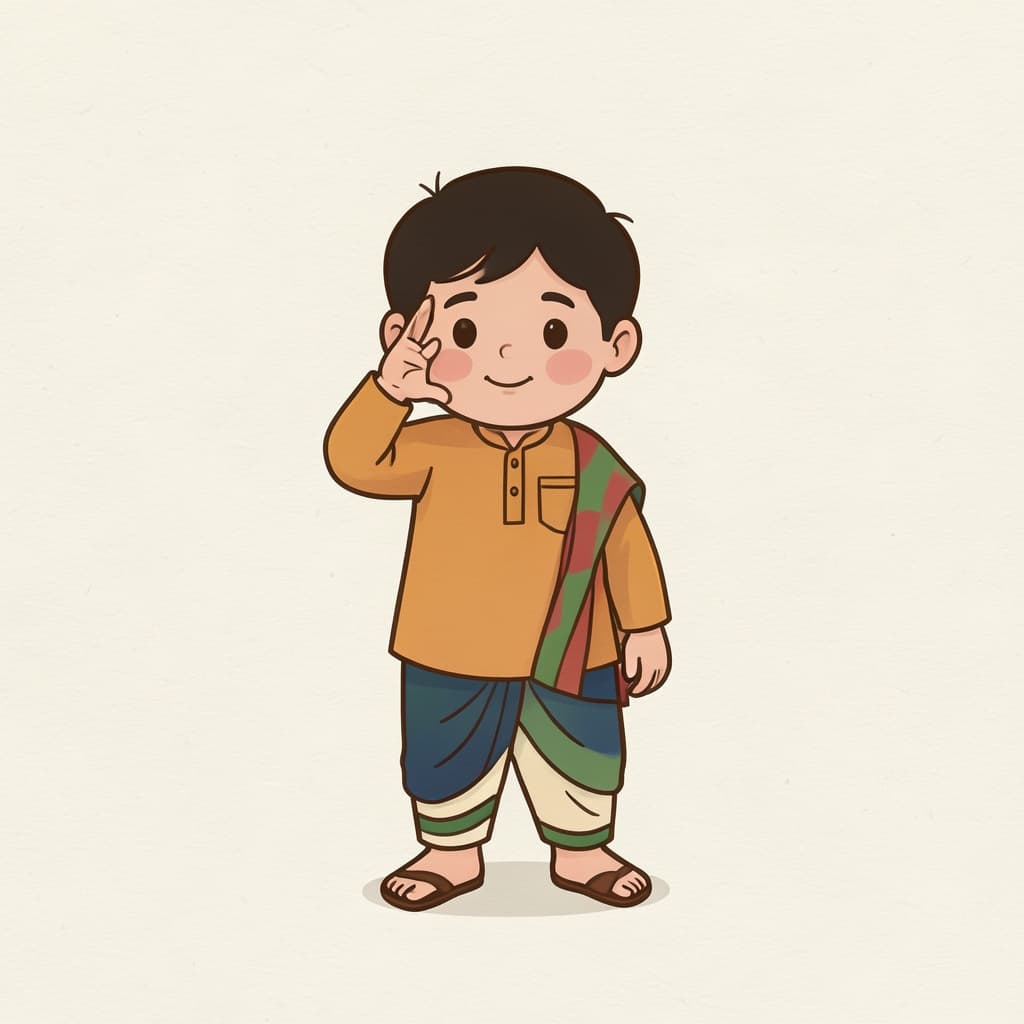
  • A boy greeting with folded hands in namaste.
    namaste

    hello (lit. "salutation to you")

    Phrase

    !Hello, teacher!

  • A boy greeting with folded hands in namaste.
    namaḥ

    salutation, homage

    Indeclinable

    ।Salutation to the teacher.

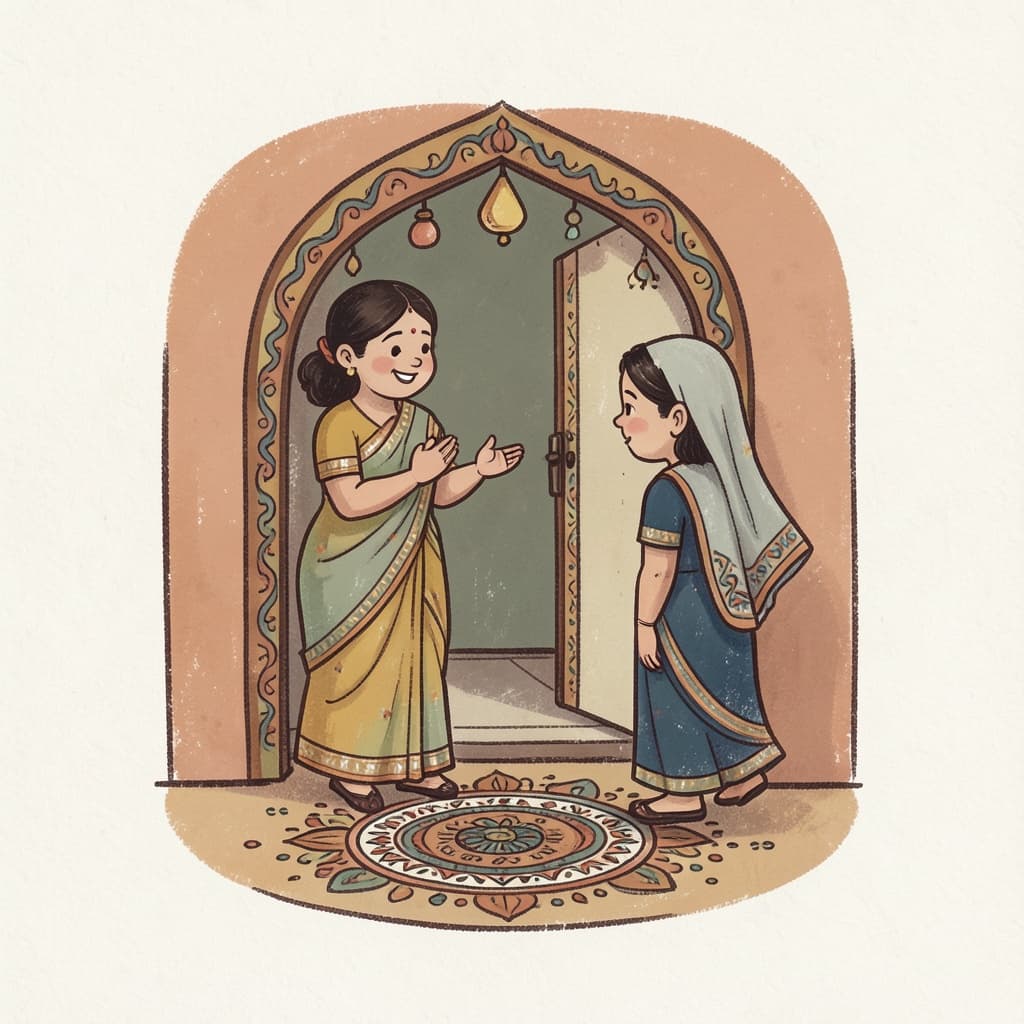
  • A smiling woman in a sari at a decorated doorway with folded hands, welcoming a guest, a rangoli pattern on the ground.
    svāgatam

    welcome

    NounNeuter

    ।You are welcome here.

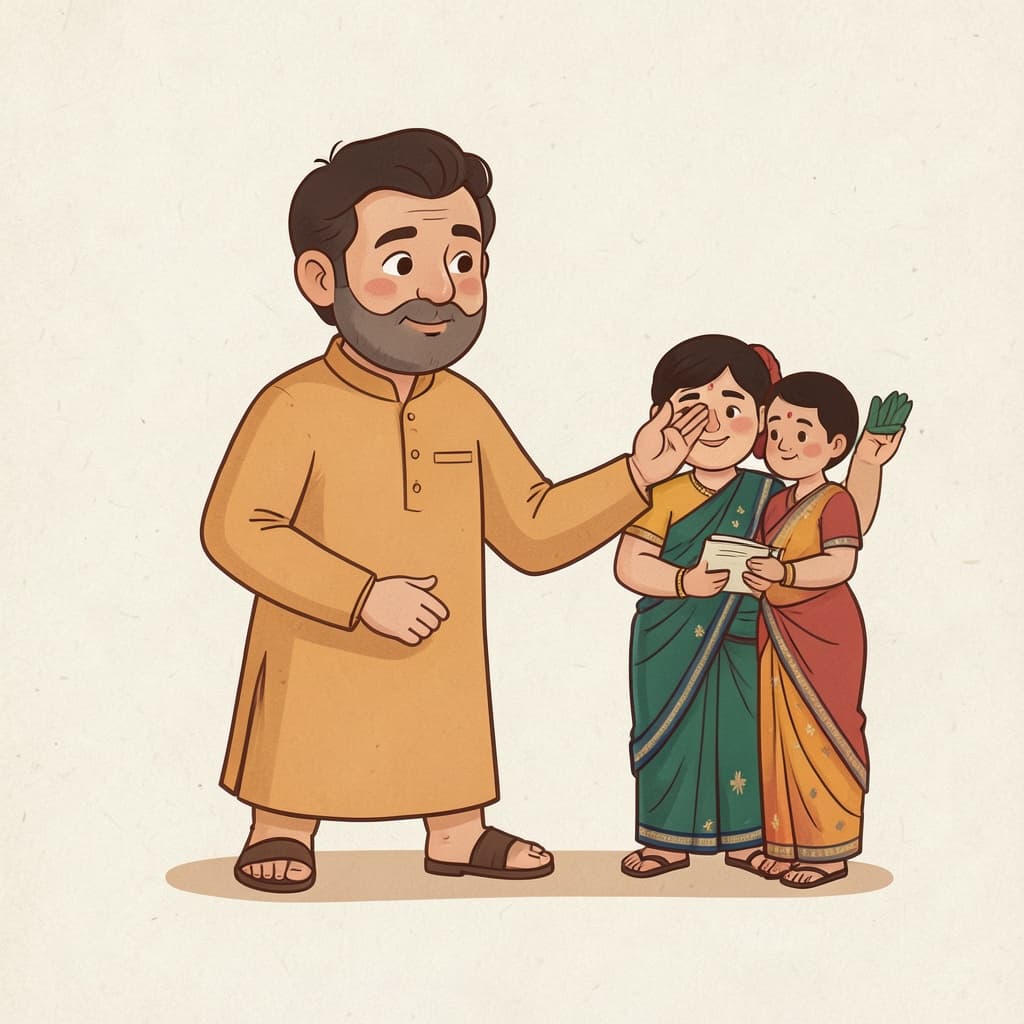
  • A boy giving a small gift to an old man who bows his head with folded hands, both smiling gratefully.
    dhanyavādaḥ

    thank you, thanks

    NounMasculine

    ।Thank you.

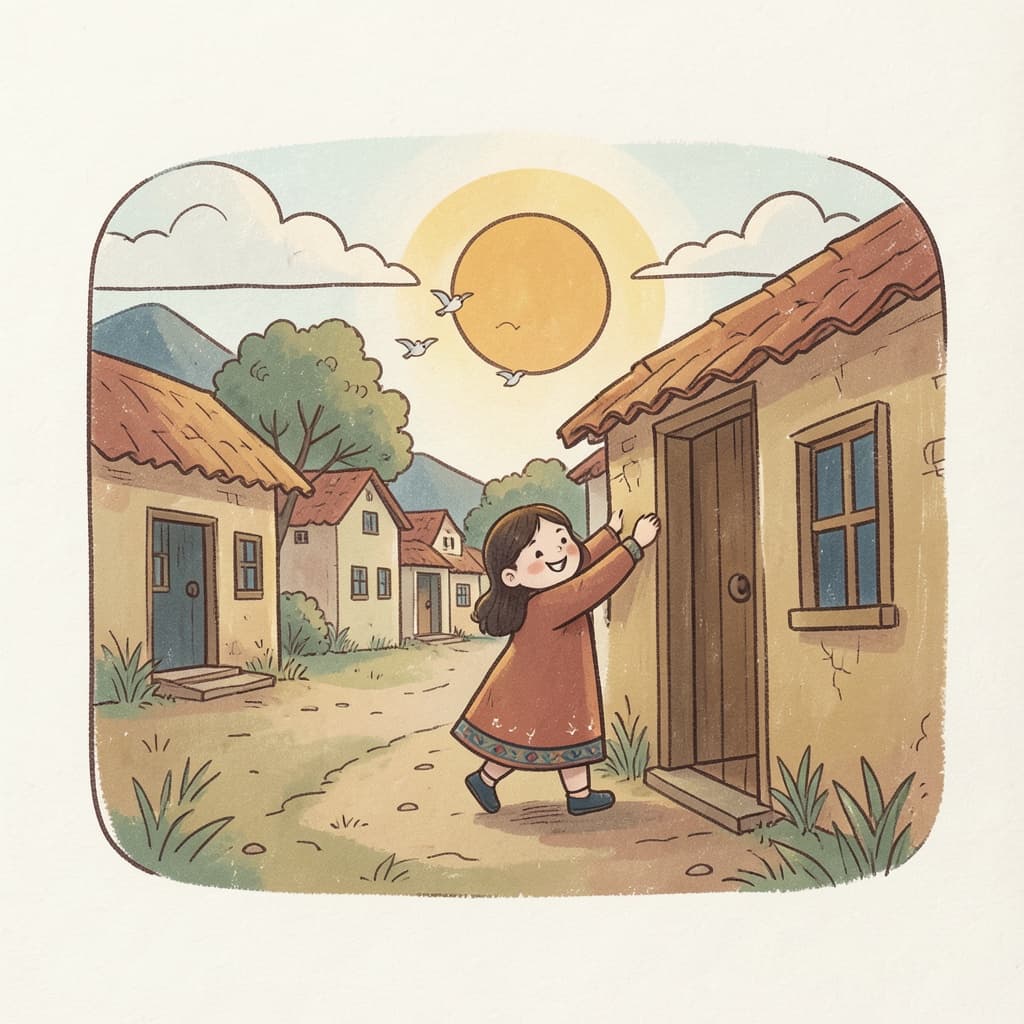
  • The sun rising over a village with a girl stretching happily at her doorway, birds flying in the morning sky.
    suprabhātam

    good morning

    NounNeuter

    , !Good morning, mother!

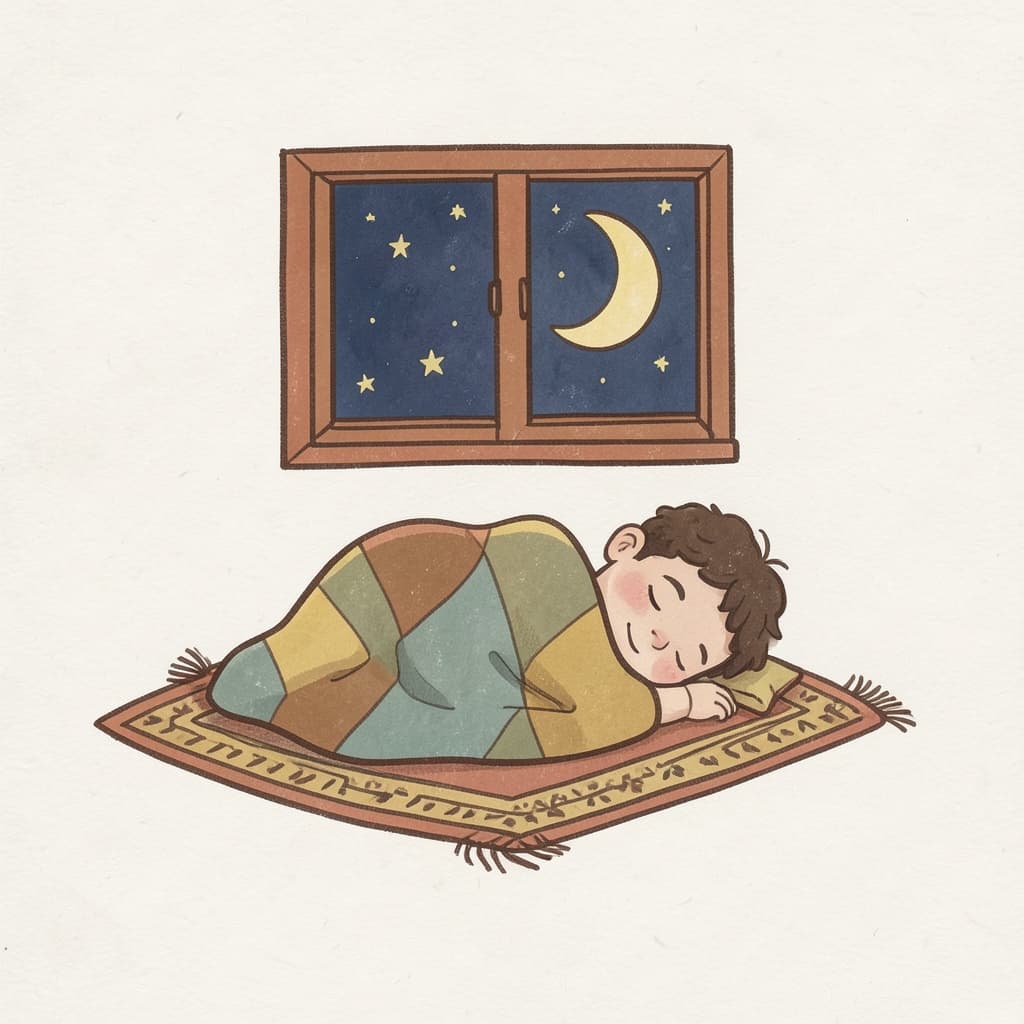
  • A child sleeping peacefully on a mat under a blanket, a crescent moon and stars outside the window.
    śubharātriḥ

    good night

    NounFeminine

    , !Good night, father!

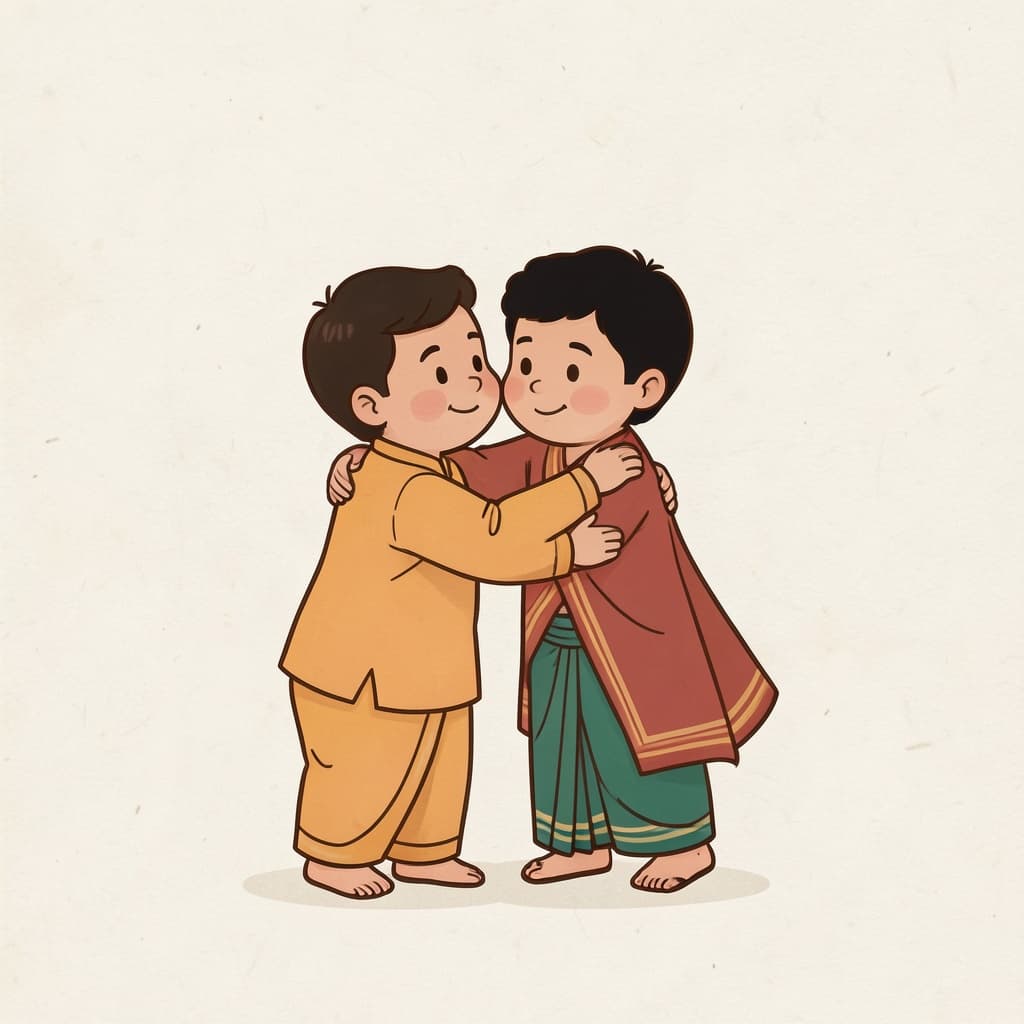
  • One child hugging another child after a quarrel, making up.
    kṣamyatām

    sorry, please excuse me

    Phrase

    , ।Sorry, please say that again.

  • Two children waving goodbye to each other on a village path, smiling.
    punaḥ milāmaḥ

    see you again

    Phrase

    , ।Good night, see you again.

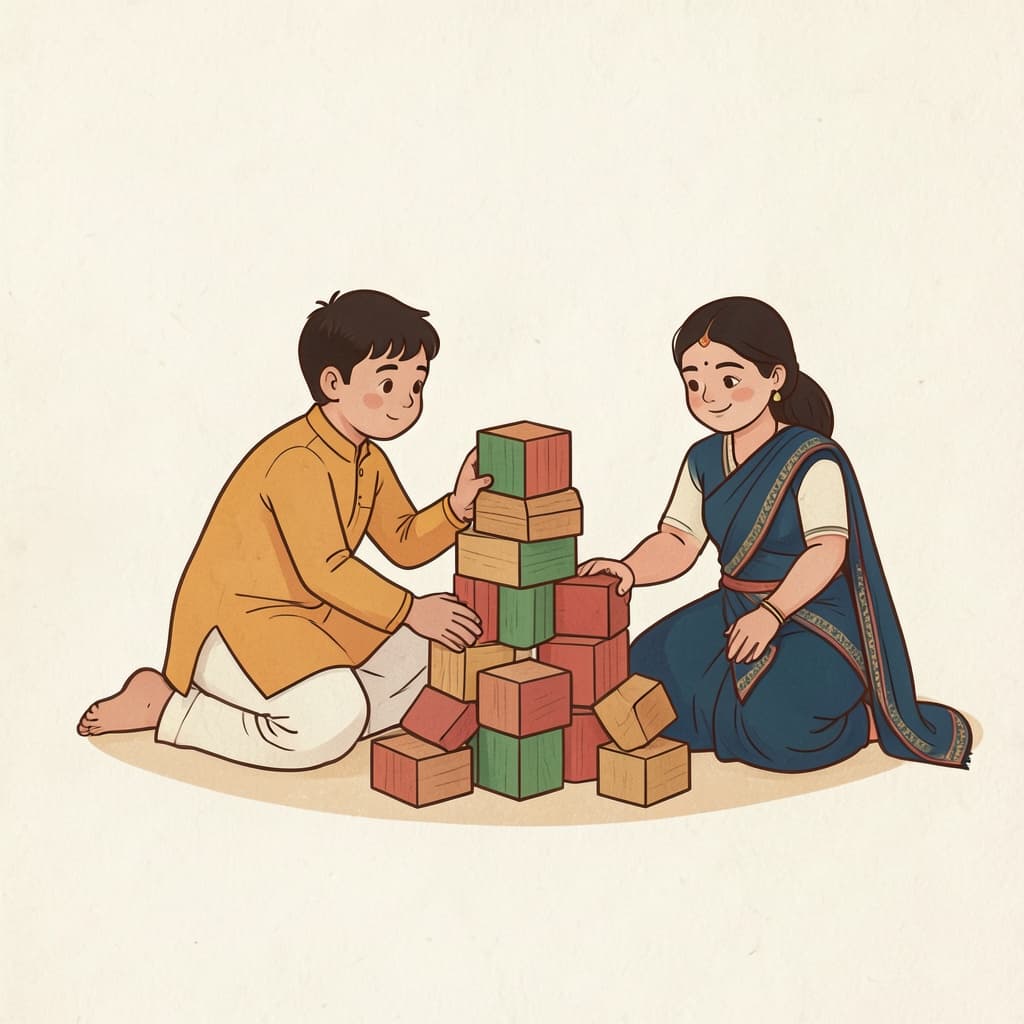
  • A child building up a fallen tower of wooden blocks again.
    punaḥ

    again

    Indeclinable

    , ।Sorry, please say that again.

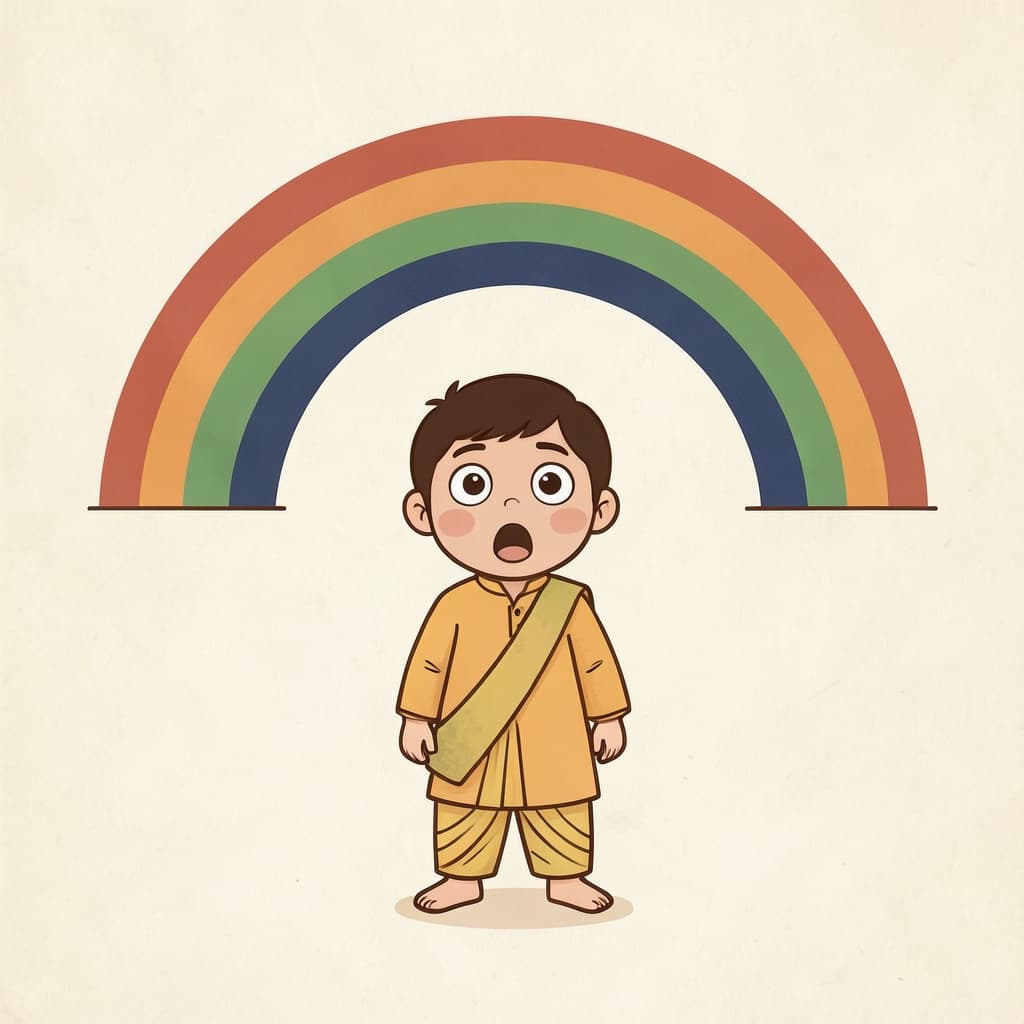
  • A child with wide eyes and an open mouth, amazed at a rainbow.
    he

    O! (calling someone)

    Indeclinable

    !O Rāma!

  • A small boy holding out his cupped hands politely to his mother, asking for something.
    kṛpayā

    please

    Indeclinable

    ।Please give me water.

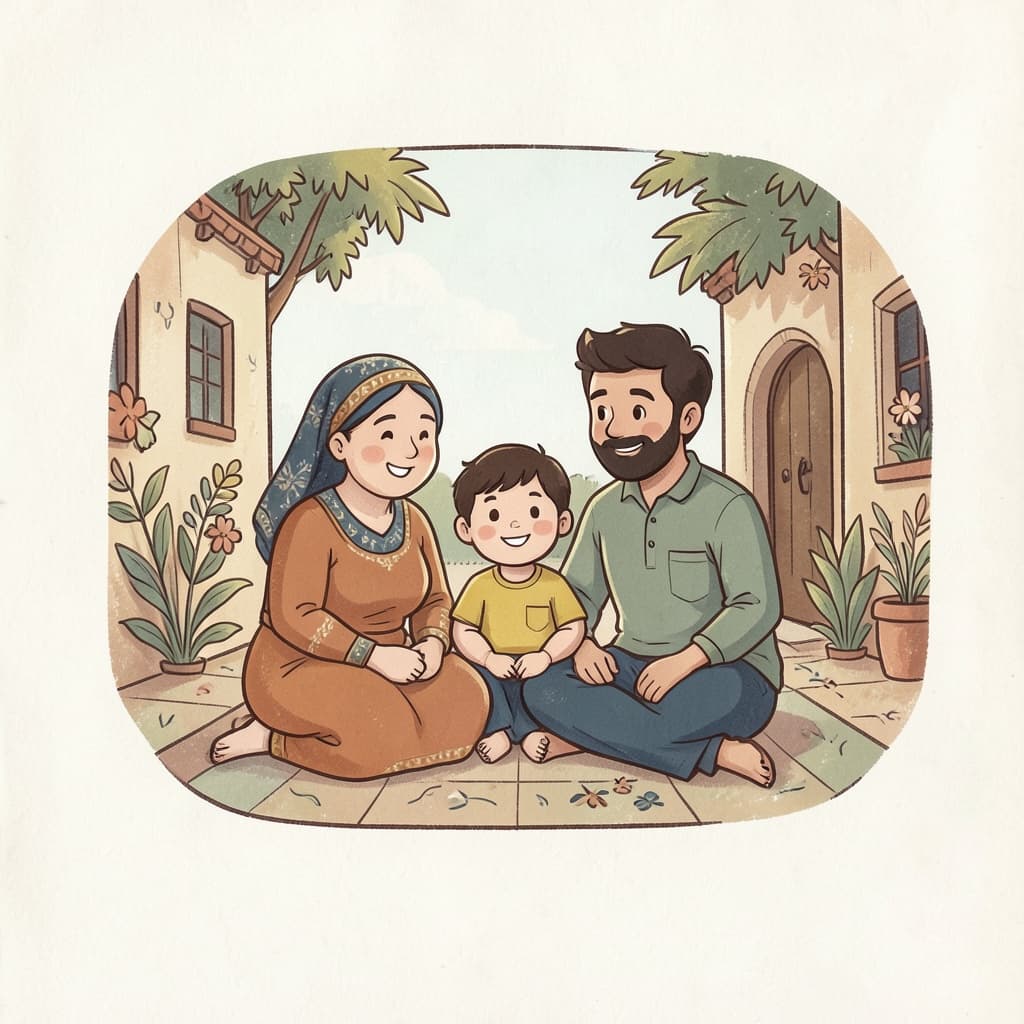
  • A healthy happy family of grandmother, father and child sitting together in a sunny courtyard.
    kuśalam

    well-being

    NounNeuter

    ।All is well here.

अव्ययानि

Connectors & particles
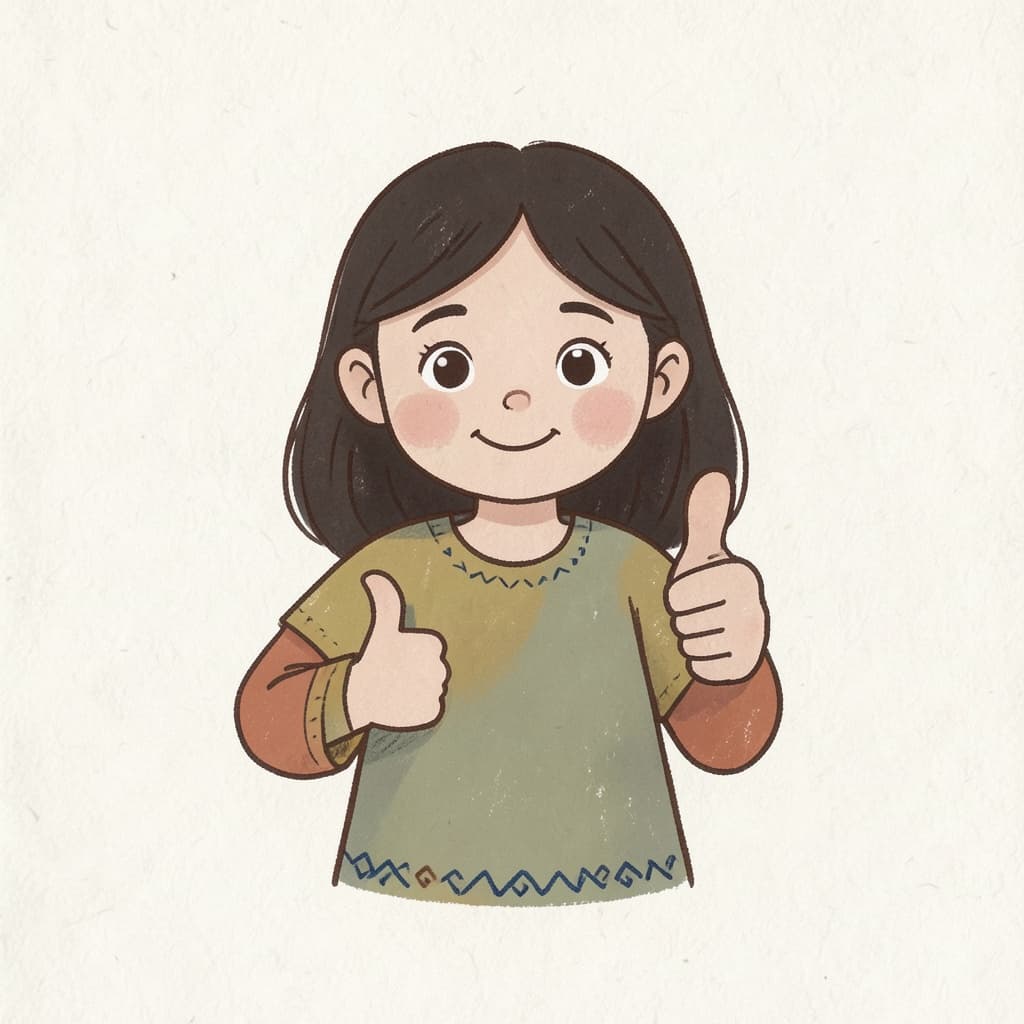
  • A smiling girl nodding with a big friendly thumbs up.
    ām

    yes

    Indeclinable

    , ।Yes, I know.

  • A child shaking her head with one hand raised to refuse a sweet.
    na

    no, not

    Indeclinable

    ।I do not know.

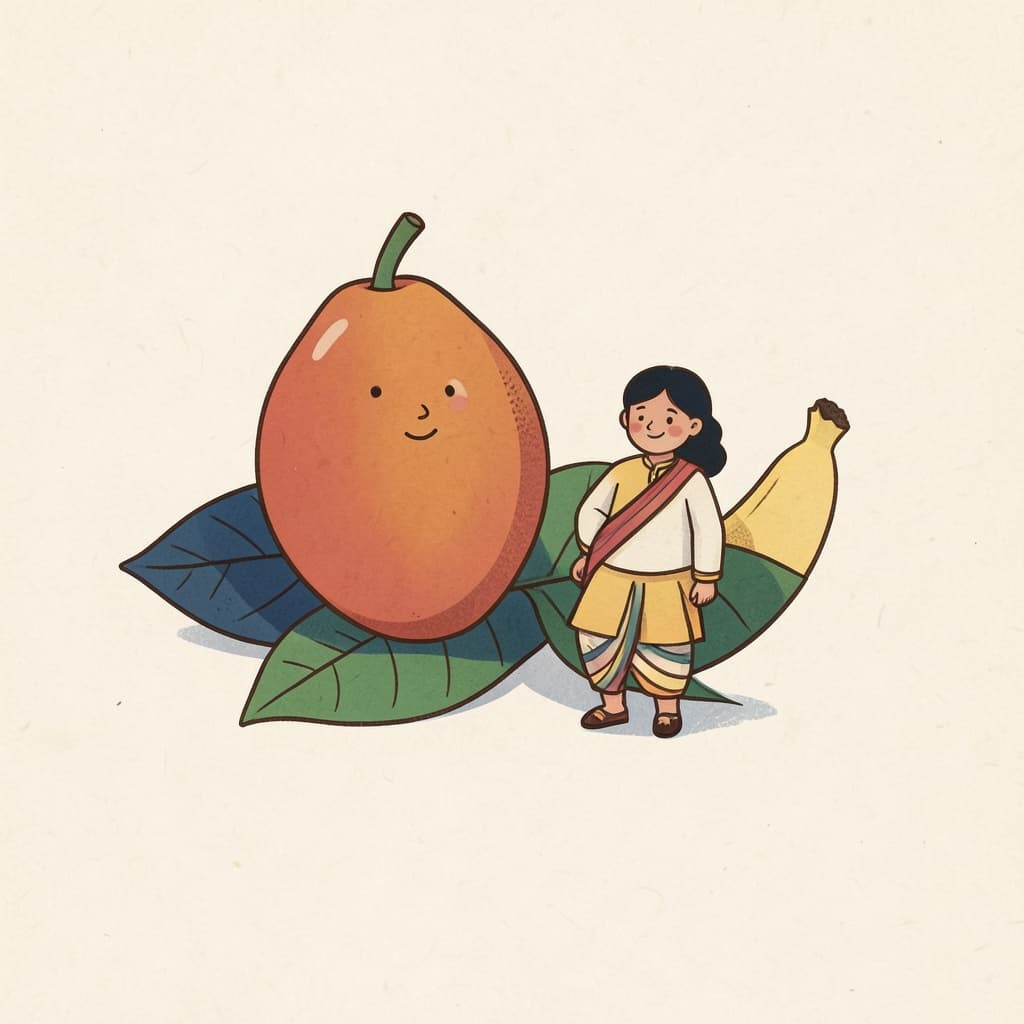
  • A mango and a banana lying side by side on a leaf.
    ca

    and

    Indeclinable

    ।Mother and father go to the garden.

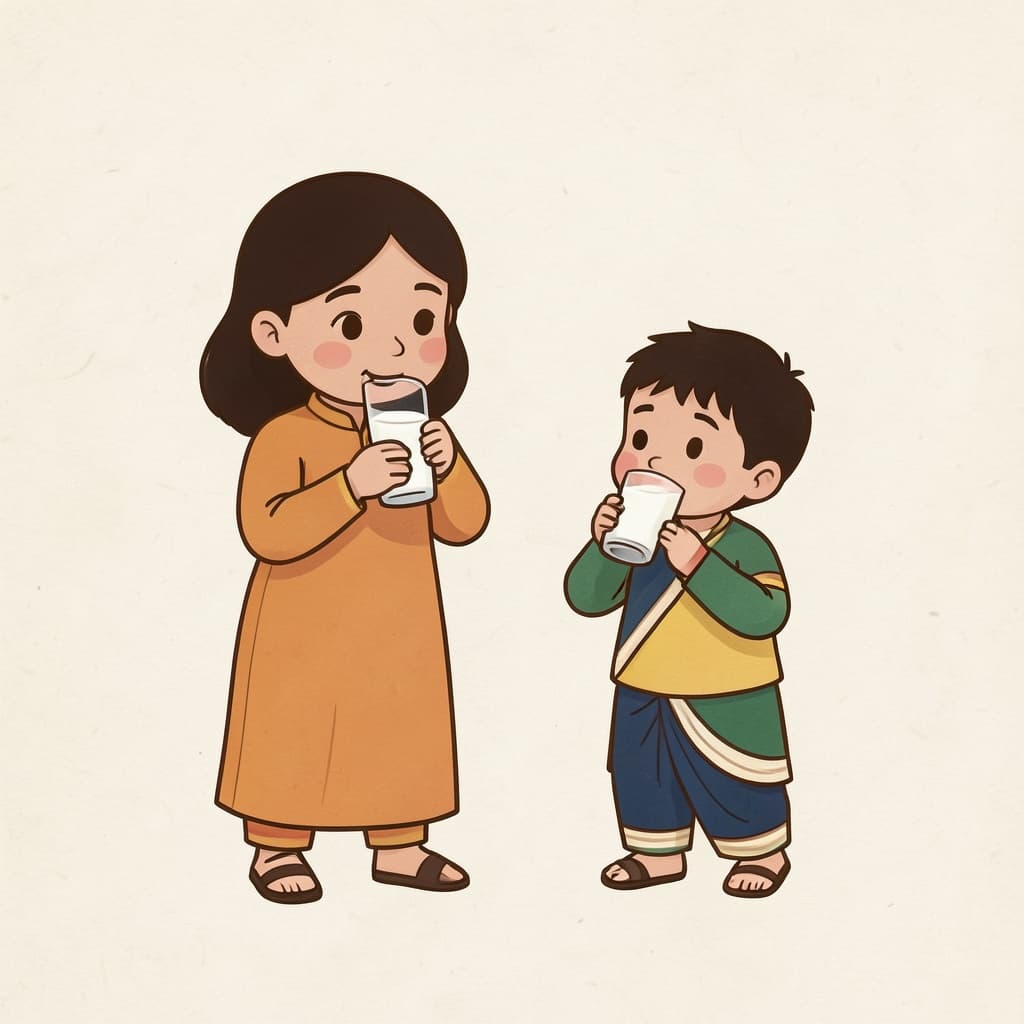
  • A girl drinking milk and her little brother drinking milk too.
    api

    also, even

    Indeclinable

    ।I also read.

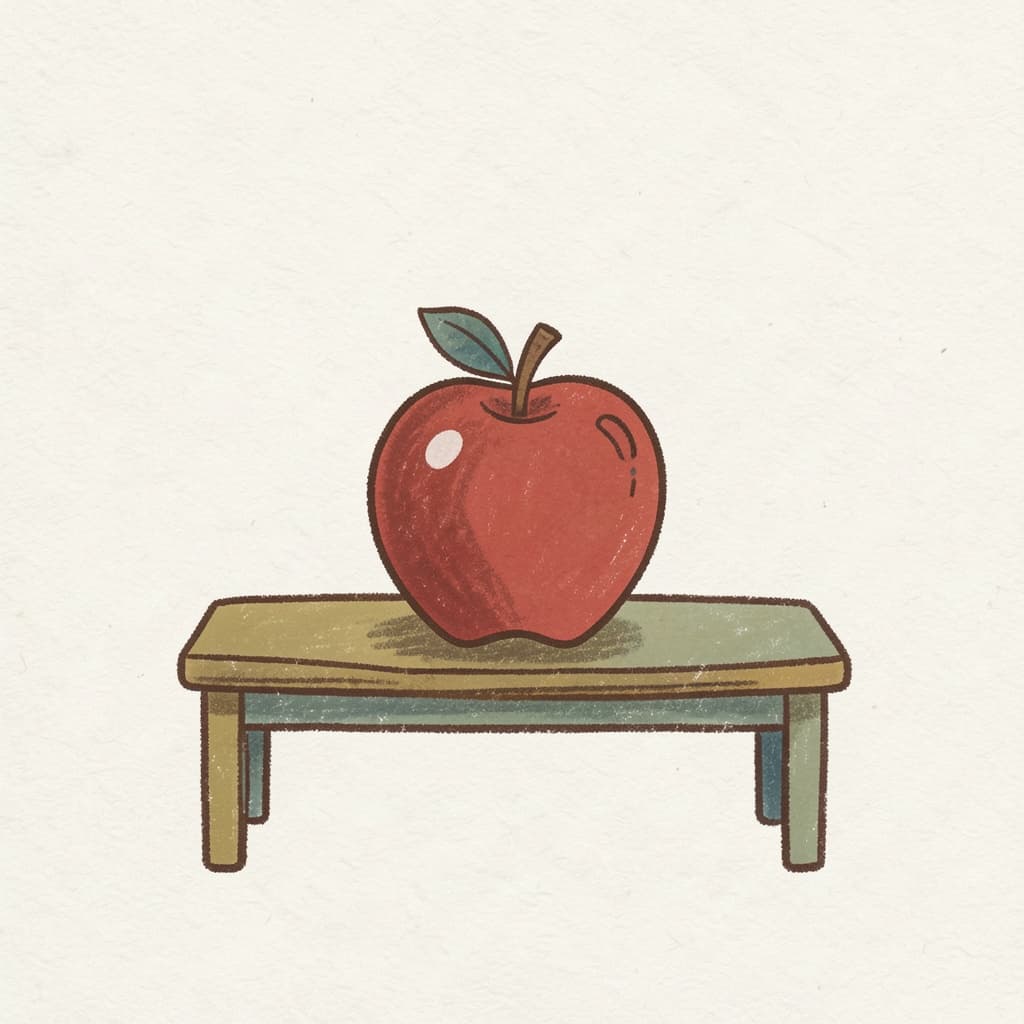
  • One single red apple standing alone on a table.
    eva

    only, indeed

    Indeclinable

    ।Truth alone wins.

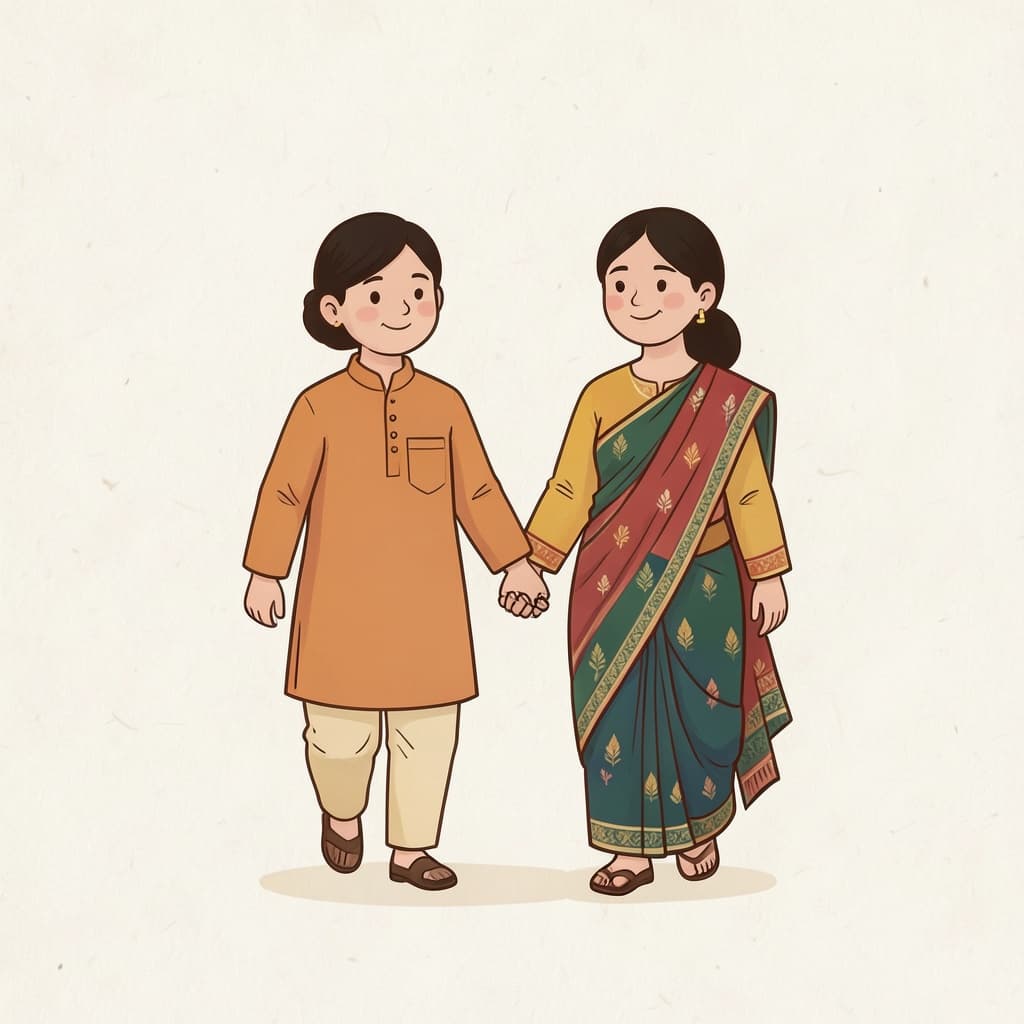
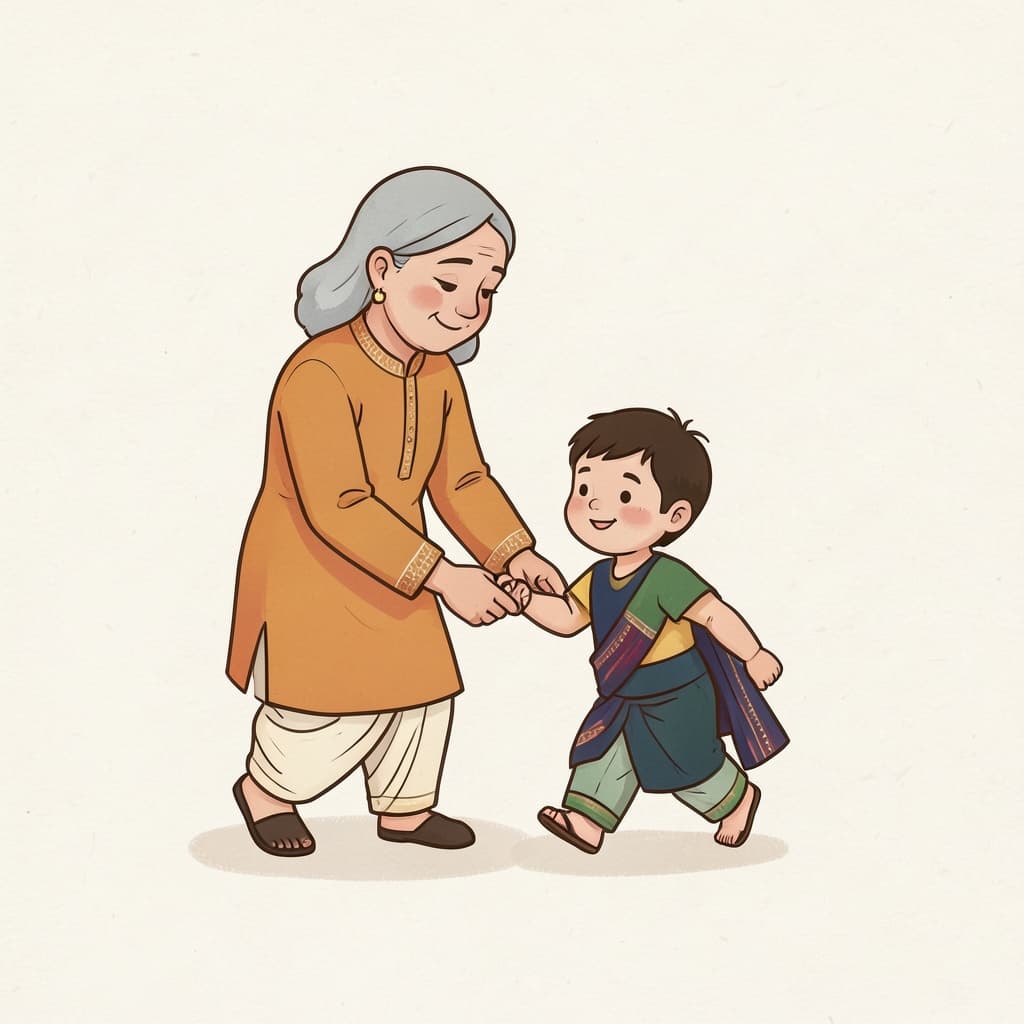
  • A girl walking together with her grandmother, holding hands.
    saha

    with

    Indeclinable

    ।The son goes with his father.

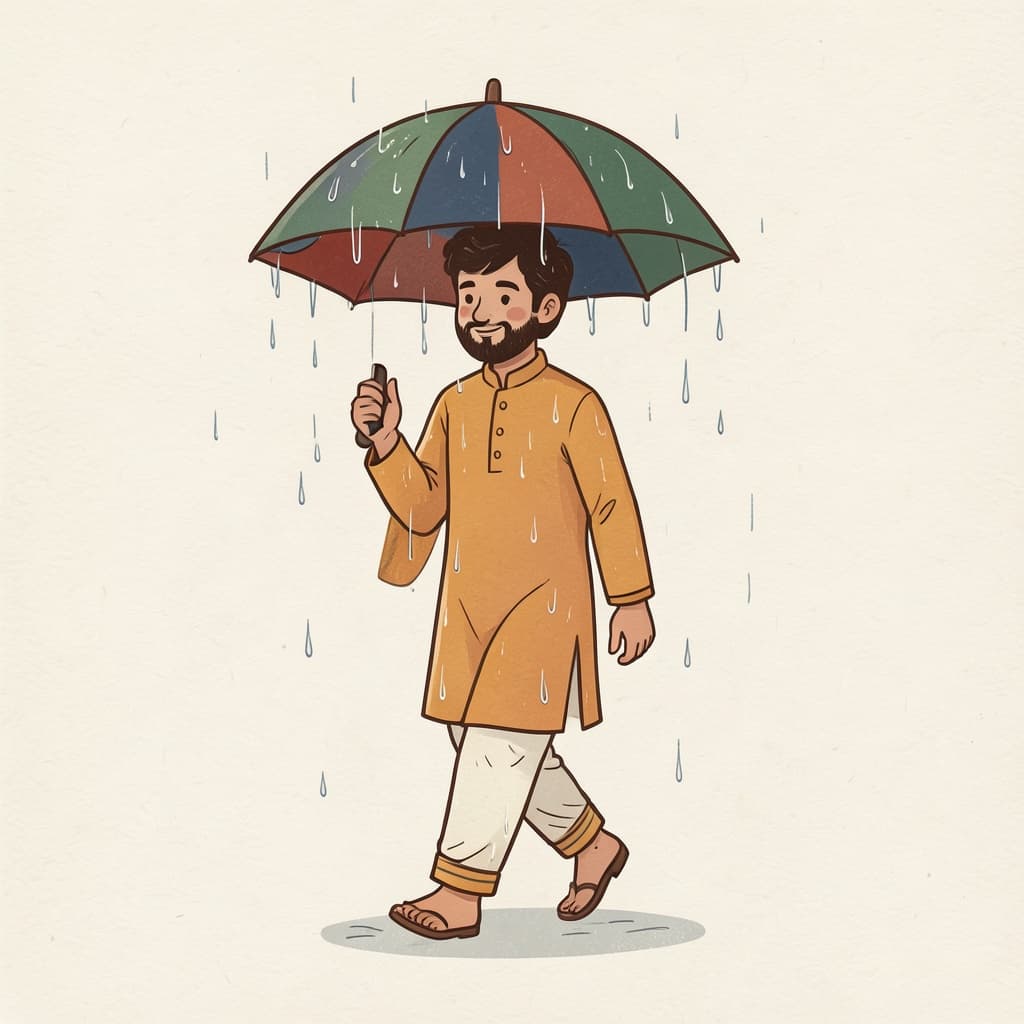
  • A man walking in the rain without an umbrella, getting wet.
    vinā

    without

    Indeclinable

    ।Without a book the student does not read.
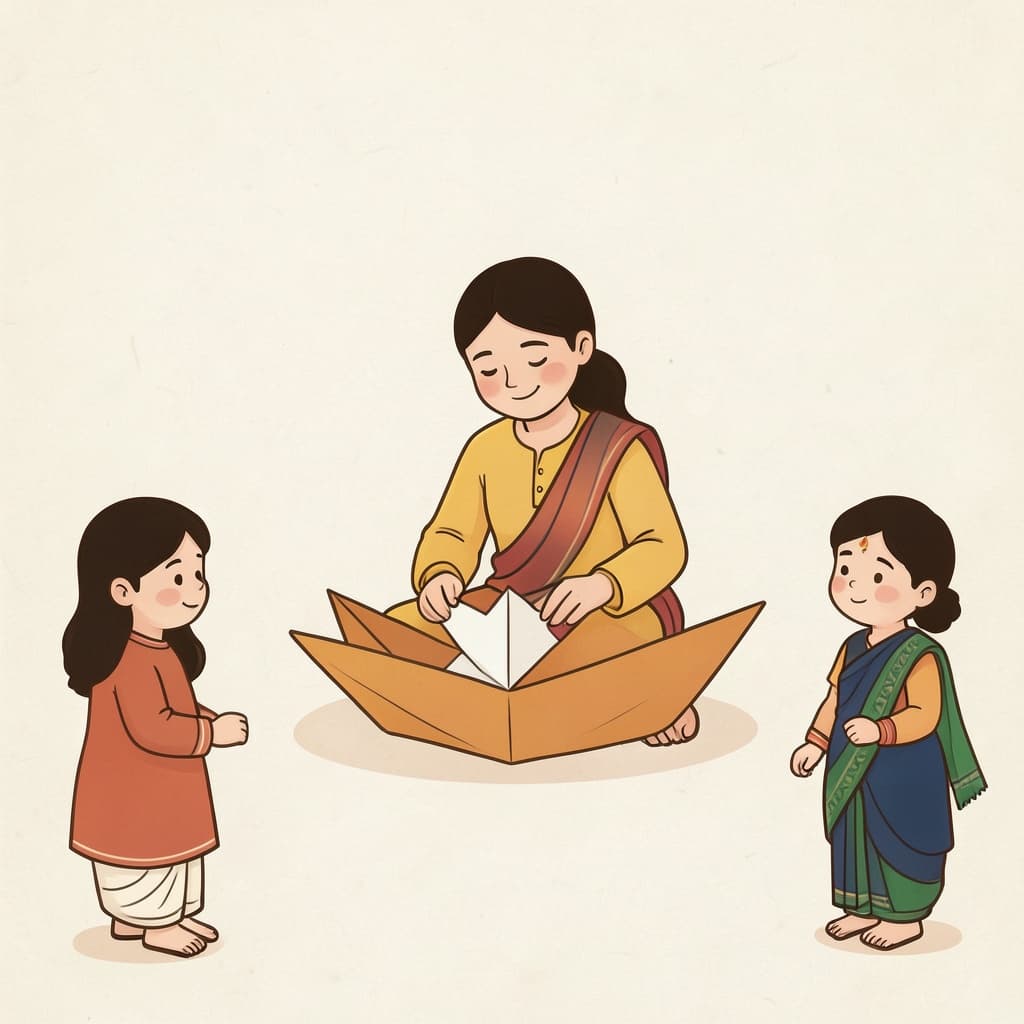
  • A teacher showing how to fold a paper boat while children copy her.
    iti

    thus (quotation marker)

    Indeclinable

    " " ।"I read," he says.

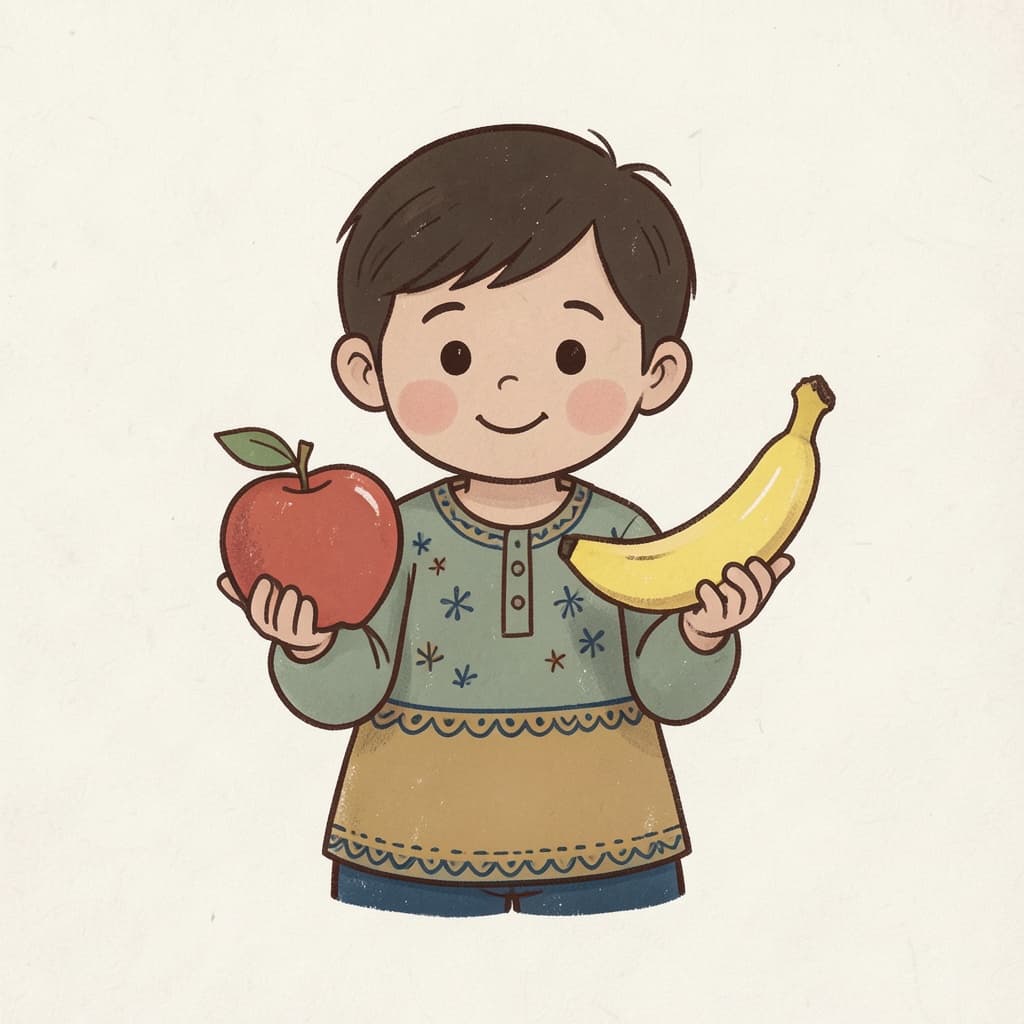
  • A child choosing between an apple and a banana, one in each hand.
    vā

    or; (question marker)

    Indeclinable

    ?Do you know Sanskrit?

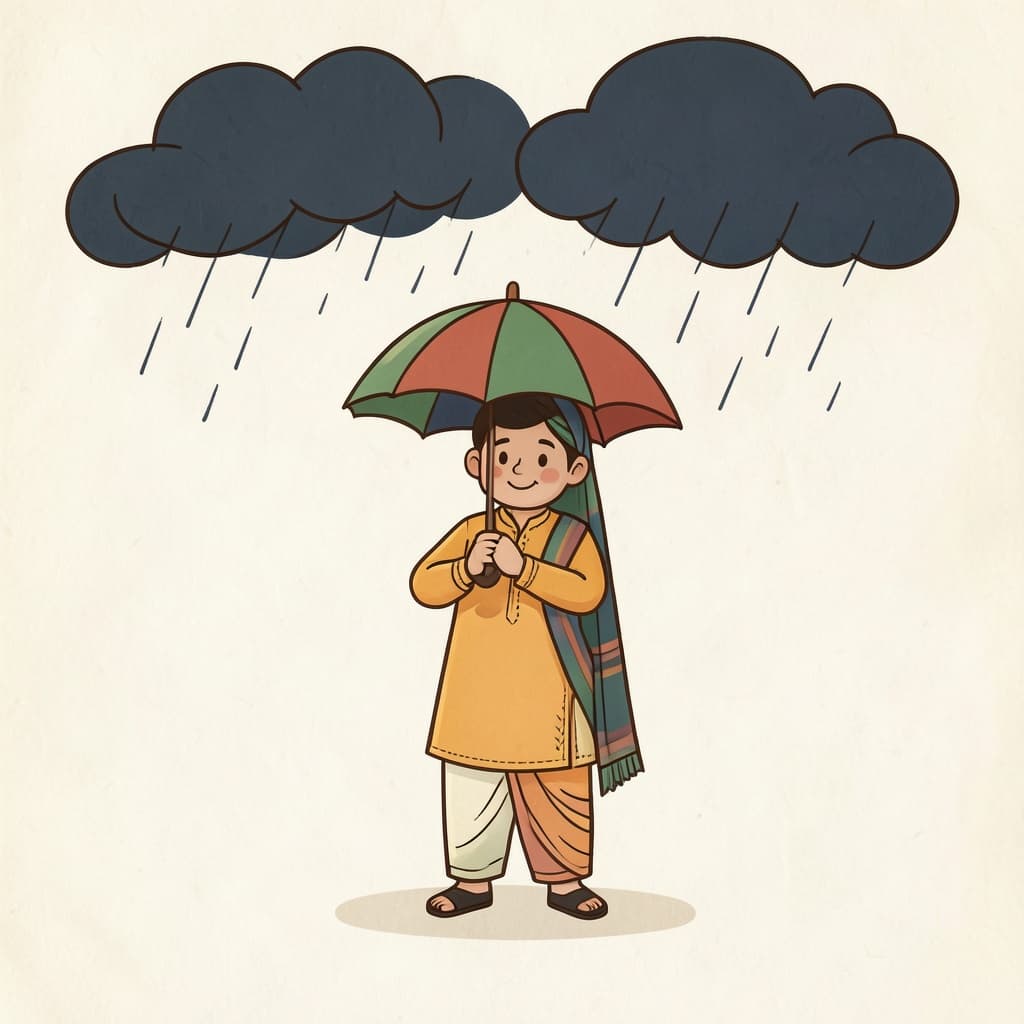
  • Dark rain clouds above and a farmer opening his umbrella.
    yadi

    if

    Indeclinable
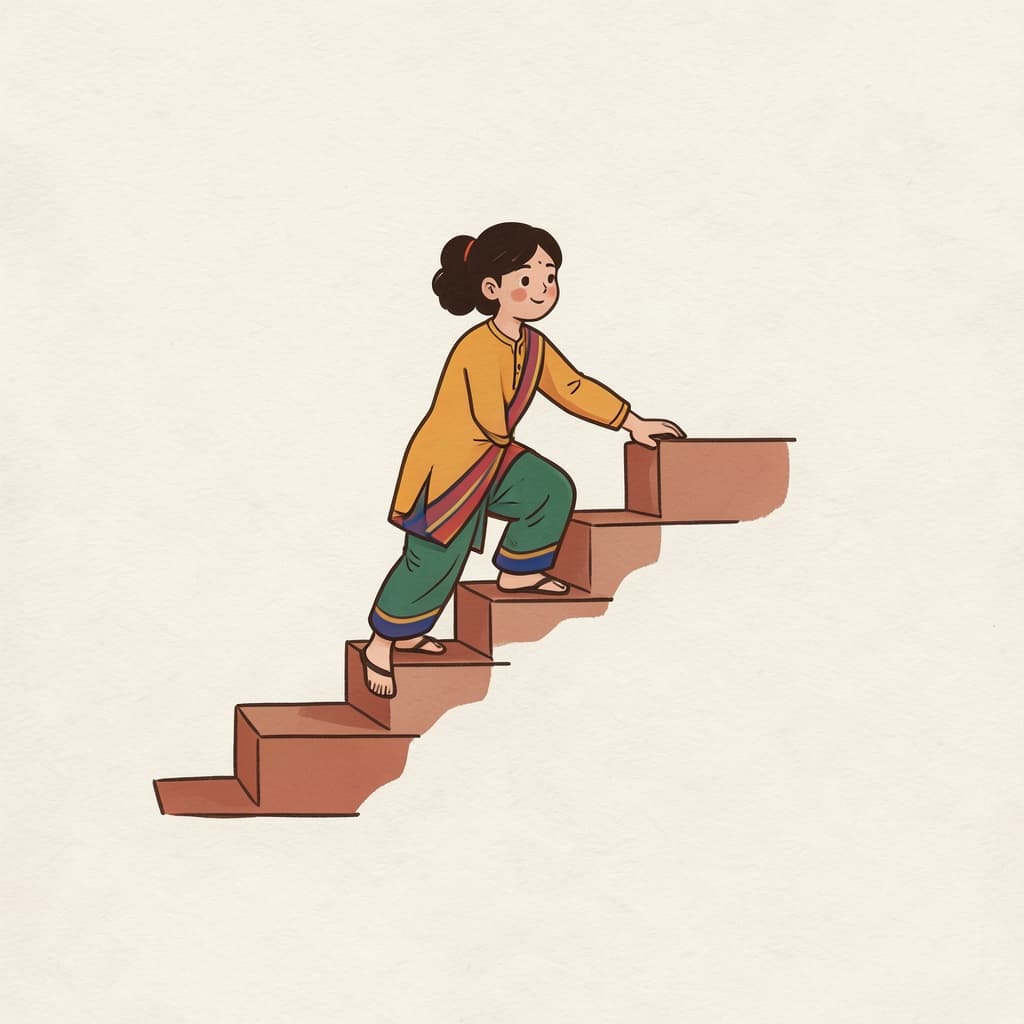
  • A girl climbing a flight of steps one after another.
    tarhi

    then

    Indeclinable
  • Dark rain clouds above and a farmer opening his umbrella.
    cet

    if

    Indeclinable
  • A wanderer roaming through a forest, looking around curiously.
    itastataḥ

    here and there

    Indeclinable

    ।The crow wandered here and there for water.
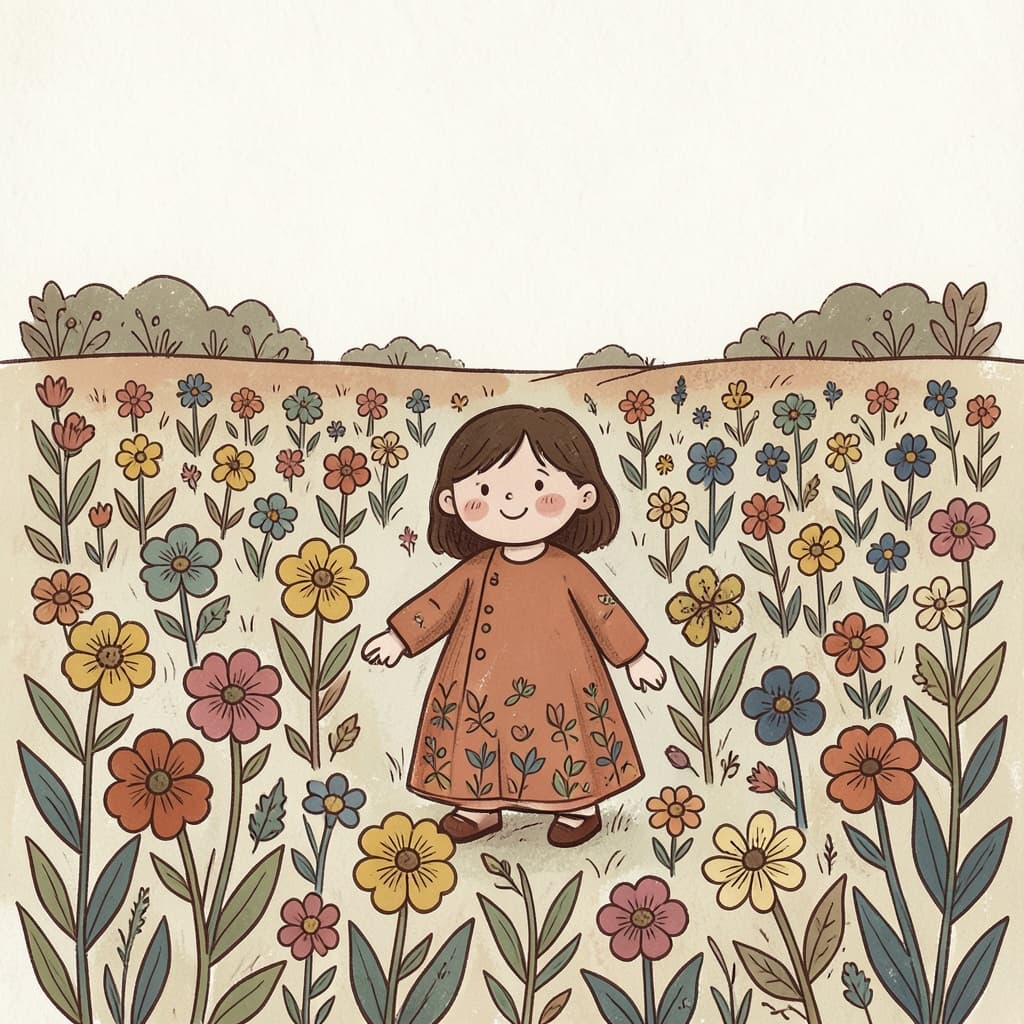
  • Flowers blooming everywhere across a wide field.
    sarvatra

    everywhere

    Indeclinable
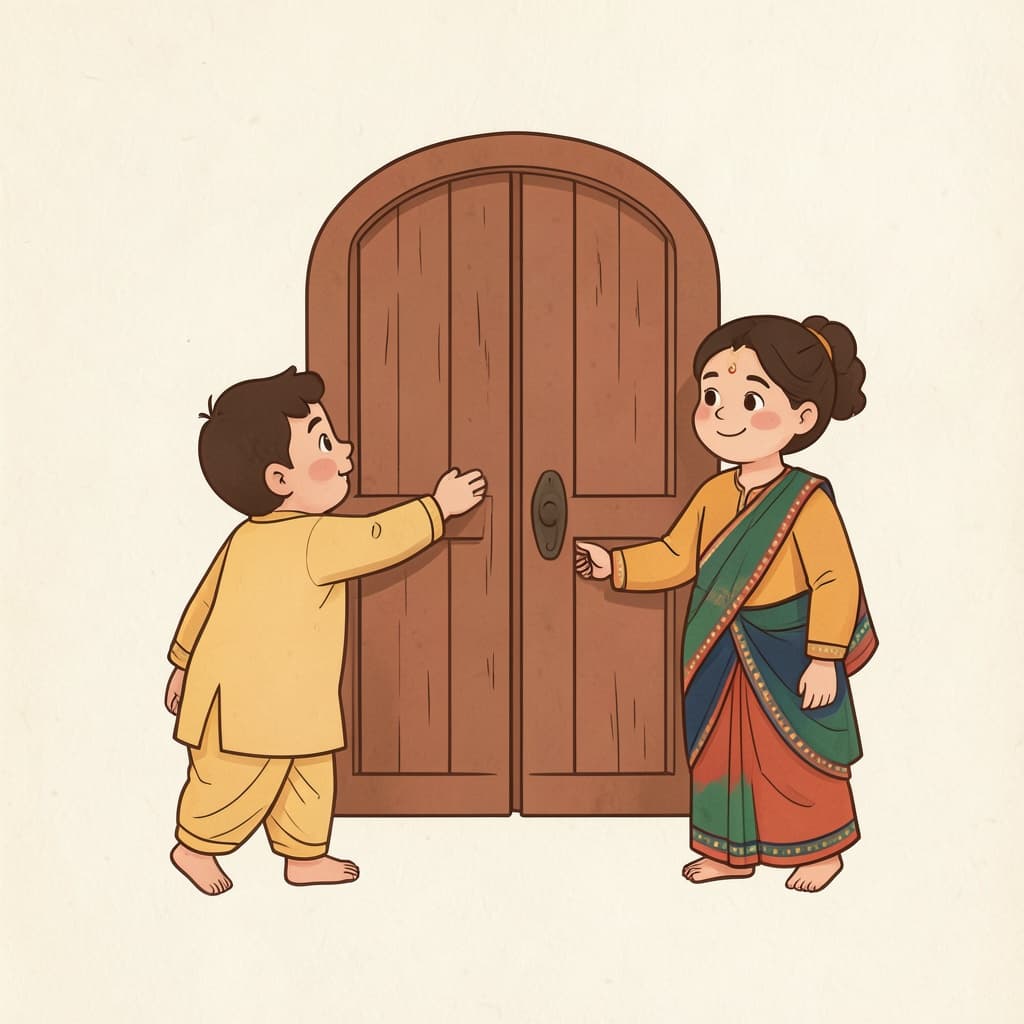
  • A child knocking once on a big wooden door.
    kadācit

    sometime, once

    Indeclinable

    ।I too will help you some day.

  • A girl climbing a flight of steps one after another.
    tataḥ

    then, from that

    Indeclinable

    ।From that, happiness.

परिवारः

Family

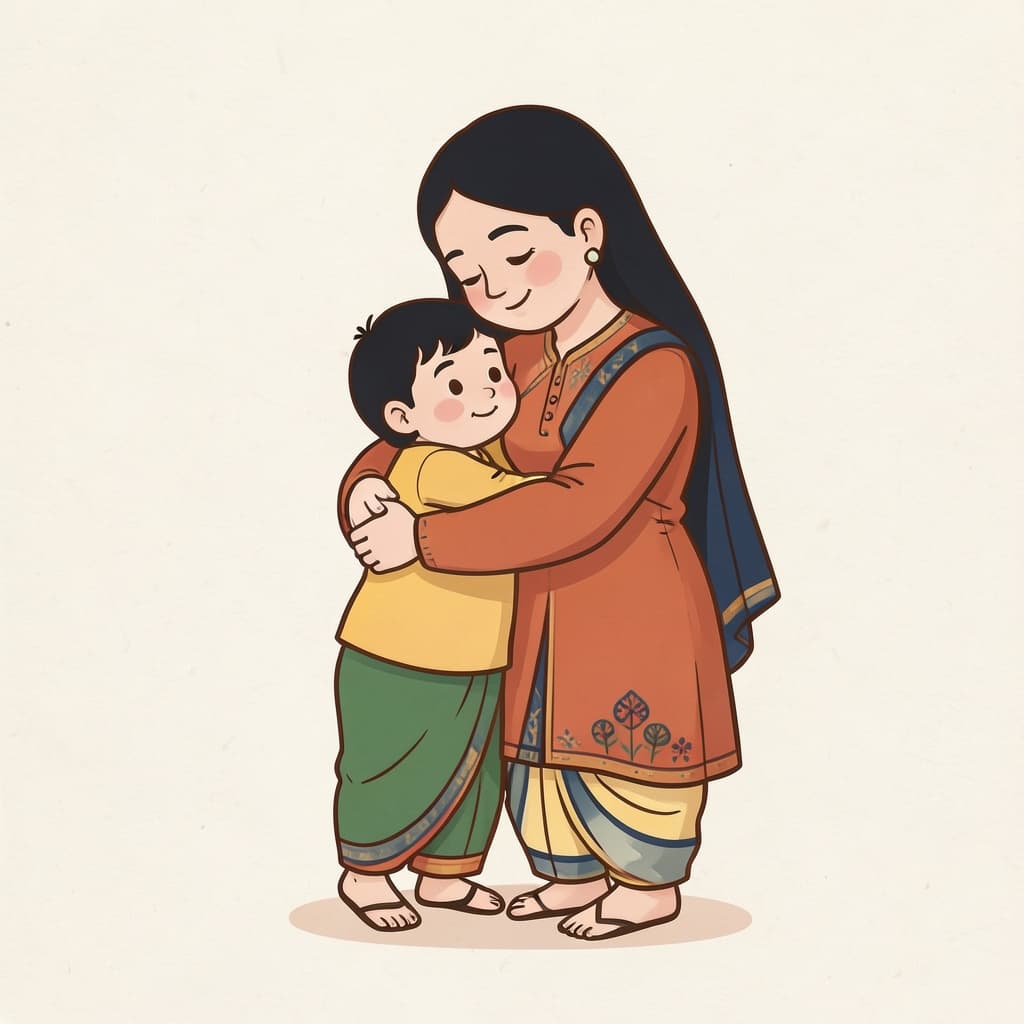
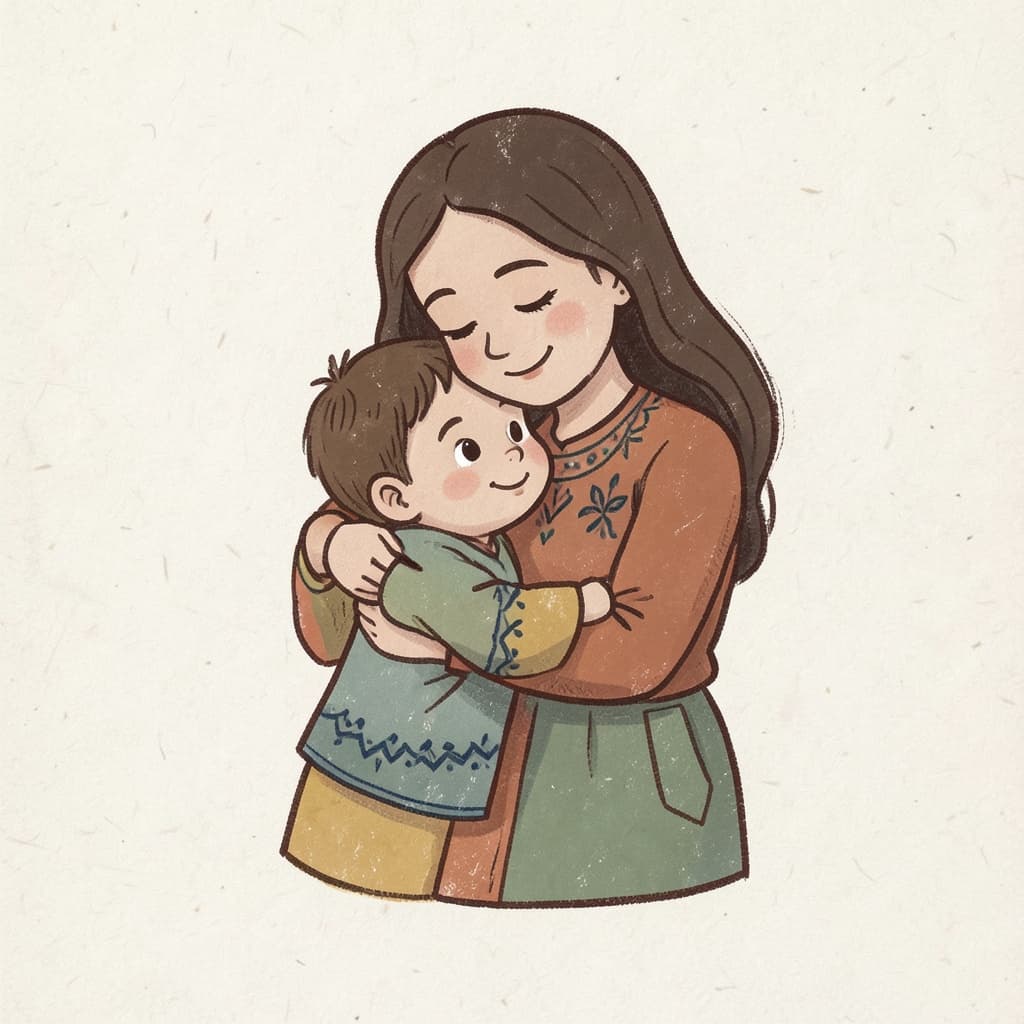
  • A loving mother hugging her small child.
    mātā

    mother

    NounFeminine

    ।Mother cooks rice.

  • A happy father carrying his child on his shoulders.
    pitā

    father

    NounMasculine

    ।Father reads a book.

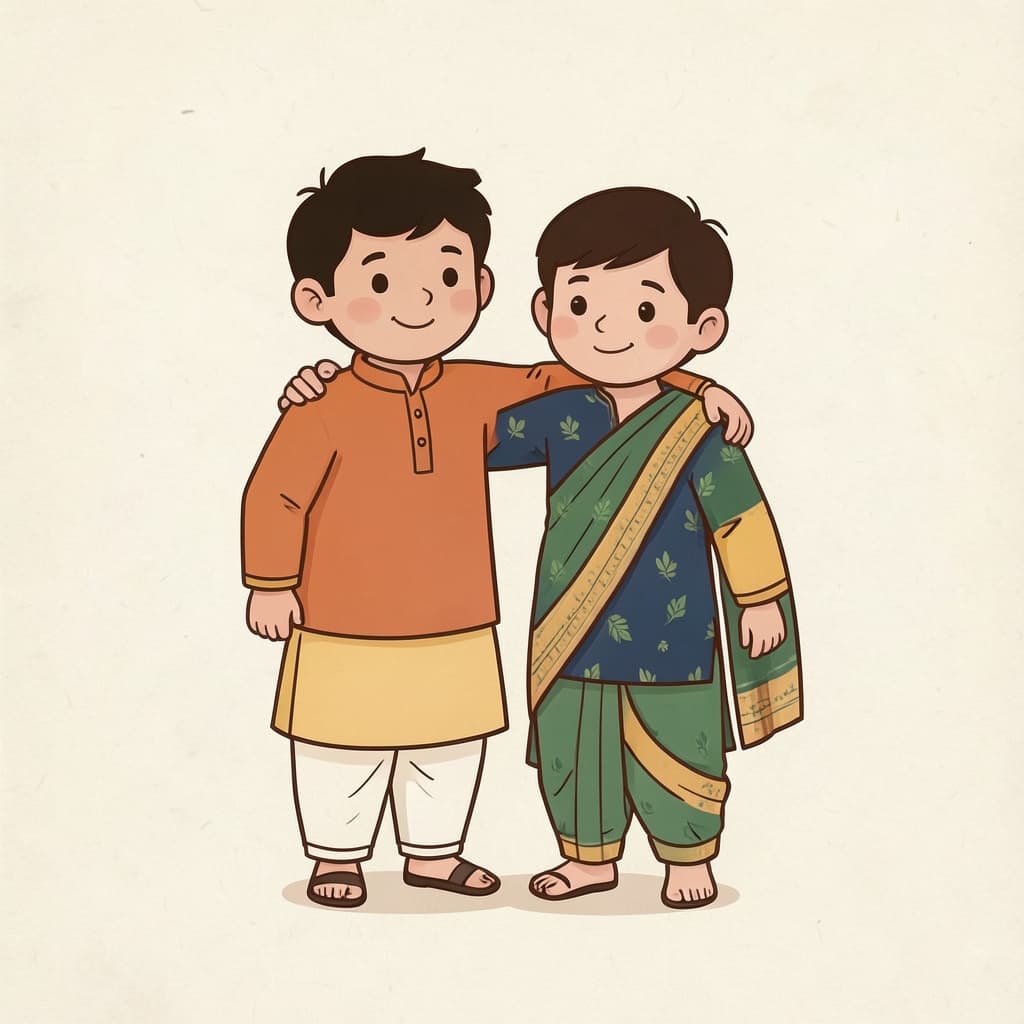
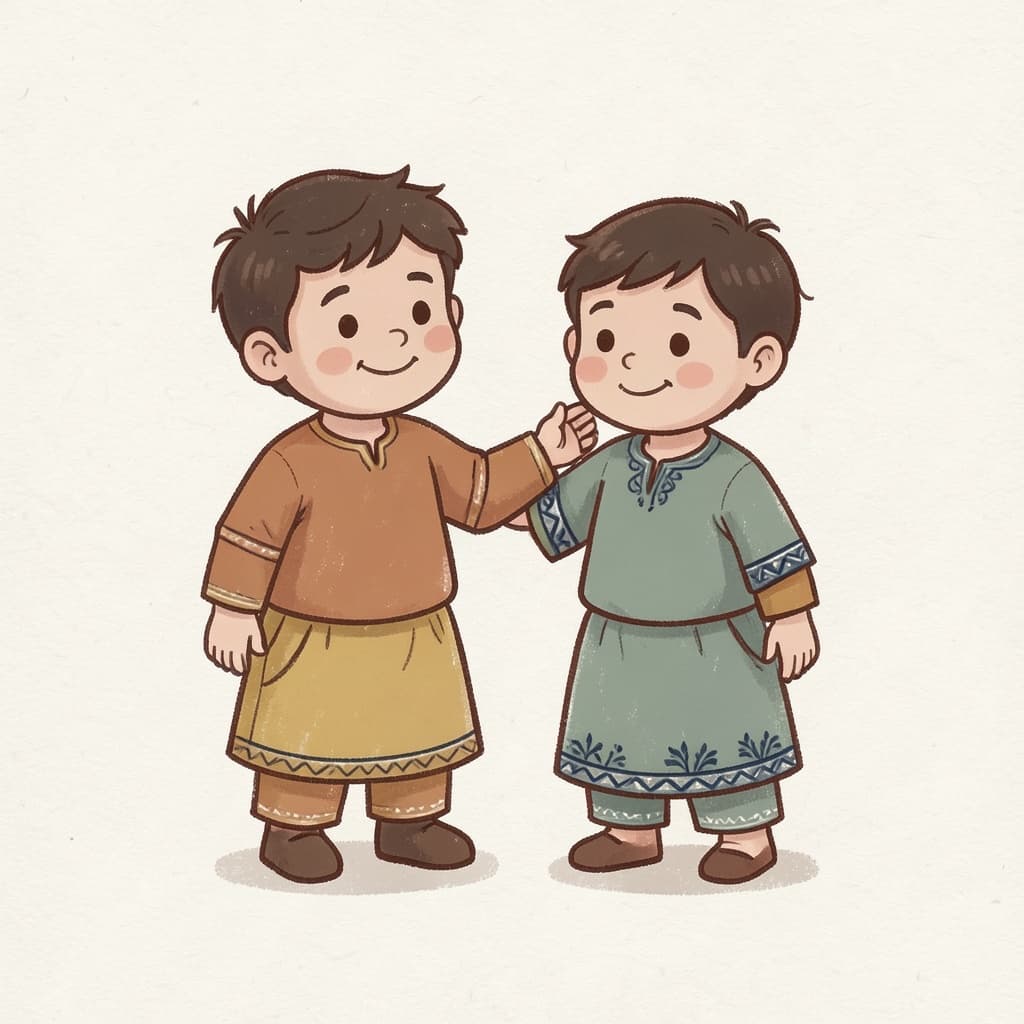
  • Two brothers standing with their arms around each other's shoulders.
    bhrātā

    brother

    NounMasculine

    ।My brother plays.

  • An older sister helping her little brother take his first steps.
    bhaginī

    sister

    NounFeminine

    ।Sister sings a song.

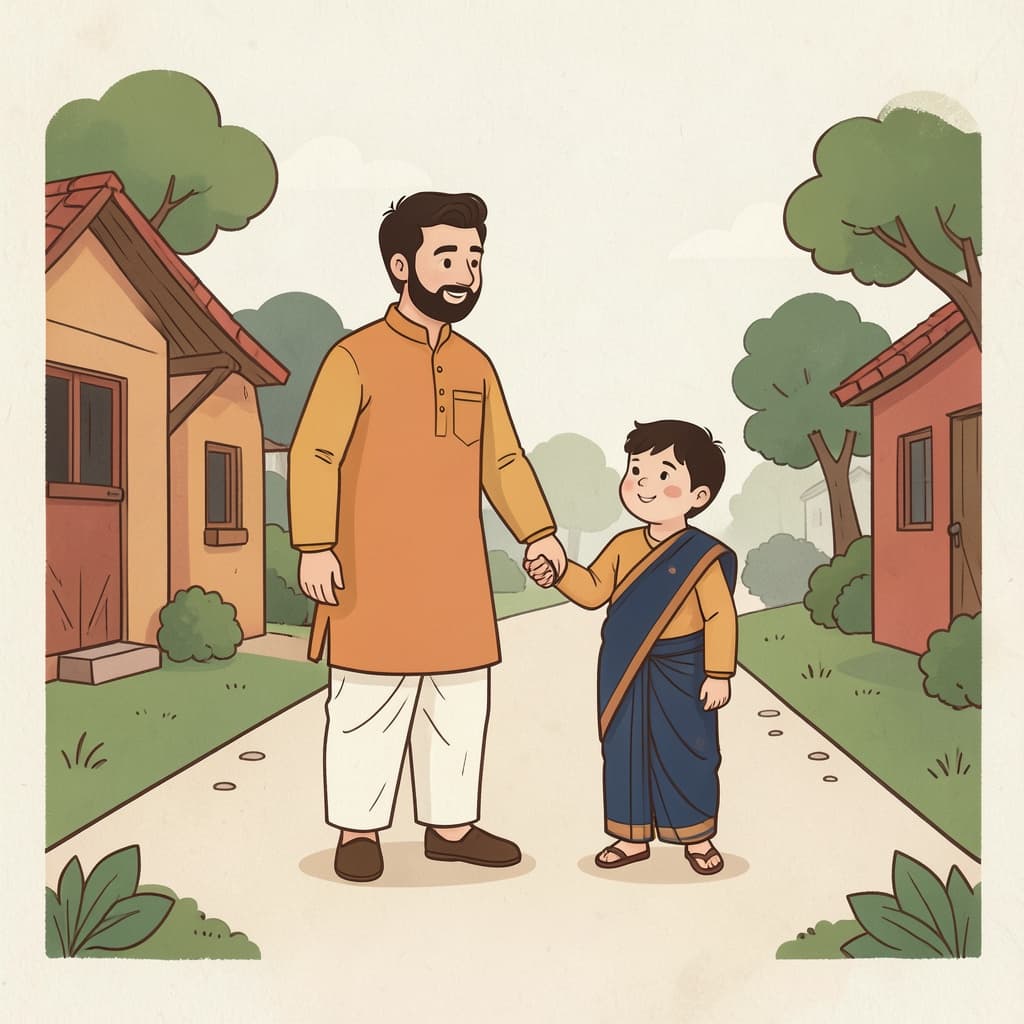
  • A father holding his small son by the hand on a village path.
    putraḥ

    son

    NounMasculine

    ।The son serves his father.

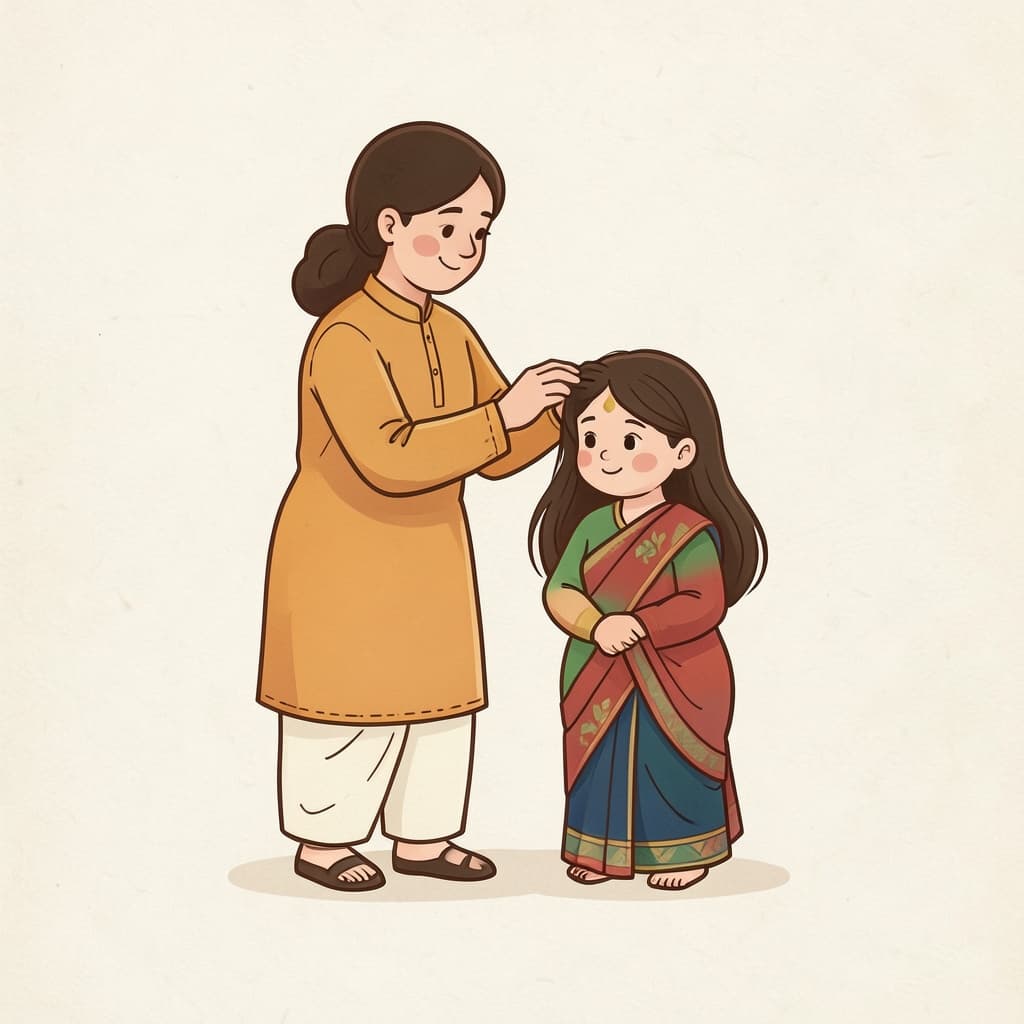
  • A mother combing her daughter's long hair.
    putrī

    daughter

    NounFeminine

    ।The daughter looks at a picture.

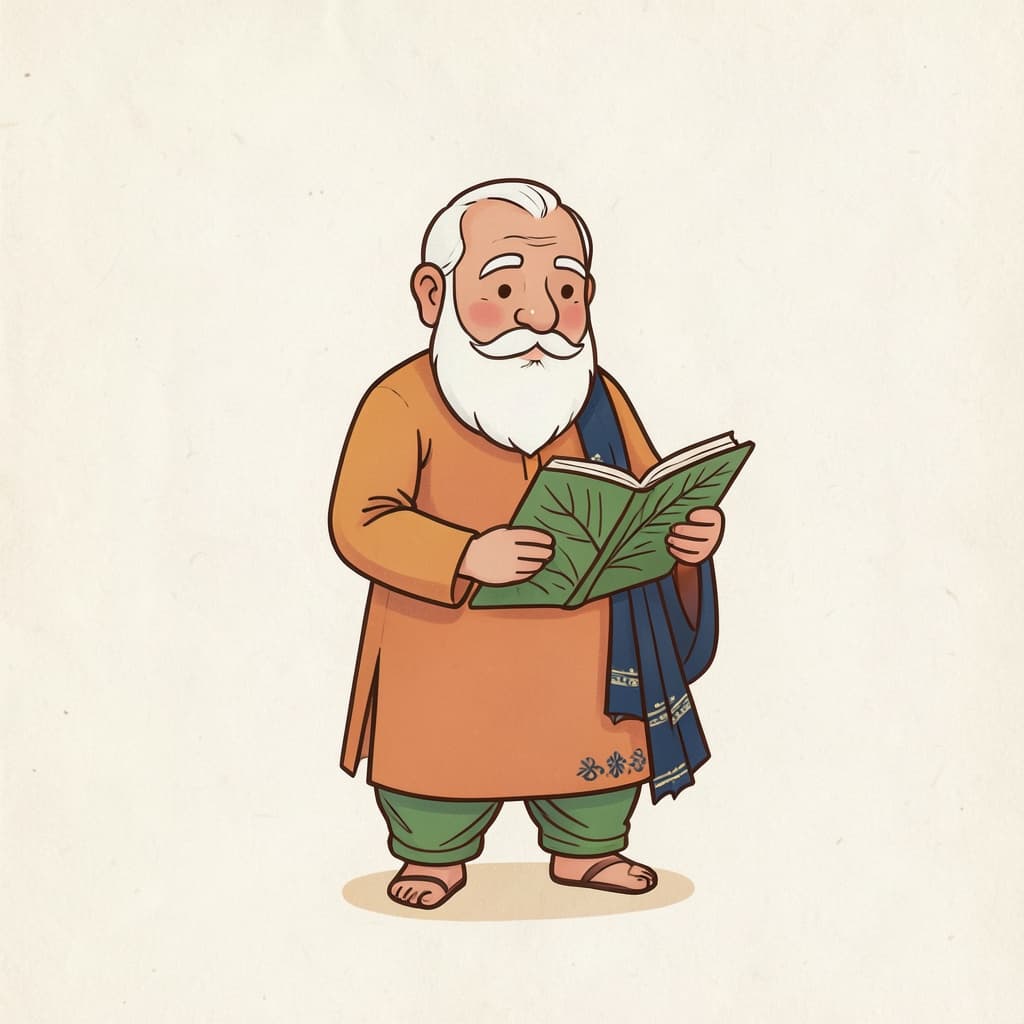
  • An old wise man with a white beard holding a palm-leaf manuscript, deep in thought.
    pitāmahaḥ

    grandfather (father’s father)

    NounMasculine

    ।Grandfather tells a story.

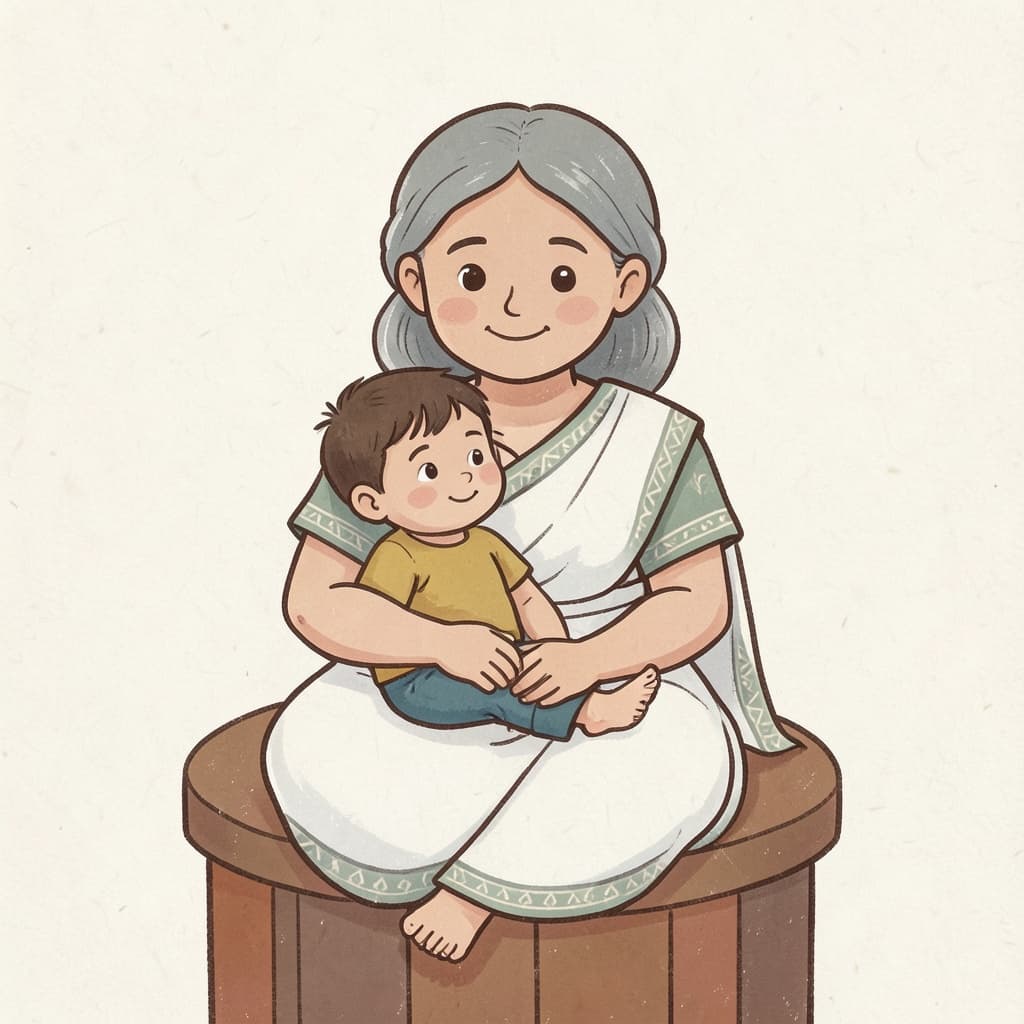
  • A kind grandmother with grey hair in a white sari holding her small grandson on her lap.
    pitāmahī

    grandmother (father’s mother)

    NounFeminine

    ।Grandmother reads the Rāmāyaṇa.

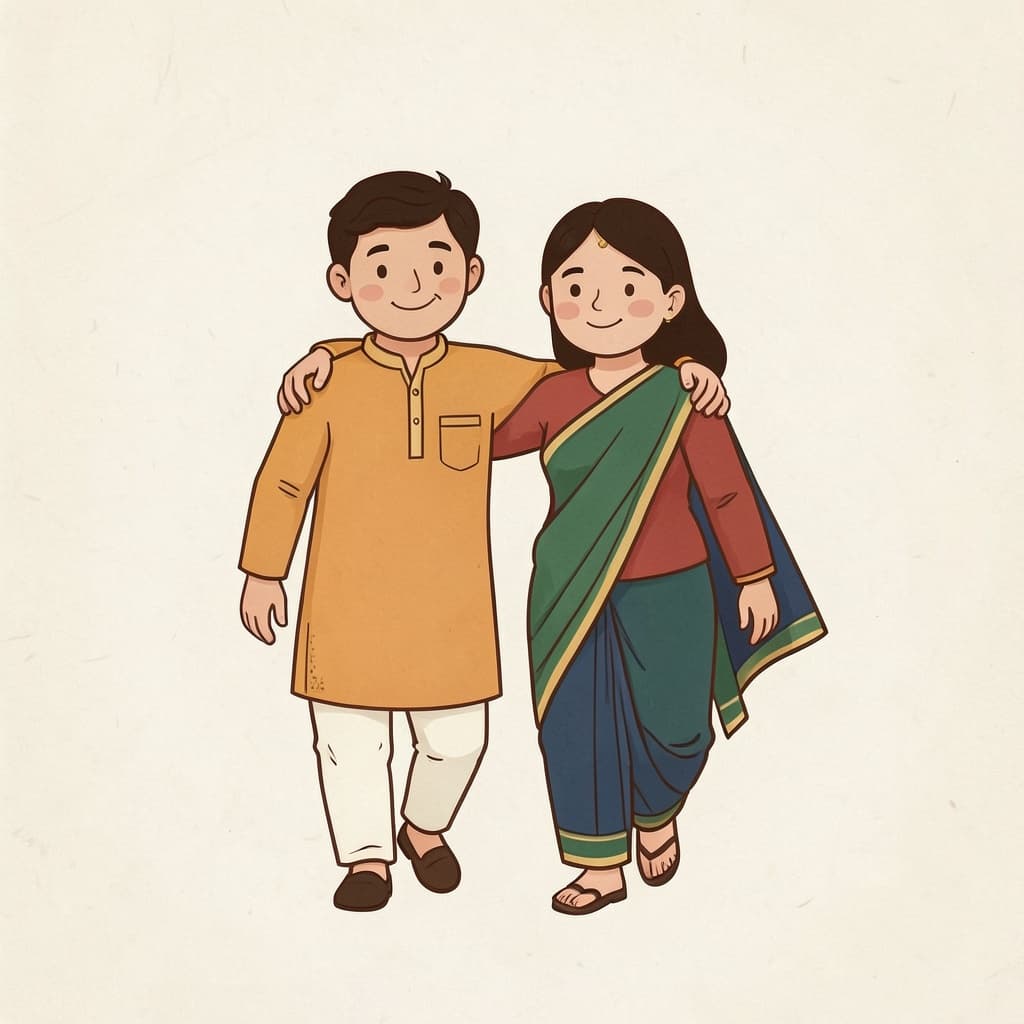
  • Two friends walking with their arms around each other's shoulders.
    mitram

    friend

    NounNeuter

    ।My friend comes home.

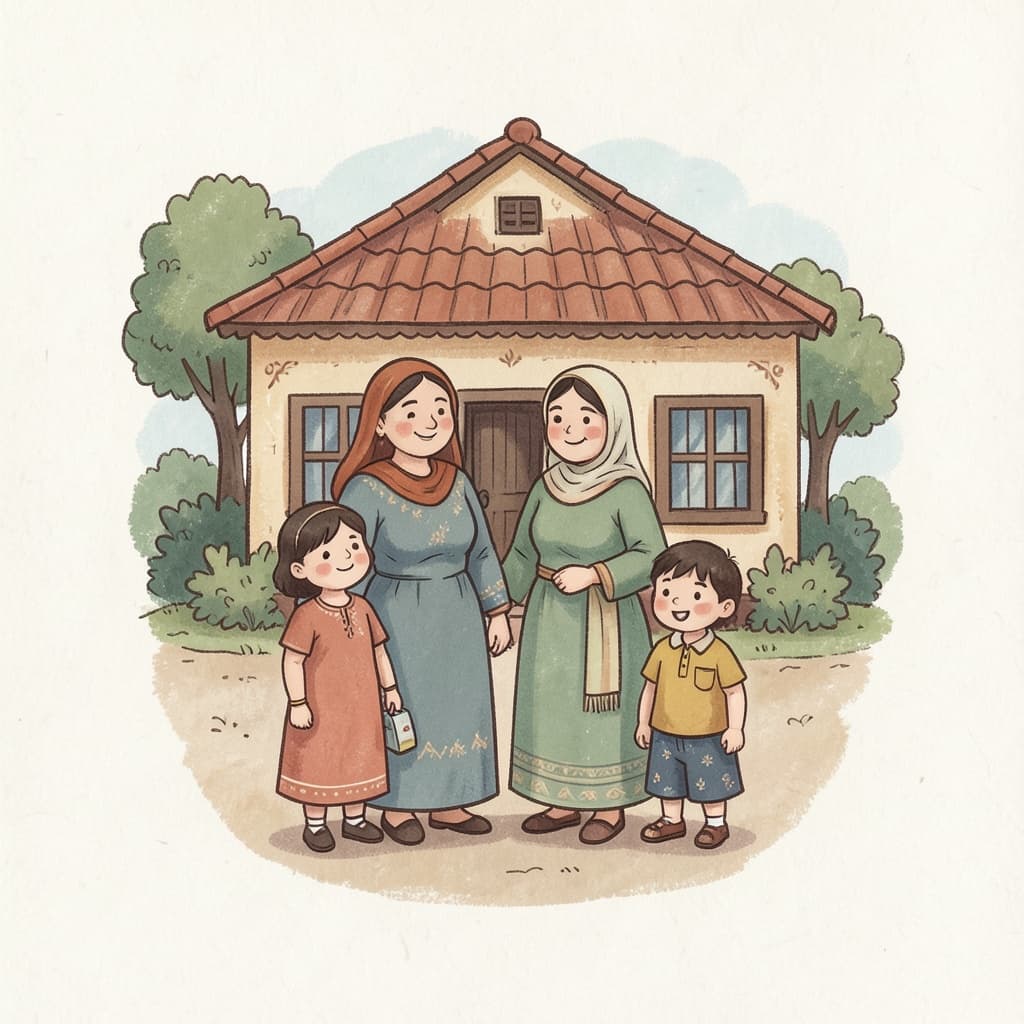
  • A family of mother, father, grandmother and two children standing together in front of their house.
    parivāraḥ

    family

    NounMasculine

    ।My family is small.

जनाः

People

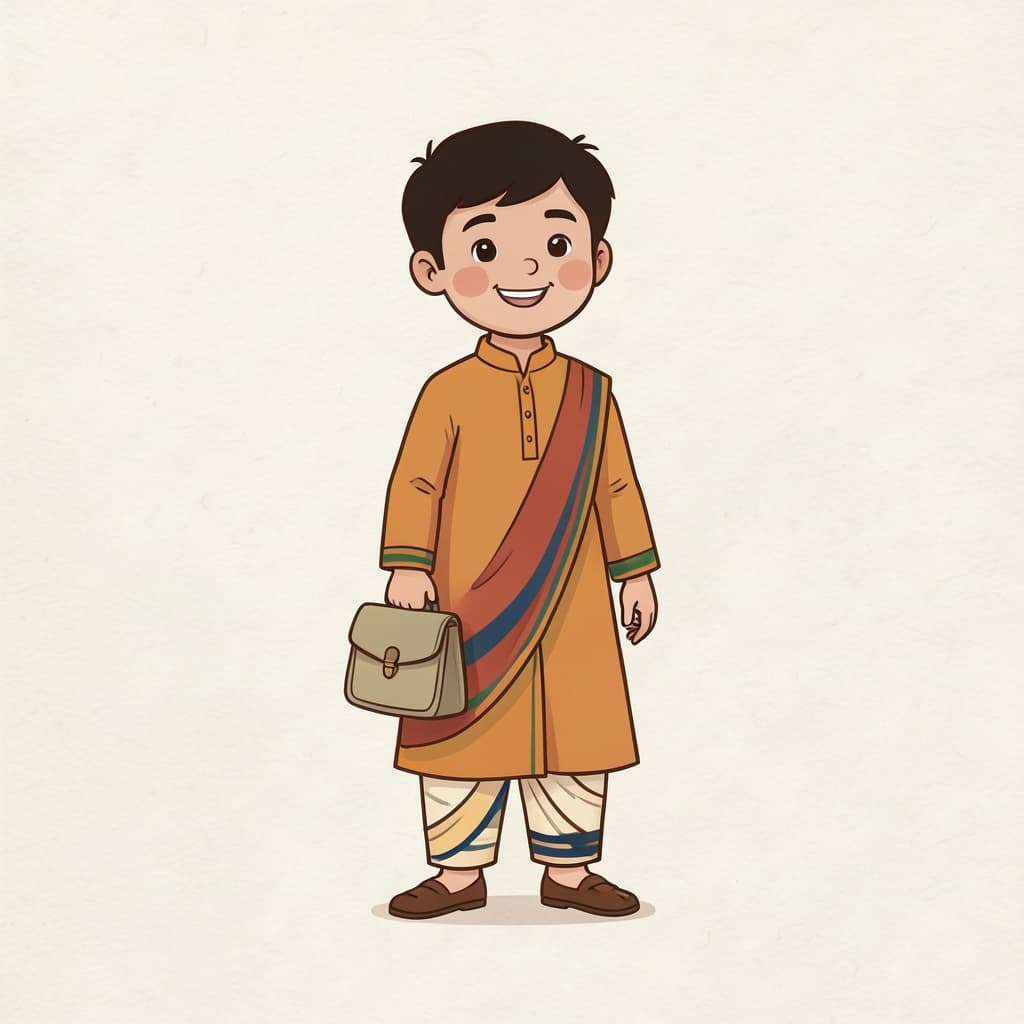
  • A cheerful boy in a kurta standing with a small cloth school bag.
    bālakaḥ

    boy

    NounMasculine

    ।The boy reads.

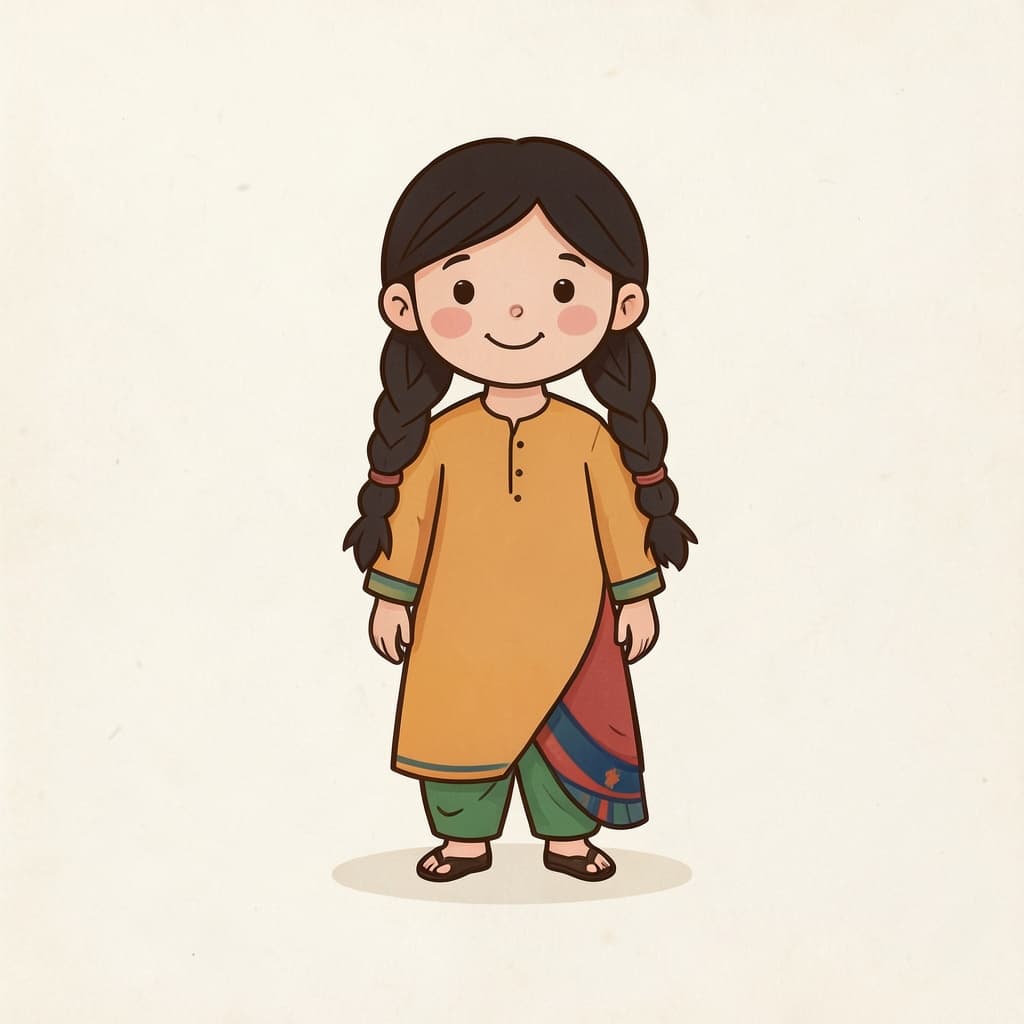
  • A smiling girl with two long plaits.
    bālikā

    girl

    NounFeminine

    ।The girl writes.

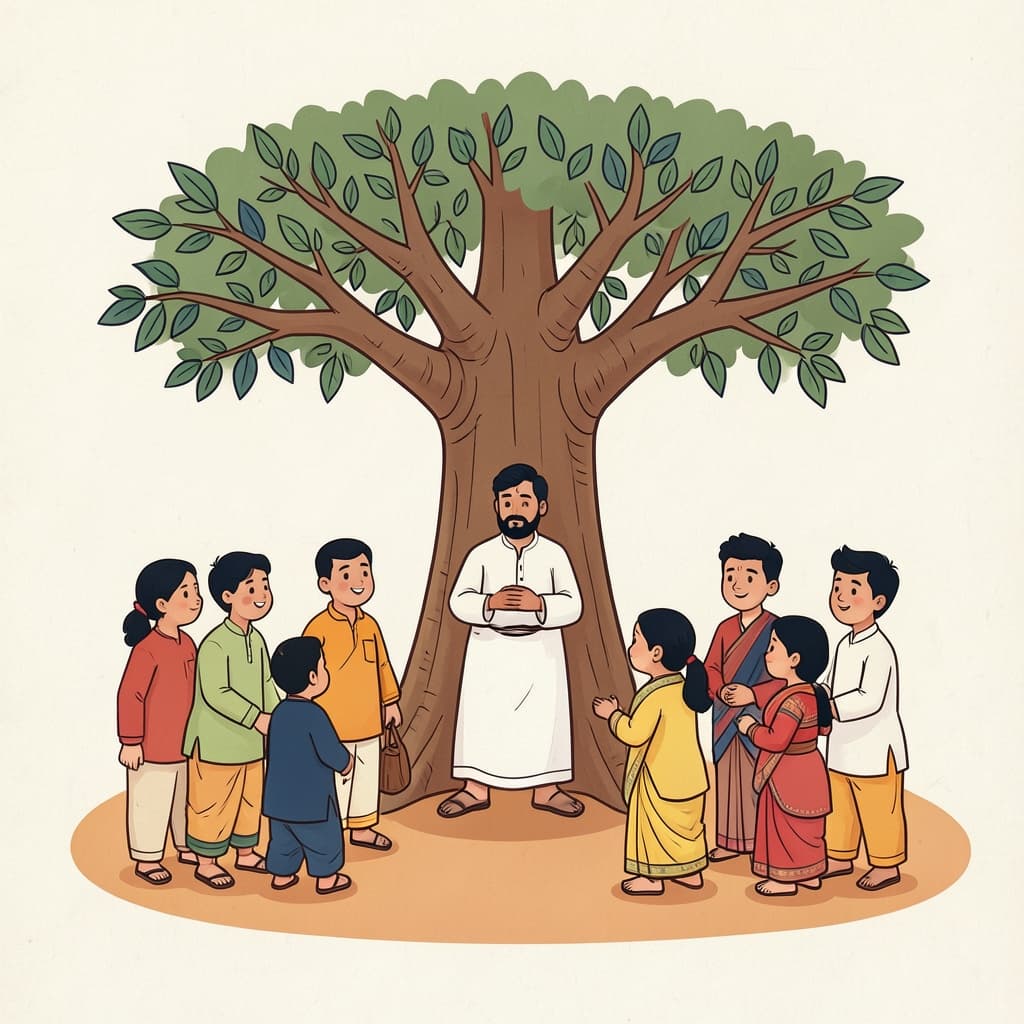
  • A revered teacher in white robes teaching a group of students under a banyan tree.
    guruḥ

    teacher, guru

    NounMasculine

    ।The teacher speaks the truth.

  • A student with a cloth satchel and a palm-leaf book walking to school along a path.
    chātraḥ

    student (male)

    NounMasculine

    ।The student reads the lesson.

  • A student with a cloth satchel and a palm-leaf book walking to school along a path.
    chātrā

    student (female)

    NounFeminine

    ।The student asks a question.

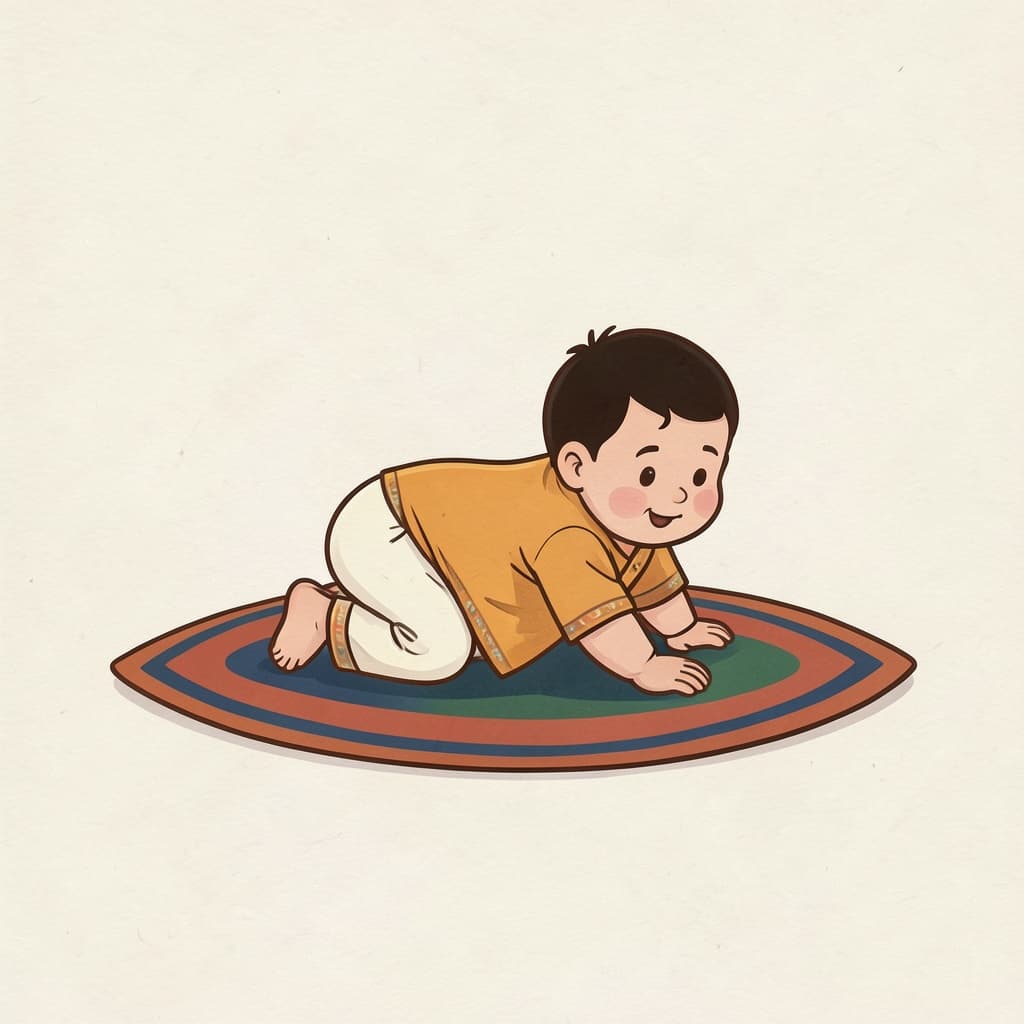
  • A baby crawling happily on a mat.
    śiśuḥ

    baby, infant

    NounMasculine

    ।The baby laughs.

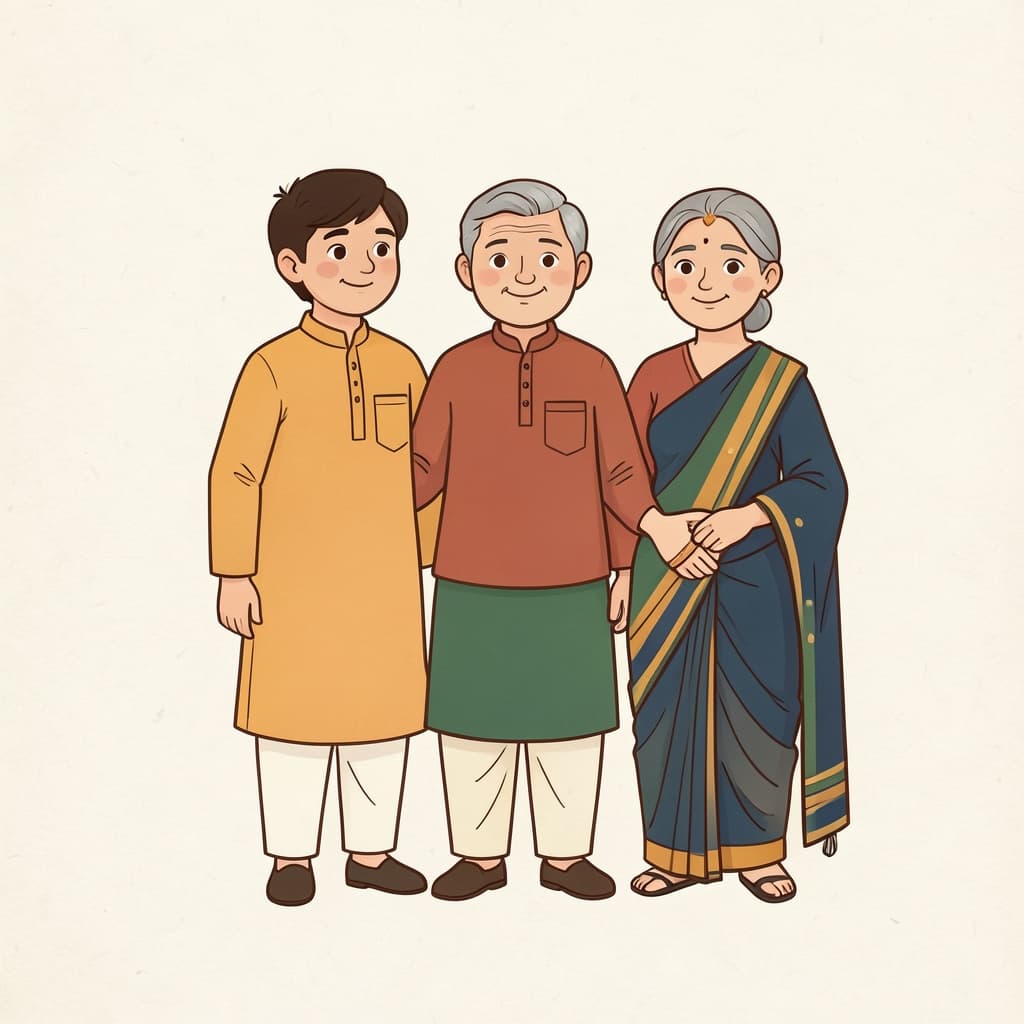
  • Three different people, young and old, standing together in a group.
    janaḥ

    person, people

    NounMasculine

    ।People walk on the road.

  • A revered teacher in white robes teaching a group of students under a banyan tree.
    śikṣakaḥ

    teacher

    NounMasculine

    ।The teacher enters the classroom.

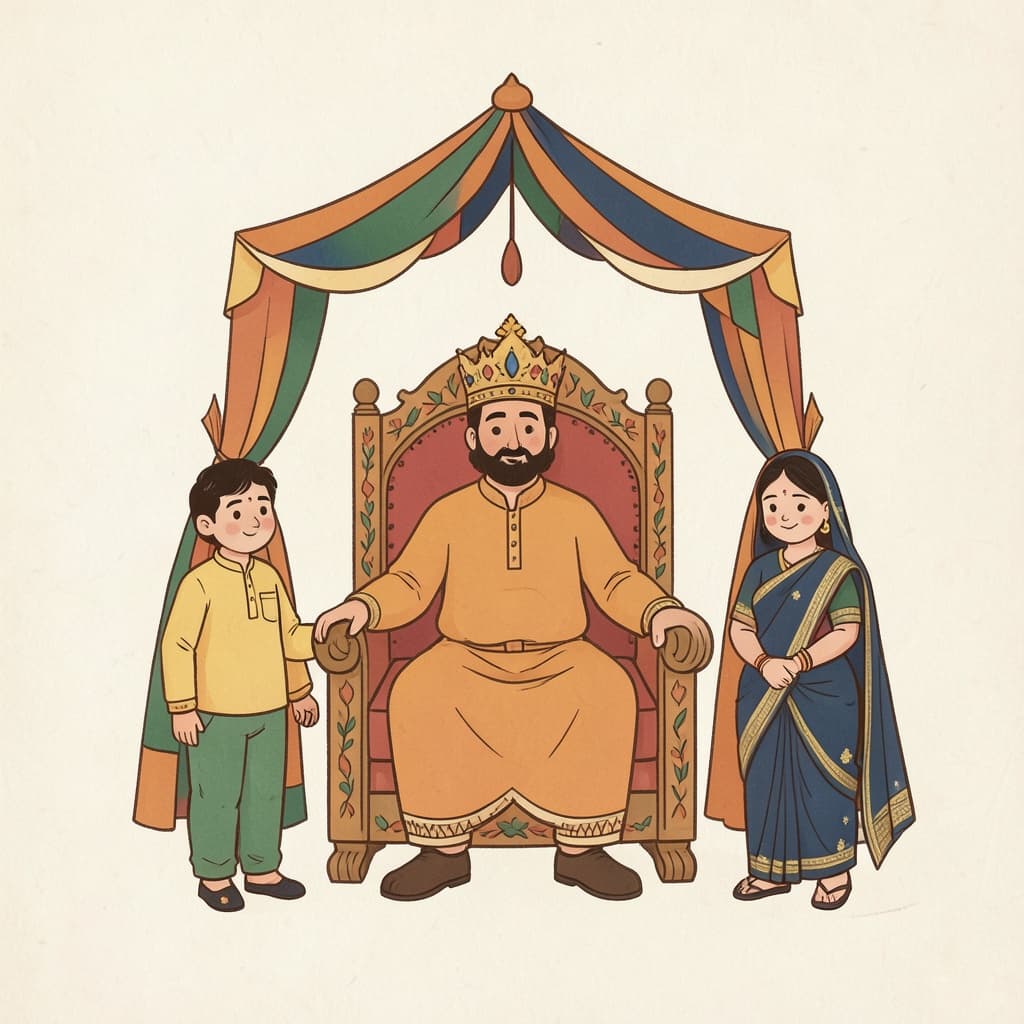
  • A king with a crown seated on a decorated throne under a canopy.
    rājā

    king

    NounMasculine

    ।The king commands the servant.

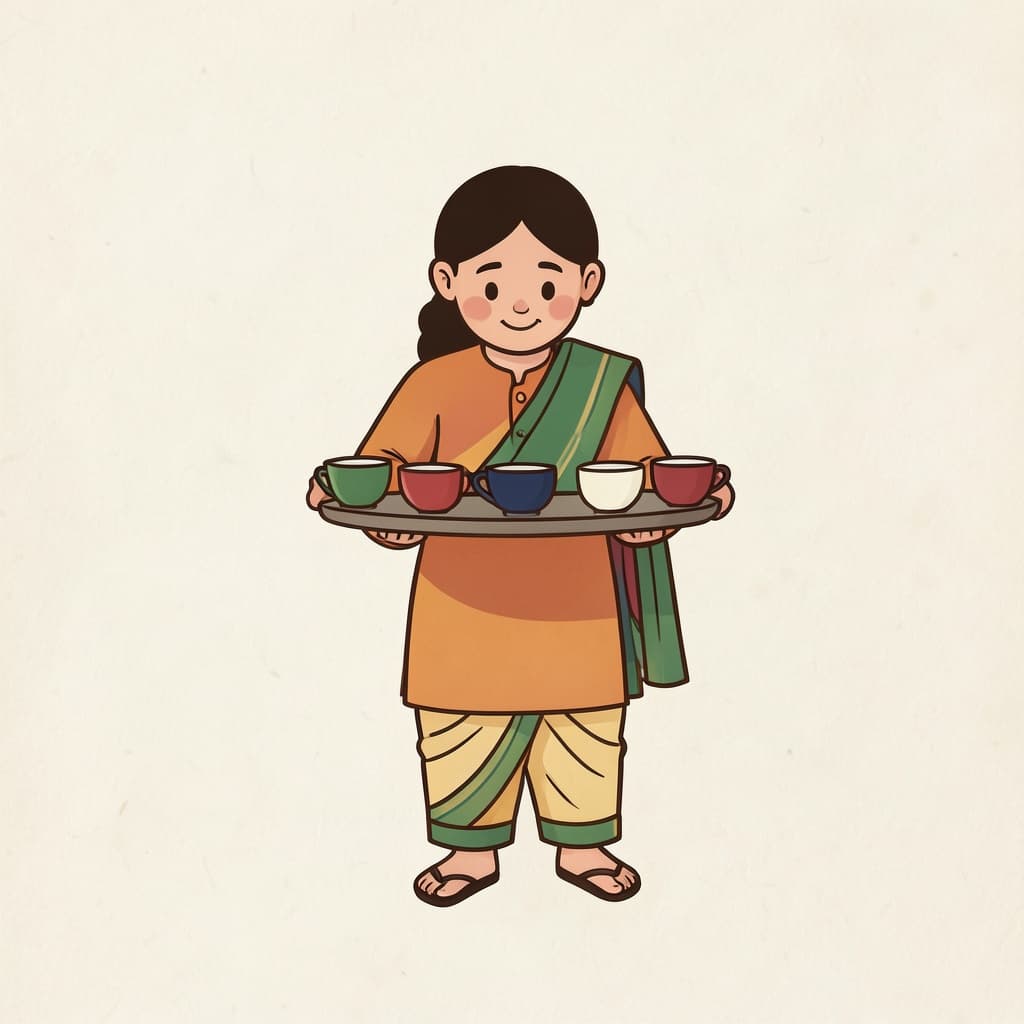
  • A servant carrying a tray with cups and bowing politely.
    sevakaḥ

    servant, helper

    NounMasculine

    ।The servant brings water.

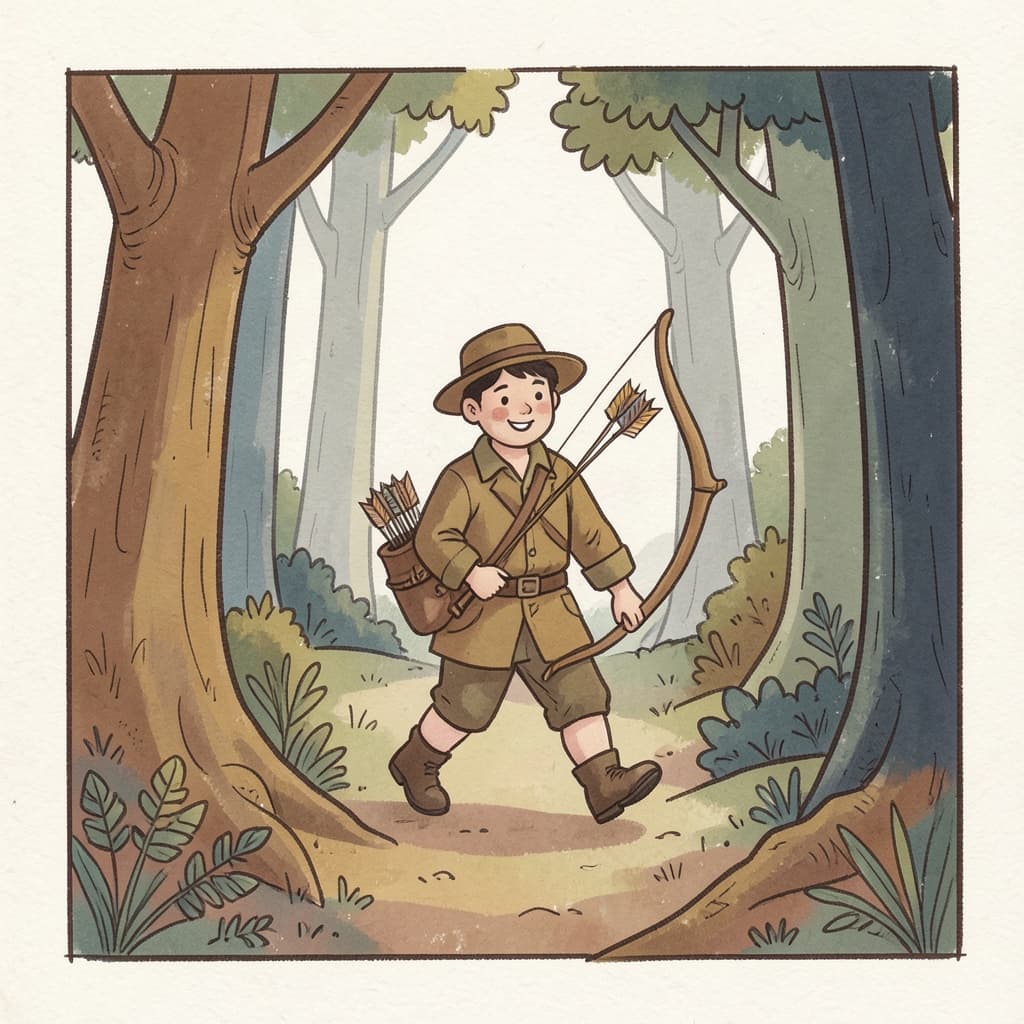
  • A hunter with a bow and a quiver of arrows walking through a forest.
    vyādhaḥ

    hunter

    NounMasculine

    ।The hunter wanders in the forest.

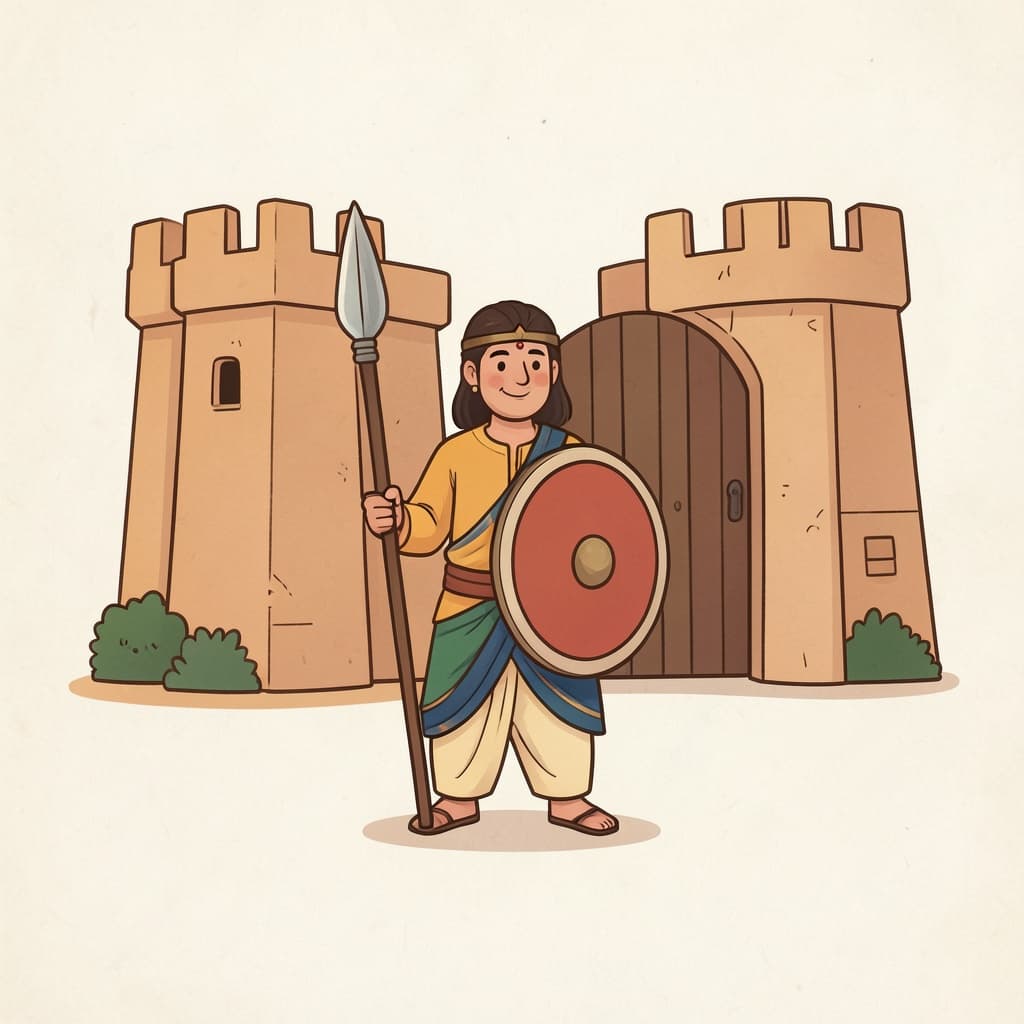
  • A brave warrior with a round shield and a spear standing guard at a fort gate.
    sainikaḥ

    soldier

    NounMasculine

    ।Soldiers protect the country.

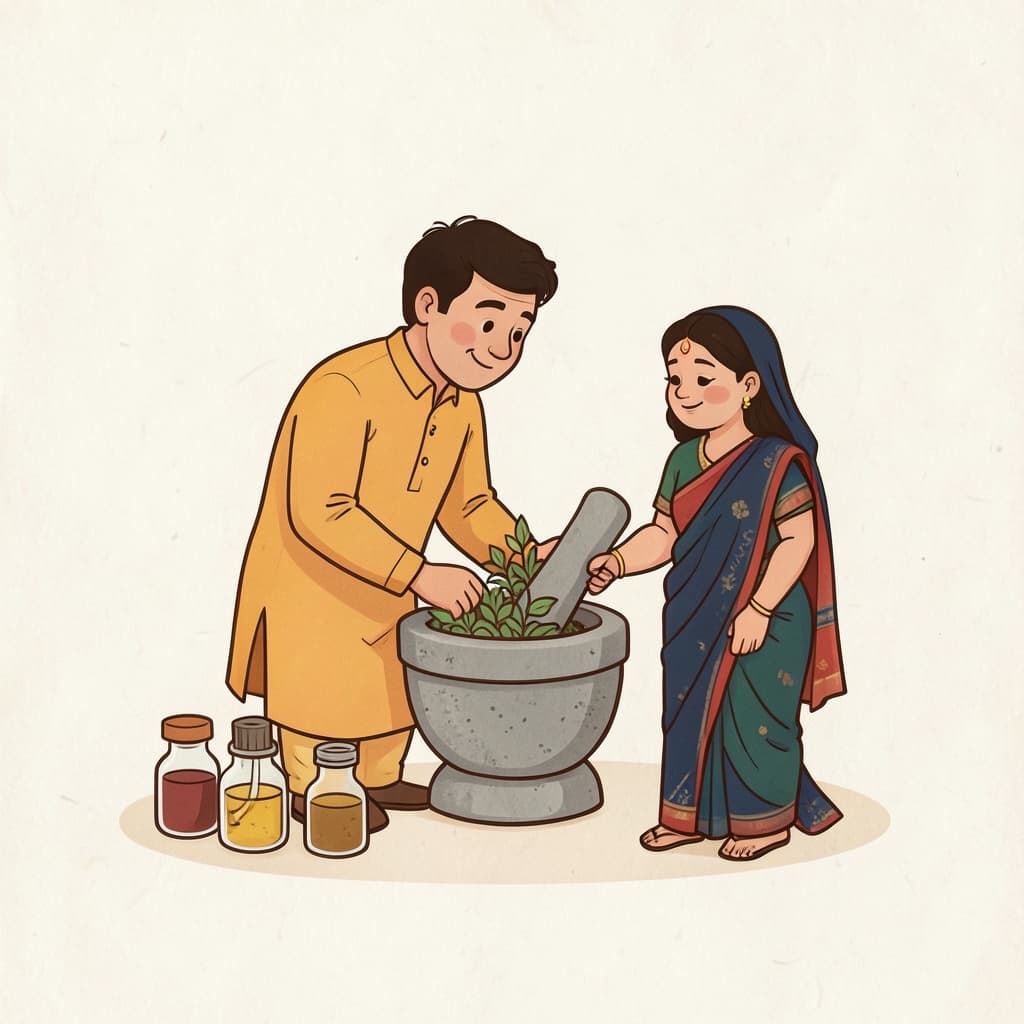
  • A village physician grinding herbs with a stone mortar and pestle, bottles of medicine beside him.
    cikitsakaḥ

    doctor

    NounMasculine

    ।The doctor works in the hospital.

  • A village physician grinding herbs with a stone mortar and pestle, bottles of medicine beside him.
    cikitsikā

    doctor (female)

    NounFeminine

    ।My mother is a doctor.

  • A brave warrior with a round shield and a spear standing guard at a fort gate.
    vīraḥ

    hero, brave one

    NounMasculine

    ।The hero wins the battle.

  • A sneaky thief in dark clothes tiptoeing at night with a sack on his back, comic and child friendly.
    cauraḥ

    thief

    NounMasculine

    ।The thief steals the money.

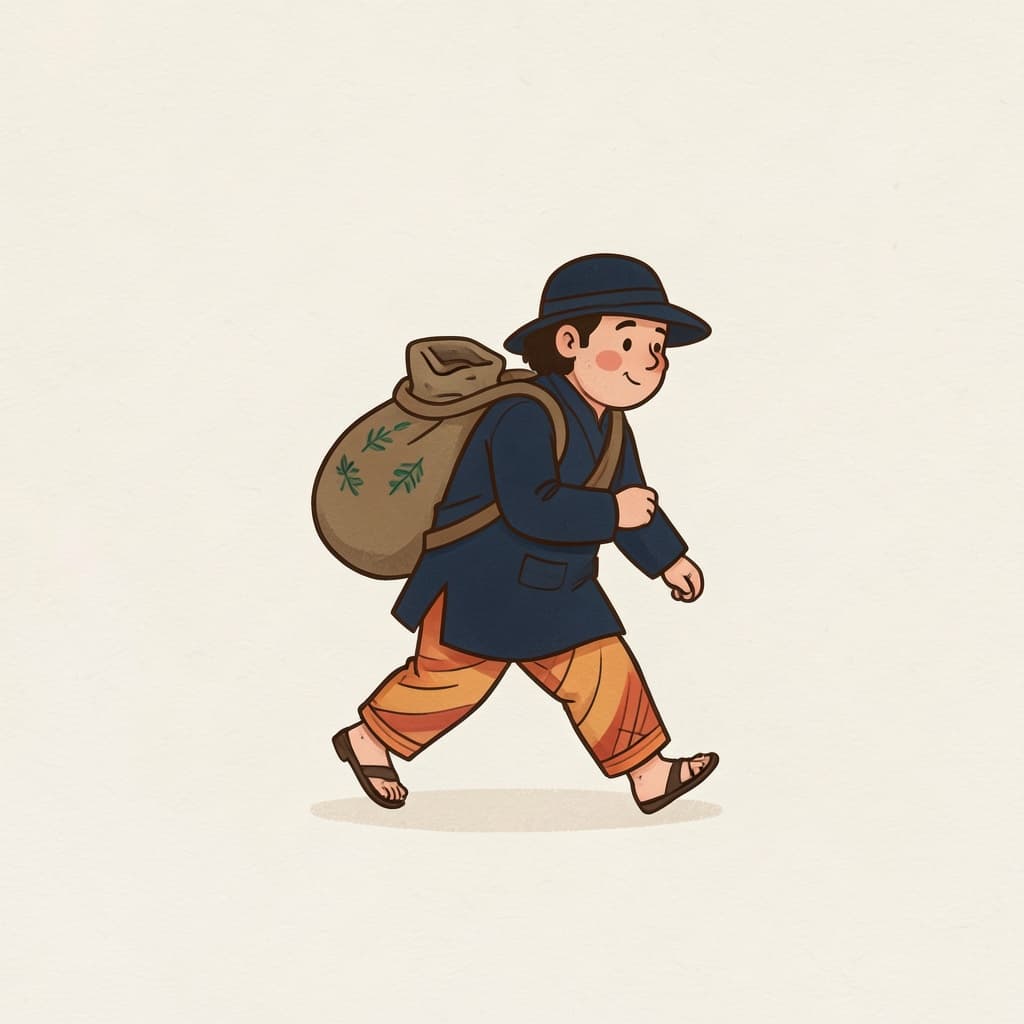
  • A traveller with a cloth bundle on a stick and a walking staff on a long dusty road.
    yātrikaḥ

    traveller

    NounMasculine

    ।The traveller sets out in the morning.
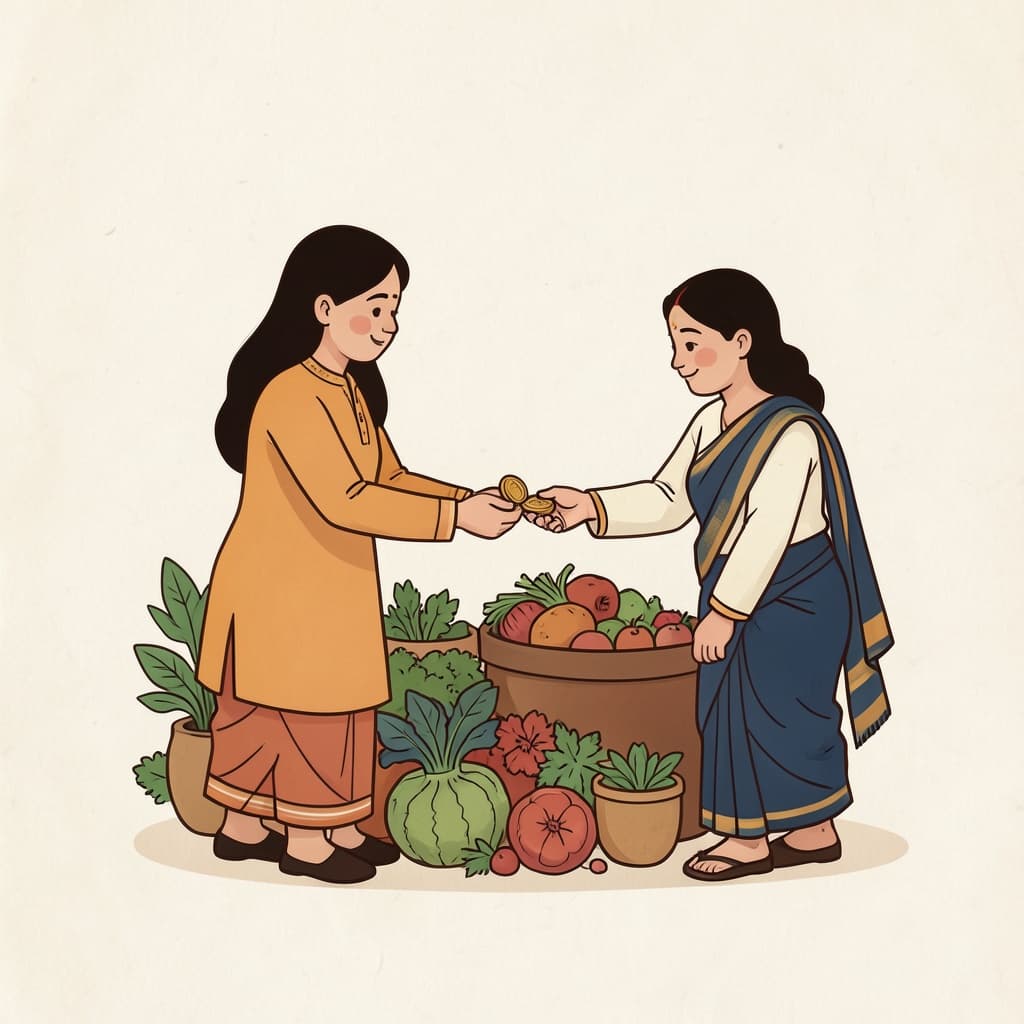
  • A woman buying vegetables, handing coins to a vendor.
    grāhakaḥ

    customer

    NounMasculine

    ।The customer goes to the shop.

  • A merchant weighing grain on a balance scale at his shop counter.
    āpaṇikaḥ

    shopkeeper

    NounMasculine

    ।The shopkeeper tells the price.

पशवः

Animals
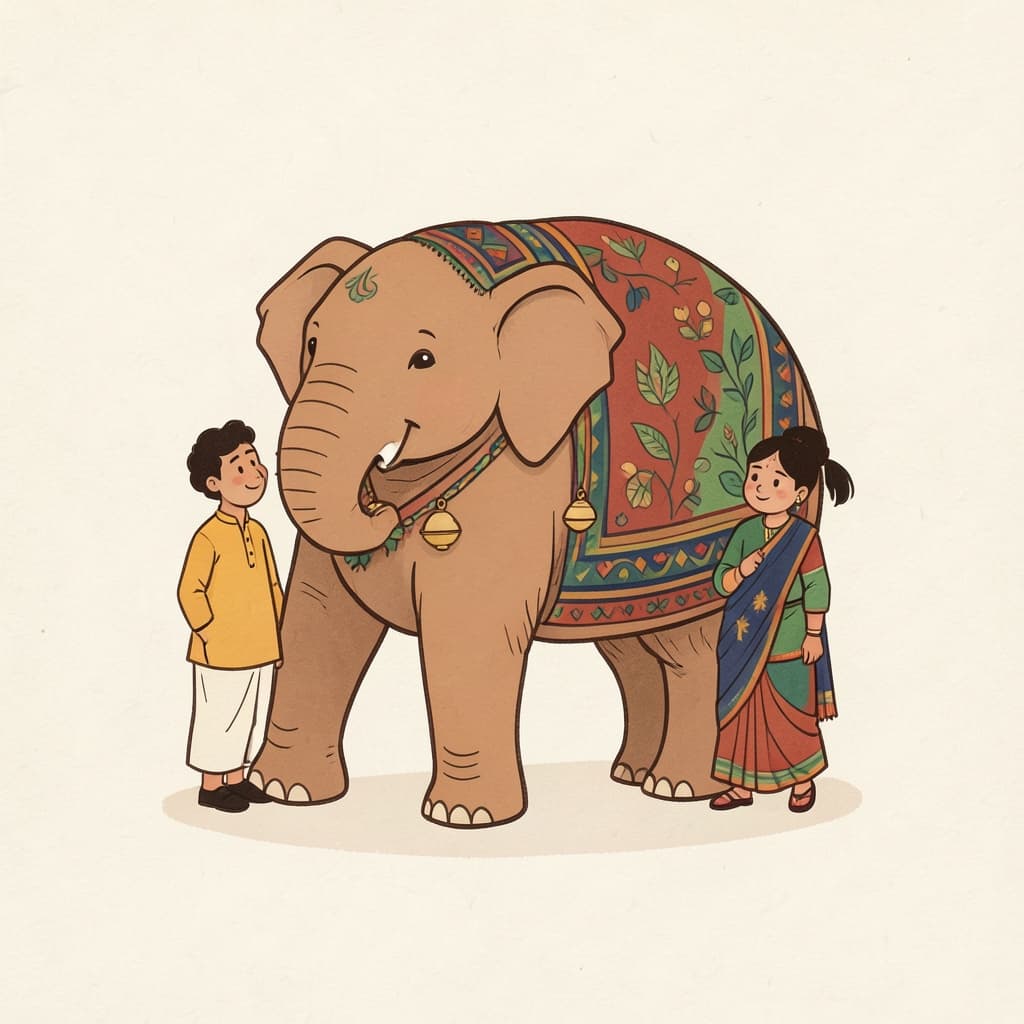
  • A large elephant decorated with a colourful cloth and bells.
    gajaḥ

    elephant

    NounMasculine

    ।The elephant walks in the forest.

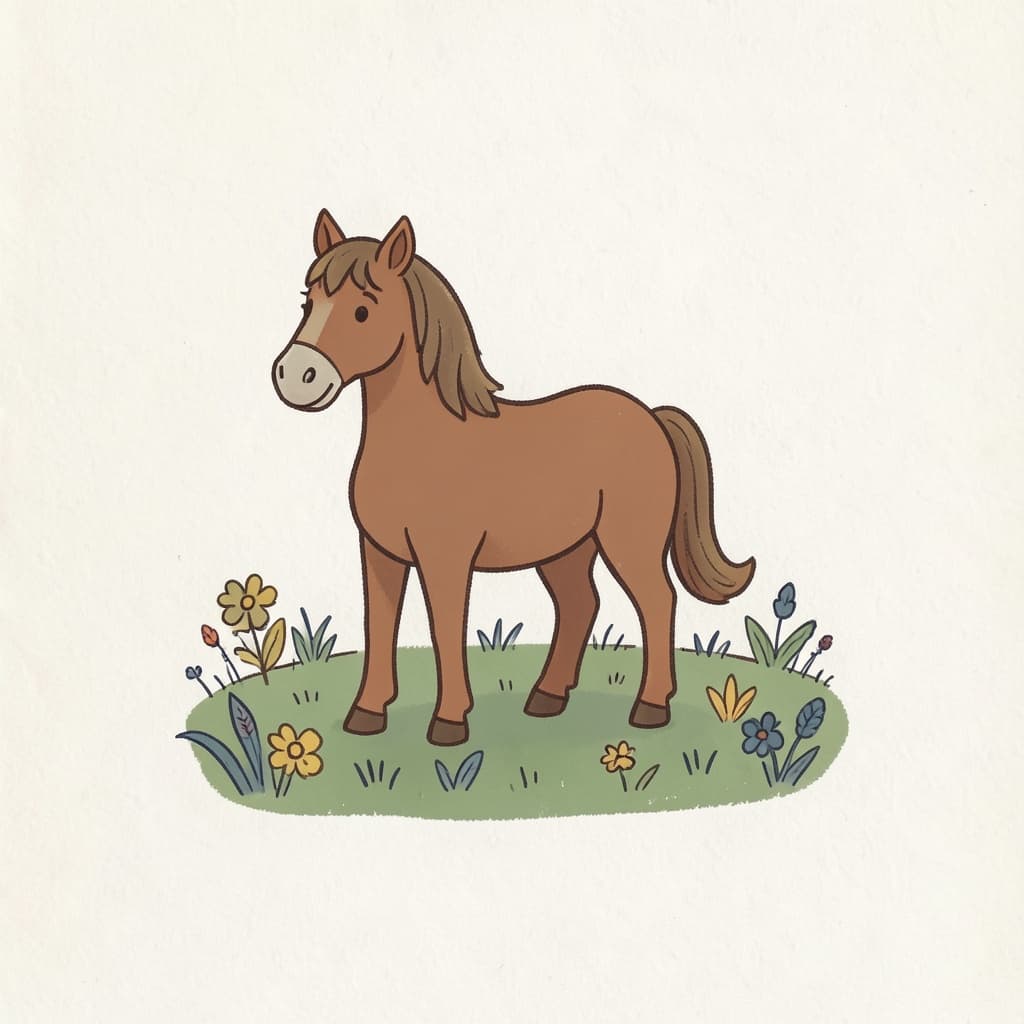
  • A brown horse standing in a green meadow.
    aśvaḥ

    horse

    NounMasculine

    ।The horse runs.

  • A majestic lion with a large mane sitting on a rock.
    siṃhaḥ

    lion

    NounMasculine

    ।The lion lives in a cave.

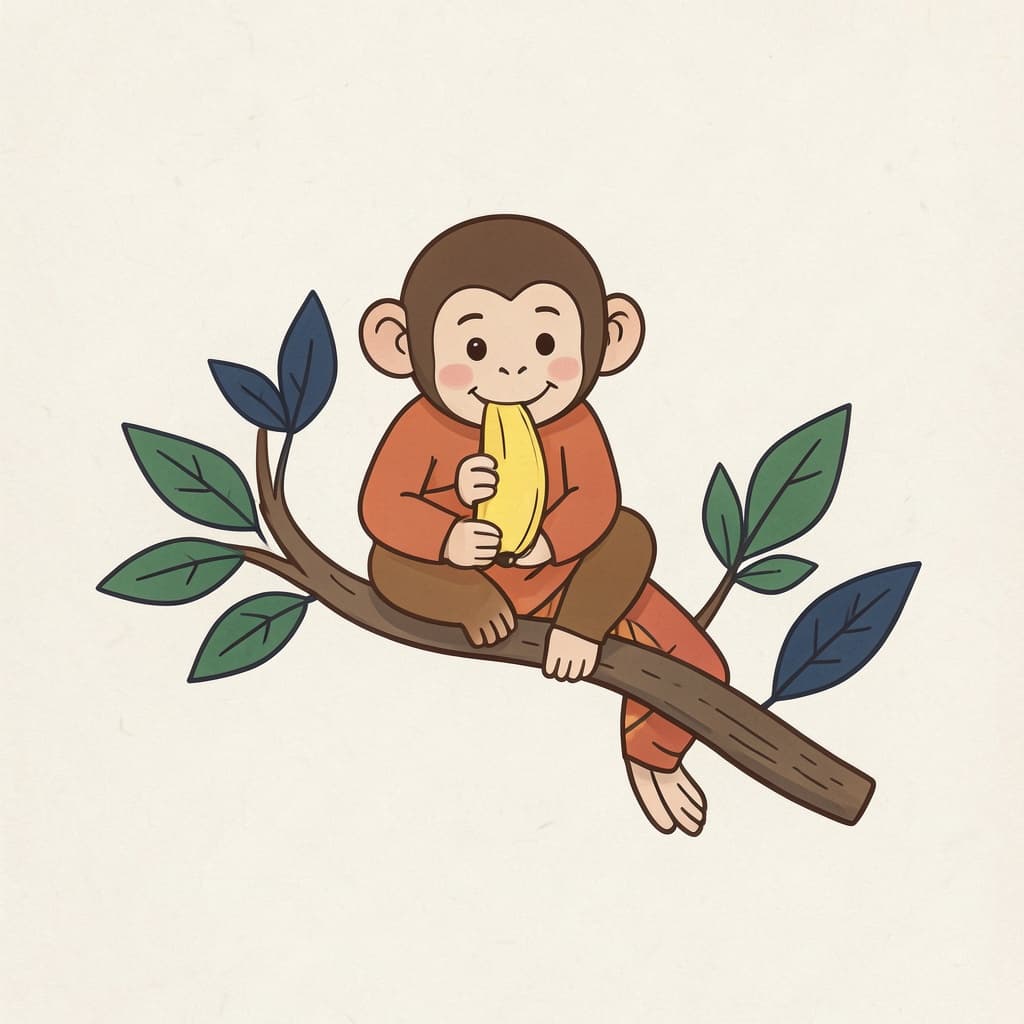
  • A playful monkey sitting on a branch eating a banana.
    vānaraḥ

    monkey

    NounMasculine

    ।The monkey eats a fruit.

  • A grey cat sitting with its tail curled around its paws.
    mārjāraḥ

    cat

    NounMasculine

    ।The cat drinks milk.

  • A friendly brown village dog sitting and wagging its tail.
    kukkuraḥ

    dog

    NounMasculine

    ।The dog guards the house.

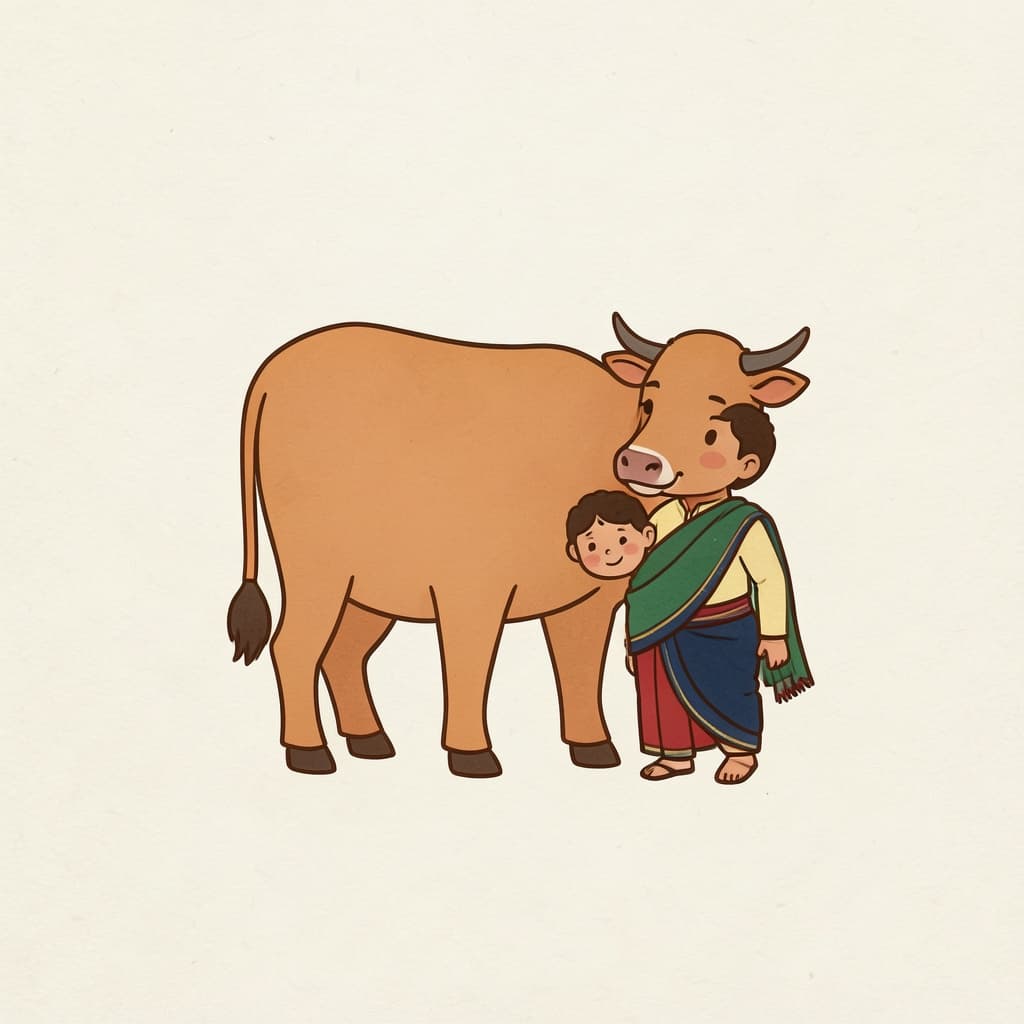
  • A cow standing with her calf.
    dhenuḥ

    cow

    NounFeminine

    ।The cow eats grass.

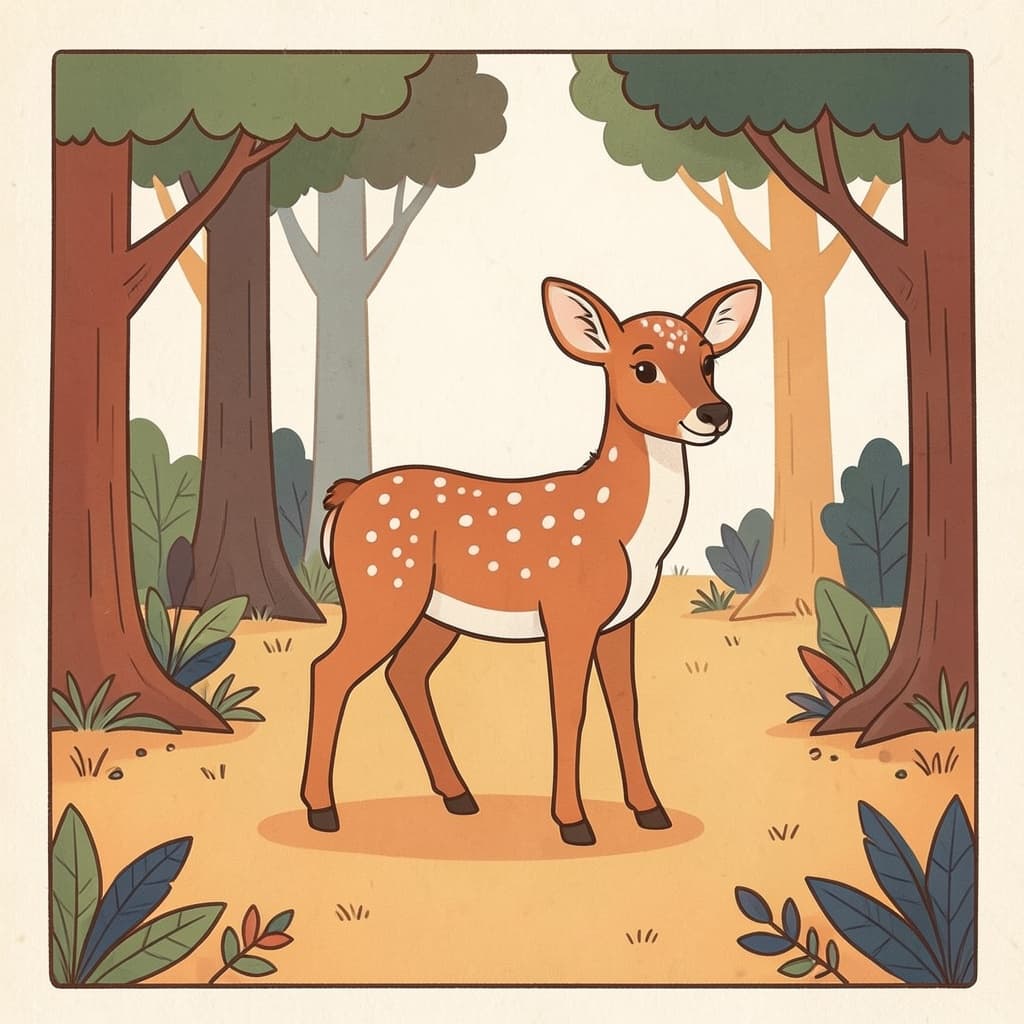
  • A spotted deer standing alert in a forest clearing.
    mṛgaḥ

    deer

    NounMasculine

    ।The deer runs in the forest.

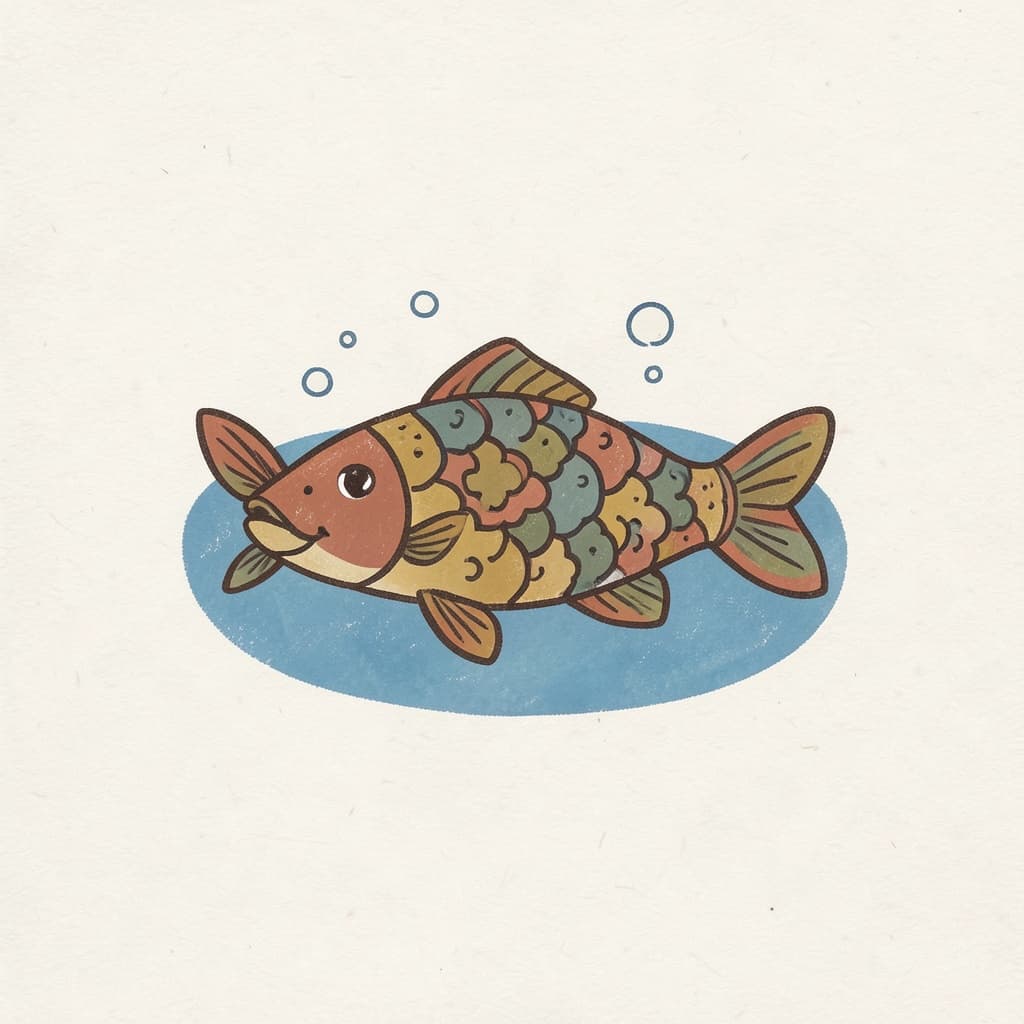
  • A colourful fish swimming in blue water with small bubbles.
    matsyaḥ

    fish

    NounMasculine

    ।The fish lives in water.

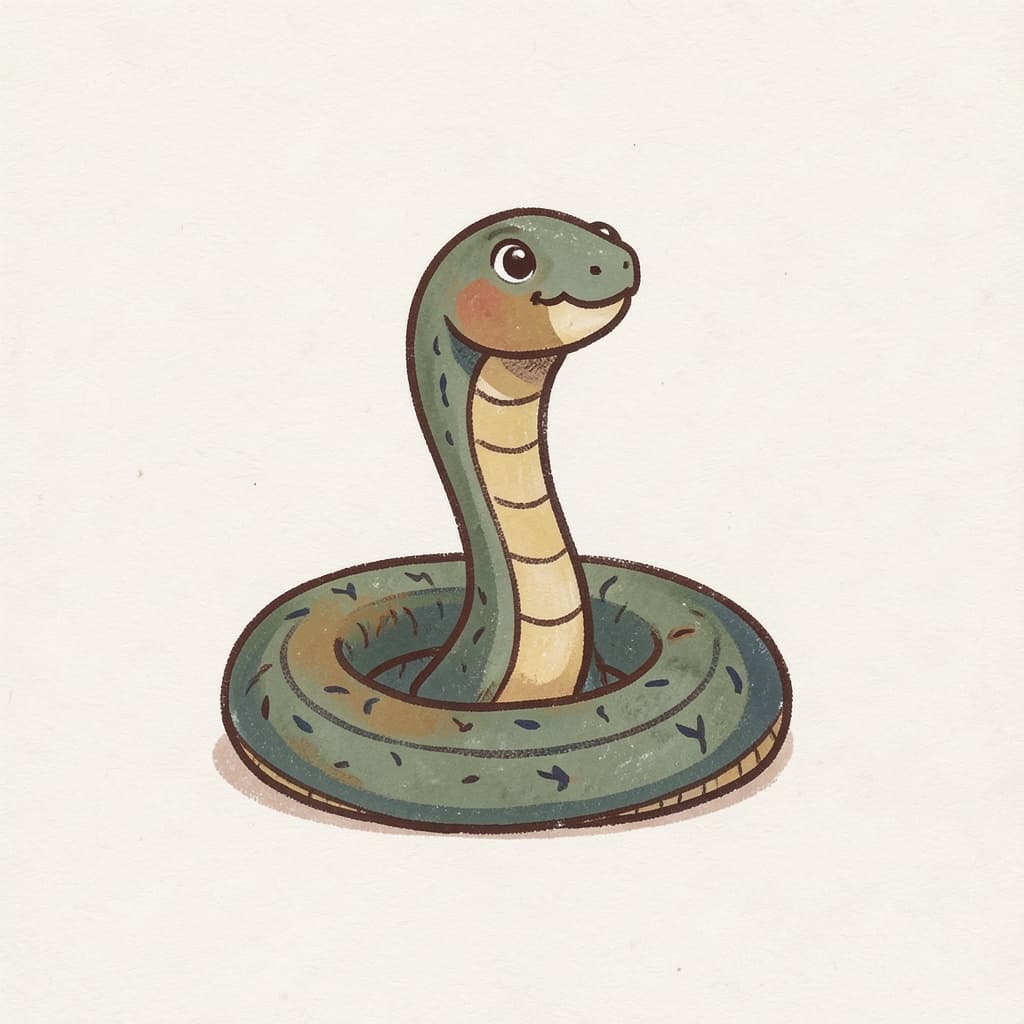
  • A green snake coiled on the ground with its head raised.
    sarpaḥ

    snake

    NounMasculine

    ।The snake moves on the ground.

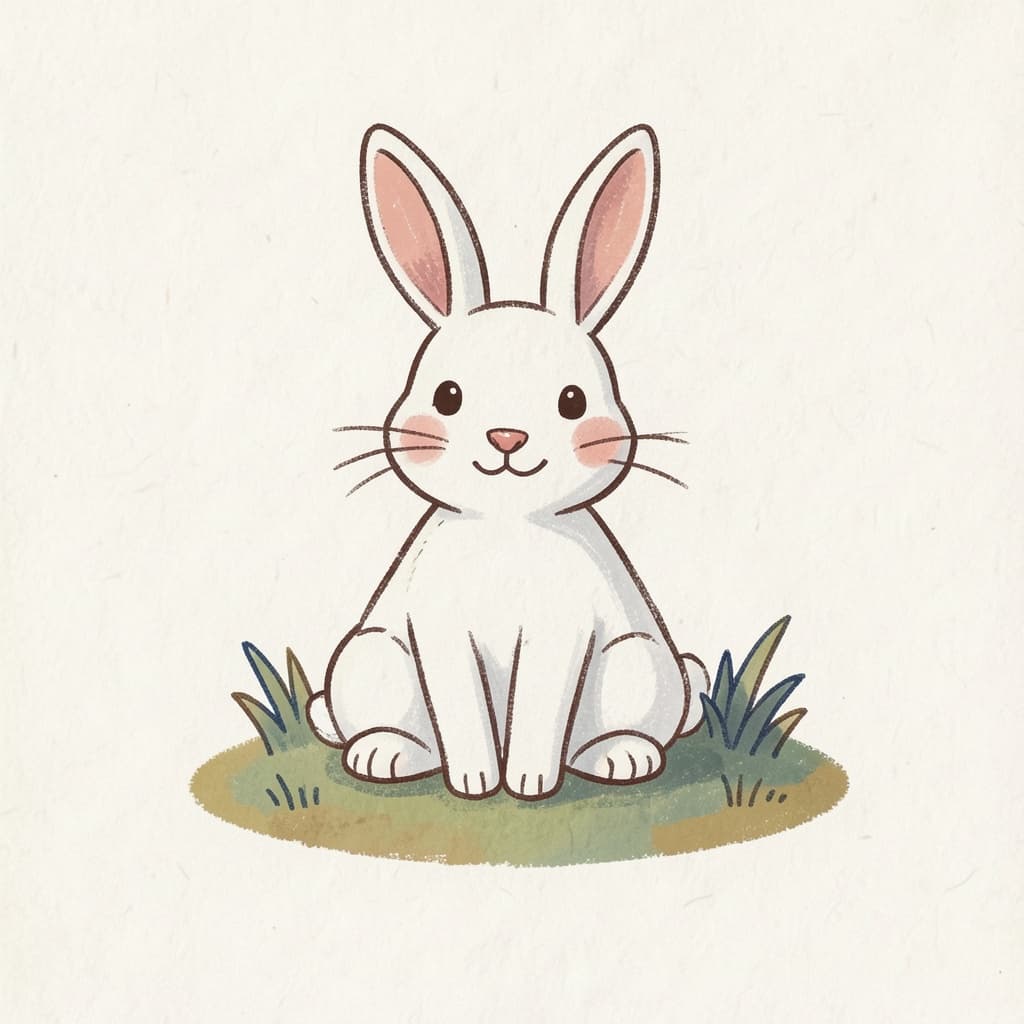
  • A white rabbit with long ears sitting on grass.
    śaśakaḥ

    rabbit, hare

    NounMasculine

    ।The rabbit runs quickly.

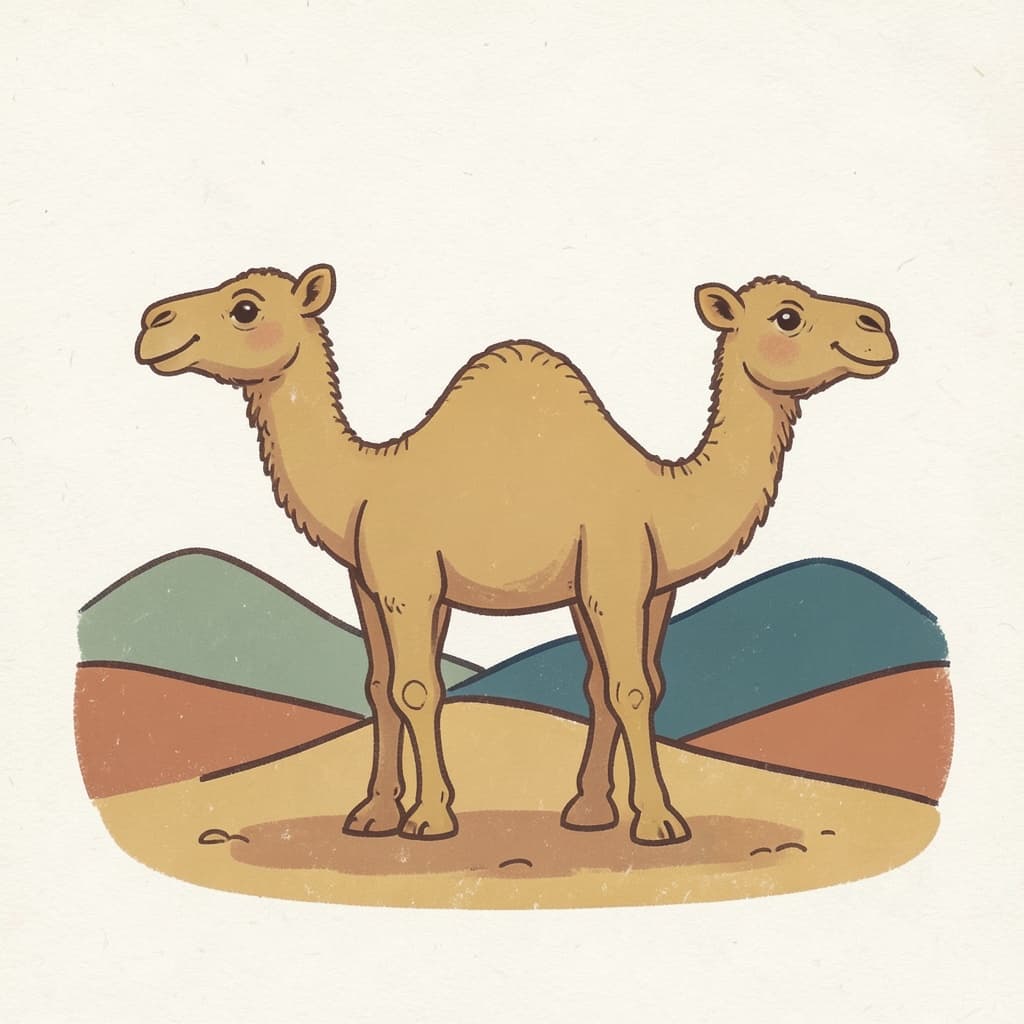
  • A camel with one hump standing in a desert with sand dunes.
    uṣṭraḥ

    camel

    NounMasculine

    ।The camel drinks water.

  • A small grey mouse holding a grain of wheat.
    mūṣakaḥ

    mouse

    NounMasculine

    ।The mouse runs.

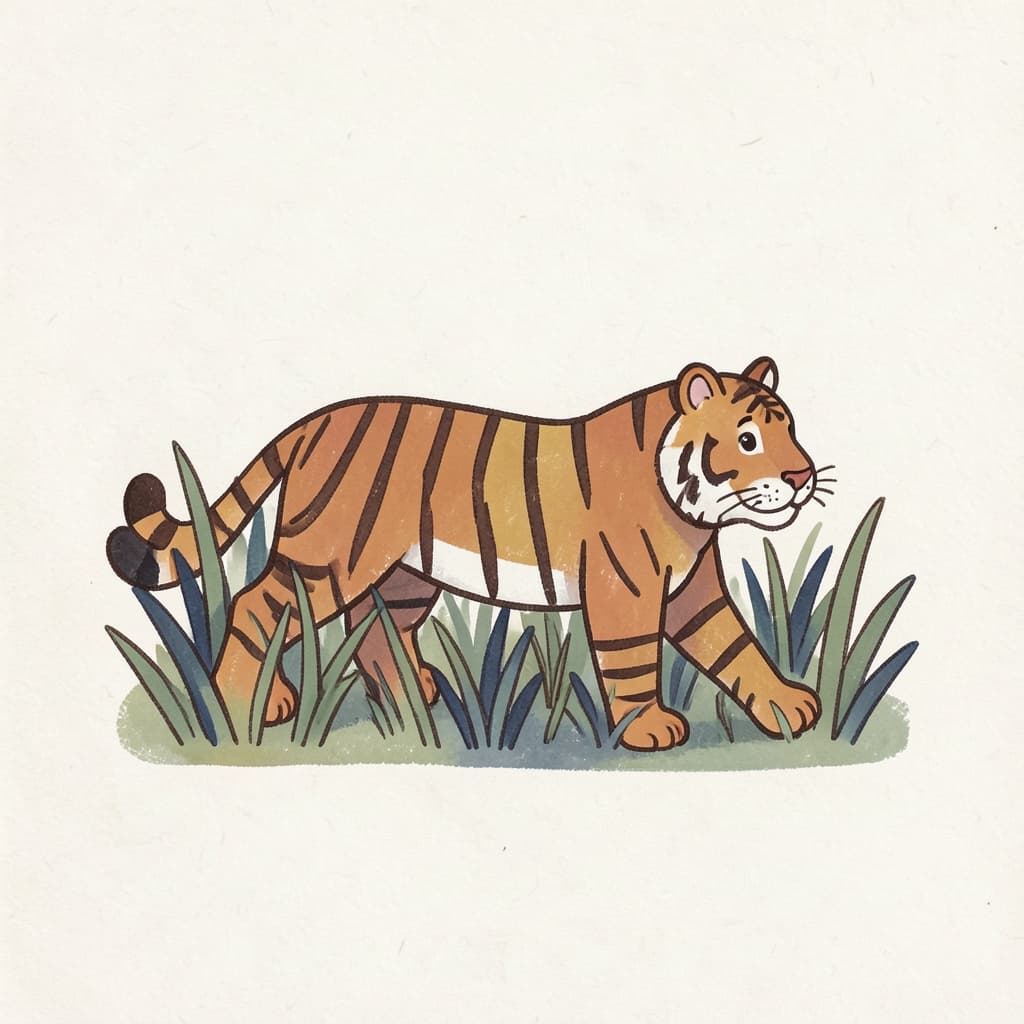
  • A striped orange tiger walking in tall grass.
    vyāghraḥ

    tiger

    NounMasculine

    ।The tiger lives in the forest.

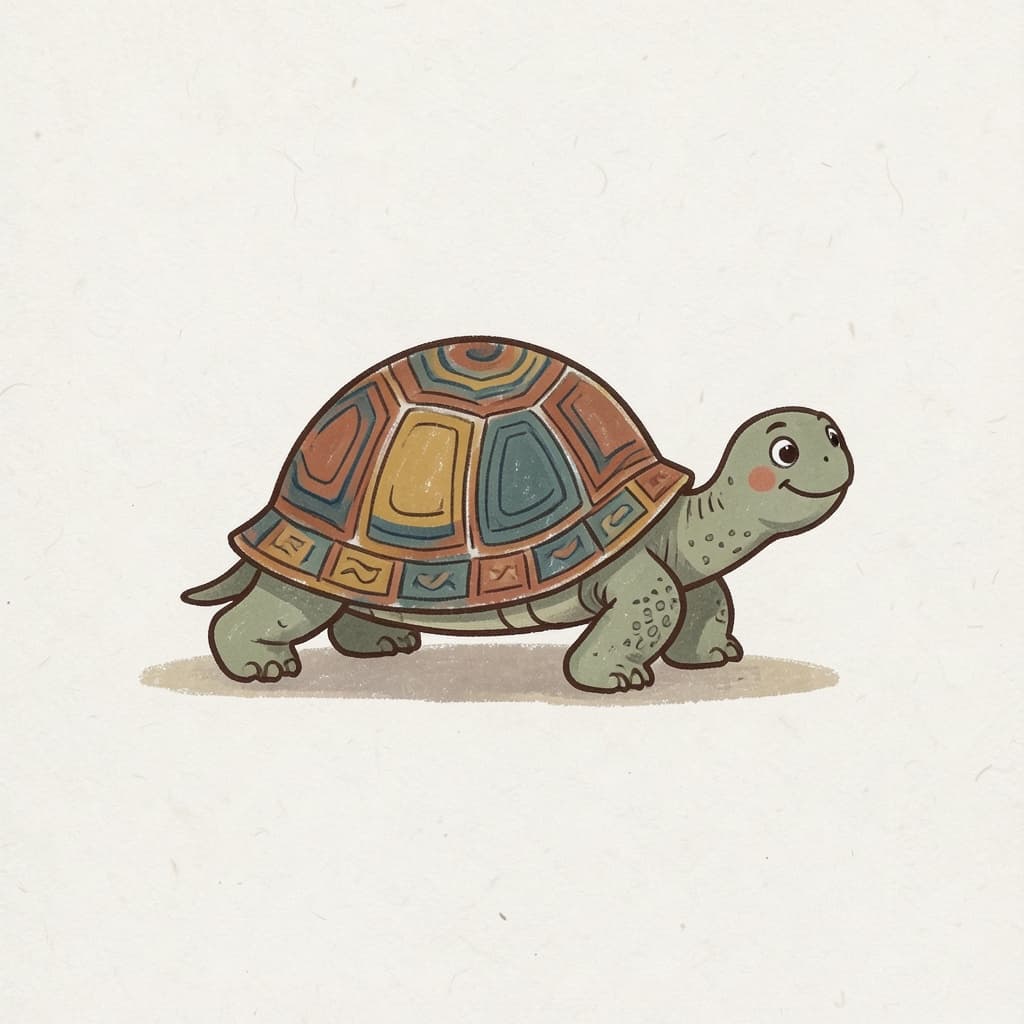
  • A tortoise with a patterned shell walking slowly on the ground.
    kūrmaḥ

    tortoise

    NounMasculine

    ।The tortoise walks slowly.

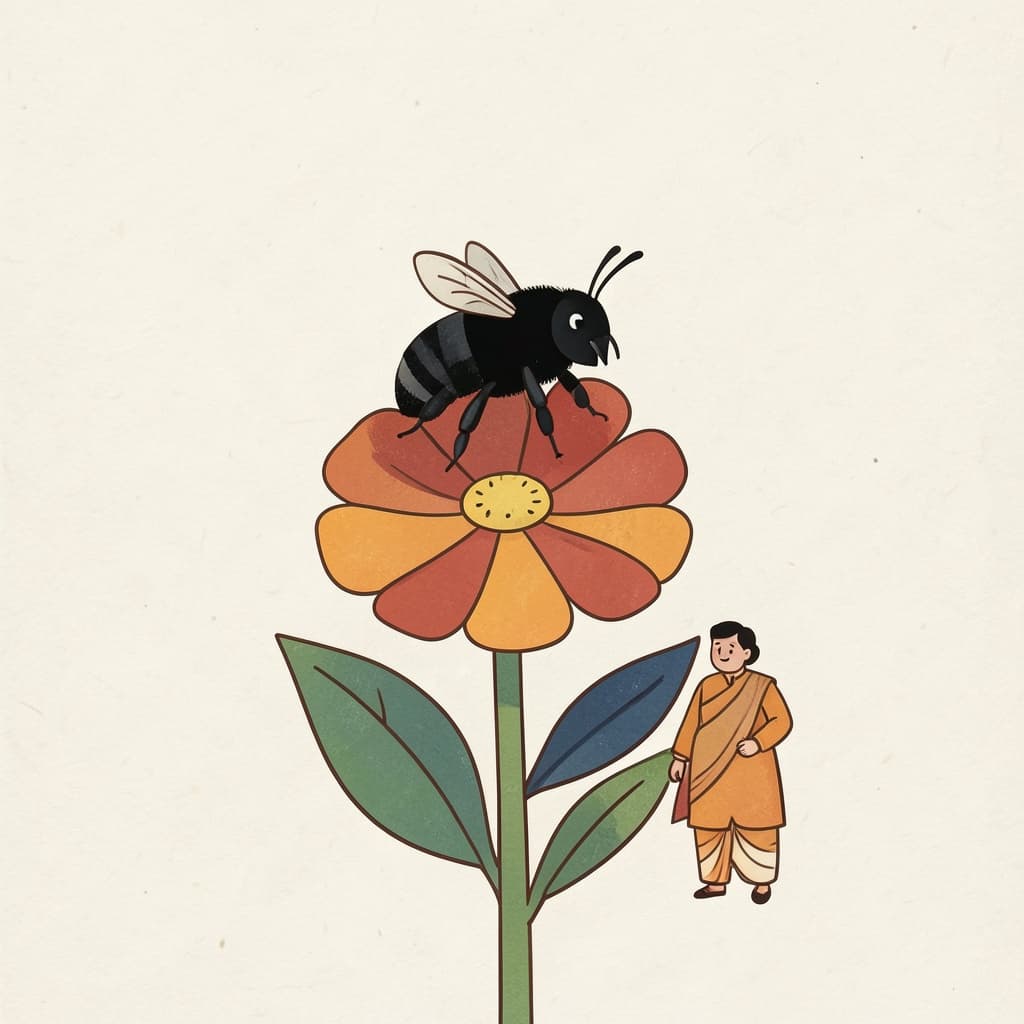
  • A black bumblebee hovering over a bright flower.
    bhramaraḥ

    bee

    NounMasculine

    ।The bee wanders in the garden.

  • A majestic lion with a large mane sitting on a rock.
    vanarājaḥ

    king of the forest (the lion)

    NounMasculine

    ! ।O king of the forest! Let me go.

खगाः

Birds
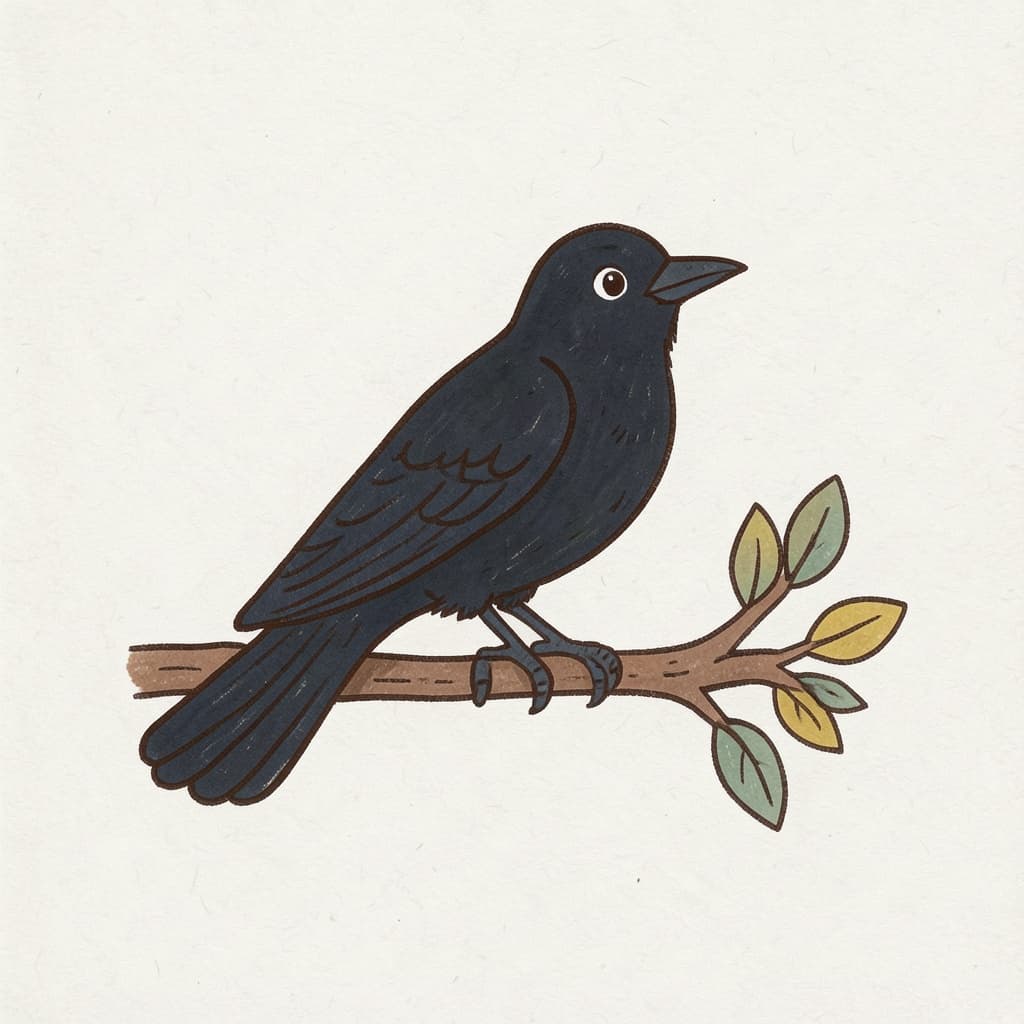
  • A black crow perched on a branch.
    kākaḥ

    crow

    NounMasculine

    ।The crow sits in the tree.

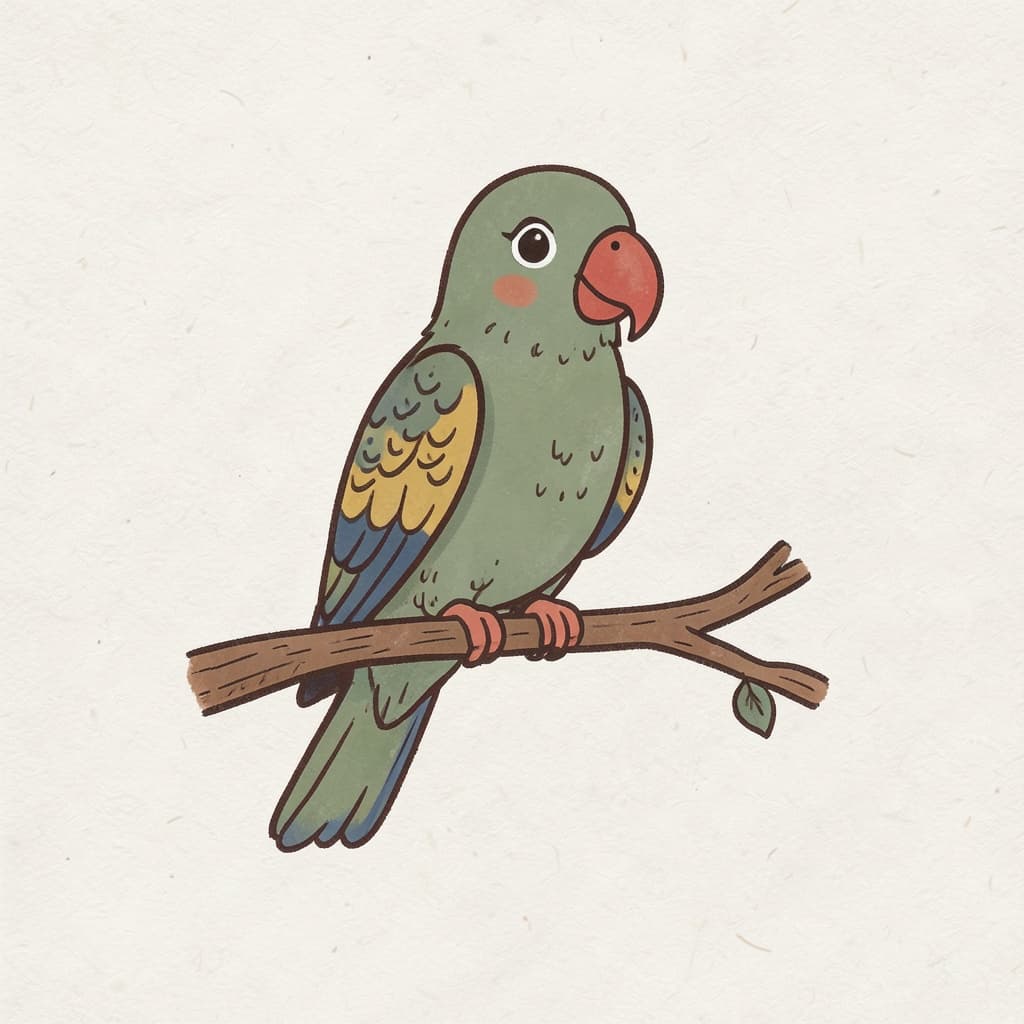
  • A green parrot with a red beak perched on a branch.
    śukaḥ

    parrot

    NounMasculine

    ।The parrot eats a fruit.

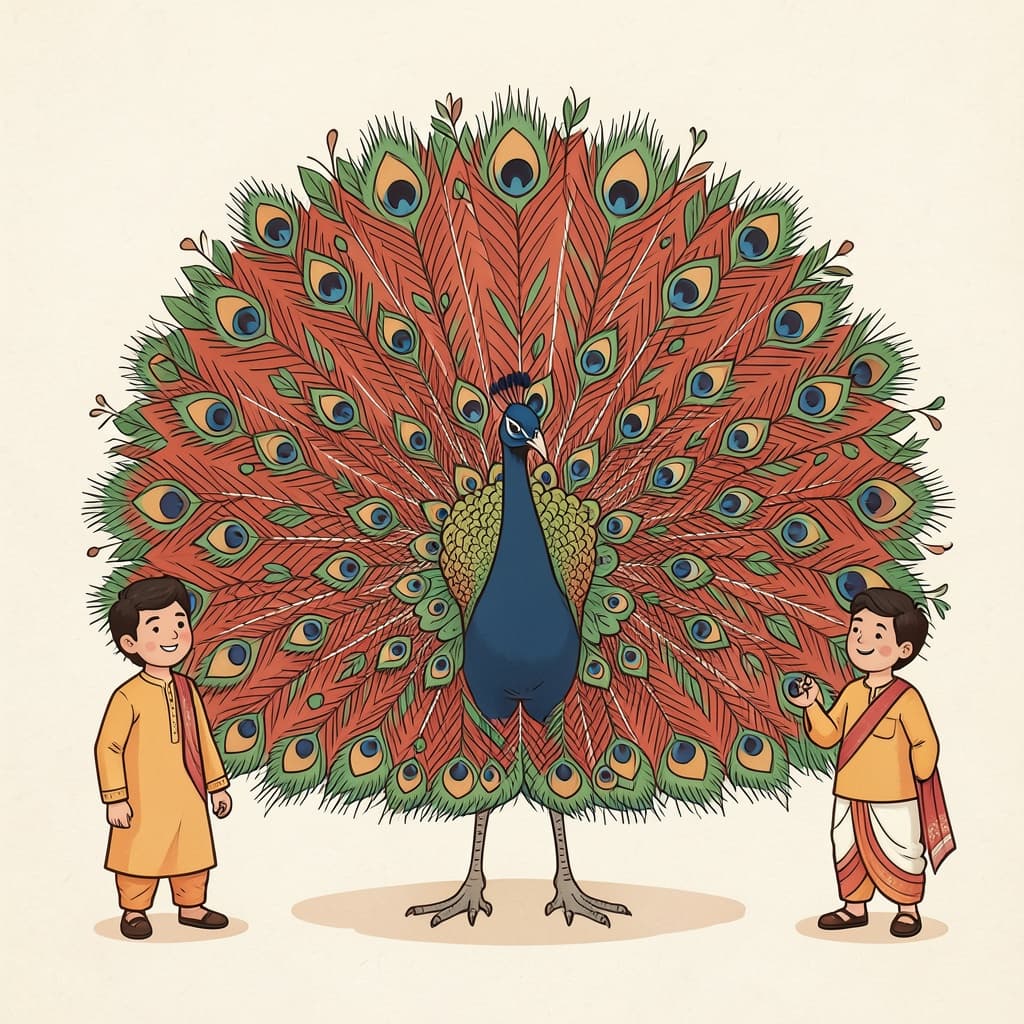
  • A peacock with its colourful tail fully spread.
    mayūraḥ

    peacock

    NounMasculine

    ।The peacock dances.

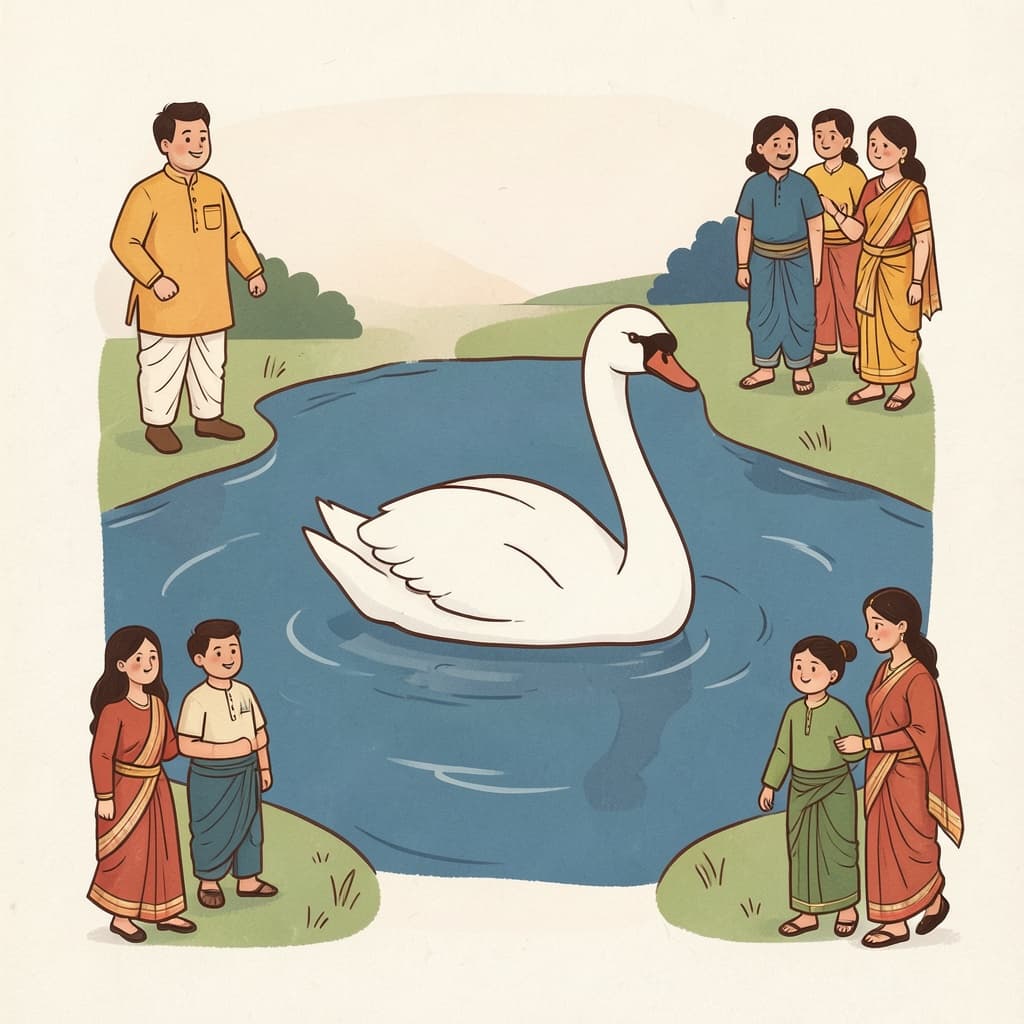
  • A white swan gliding on a blue lake.
    haṃsaḥ

    swan

    NounMasculine

    ।The swan lives in the pond.

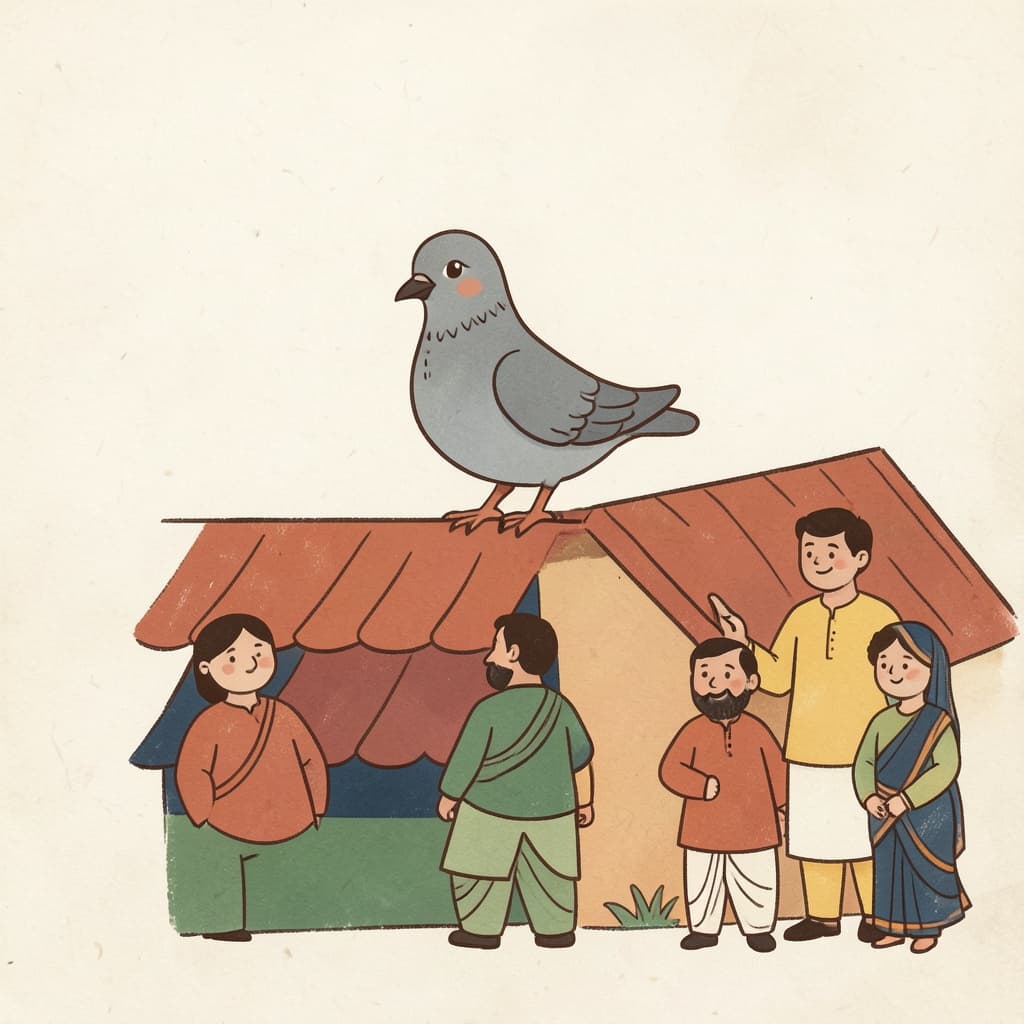
  • A grey pigeon sitting on the edge of a rooftop.
    kapotaḥ

    pigeon, dove

    NounMasculine

    ।The pigeon eats grain.

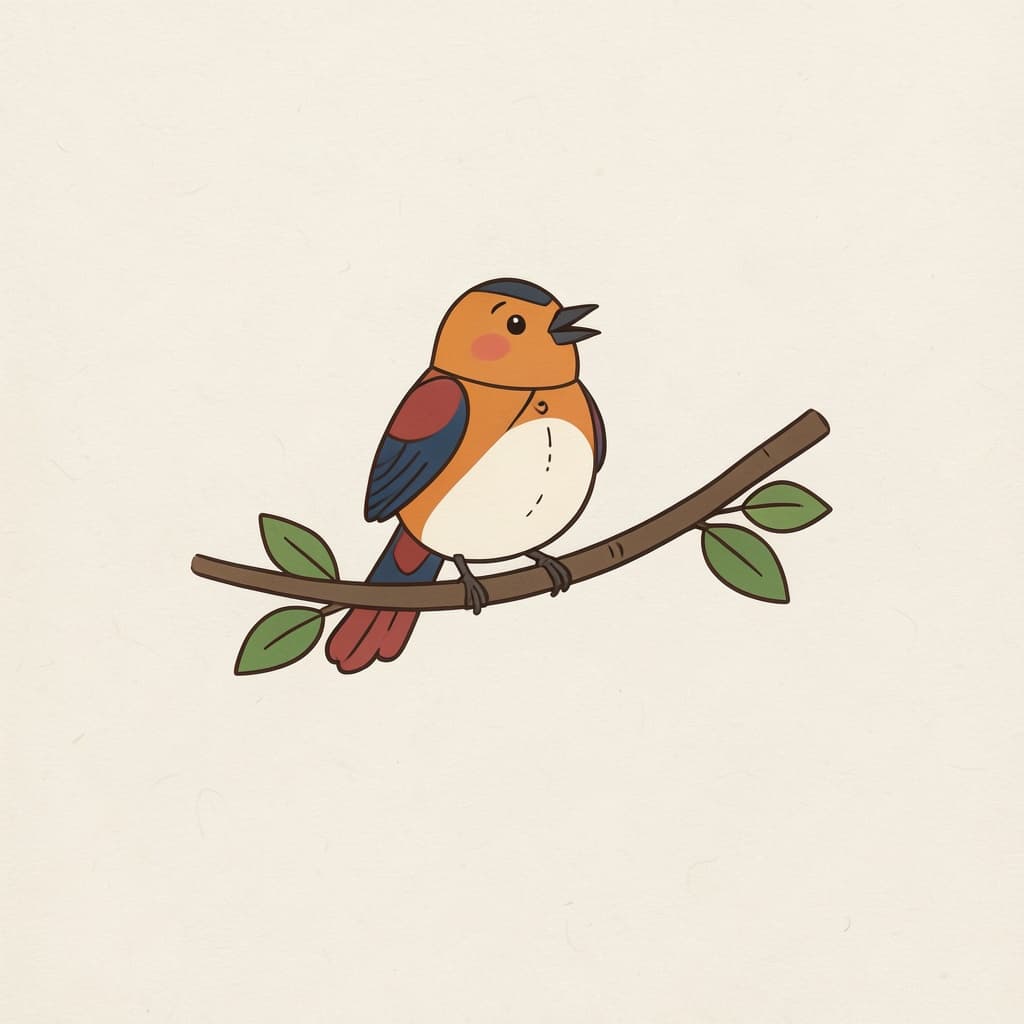
  • A small colourful bird singing on a branch.
    khagaḥ

    bird

    NounMasculine

    ।Birds sing in the tree.

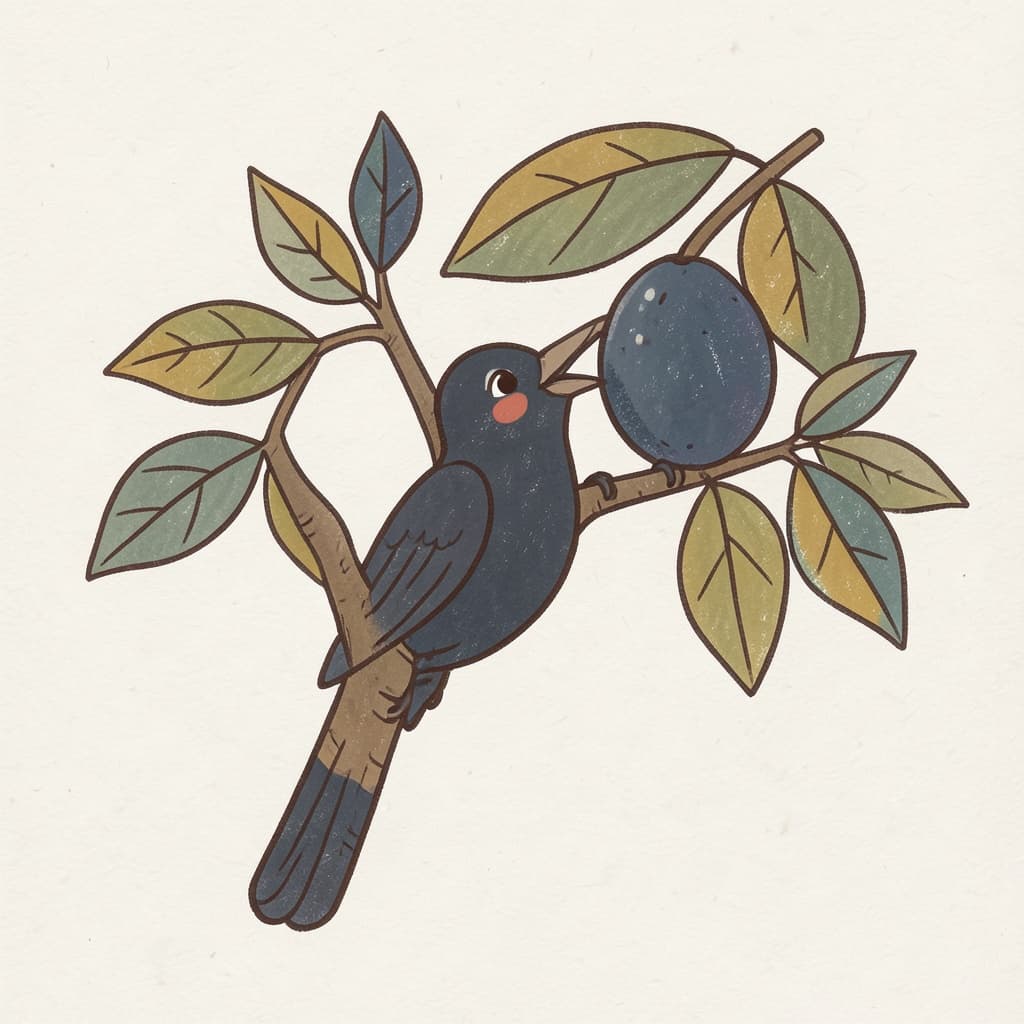
  • A dark cuckoo bird singing on a mango tree branch.
    kokilaḥ

    cuckoo

    NounMasculine

    ।The cuckoo sings sweetly.

फलानि

Fruits
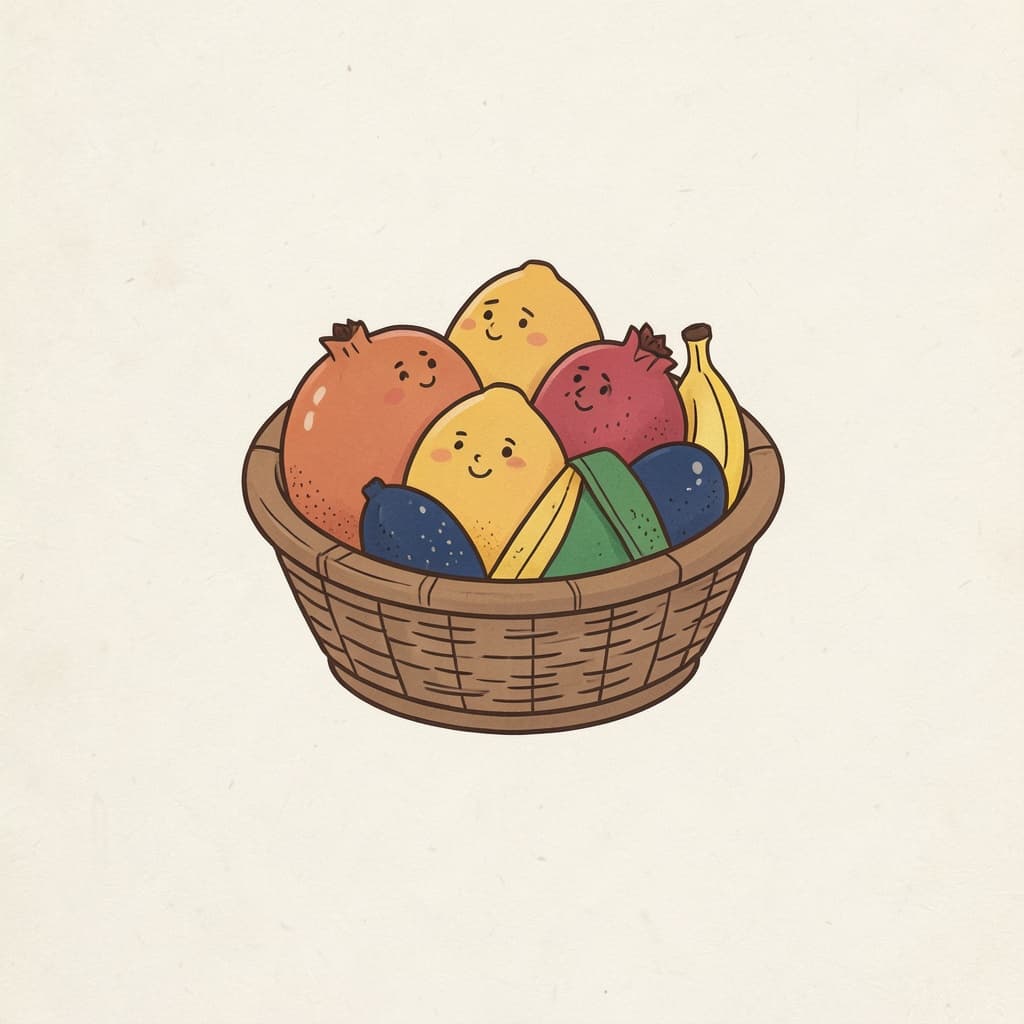
  • A basket of mixed fruits: mangoes, bananas and pomegranates.
    phalam

    fruit

    NounNeuter

    ।The monkey eats a fruit.

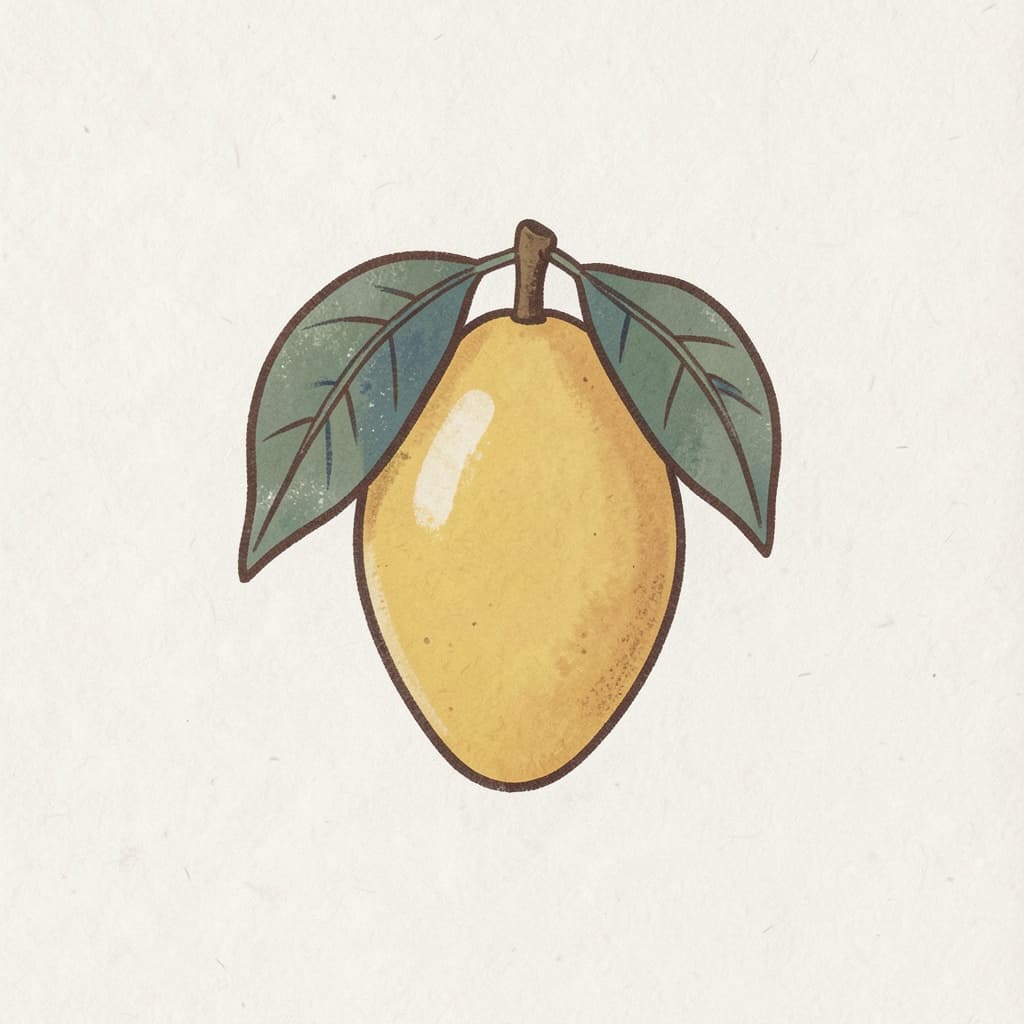
  • A ripe yellow mango with two green leaves.
    āmram

    mango (fruit)

    NounNeuter

    ।The mango is sweet.

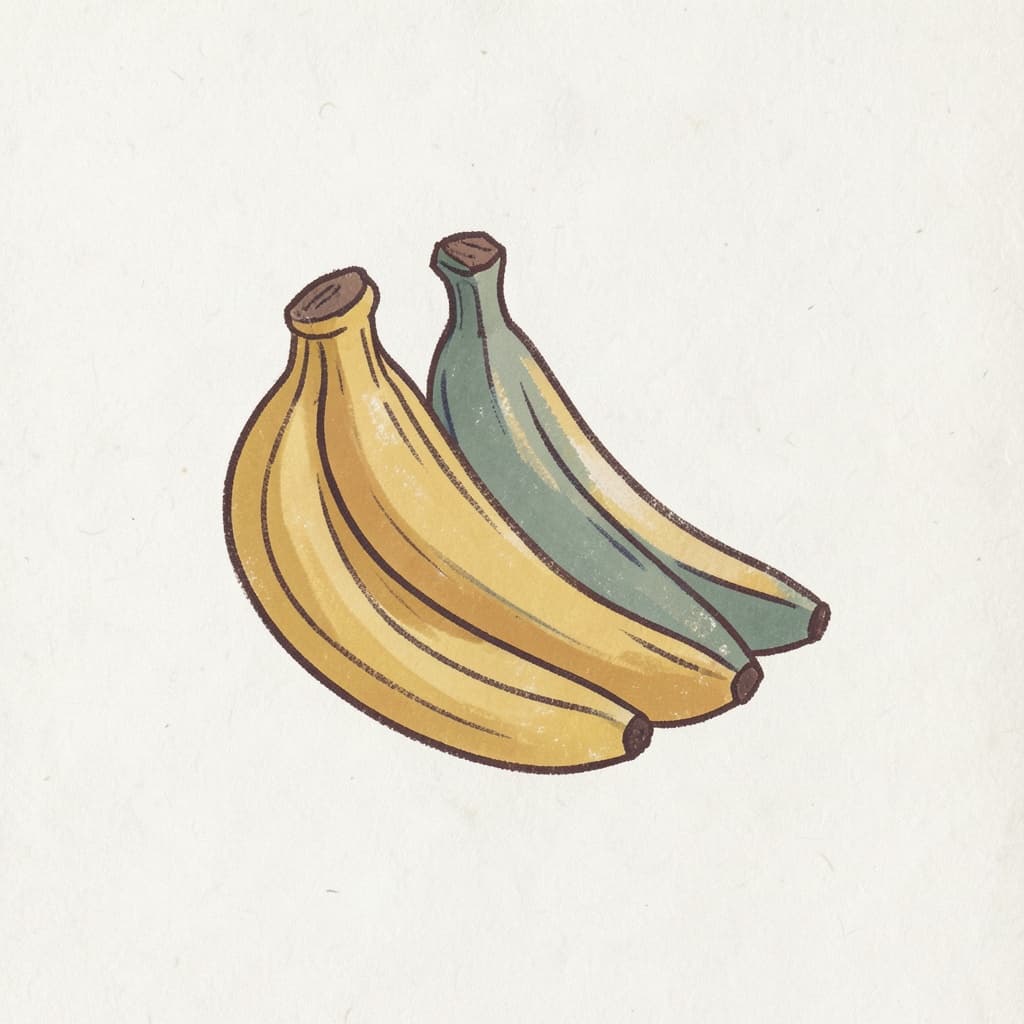
  • A bunch of ripe yellow bananas.
    kadalīphalam

    banana

    NounNeuter

    ।The baby eats a banana.

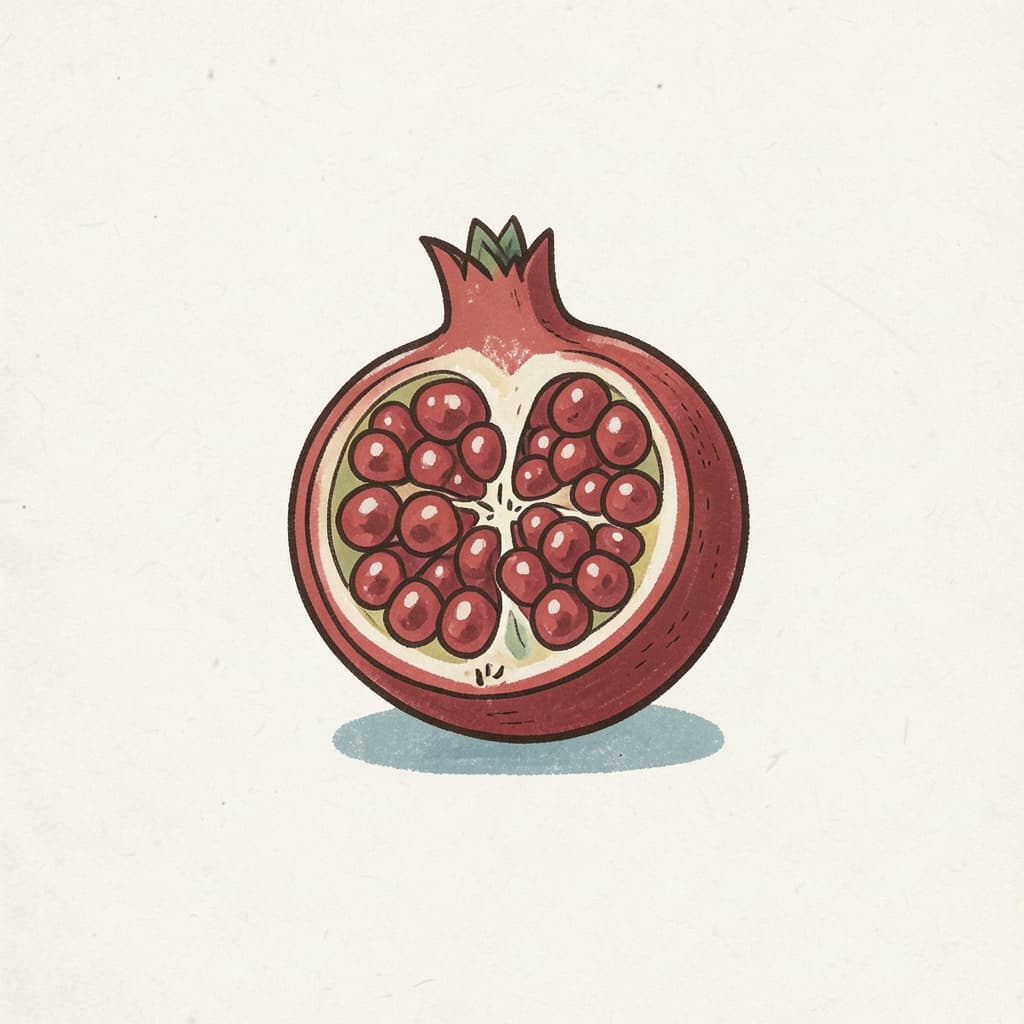
  • A red pomegranate cut open showing its shining red seeds.
    dāḍimam

    pomegranate

    NounNeuter

    ।The pomegranate is red.

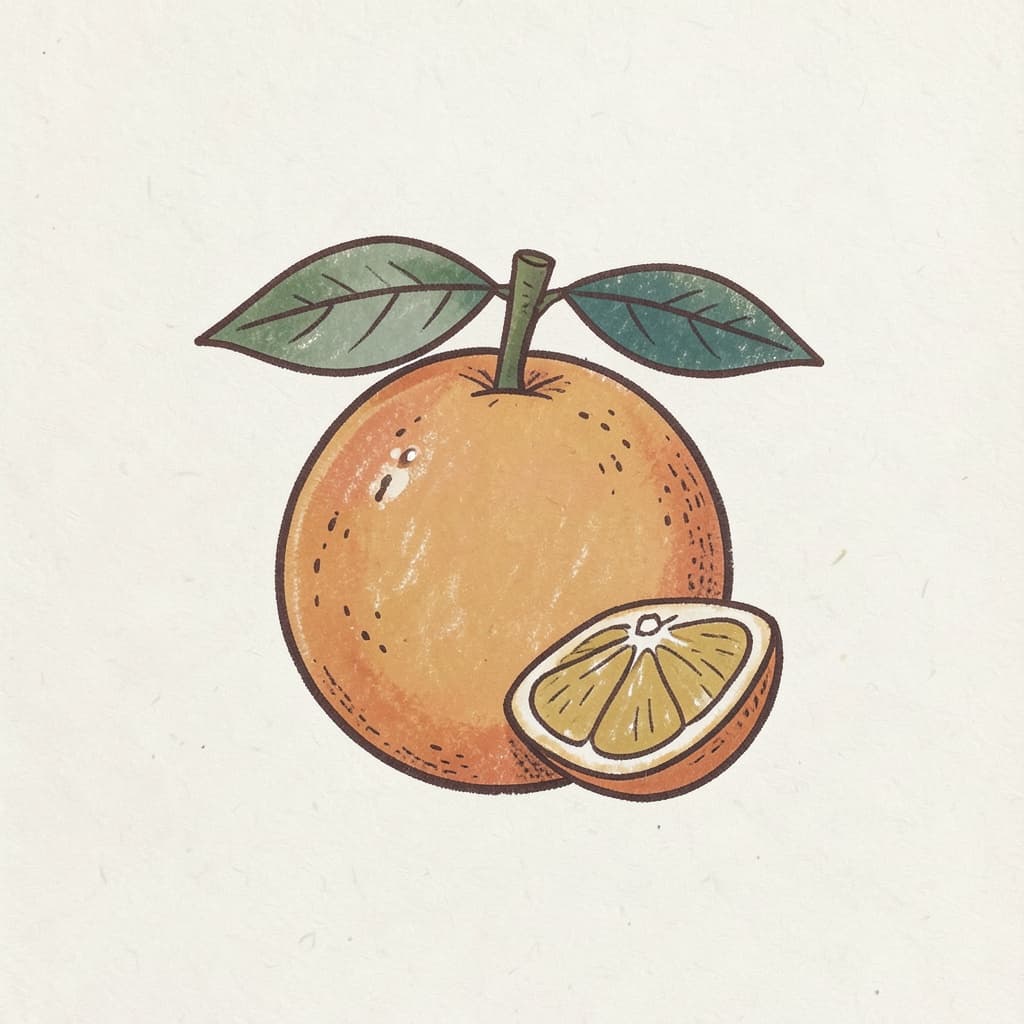
  • An orange fruit with a green leaf and one peeled segment.
    nāraṅgam

    orange

    NounNeuter

    ।I eat an orange.

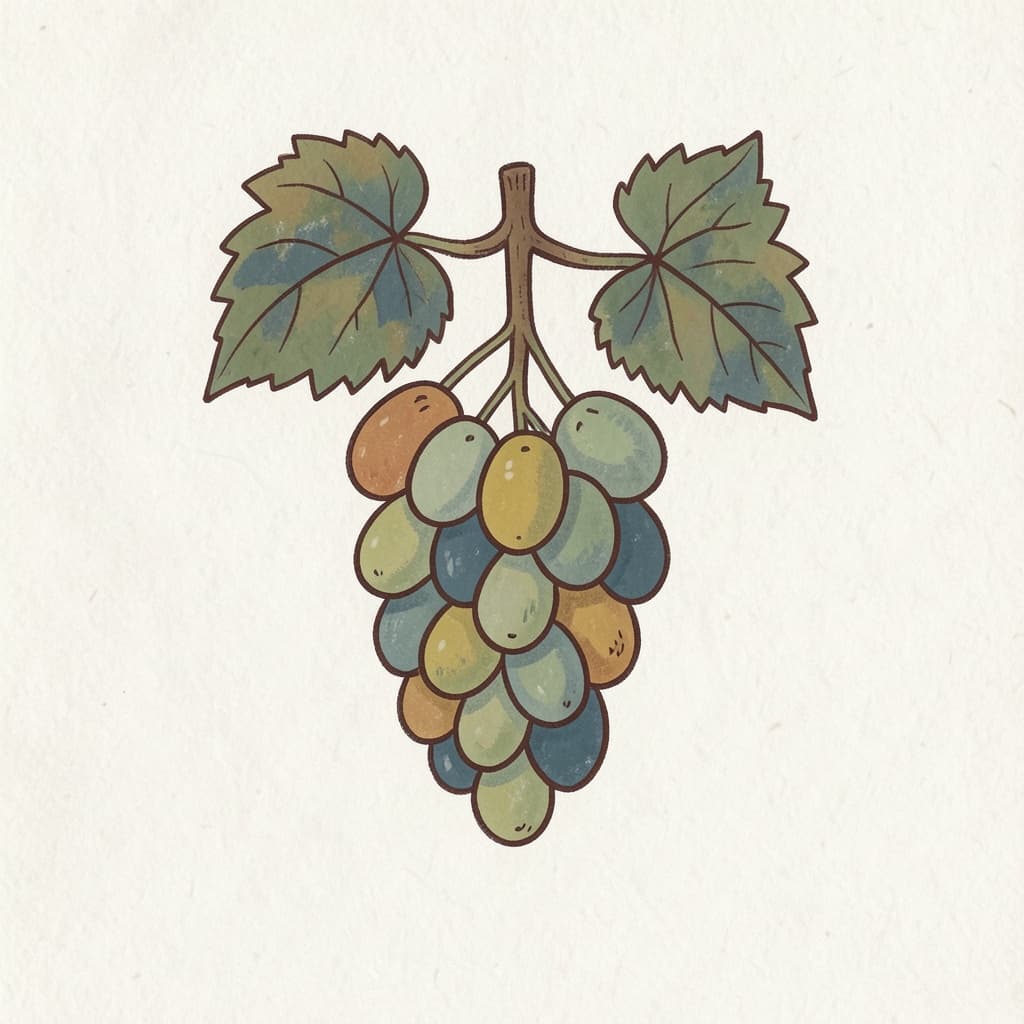
  • A bunch of green grapes hanging from a vine.
    drākṣā

    grapes, vine

    NounFeminine

    ।The grapes are sweet.

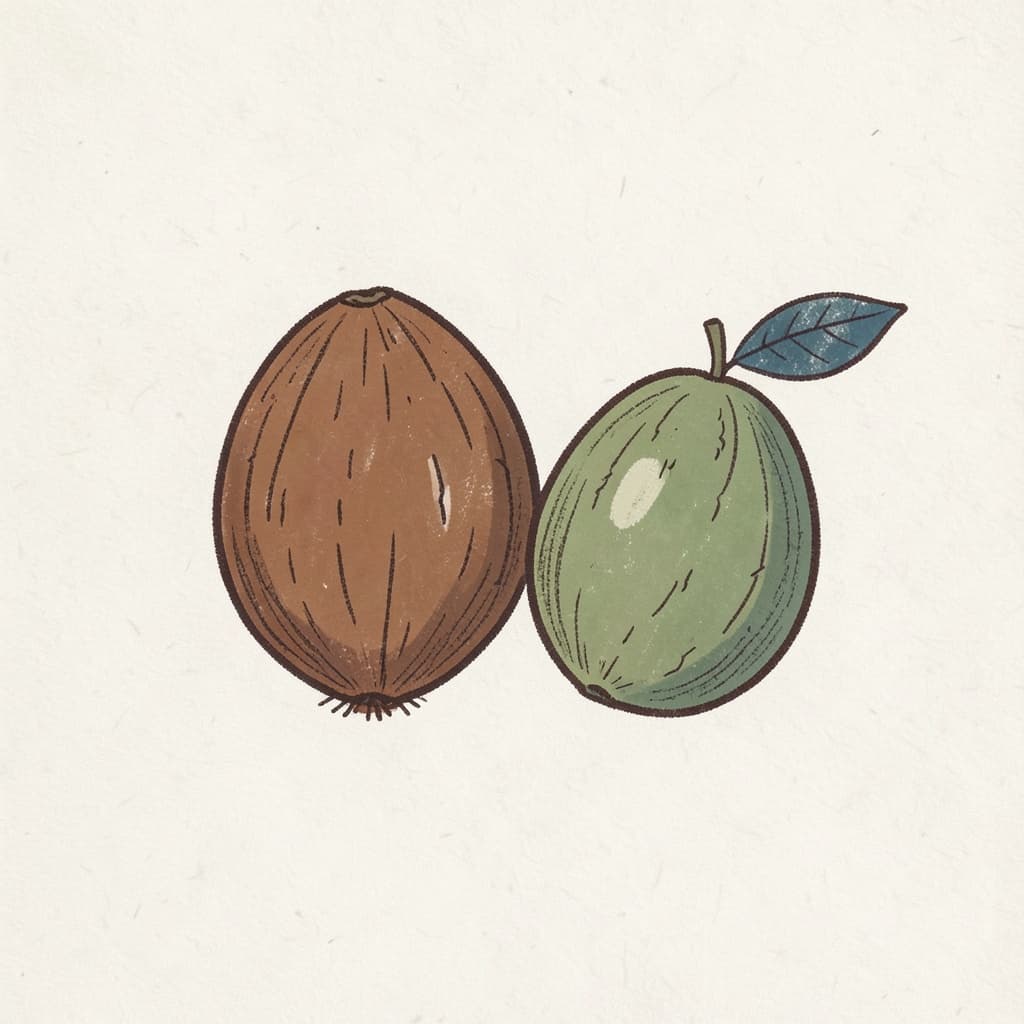
  • A brown coconut and a green coconut with a leaf.
    nārikelam

    coconut

    NounNeuter

    ।Coconut water is sweet.

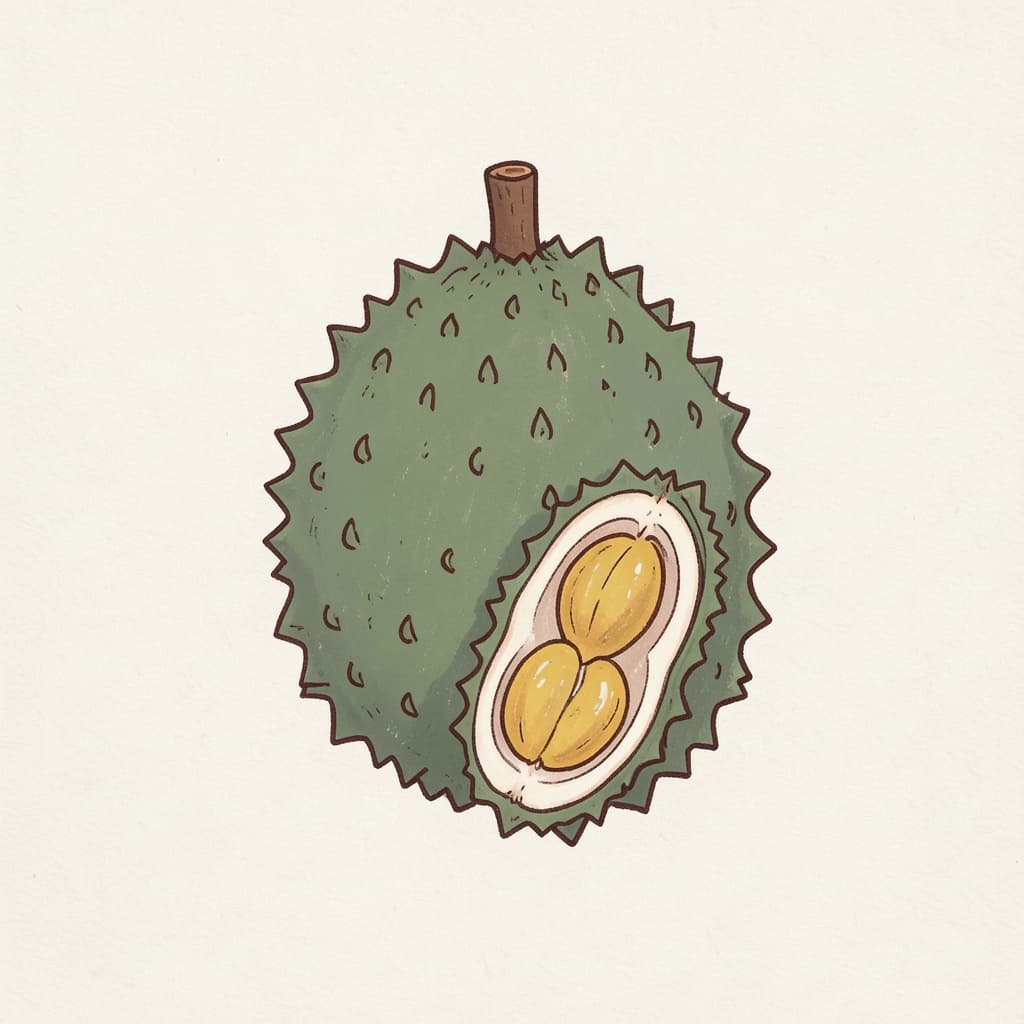
  • A large green spiky jackfruit, one piece cut open showing yellow pods.
    panasam

    jackfruit

    NounNeuter

    ।The jackfruit is on the tree.

शाकानि

Vegetables
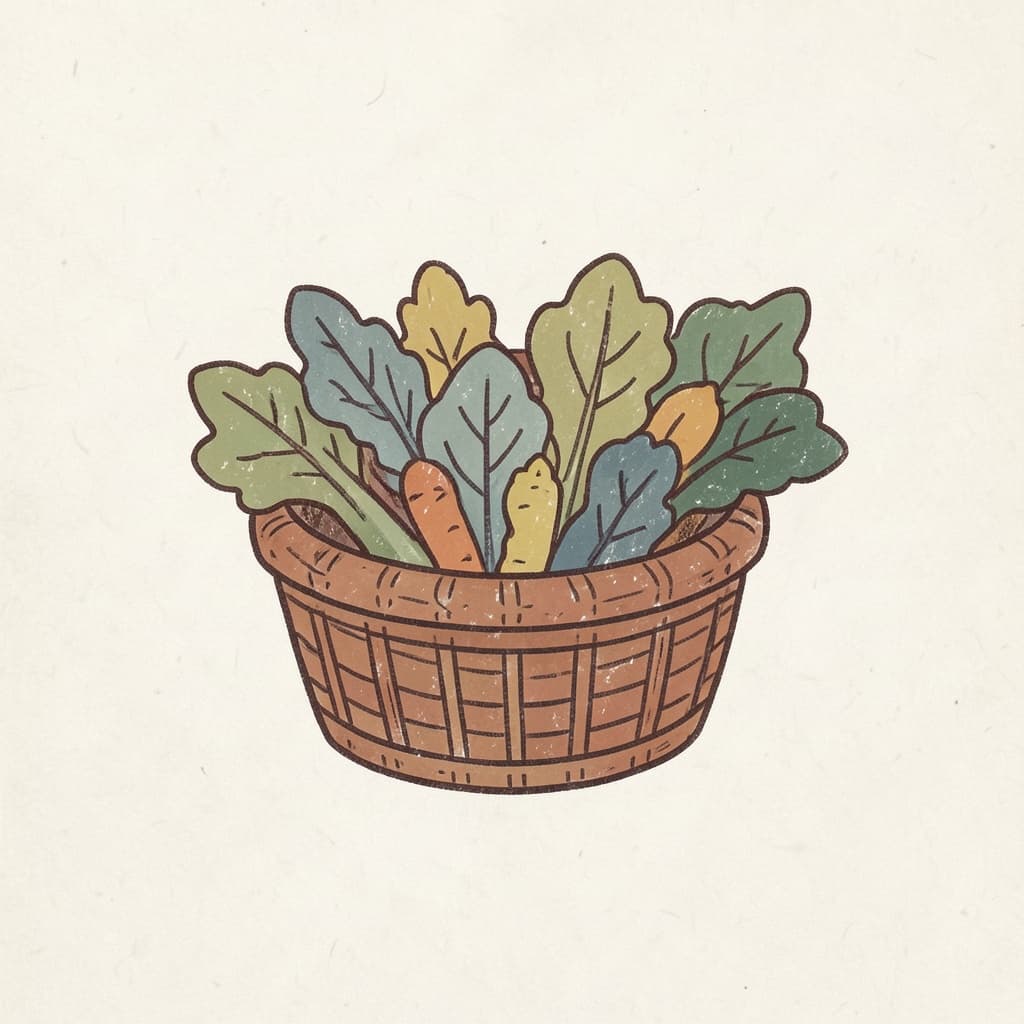
  • A basket full of fresh green leafy vegetables.
    śākam

    vegetable, greens

    NounNeuter

    ।Mother cooks vegetables.

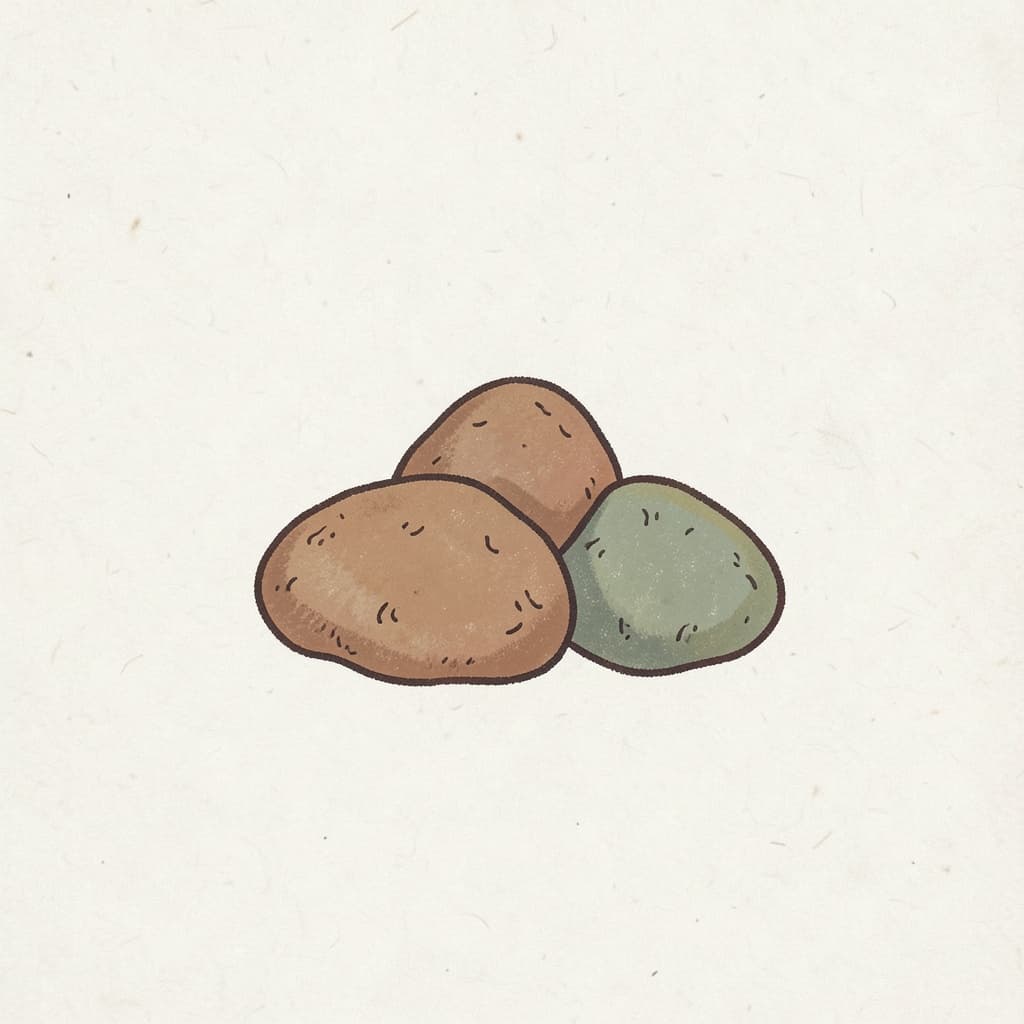
  • A few brown potatoes in a small heap.
    ālukam

    potato

    NounNeuterModern usage

    ।Mother cooks potatoes.

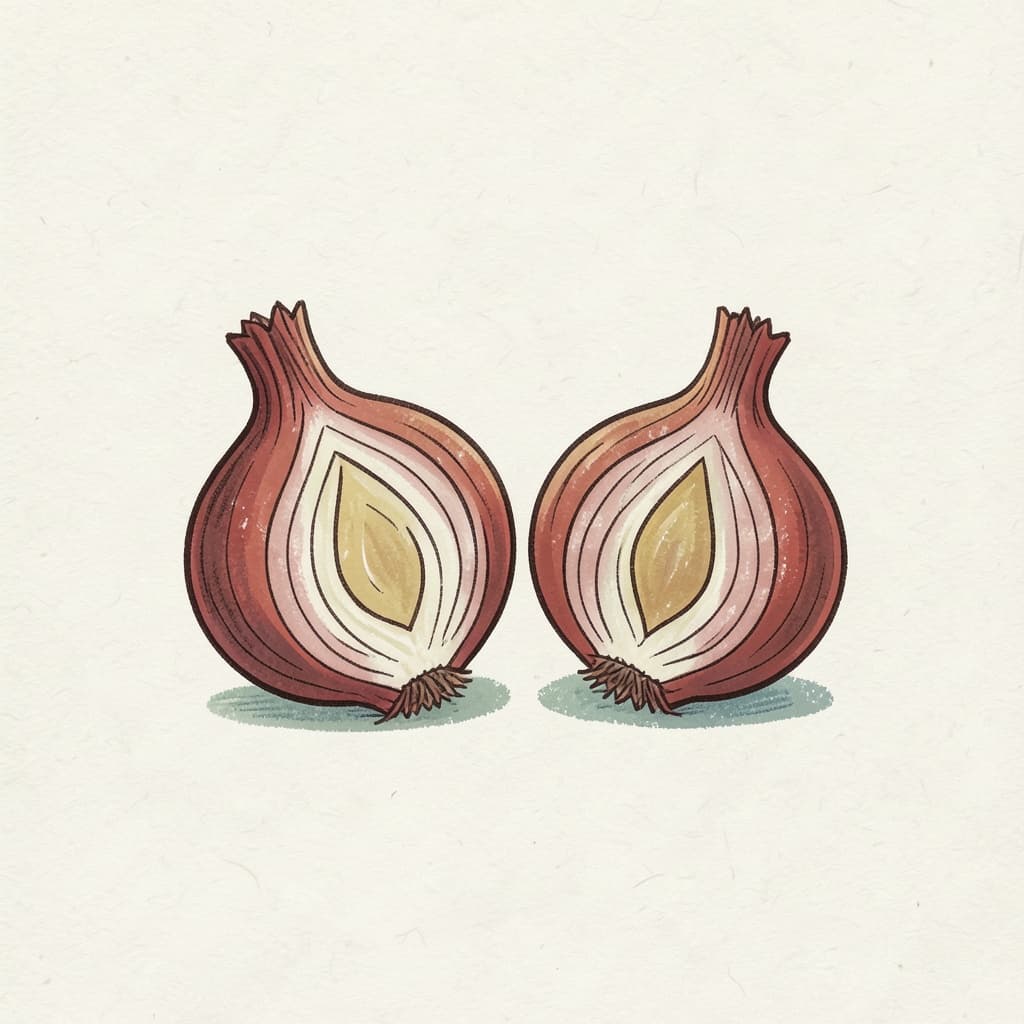
  • Two red onions, one cut in half showing rings.
    palāṇḍuḥ

    onion

    NounMasculine

    ।The onion grows in the ground.

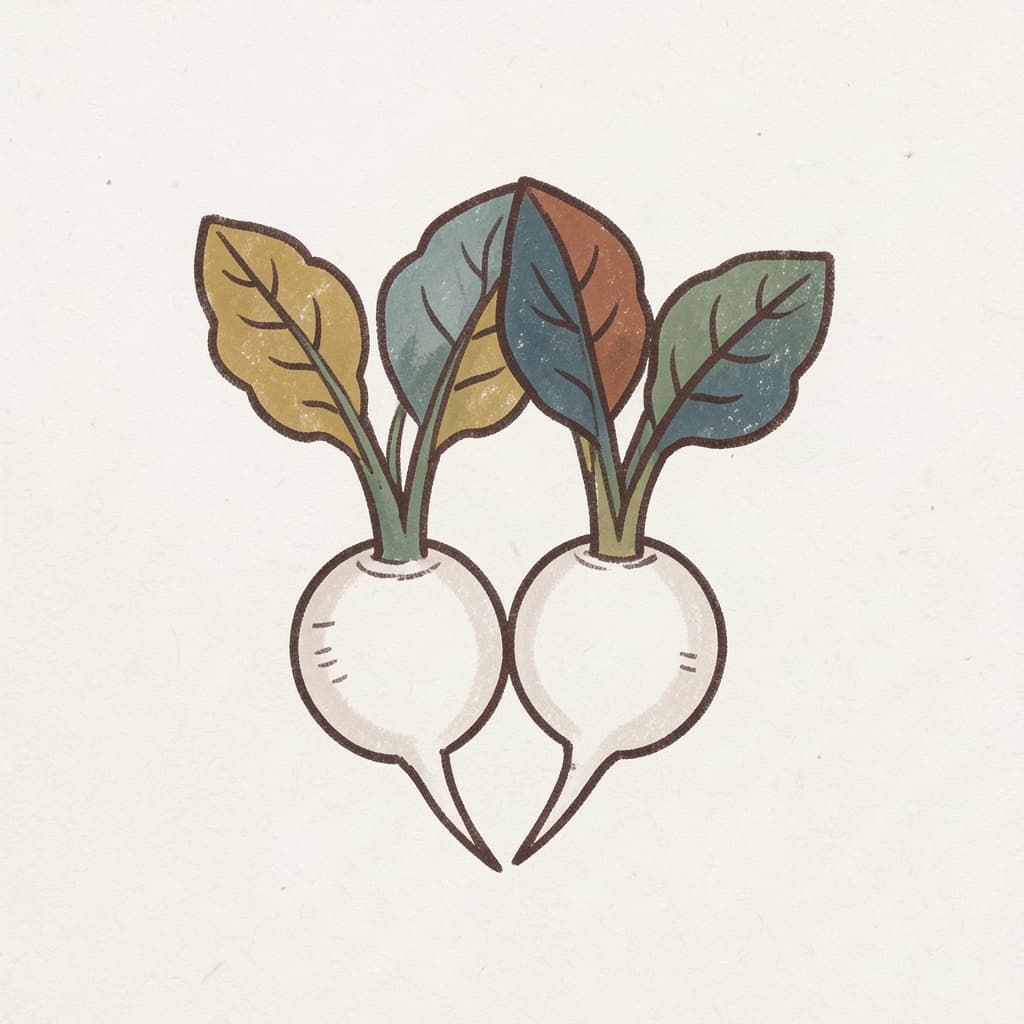
  • Two white radishes with green leaves.
    mūlakam

    radish

    NounNeuter

    ।The radish is white.

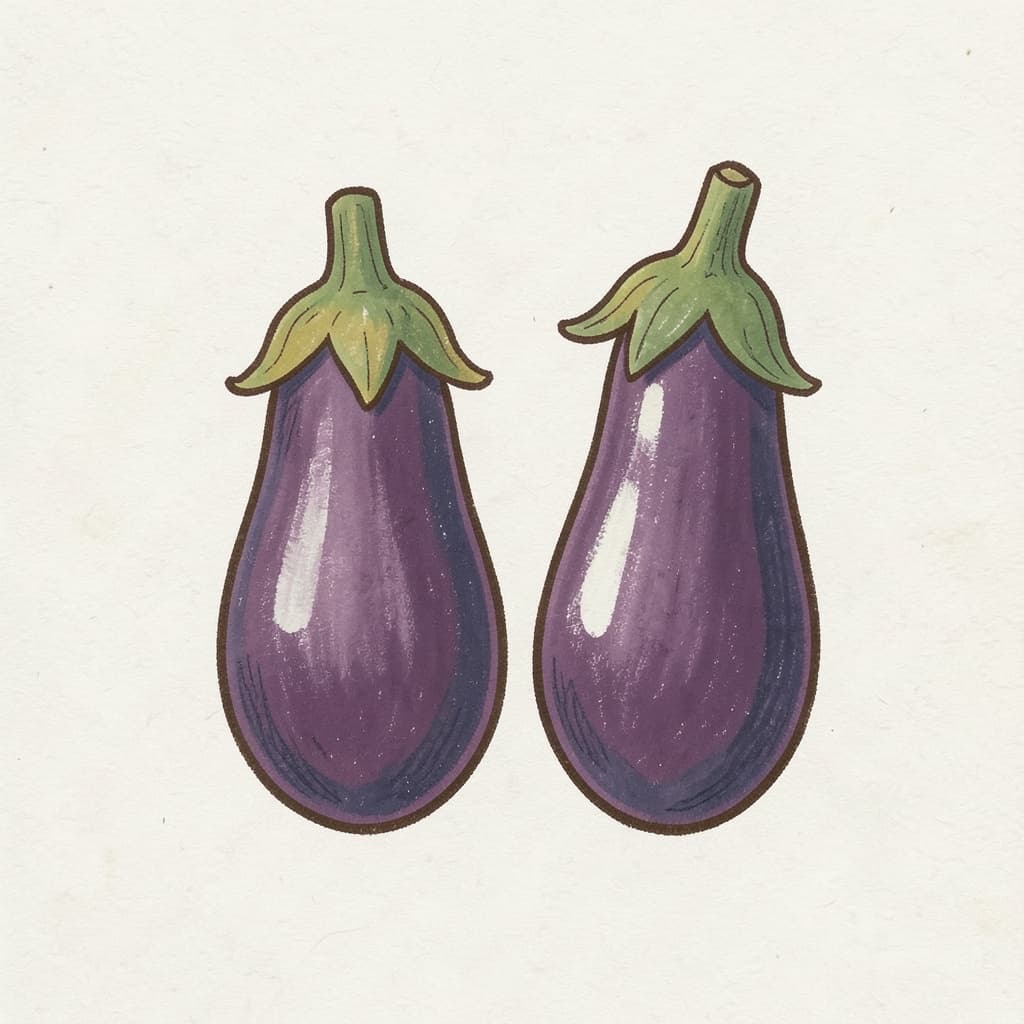
  • Two shiny purple aubergines with green caps.
    vṛntākam

    aubergine, brinjal

    NounNeuter

    ।Mother cooks the aubergine.

  • A big round orange pumpkin with a curly vine.
    kūṣmāṇḍaḥ

    pumpkin

    NounMasculine

    ।The pumpkin is yellow.

शरीराङ्गानि

Body parts
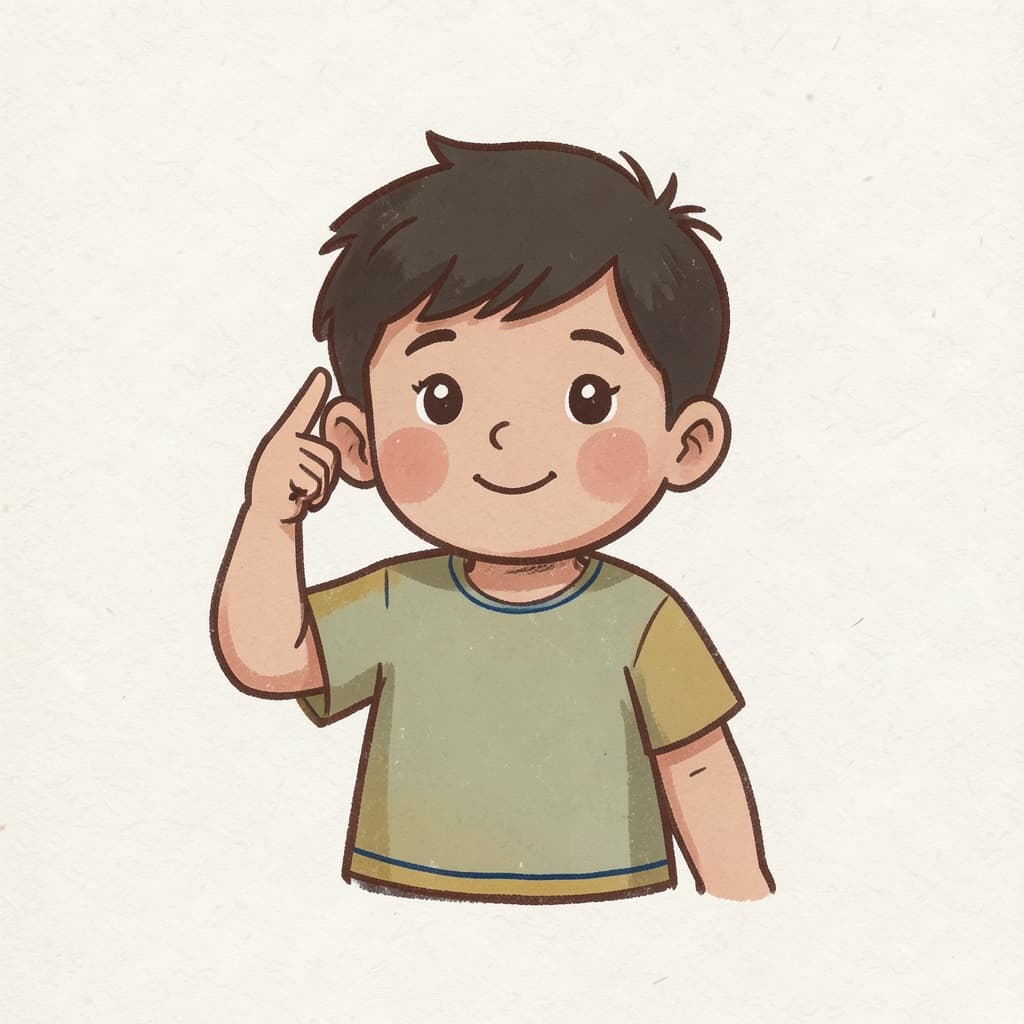
  • A boy pointing at his own head with one finger.
    śiraḥ

    head

    NounNeuter

    ।He bows his head.

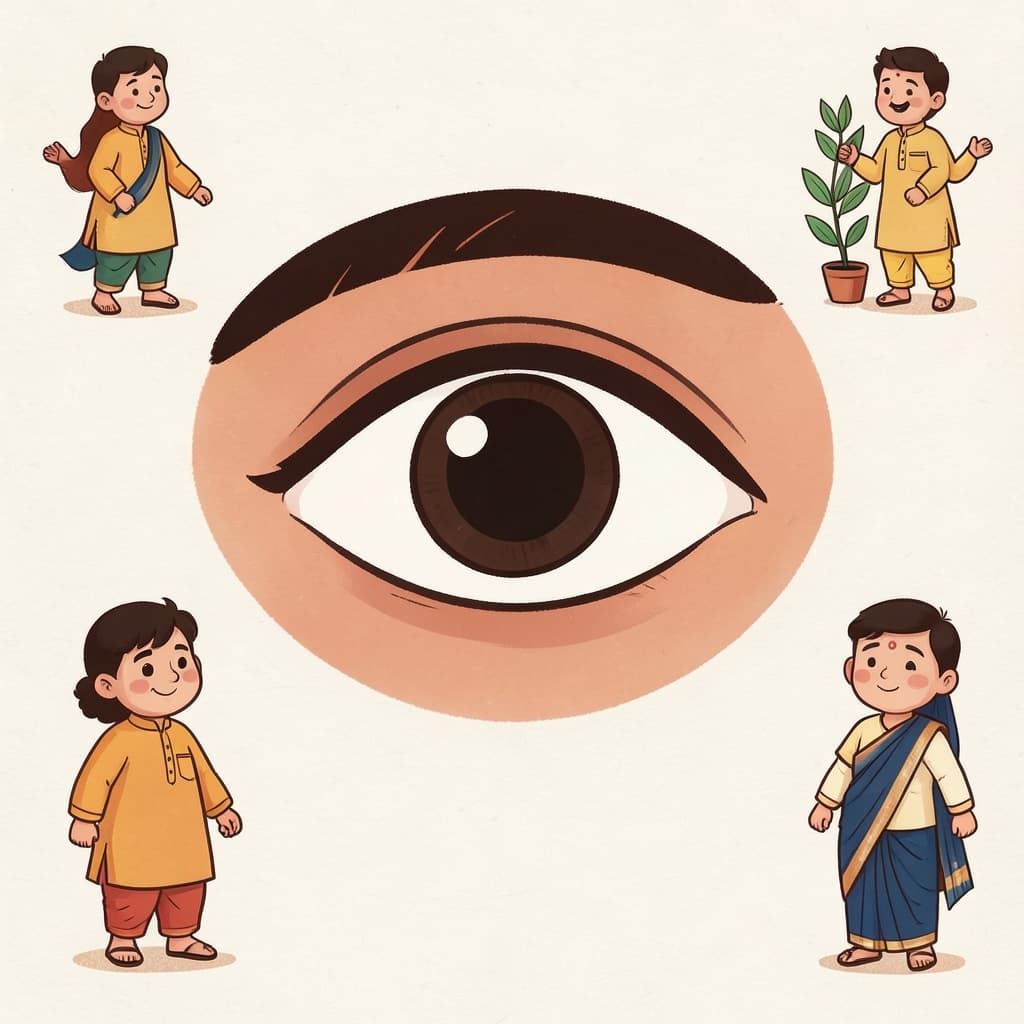
  • A close-up of one large expressive eye lined with kajal.
    netram

    eye

    NounNeuter

    ।We see with our eyes.

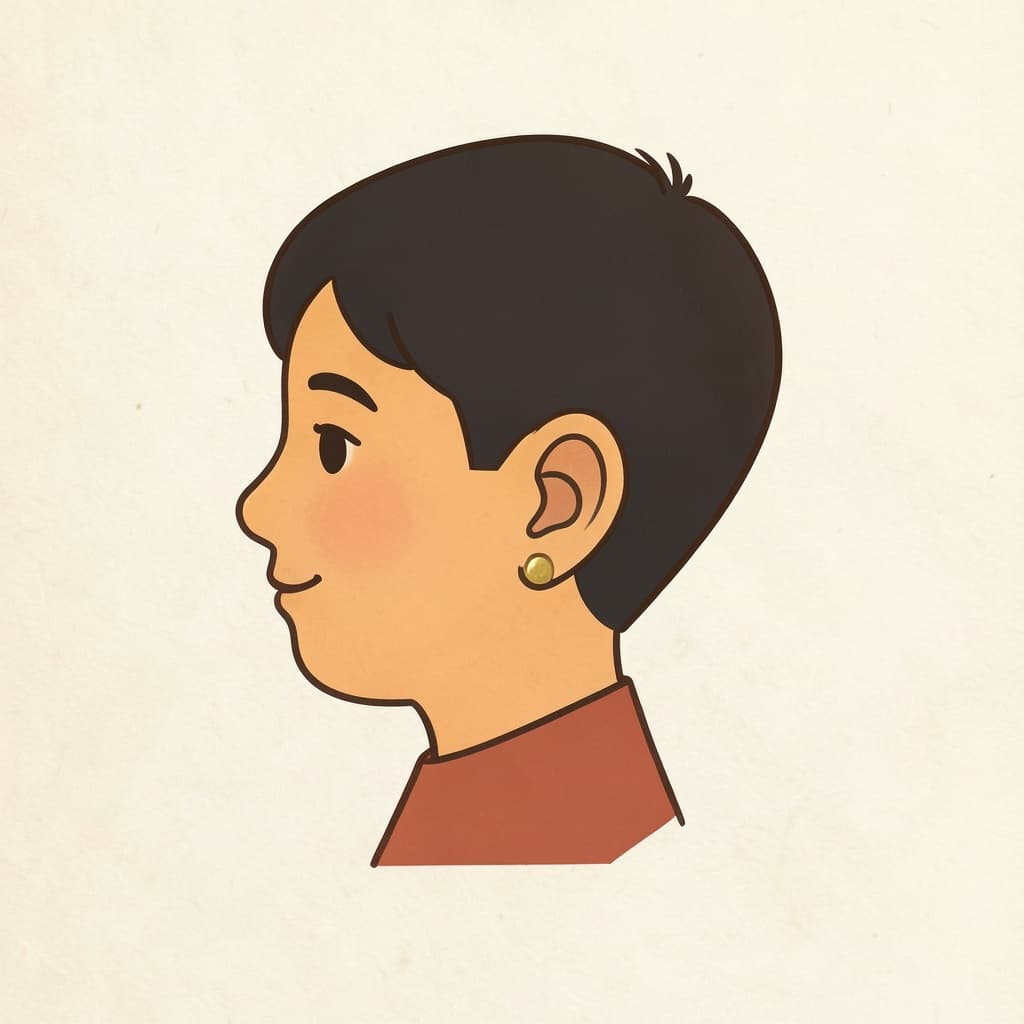
  • A side view of a child's head showing a large ear with a small gold earring.
    karṇaḥ

    ear

    NounMasculine

    ।We hear with our ears.

  • A girl touching her nose with one finger, smiling.
    nāsikā

    nose

    NounFeminine

    ।The nose is above the mouth.

  • A cheerful round face of a child with a big smile.
    mukham

    mouth, face

    NounNeuter

    ।The baby’s face is lovely.

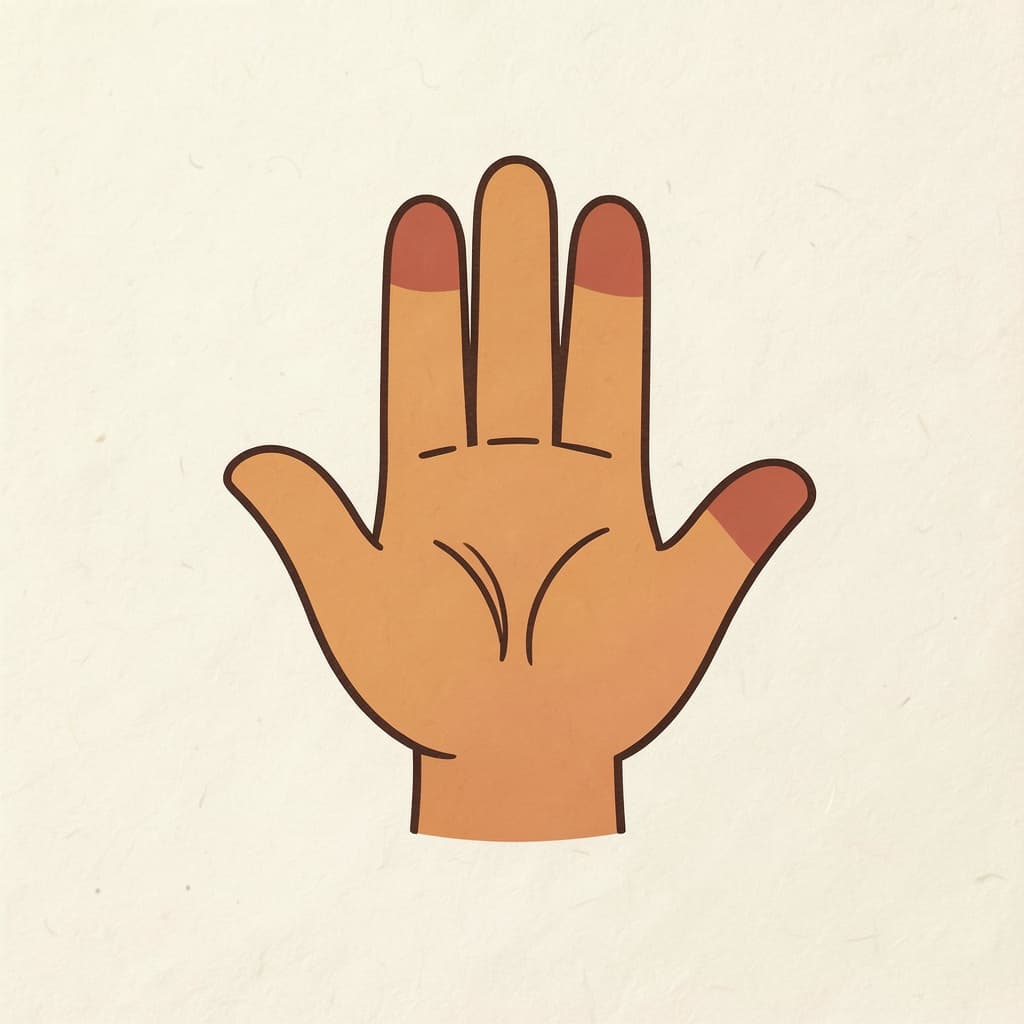
  • One open human hand with the palm facing forward, large and centred.
    hastaḥ

    hand

    NounMasculine

    ।I write with my hand.

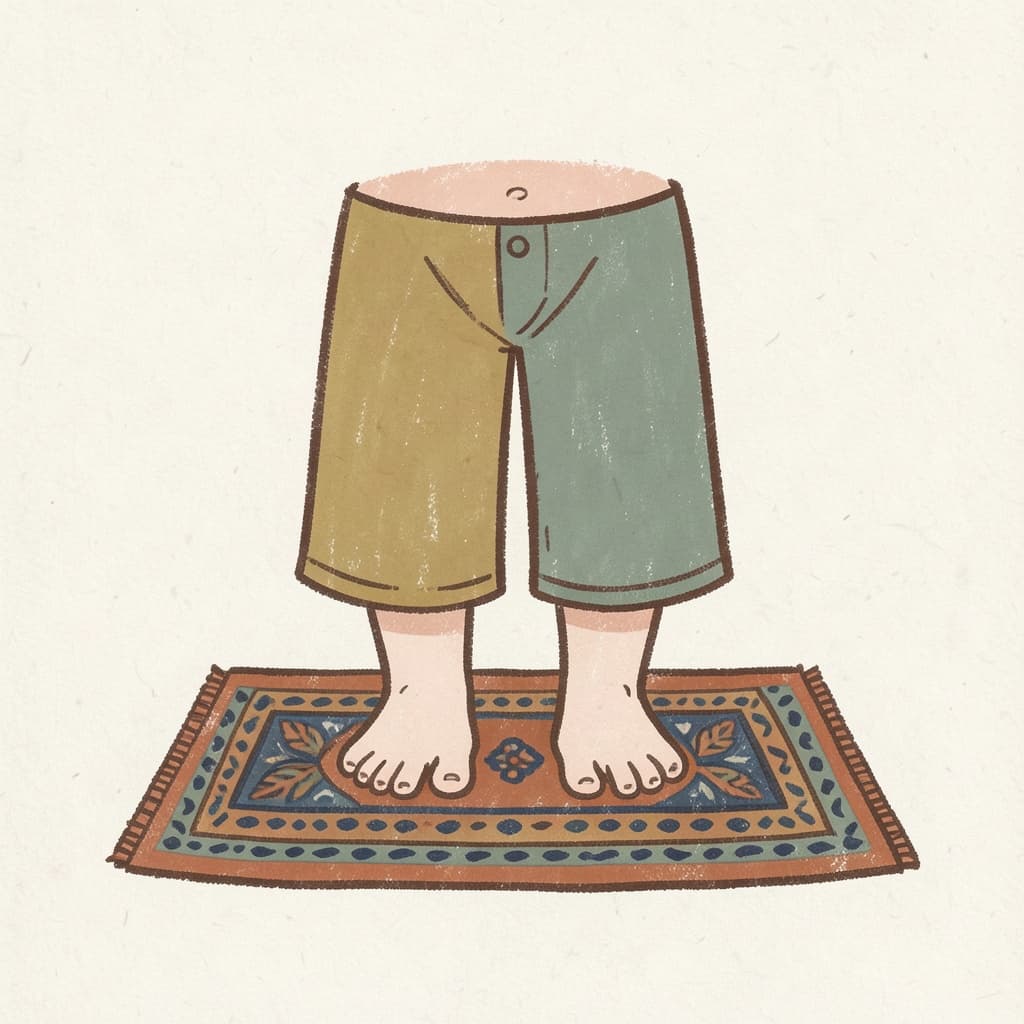
  • A pair of bare feet standing on a mat.
    pādaḥ

    foot

    NounMasculine

    ।We walk with our feet.

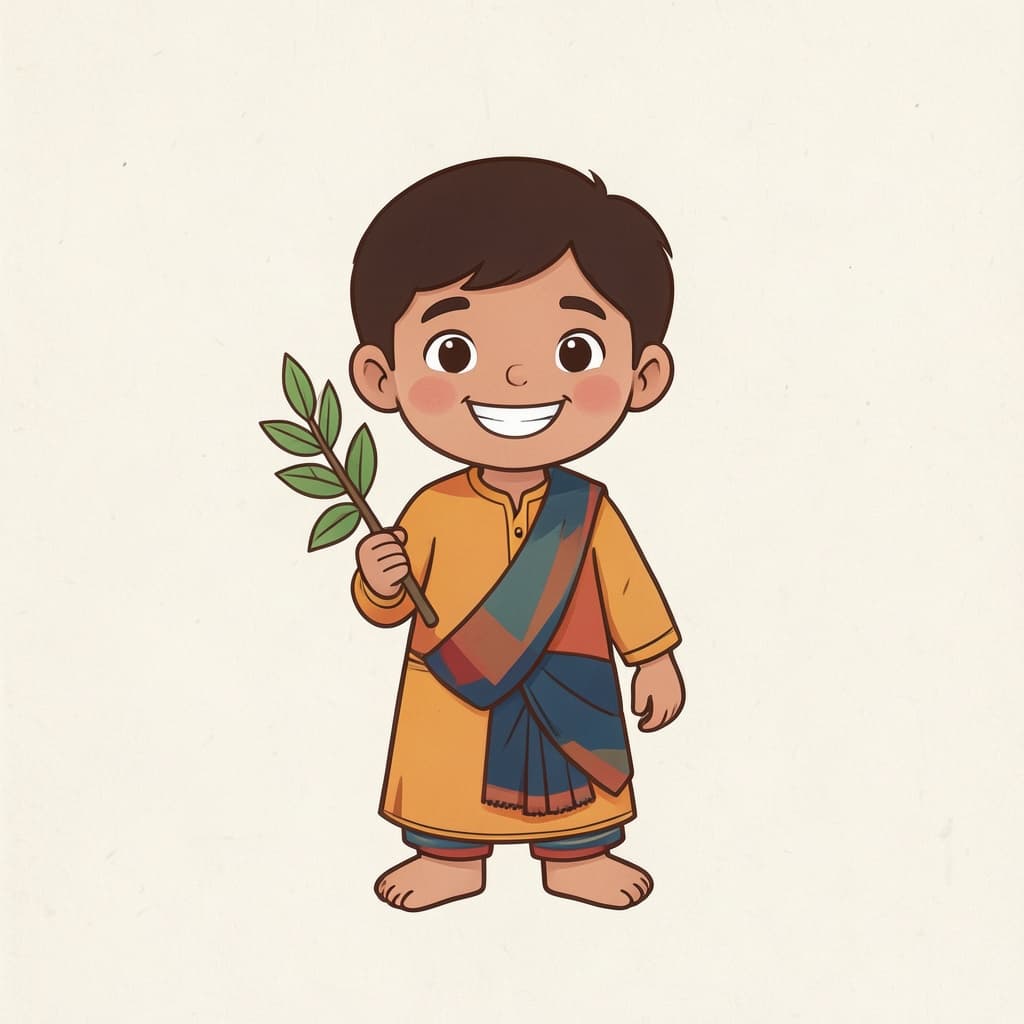
  • A child with a big bright smile showing clean white teeth, holding a neem twig.
    dantaḥ

    tooth

    NounMasculine

    ।The mouse cuts the net with its teeth.
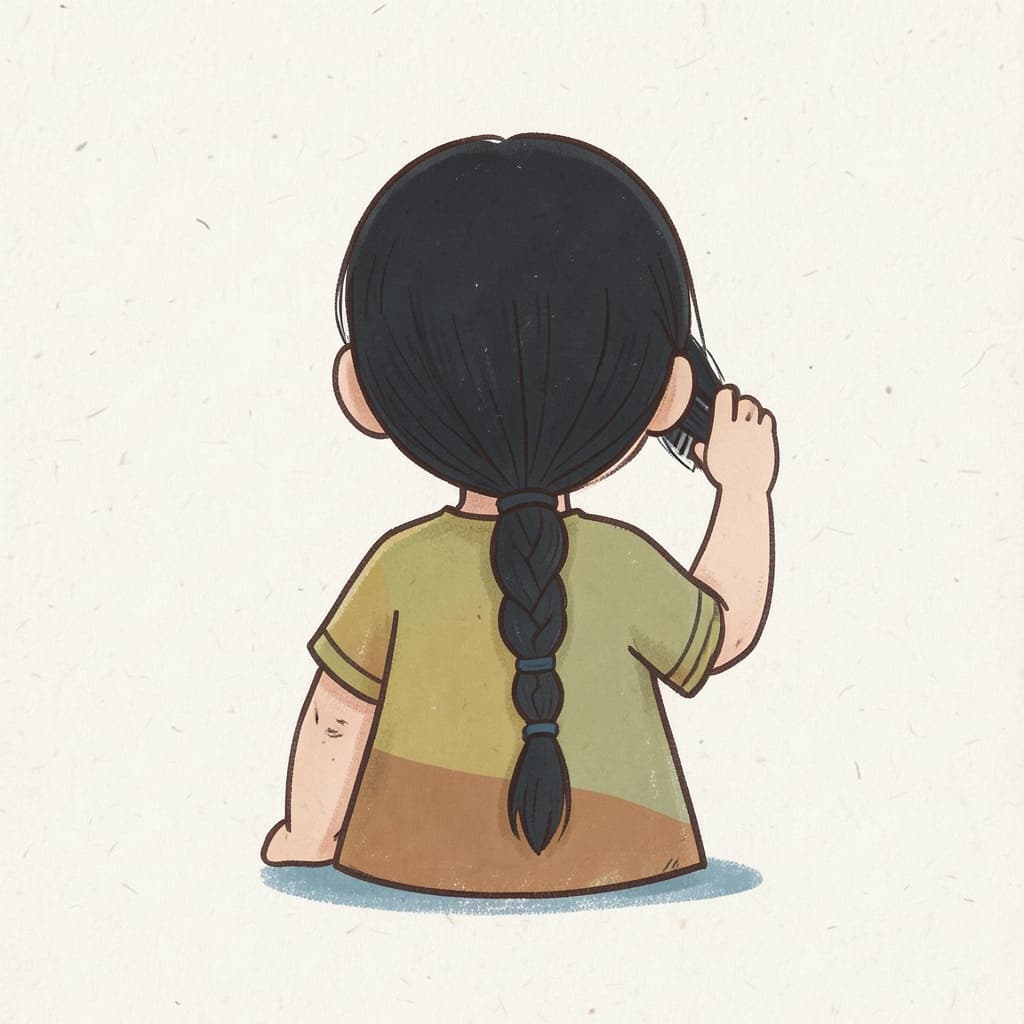
  • A girl with long black hair in a single braid, seen from behind, brushing it.
    keśaḥ

    hair

    NounMasculine

    ।The girl’s hair is long.

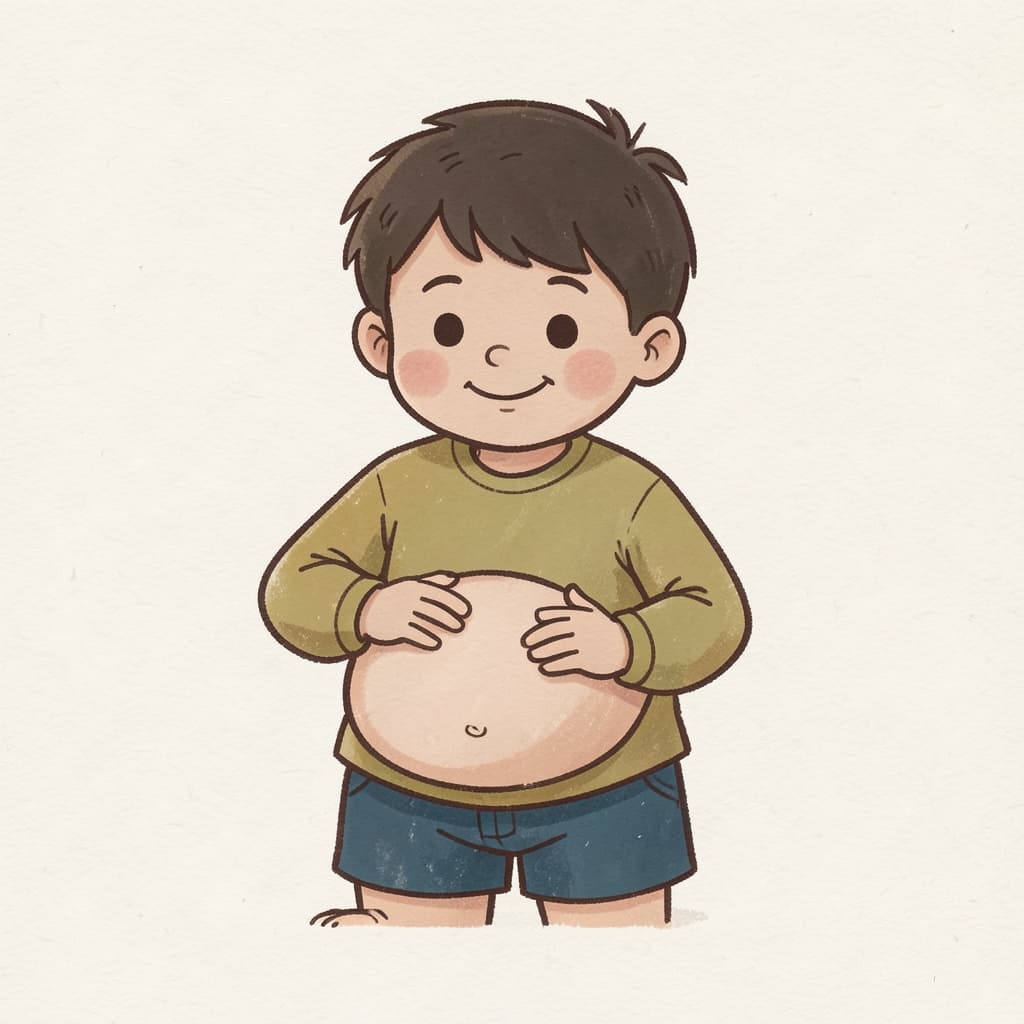
  • A boy patting his round full belly after a meal, smiling.
    udaram

    stomach, belly

    NounNeuter

    ।My stomach is full.

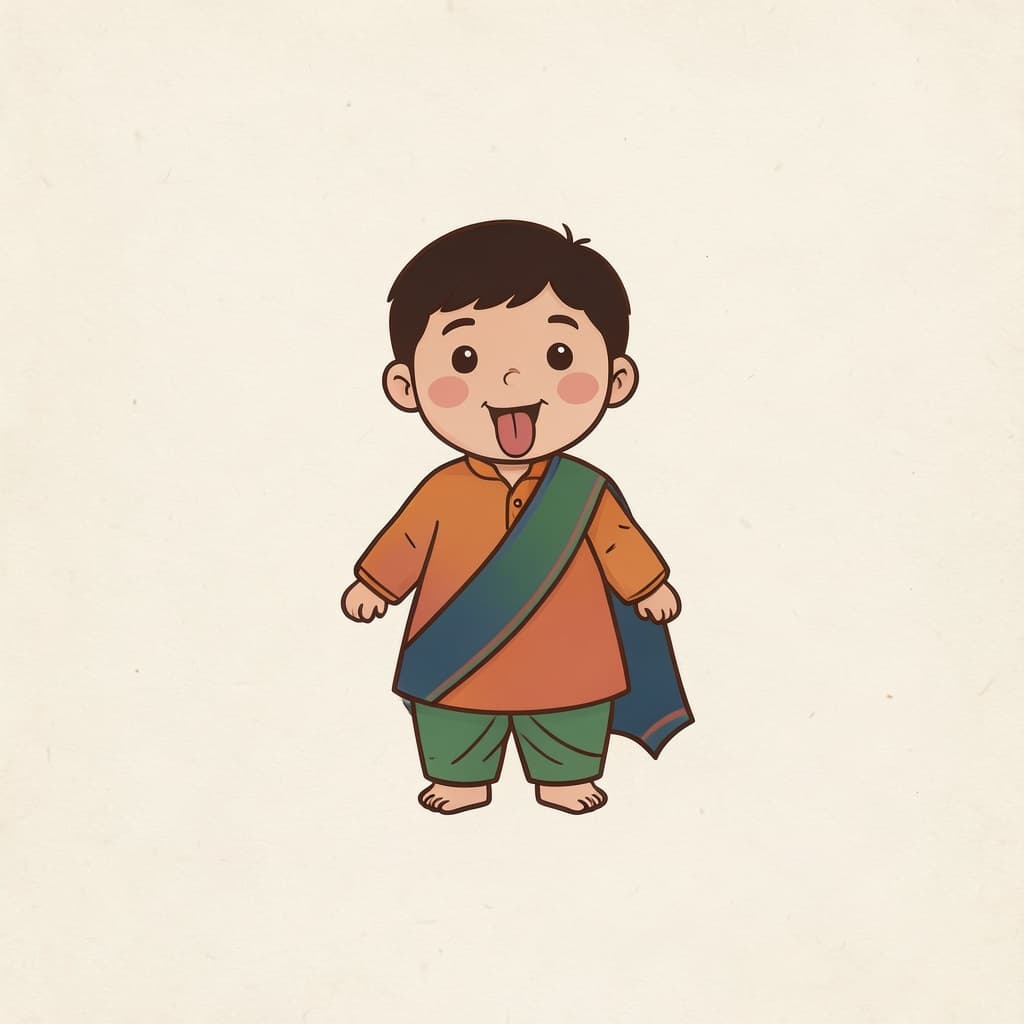
  • A child playfully sticking out the tongue.
    jihvā

    tongue

    NounFeminine

    ।The tongue is in the mouth.

  • A person standing tall and stretching both arms up, showing the whole body.
    śarīram

    body

    NounNeuter

    ।The mouse ran over the lion’s body.

  • A child showing arms and legs, stretching in a star shape.
    aṅgam

    limb, part of the body

    NounNeuter

वर्णाः

Colours

  • raktaḥ

    red

    Adjective

    ।The flower is red.

  • nīlaḥ

    blue, dark blue

    Adjective

    ।The sky is blue.

  • pītaḥ

    yellow

    Adjective

    ।The banana is yellow.

  • haritaḥ

    green

    Adjective

    ।The leaf is green.

  • śvetaḥ

    white

    Adjective

    ।The swan is white.

  • kṛṣṇaḥ

    black, dark

    Adjective

    ।The crow is black.

विशेषणानि

Describing words
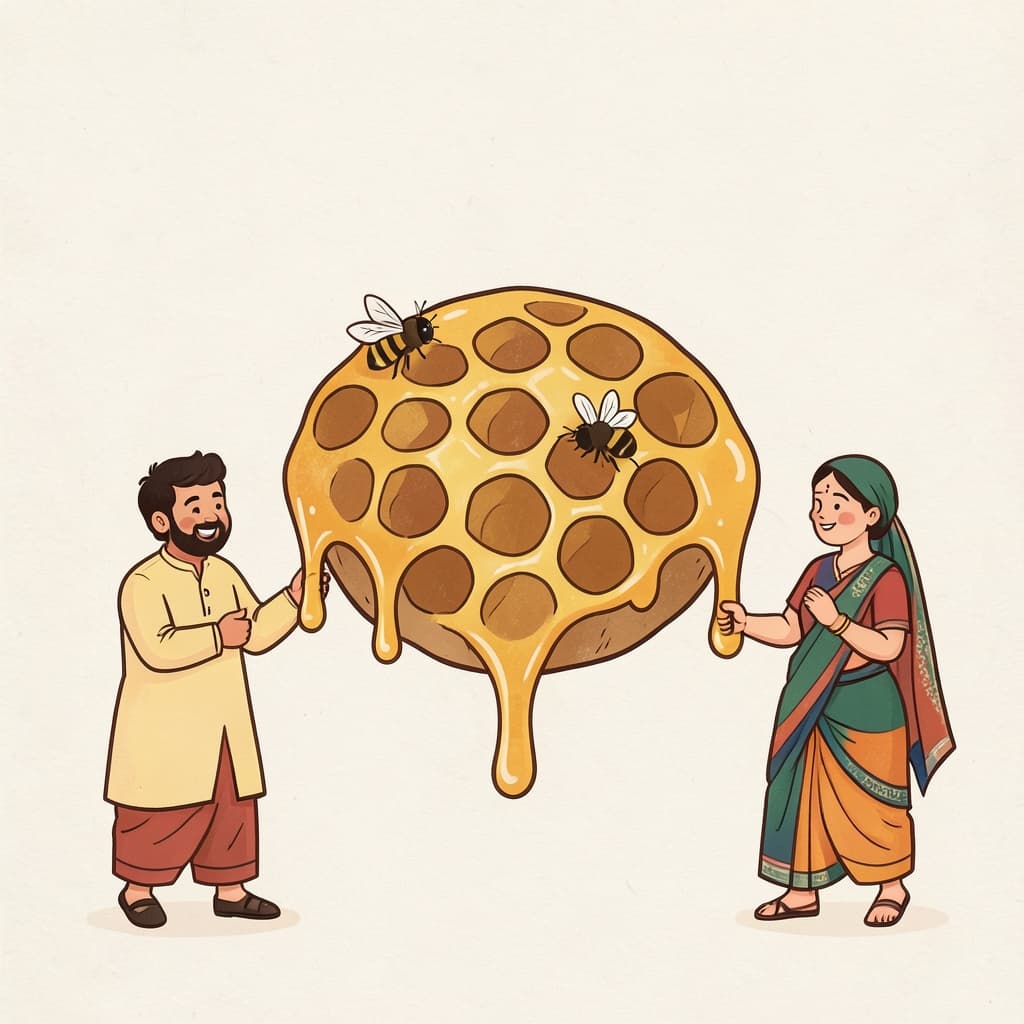
  • A honeycomb dripping golden honey with a few bees.
    madhuraḥ

    sweet

    Adjective

    ।The mango is sweet.

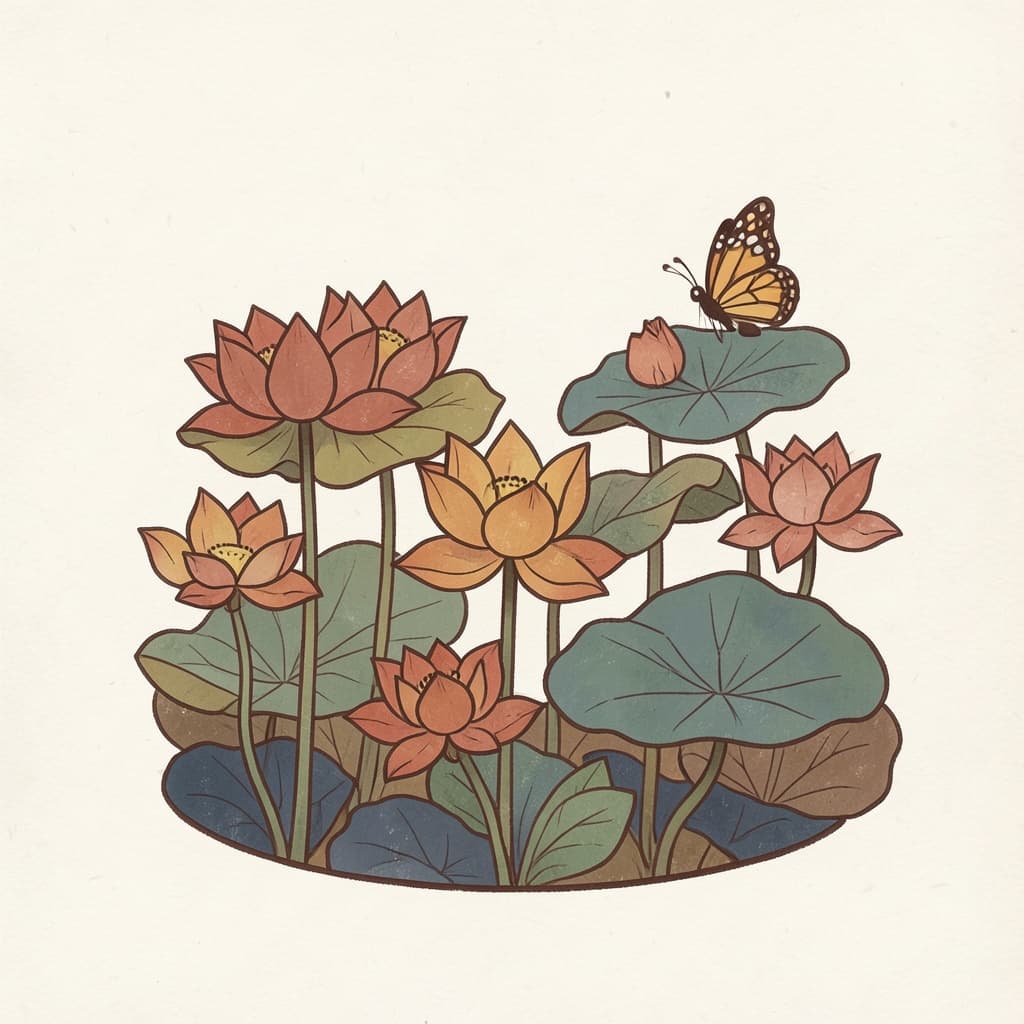
  • A beautiful garden with blooming lotus flowers and a butterfly.
    sundaraḥ

    beautiful

    Adjective

    ।The garden is beautiful.

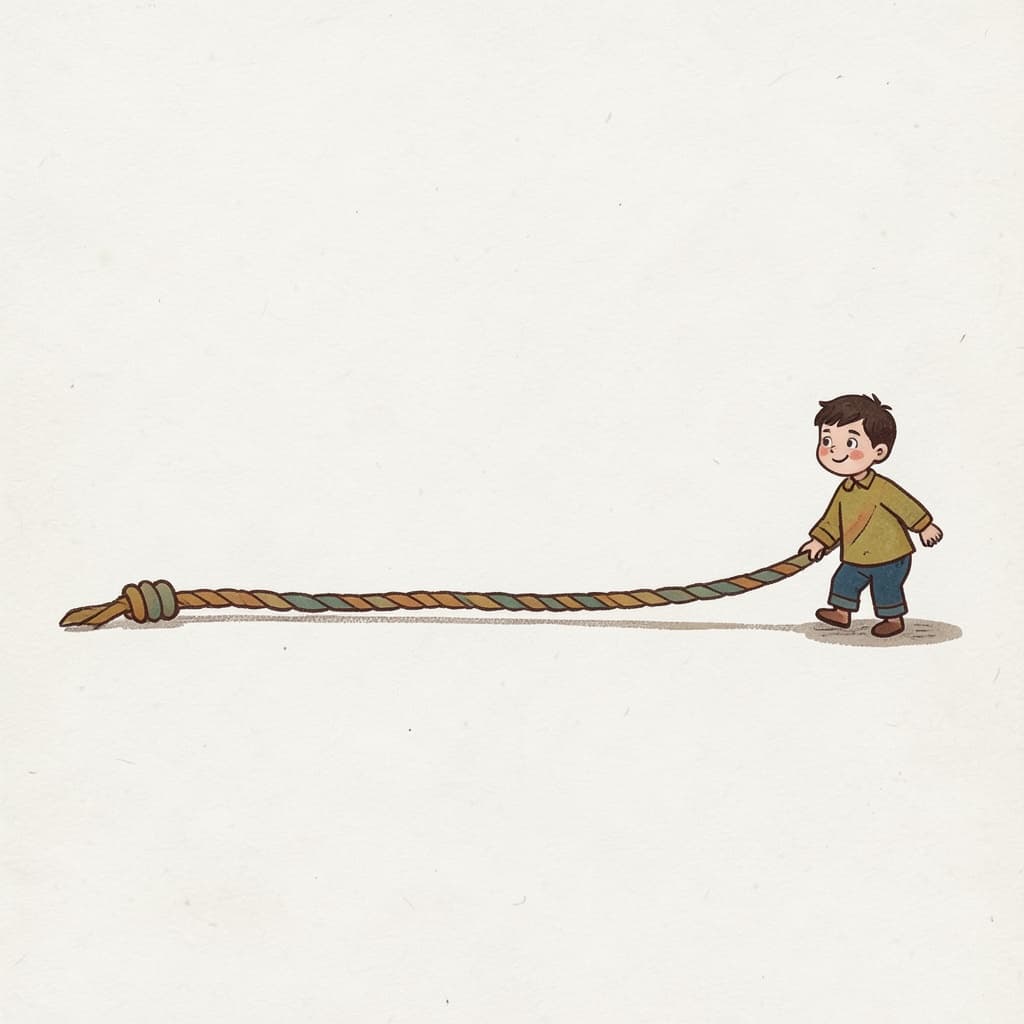
  • A very long rope stretched across the ground with a small boy at one end.
    dīrghaḥ

    long

    Adjective

    ।The road is long.

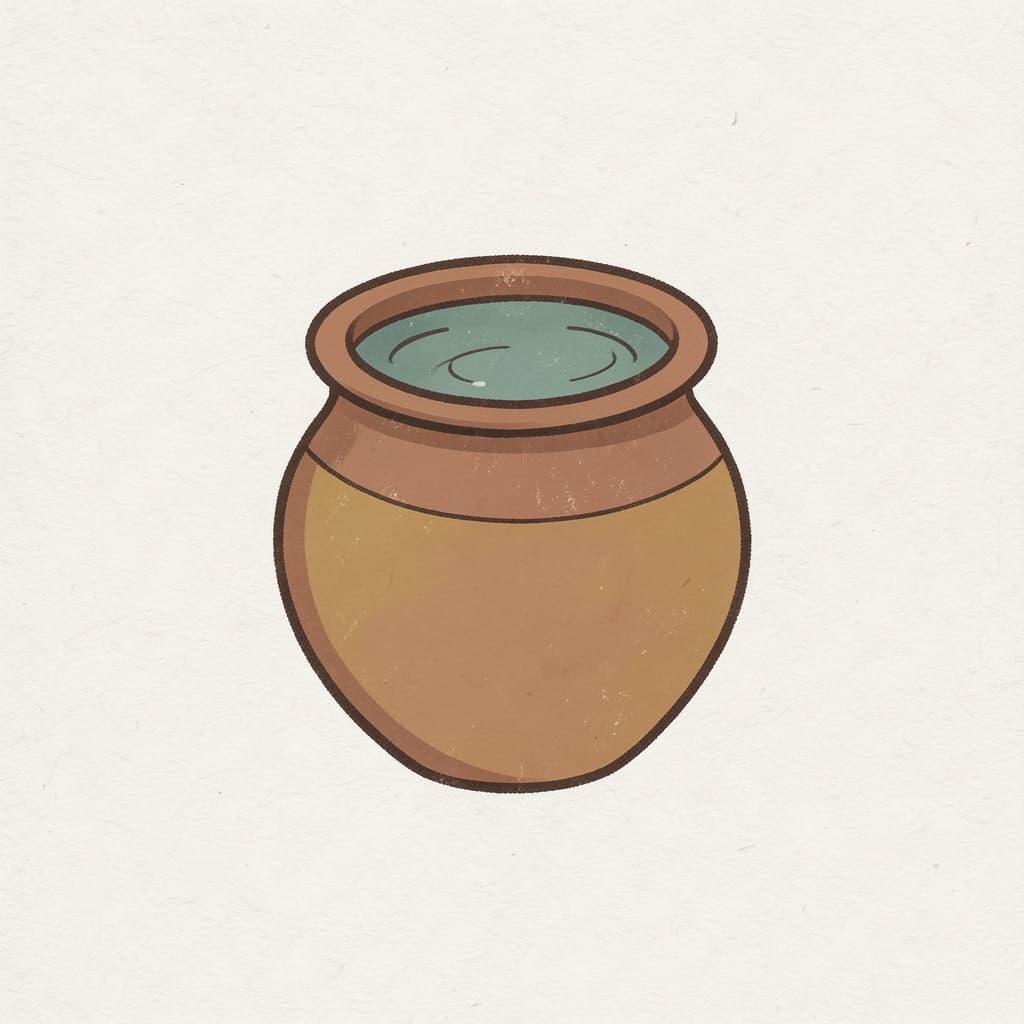
  • A clay pot filled to the brim with water.
    pūrṇaḥ

    full, complete

    Adjective

    ।The pot is full of water.

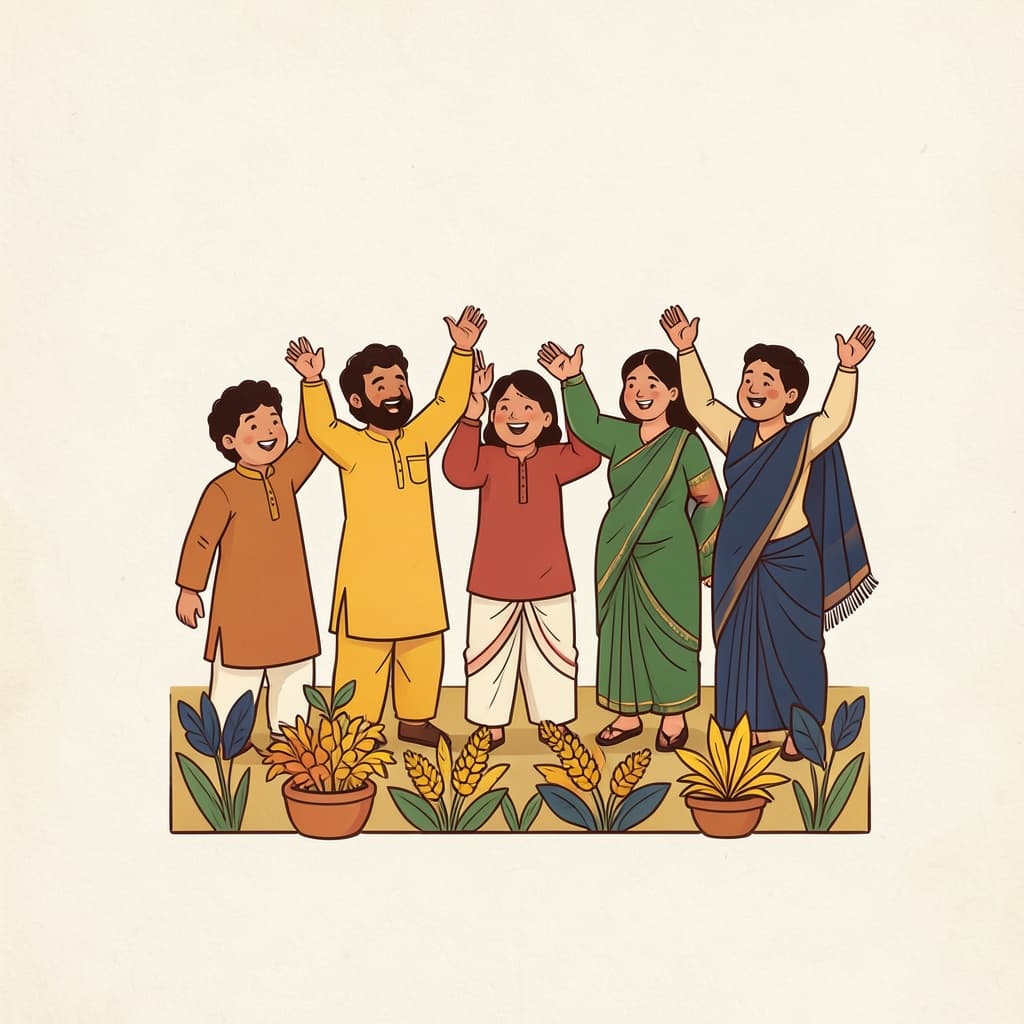
  • Villagers rejoicing with raised hands at a golden harvest.
    prasannaḥ

    happy, pleased

    Adjective

    ।Everyone is happy.

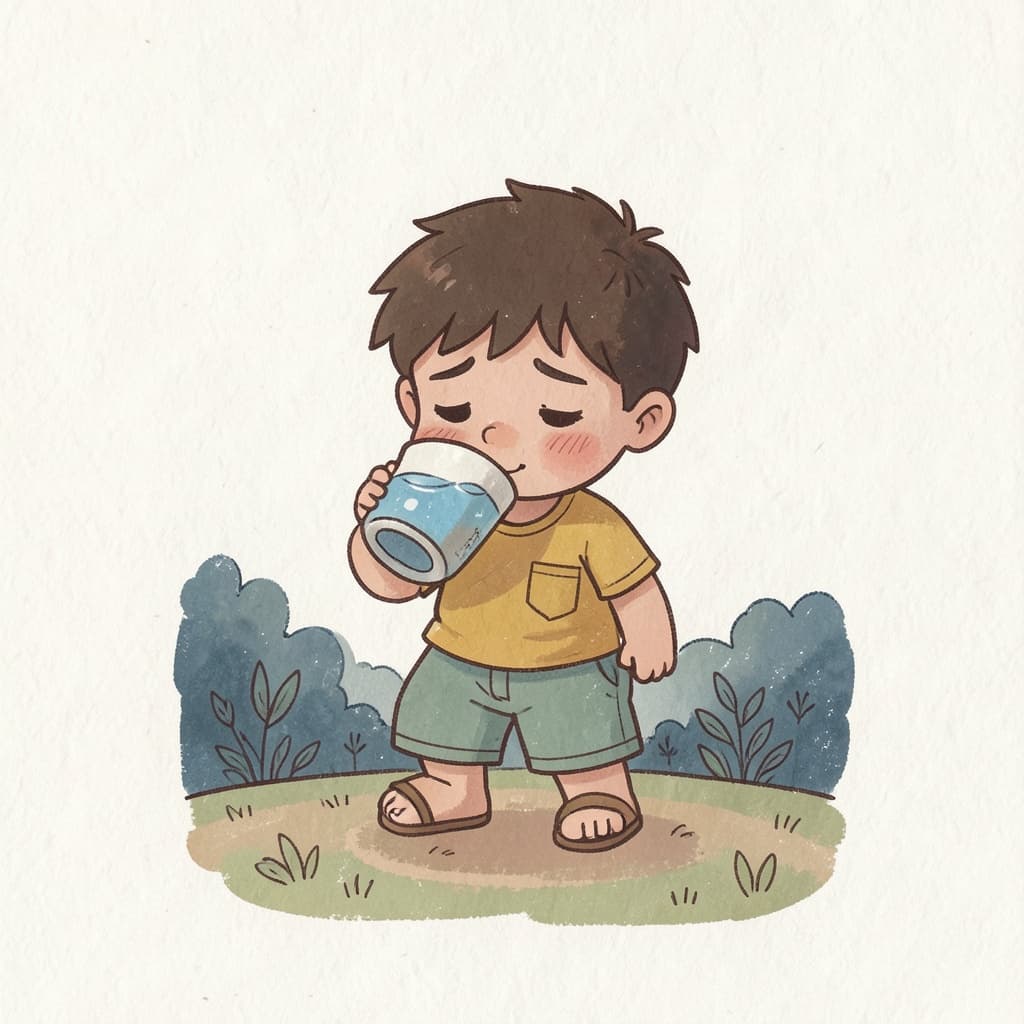
  • A tired boy in the hot sun drinking water from a cup.
    tṛṣitaḥ

    thirsty

    Adjective

    ।The crow was thirsty.

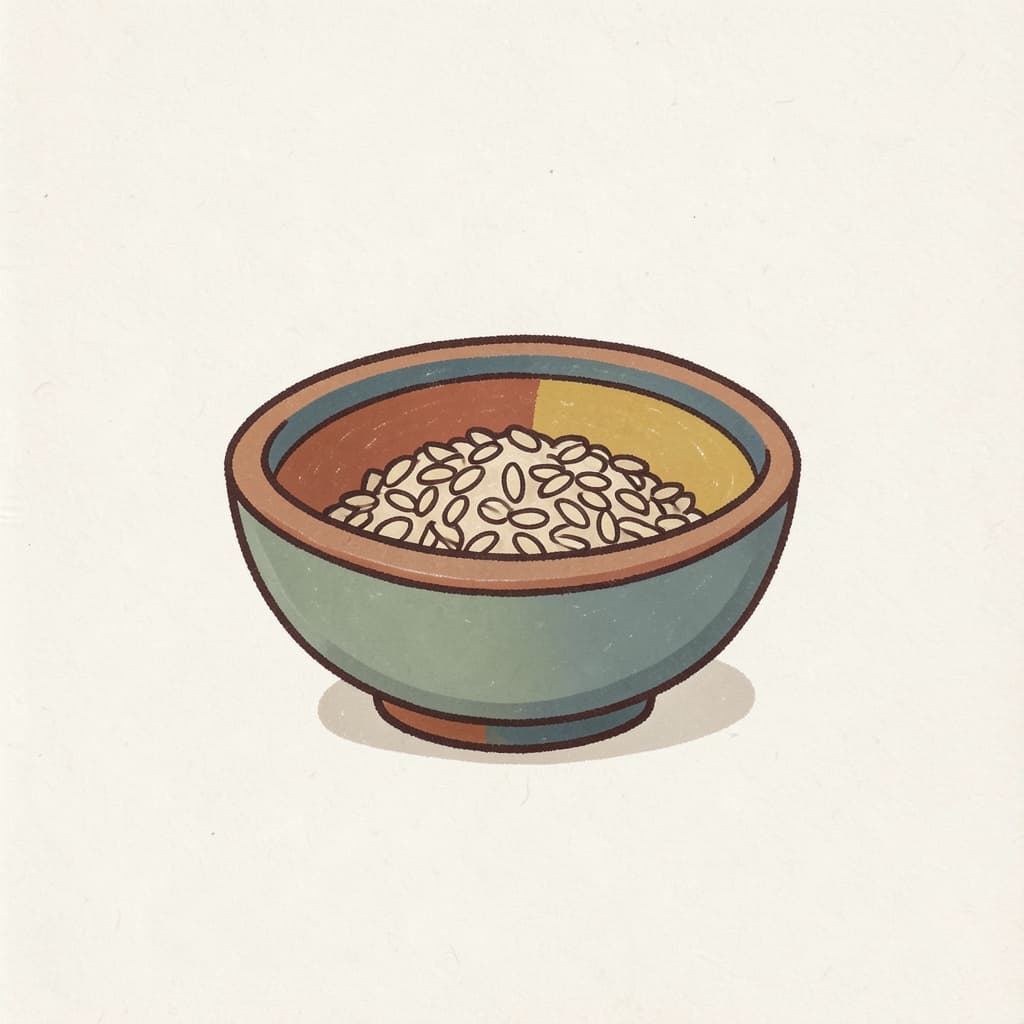
  • A few grains of rice in an almost empty bowl.
    alpaḥ

    little, scanty

    Adjective

    ।There was little water in the pot.

  • A small feather floating lightly in the air.
    laghuḥ

    small, light

    Adjective

    ।My family is small.

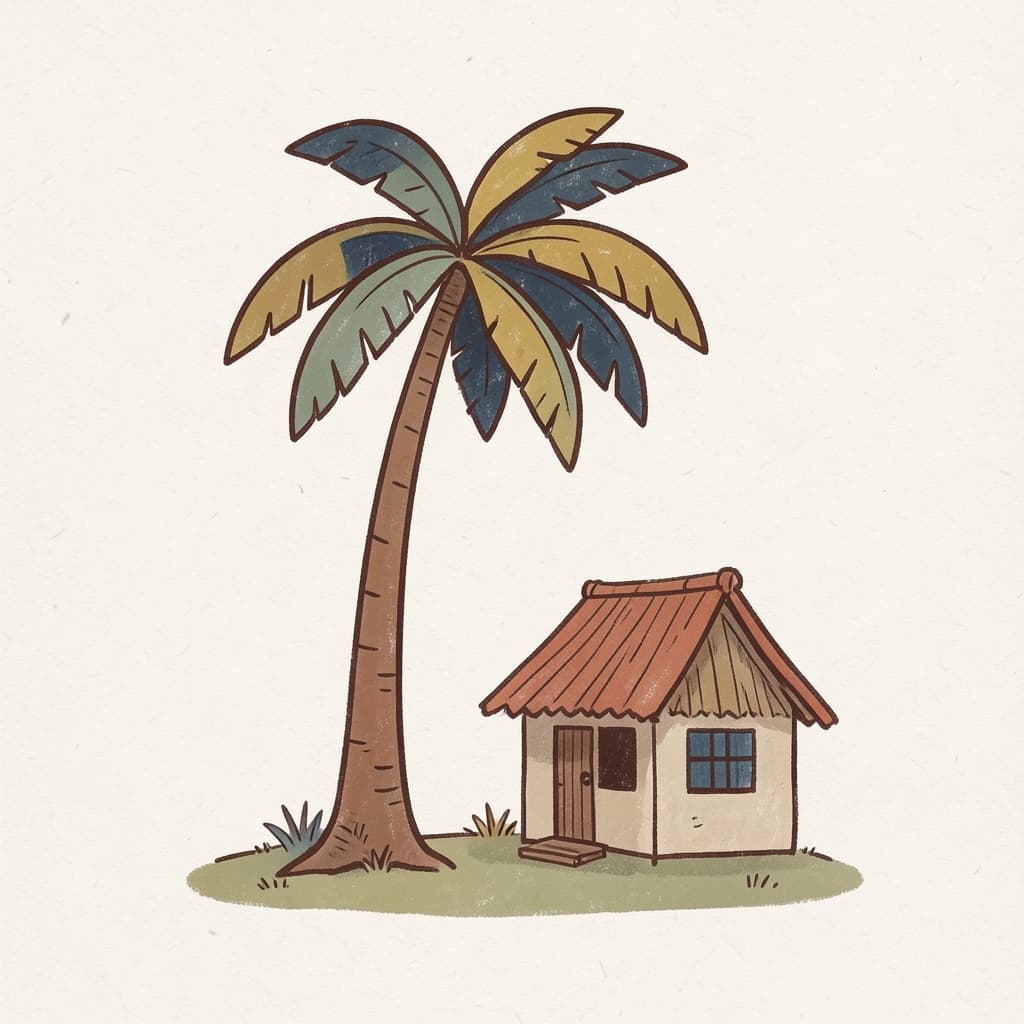
  • A very tall palm tree next to a small hut.
    unnataḥ

    high, tall

    Adjective

    ।The mountain is high.

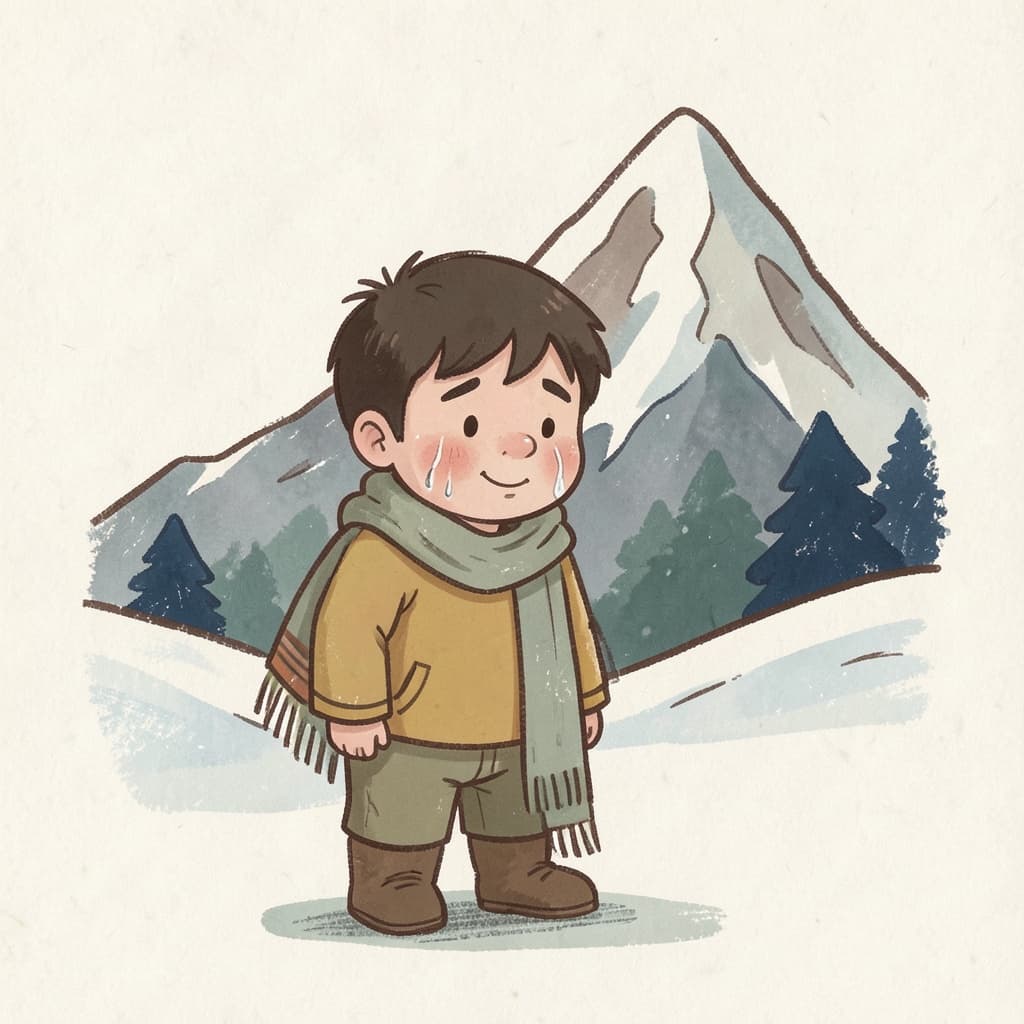
  • A boy shivering with a shawl around him beside a snowy mountain.
    śītalaḥ

    cool, cold

    Adjective

    ।The wind is cool.

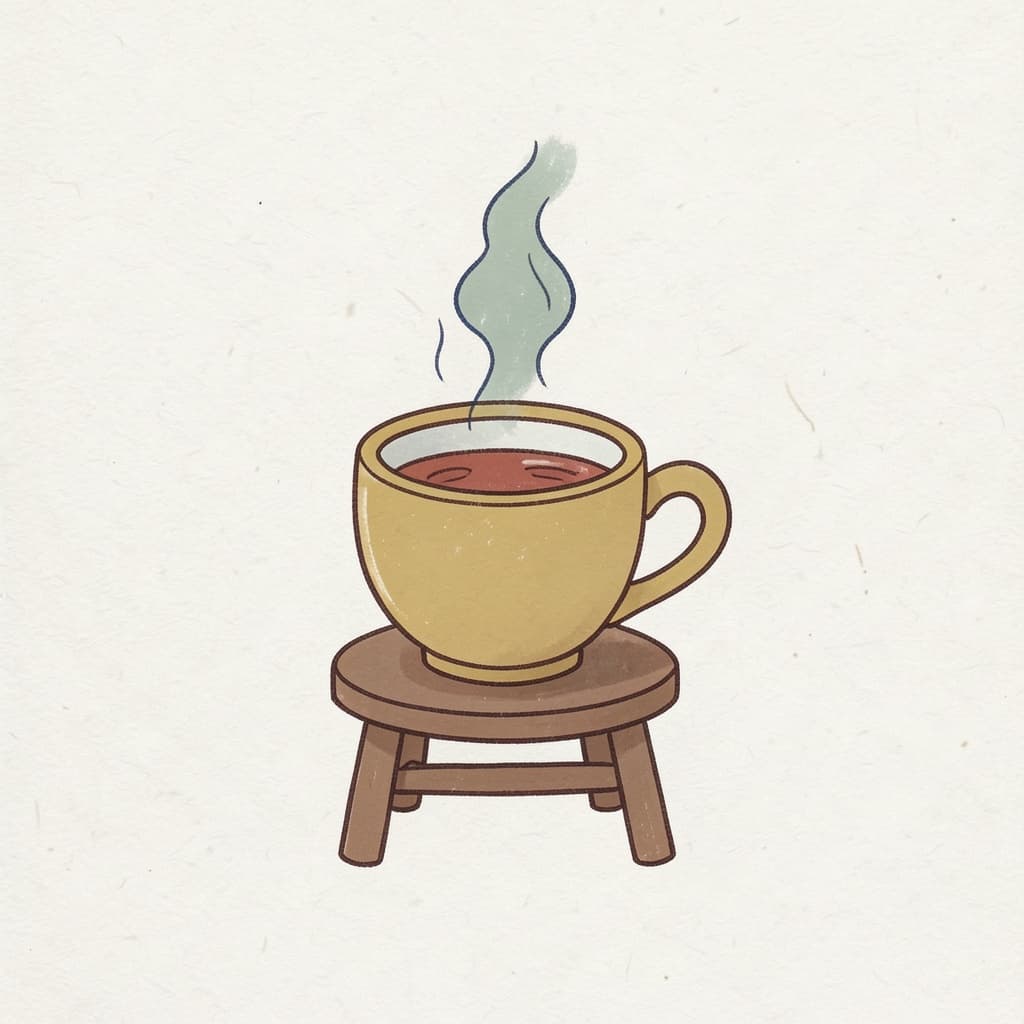
  • A steaming hot cup of tea on a small stool.
    uṣṇaḥ

    hot, warm

    Adjective

    ।Fire is hot.

  • An angry child with crossed arms, frowning and turned away.
    kruddhaḥ

    angry

    Adjective

    ।The lion became angry.

  • A mother hugging her small child lovingly.
    priyaḥ

    dear, beloved

    Adjective

    ।My family is dear to me.

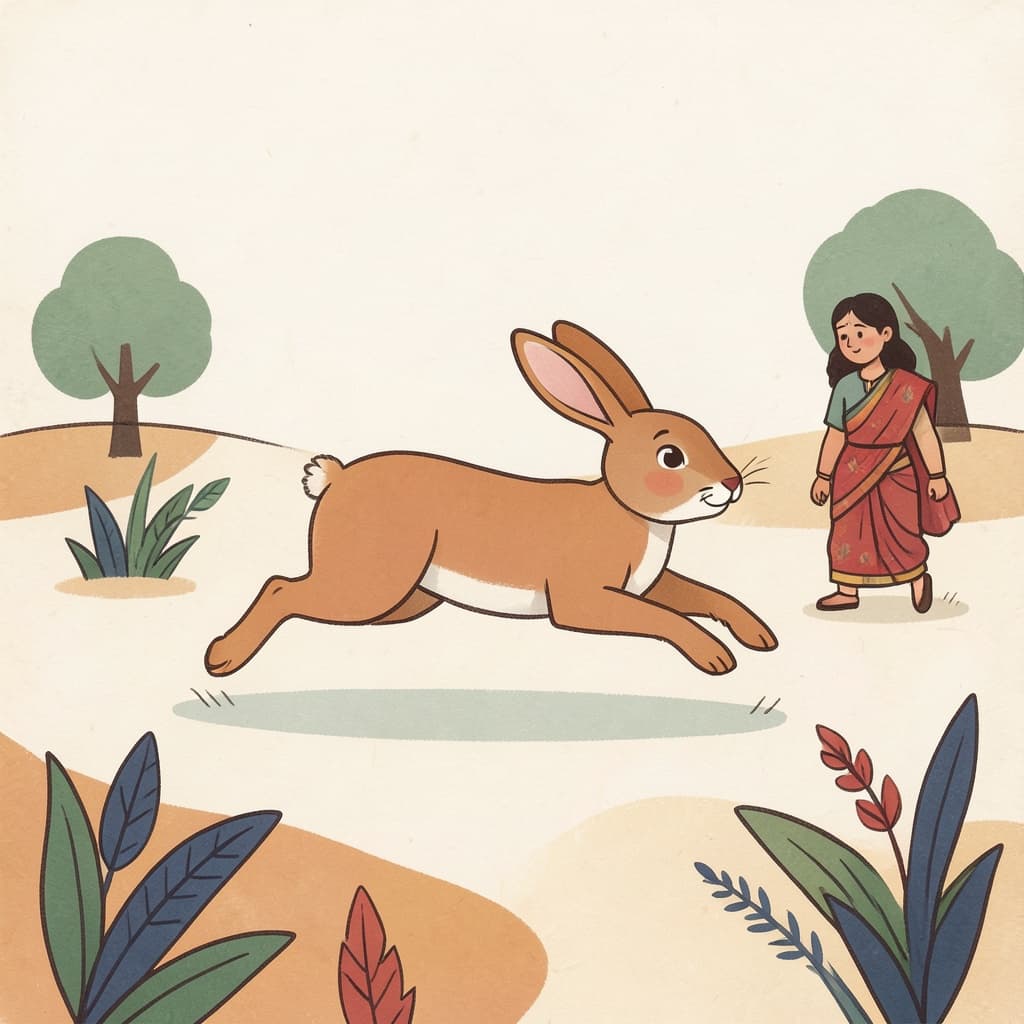
  • A hare running very fast across a field.
    śīghram

    quickly

    Indeclinable

    ।The rabbit runs quickly.

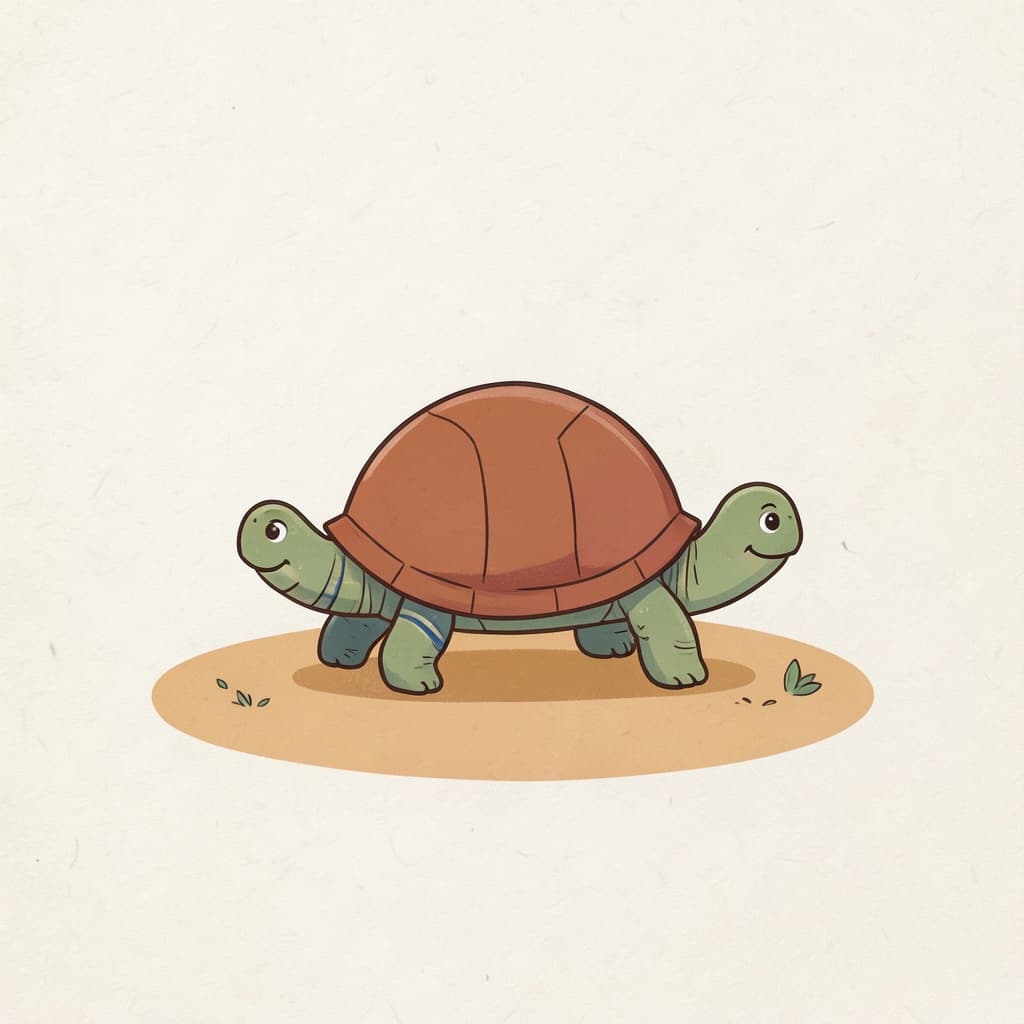
  • A tortoise walking slowly along a path.
    śanaiḥ

    slowly

    Indeclinable

    ।The tortoise walks slowly.

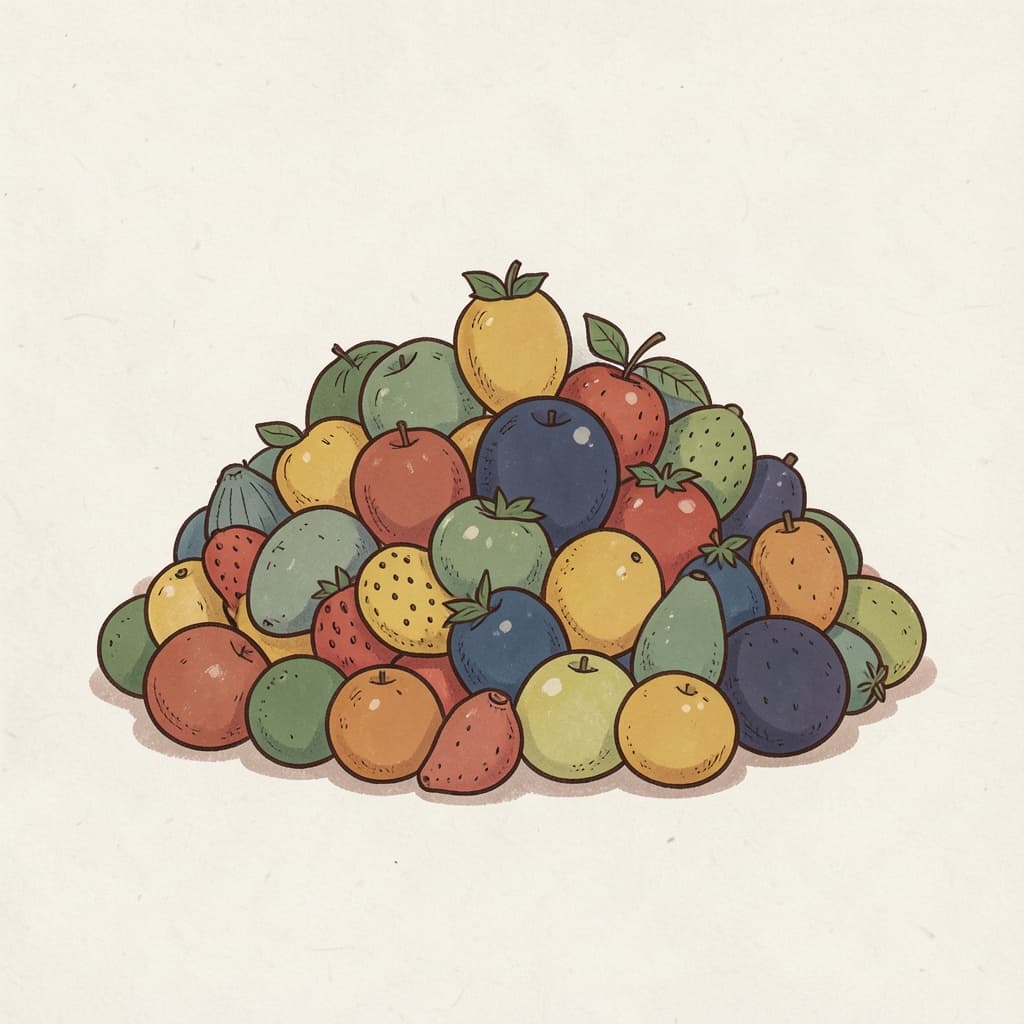
  • A big heap of many colourful fruits.
    bahu

    much, very much

    Indeclinable

    ।I like laddus very much.

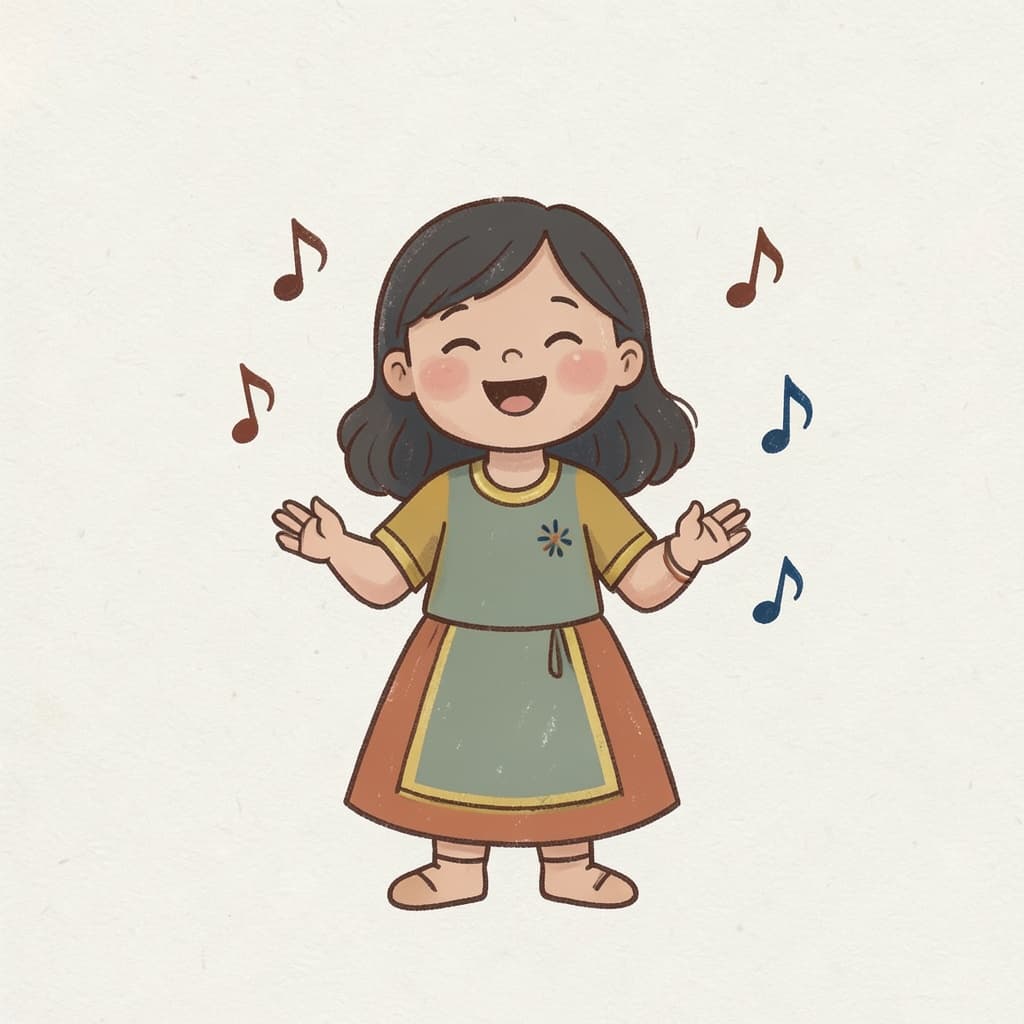
  • A girl singing sweetly with musical notes around her.
    madhuram

    sweetly

    Indeclinable

    ।The cuckoo sings sweetly.

सङ्ख्याः

Numbers

  • १
    ekam

    one

    Number
  • २
    dve

    two

    Number
  • ३
    trīṇi

    three

    Number
  • ४
    catvāri

    four

    Number
  • ५
    pañca

    five

    Number
  • ६
    ṣaṭ

    six

    Number
  • ७
    sapta

    seven

    Number
  • ८
    aṣṭa

    eight

    Number
  • ९
    nava

    nine

    Number
  • १०
    daśa

    ten

    Number

दिशः

Directions & places
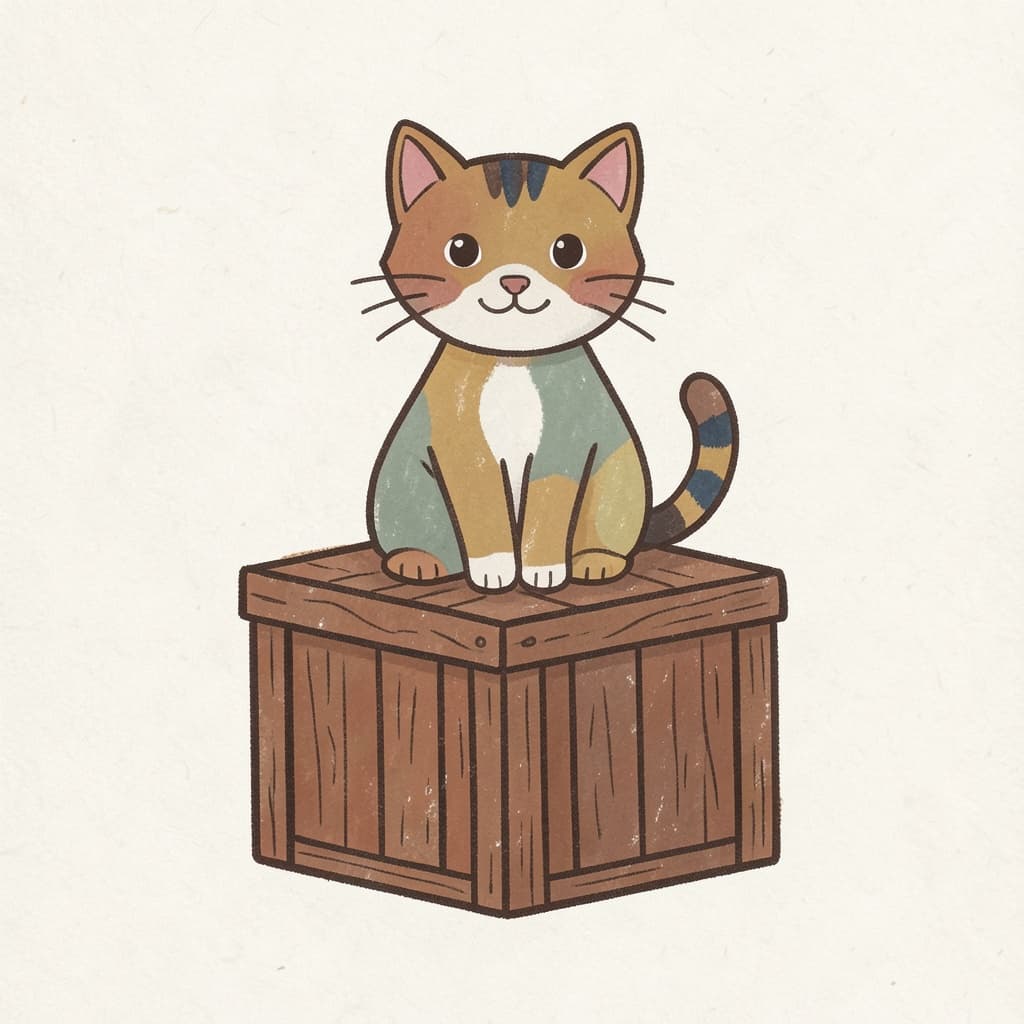
  • A cat sitting on top of a wooden box.
    upari

    above, on top of

    Indeclinable

    ।The nose is above the mouth.

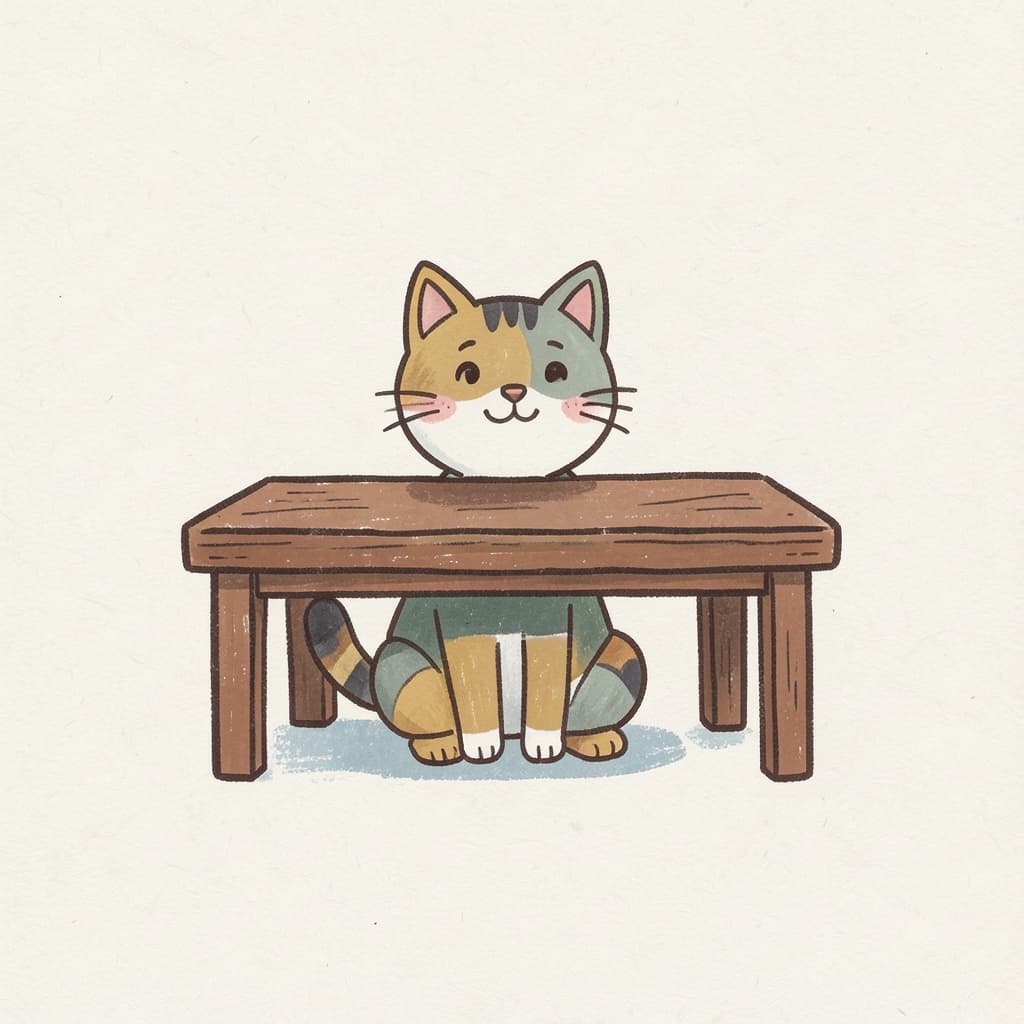
  • A cat sitting under a wooden table.
    adhaḥ

    below, under

    Indeclinable

    ।The boy stands under the tree.

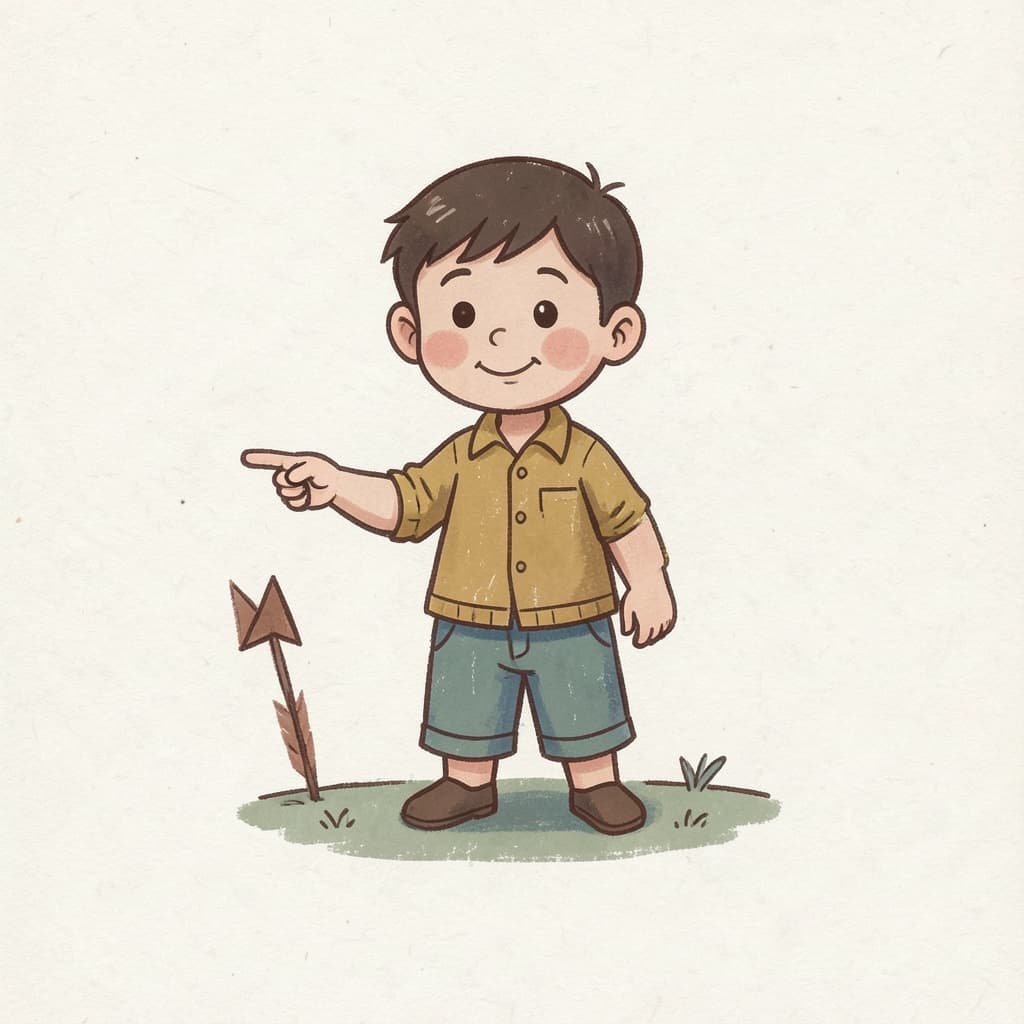
  • A boy pointing to his left side with an arrow on the ground pointing left.
    vāmataḥ

    on the left

    Indeclinable

    ।The school is on the left.

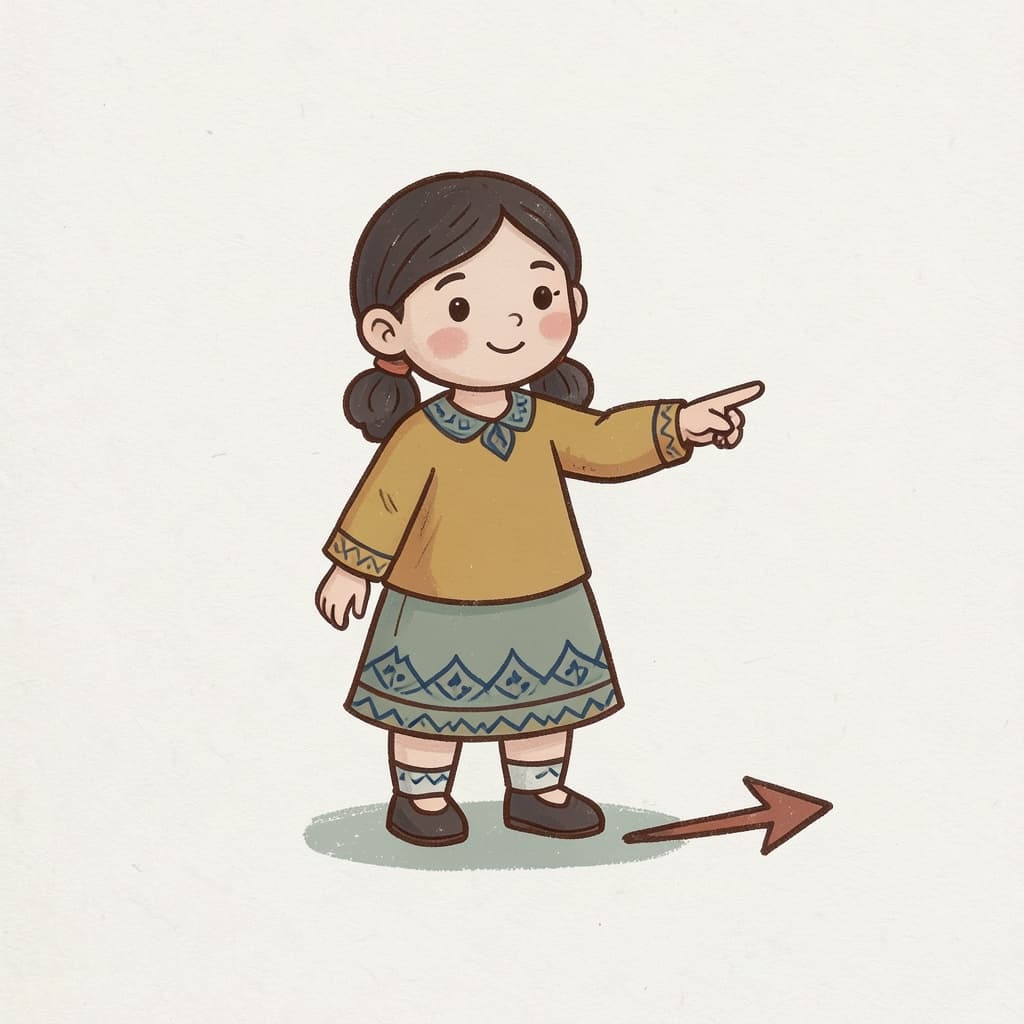
  • A girl pointing to her right side with an arrow on the ground pointing right.
    dakṣiṇataḥ

    on the right

    Indeclinable

    ।The temple is on the right.

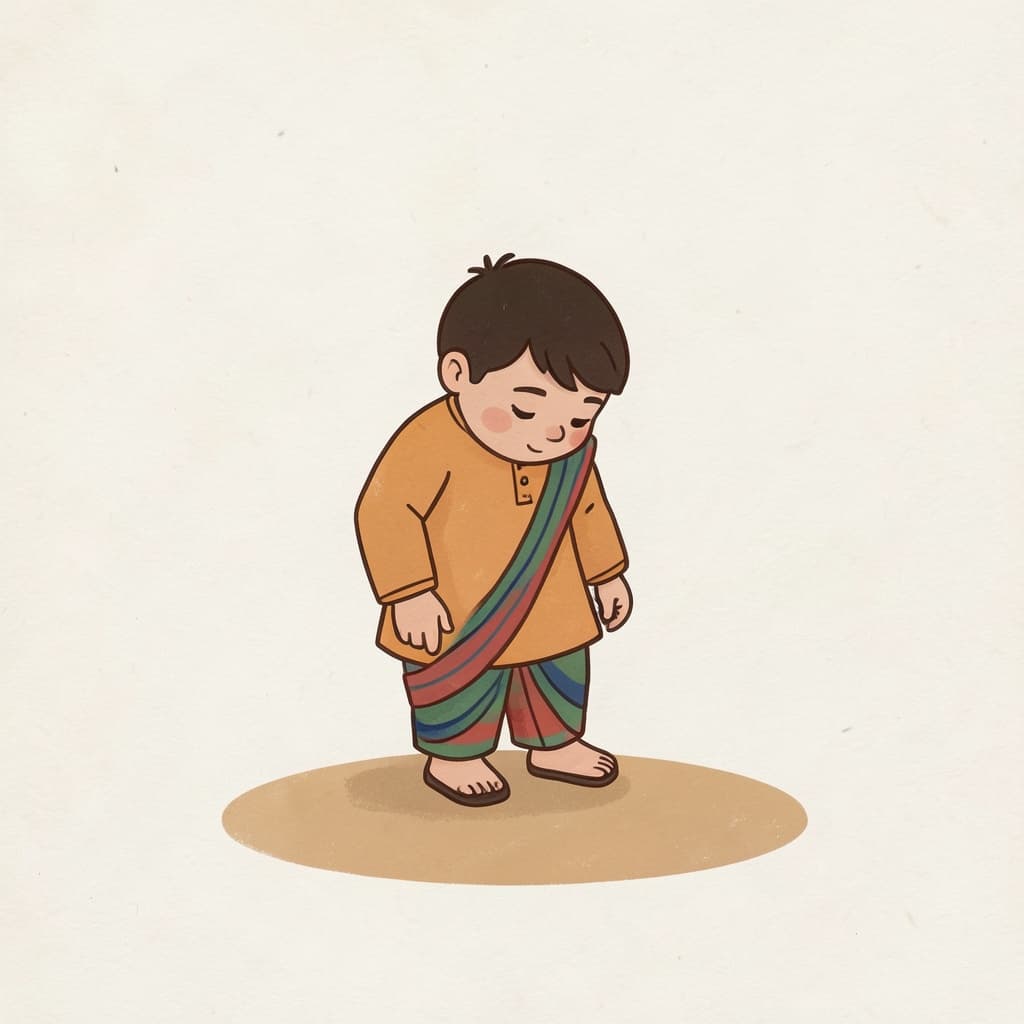
  • A child pointing down at a spot on the ground right at his feet.
    atra

    here

    Indeclinable

    ।Stay here.

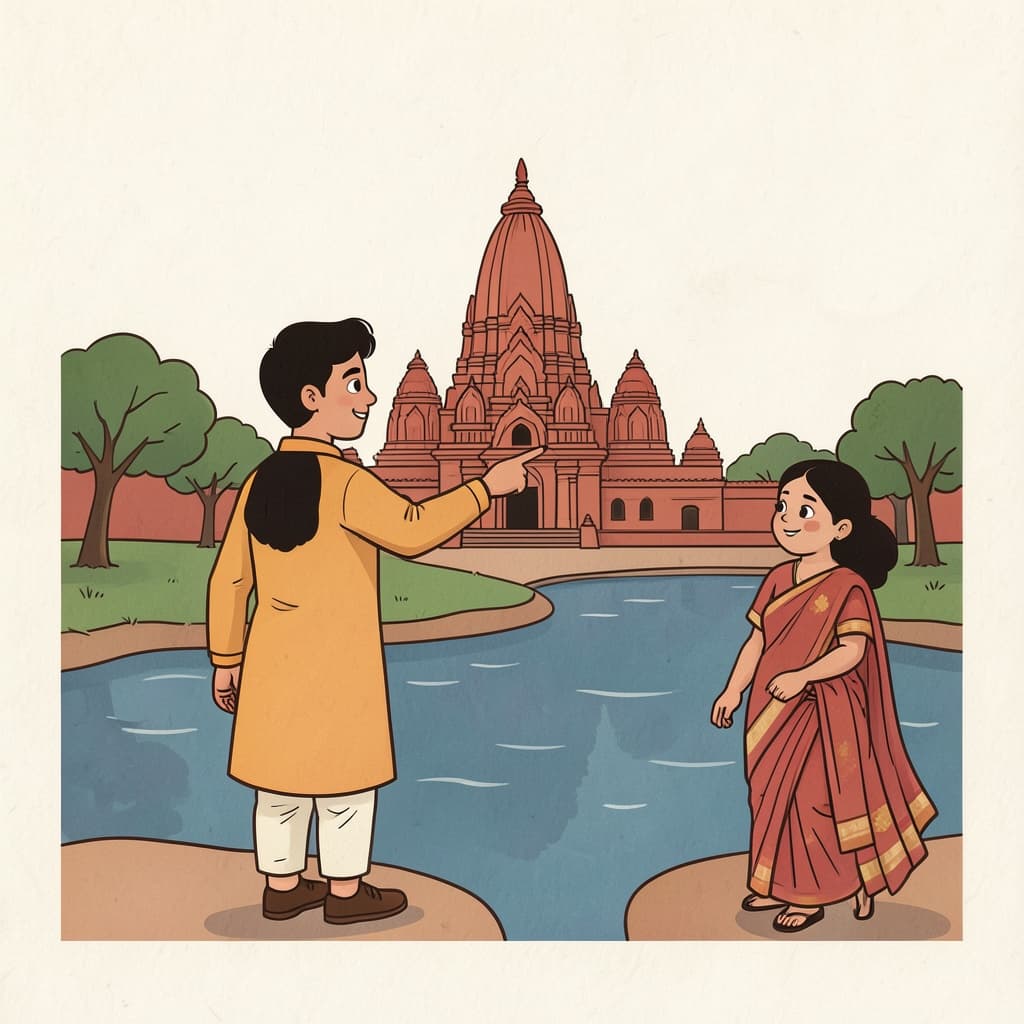
  • A girl pointing far away at a temple across a river.
    tatra

    there

    Indeclinable

    ।The mouse came there.

  • The sun rising on the horizon in the east over green hills.
    pūrvā

    east

    Adjective

    ।The sun rises in the east.

  • The sun setting in the west with an orange sky over a river.
    paścimā

    west

    Adjective
  • A compass needle pointing up towards snowy mountains.
    uttarā

    north

    Adjective
  • A compass needle pointing down towards the sea with palm trees.
    dakṣiṇā

    south

    Adjective
  • Two children standing side by side, one tapping the other on the side.
    pārśvam

    side

    NounNeuter

    ।The tree stands beside the road.

गृहवस्तूनि

Household items
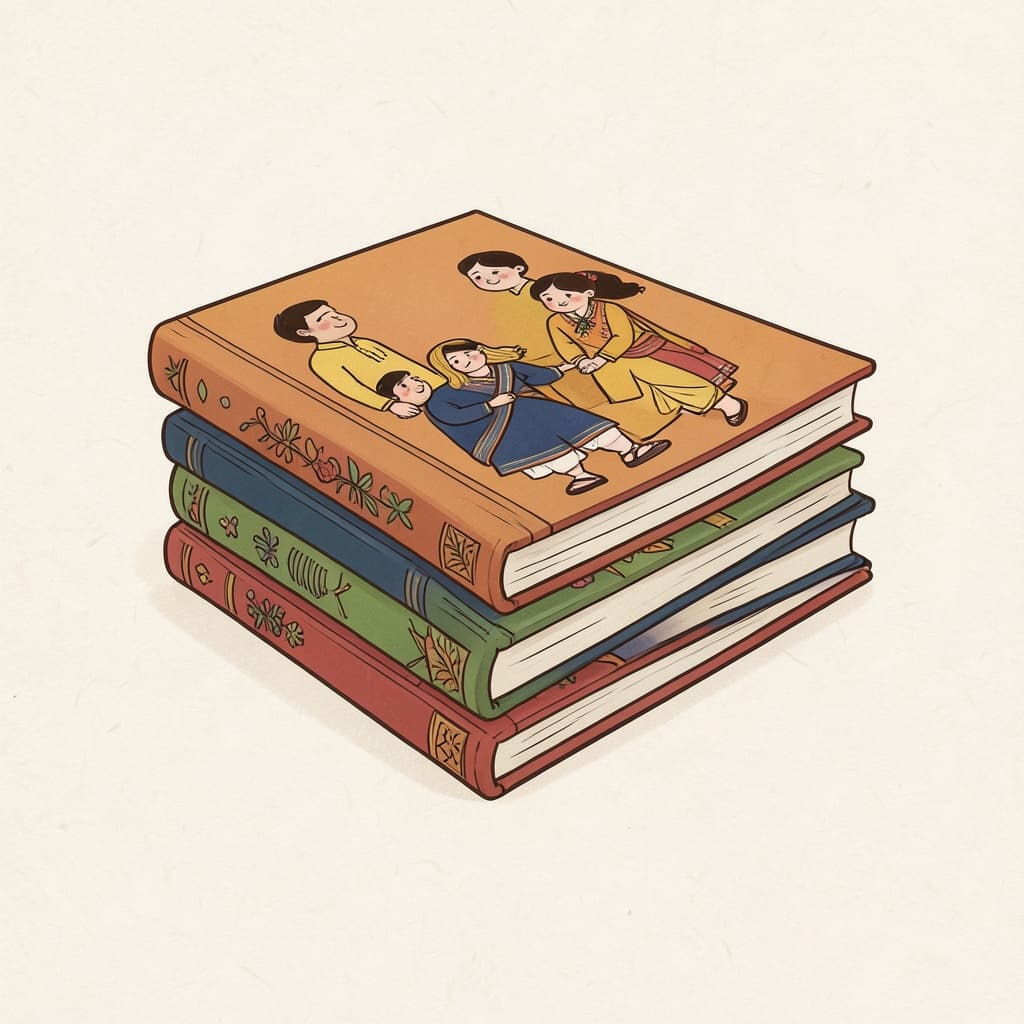
  • A stack of books with colourful covers.
    pustakam

    book

    NounNeuter

    ।Rāma reads a book.

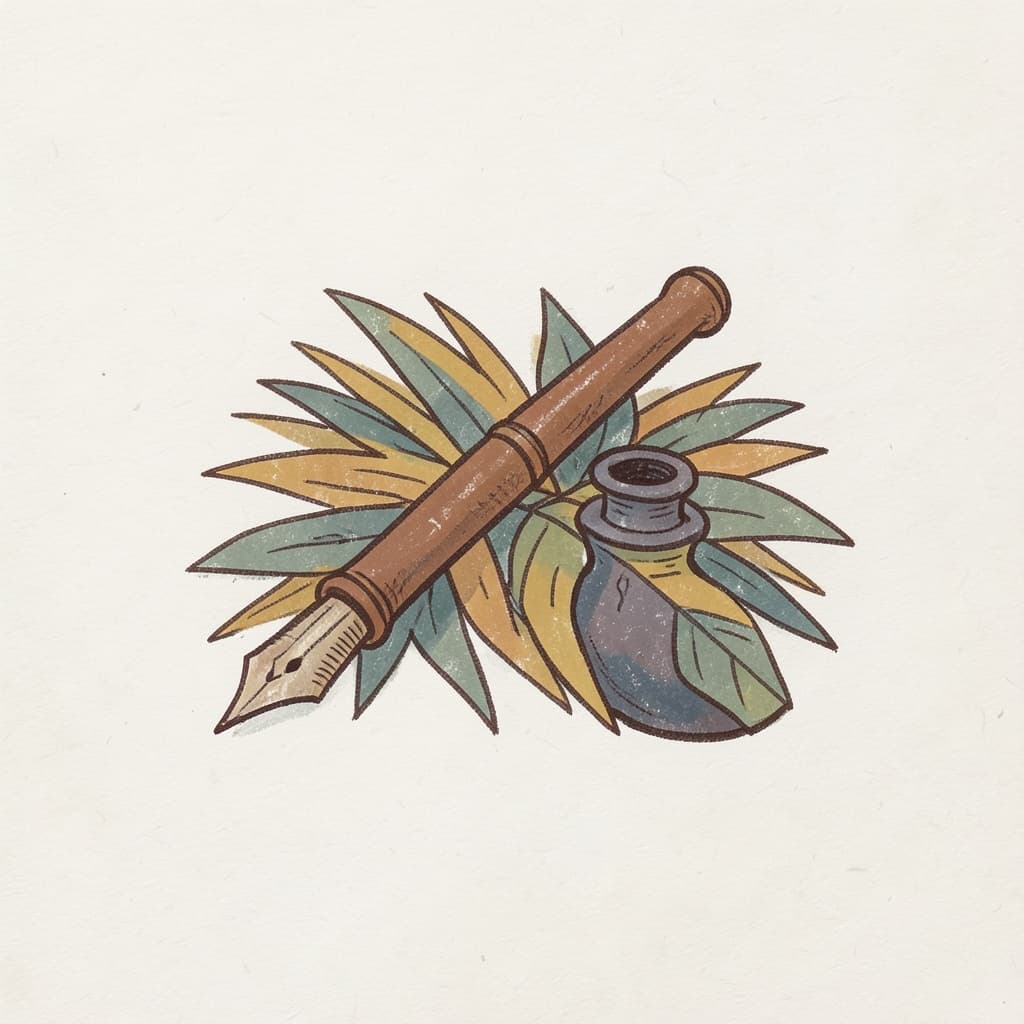
  • An old-style pen and an inkpot on a palm-leaf page.
    lekhanī

    pen

    NounFeminine

    ।We write with a pen.

  • A small square woven mat seat on the floor.
    āsanam

    seat

    NounNeuter

    ।The students sit on the seat.

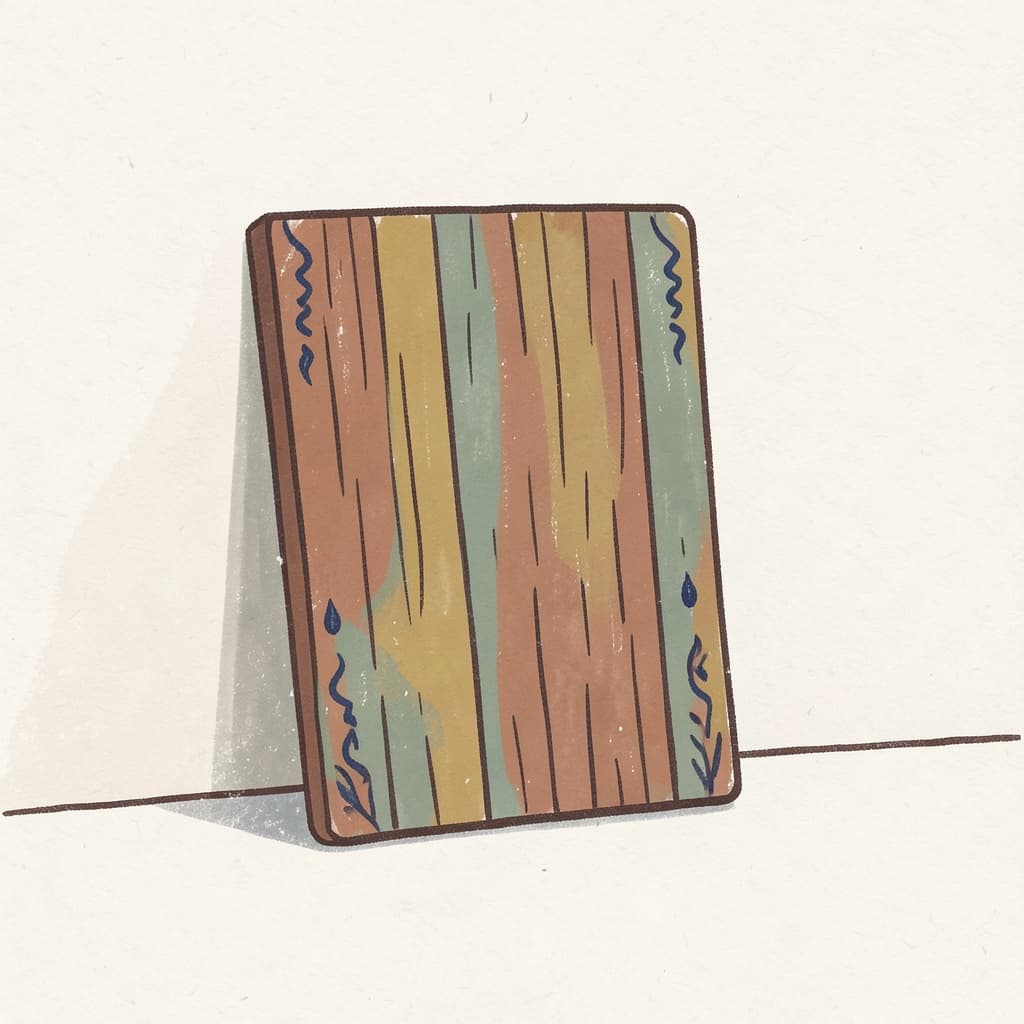
  • A wooden plank board leaning against a wall.
    phalakam

    board, plank

    NounNeuter

    ।The teacher writes on the board.

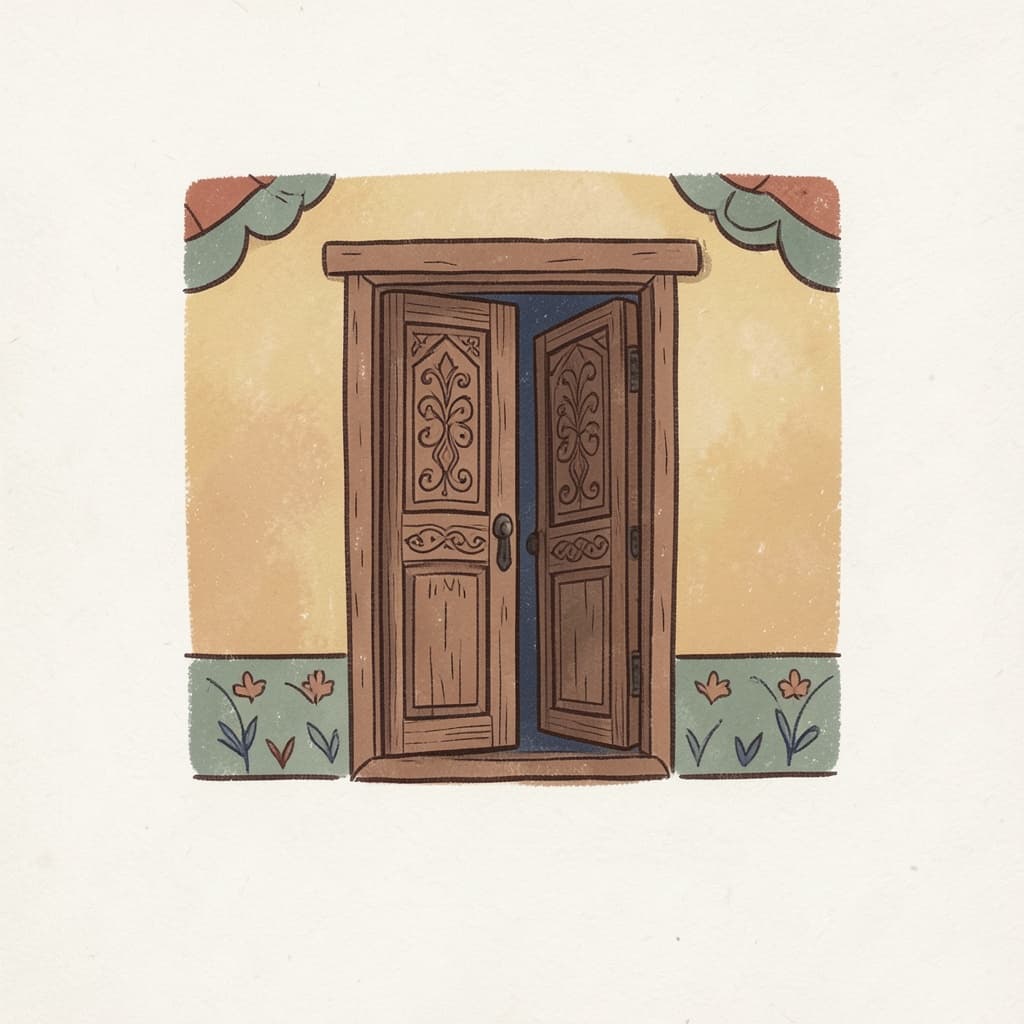
  • A carved wooden door of a village house, slightly open.
    dvāram

    door

    NounNeuter

    ।The boy stands at the door.

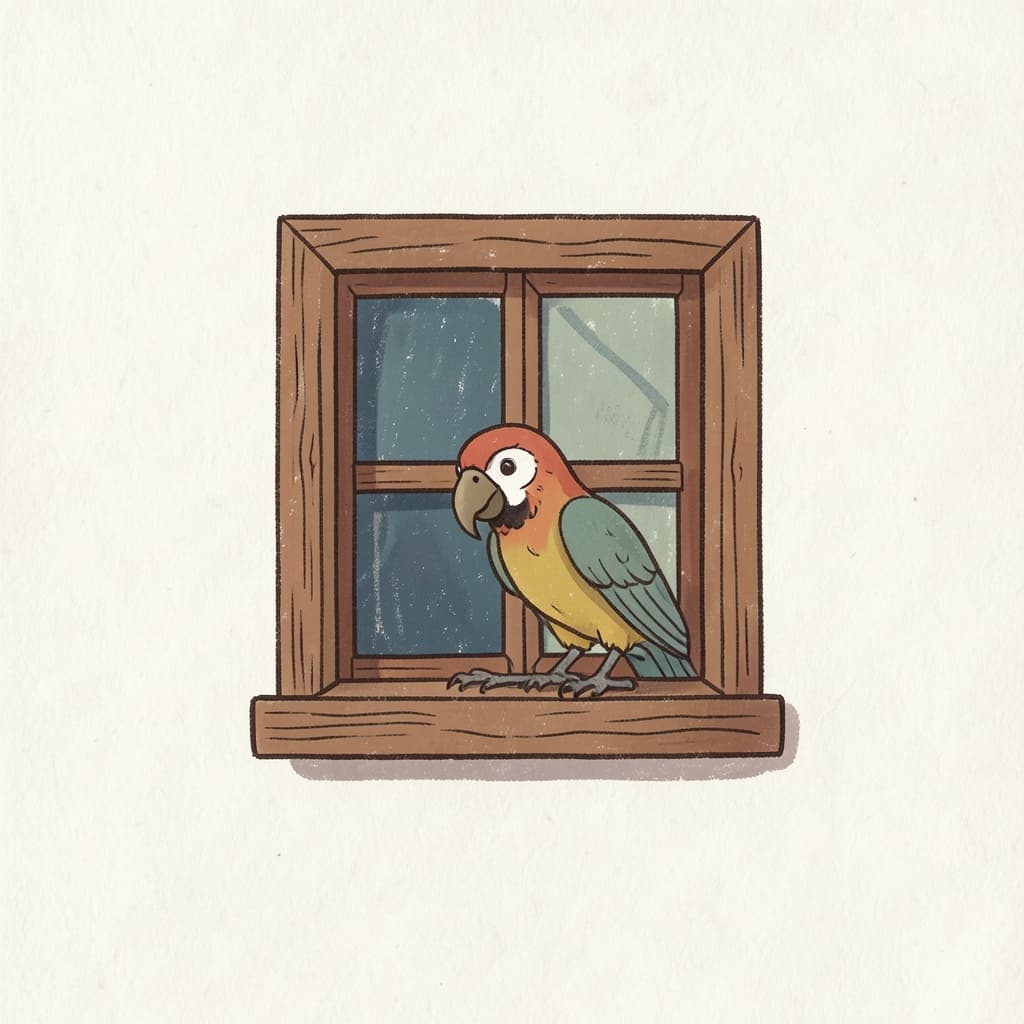
  • A small wooden window with a parrot sitting on its sill.
    gavākṣaḥ

    window

    NounMasculine

    ।I see the sun from the window.

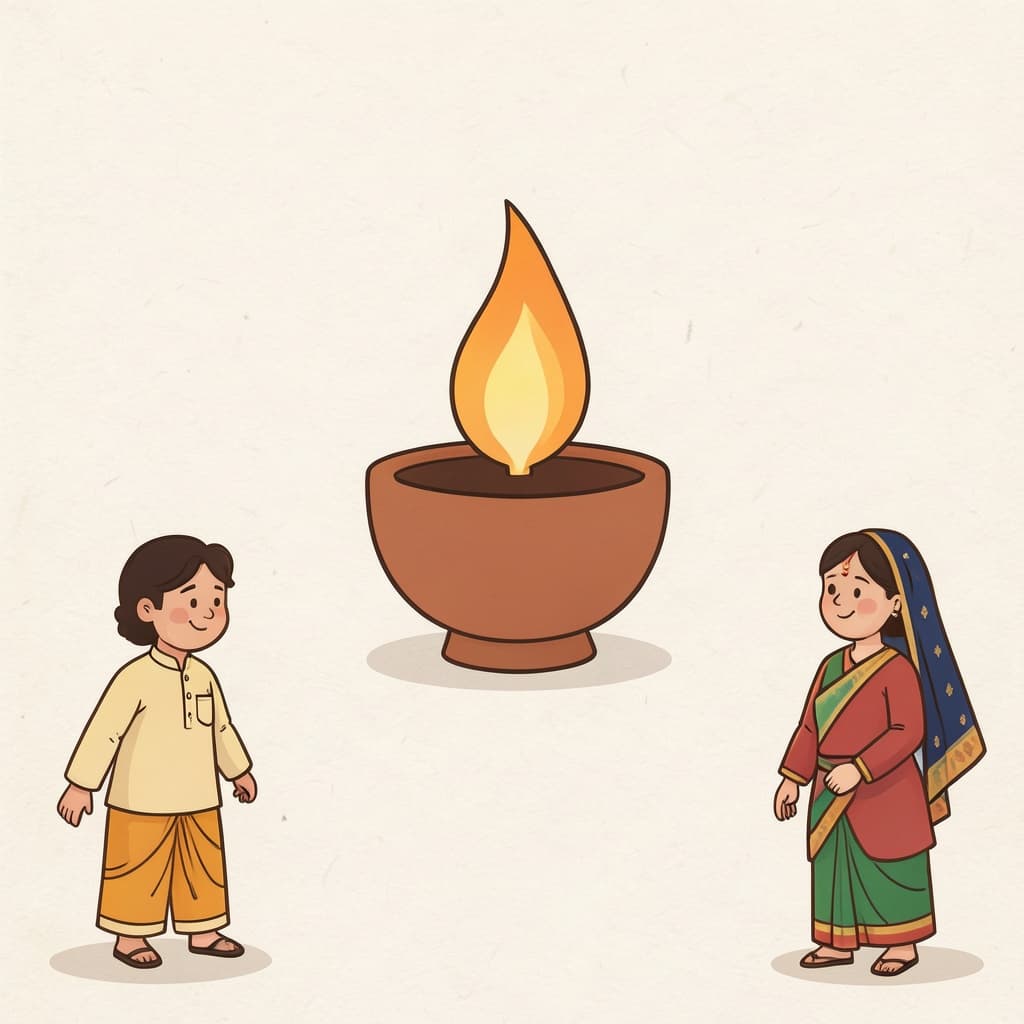
  • A small clay oil lamp with a bright flame.
    dīpaḥ

    lamp

    NounMasculine

    ।The lamp shines.

  • A round red clay water pot.
    ghaṭaḥ

    pot, pitcher

    NounMasculine

    ।There is water in the pot.

  • A round red clay water pot.
    pātram

    vessel, container

    NounNeuter

    ।There is milk in the vessel.

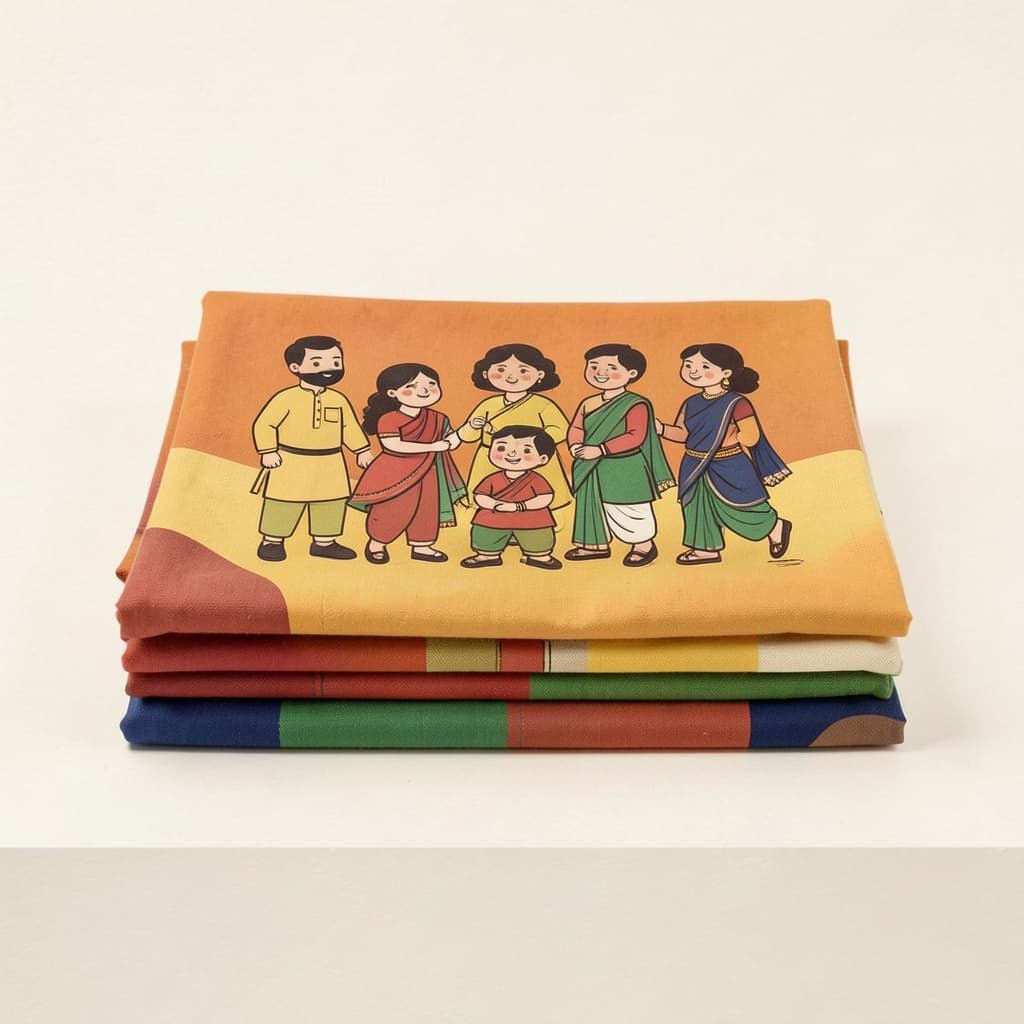
  • Neatly folded colourful cloth stacked on a shelf.
    vastram

    cloth, garment

    NounNeuter

    ।The cloth is white.

  • A brass cup filled with water.
    caṣakaḥ

    cup, glass

    NounMasculine

    ।There is water in the glass.

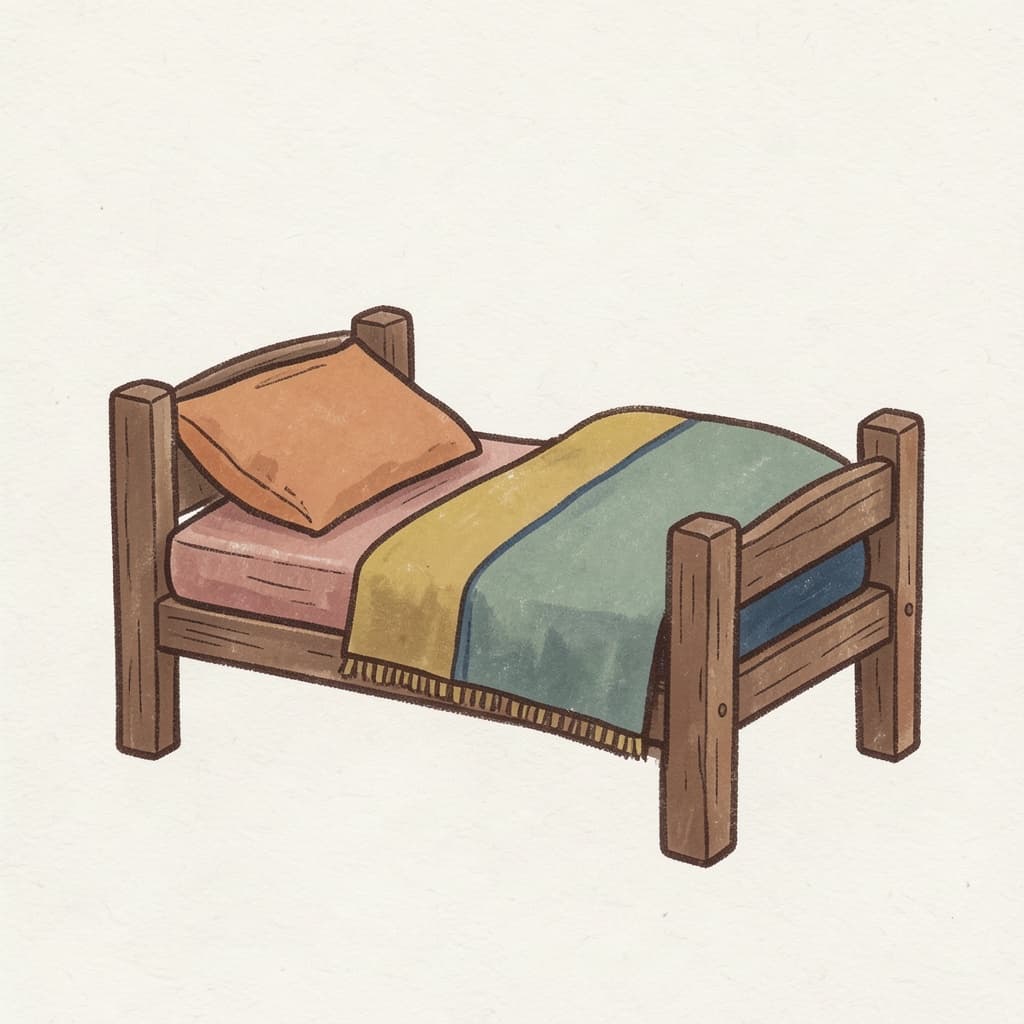
  • A wooden cot bed with a pillow and a folded blanket.
    śayyā

    bed

    NounFeminine

    ।The baby sleeps on the bed.

  • An old brass key with a round handle.
    kuñcikā

    key

    NounFeminine

    ?Where is the key?

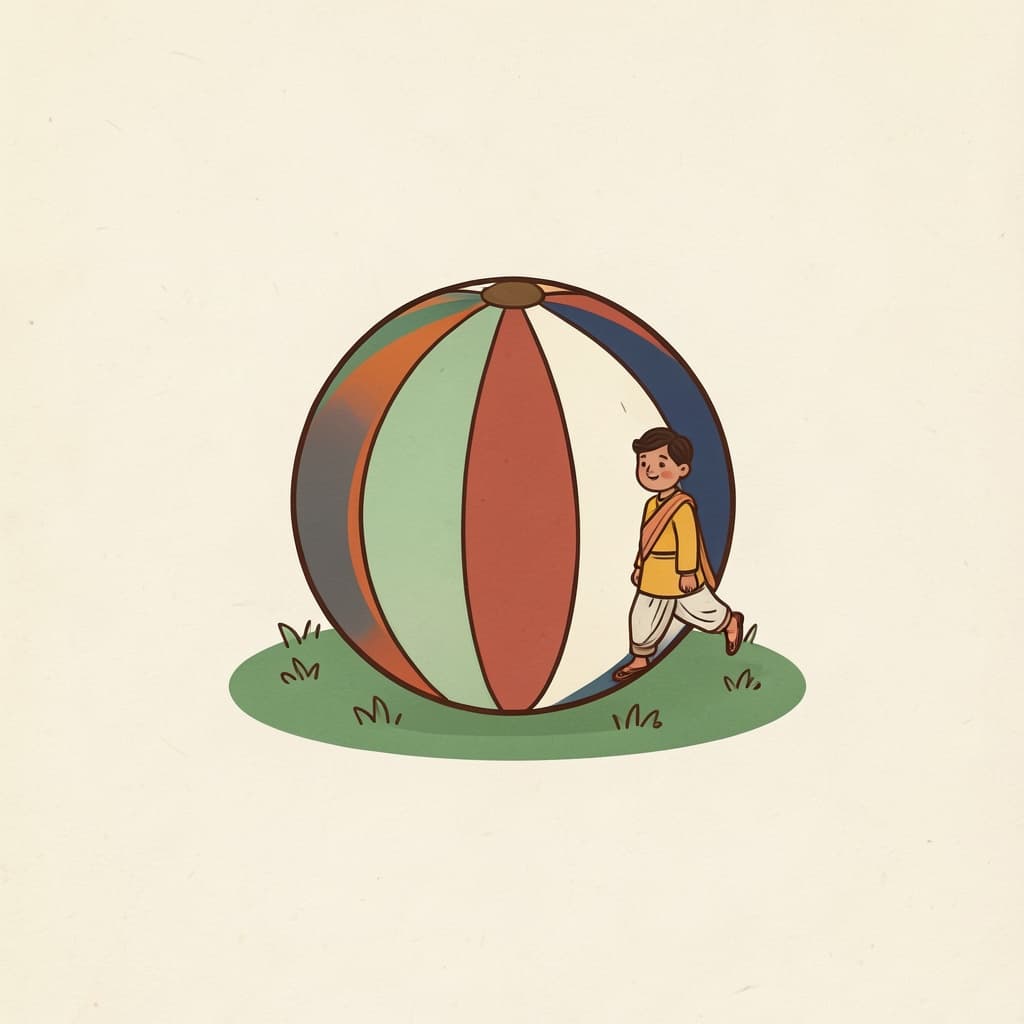
  • A colourful striped cloth ball lying on green grass.
    kandukaḥ

    ball

    NounMasculine

    ।The boy throws the ball.

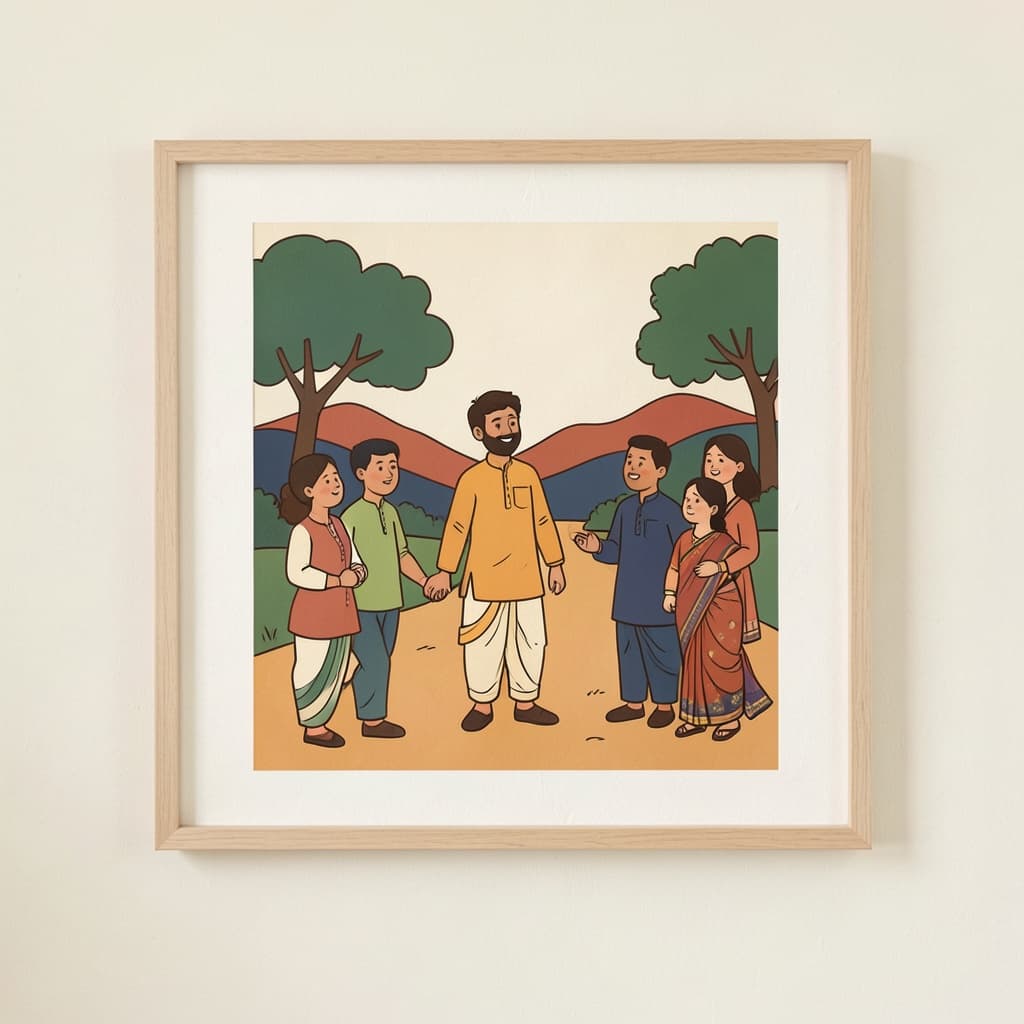
  • A framed painting of a landscape hanging on a wall.
    citram

    picture

    NounNeuter

    ।The daughter looks at a picture.

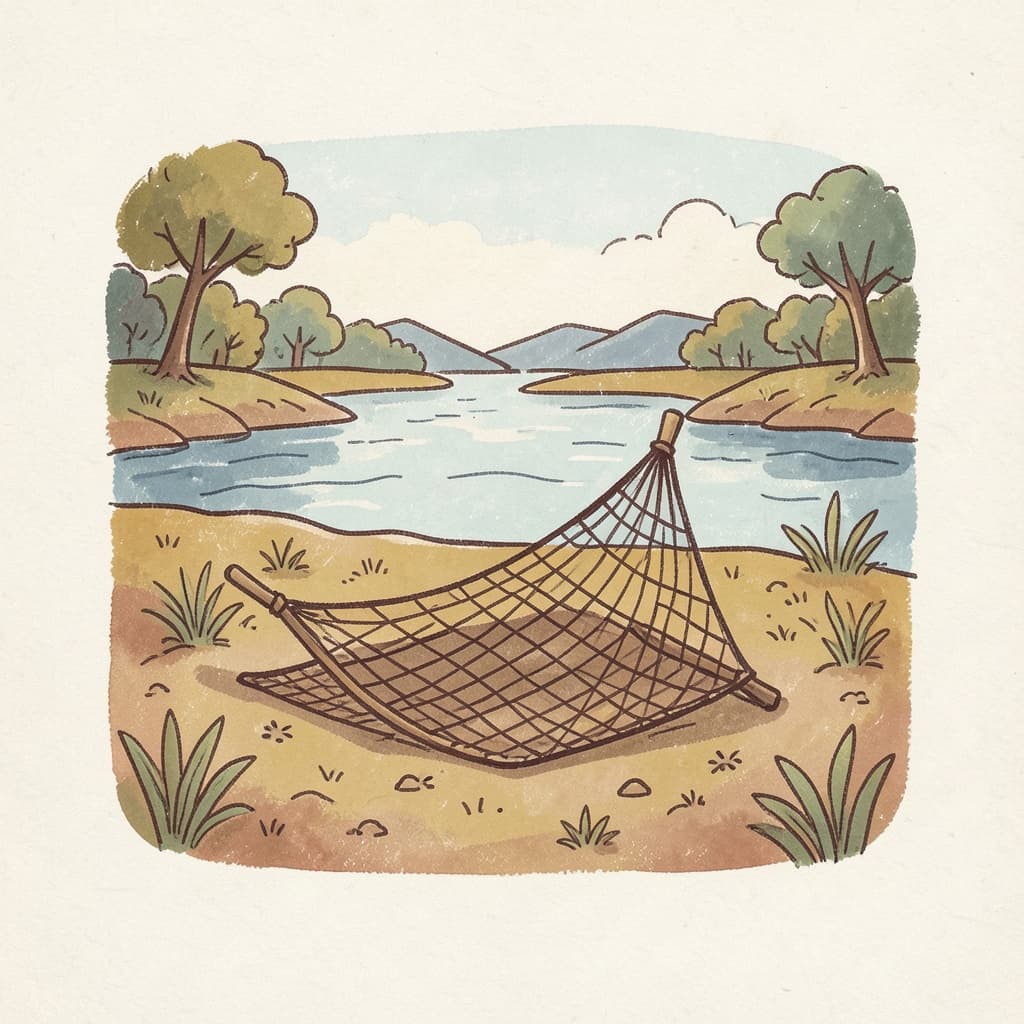
  • A fishing net spread out on the riverbank.
    jālam

    net

    NounNeuter

    ।The mouse cuts the net.

  • A single arrow with feathers flying through the air.
    bāṇaḥ

    arrow

    NounMasculine
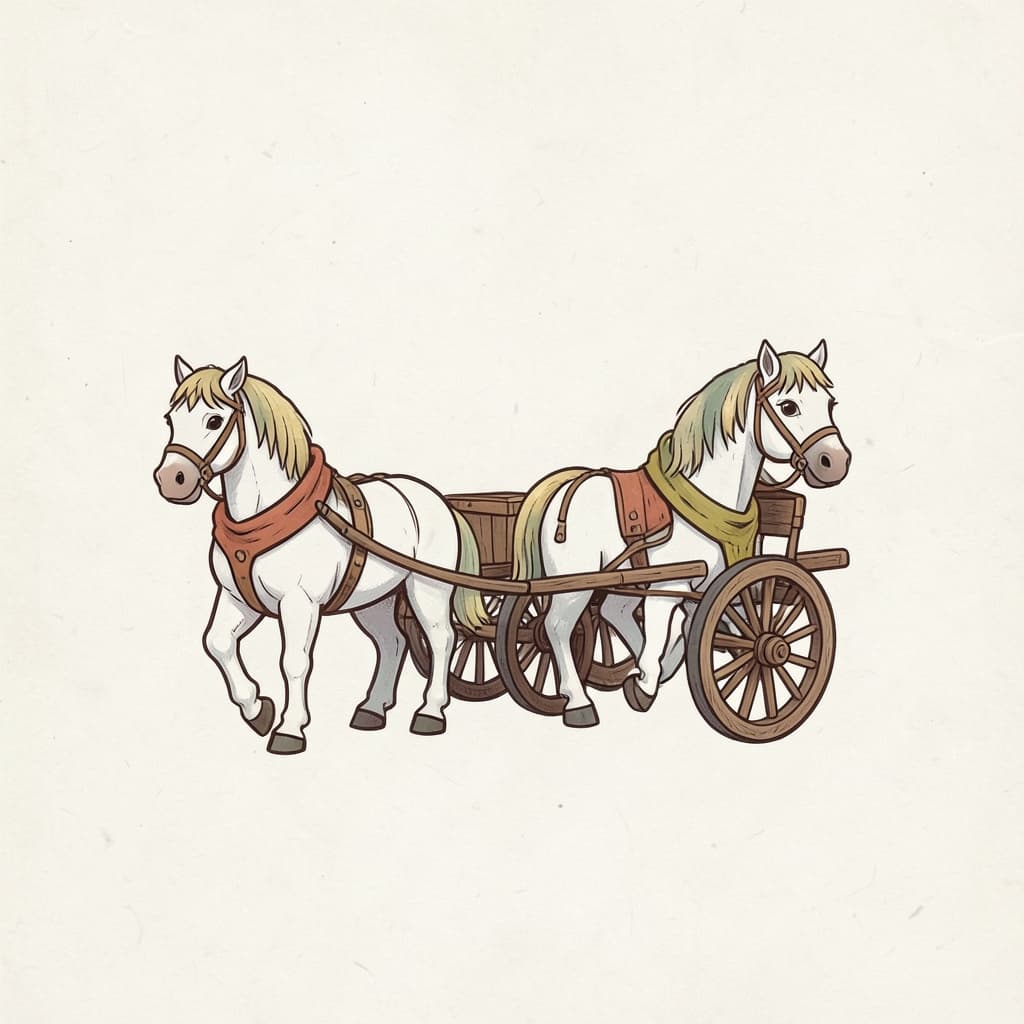
  • An old wooden chariot pulled by two white horses.
    rathaḥ

    chariot

    NounMasculine

प्रकृतिः

Nature
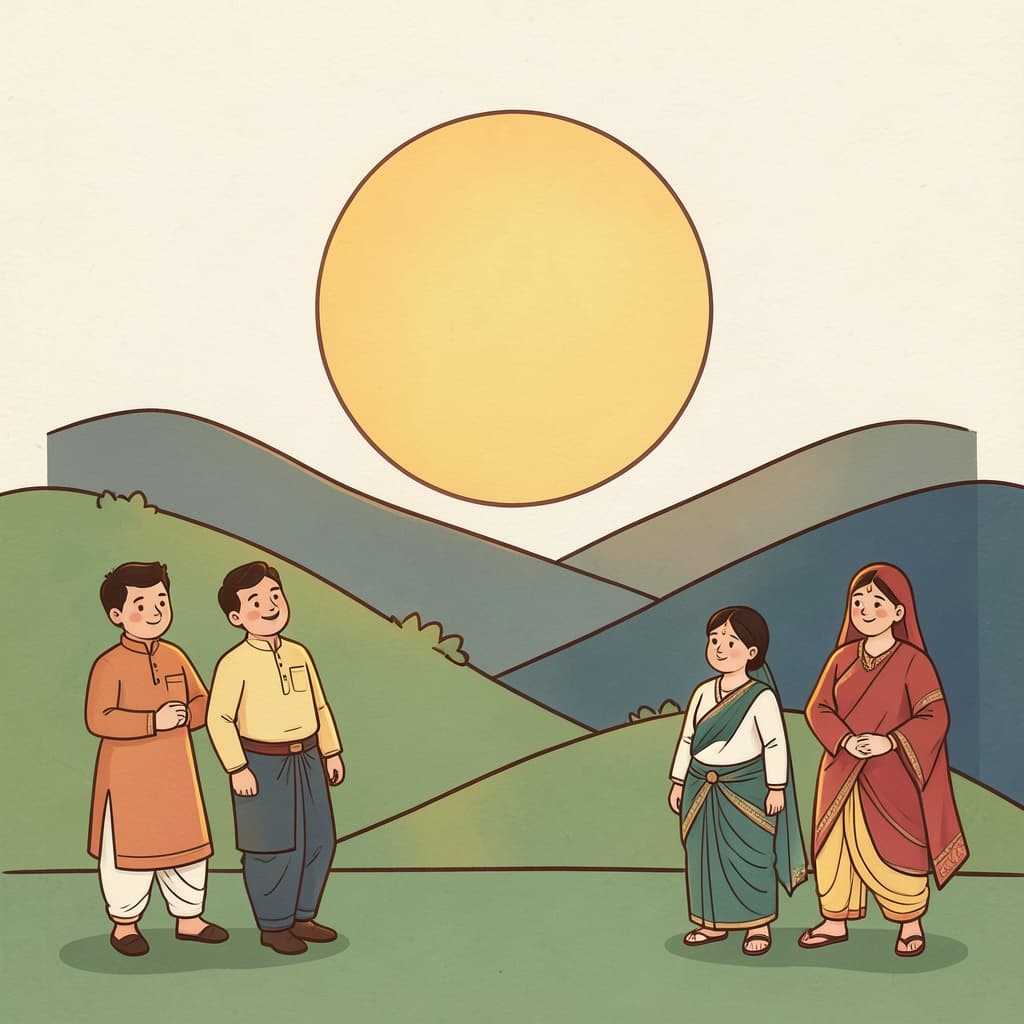
  • A big bright sun rising over green hills.
    sūryaḥ

    sun

    NounMasculine

    ।The sun shines.

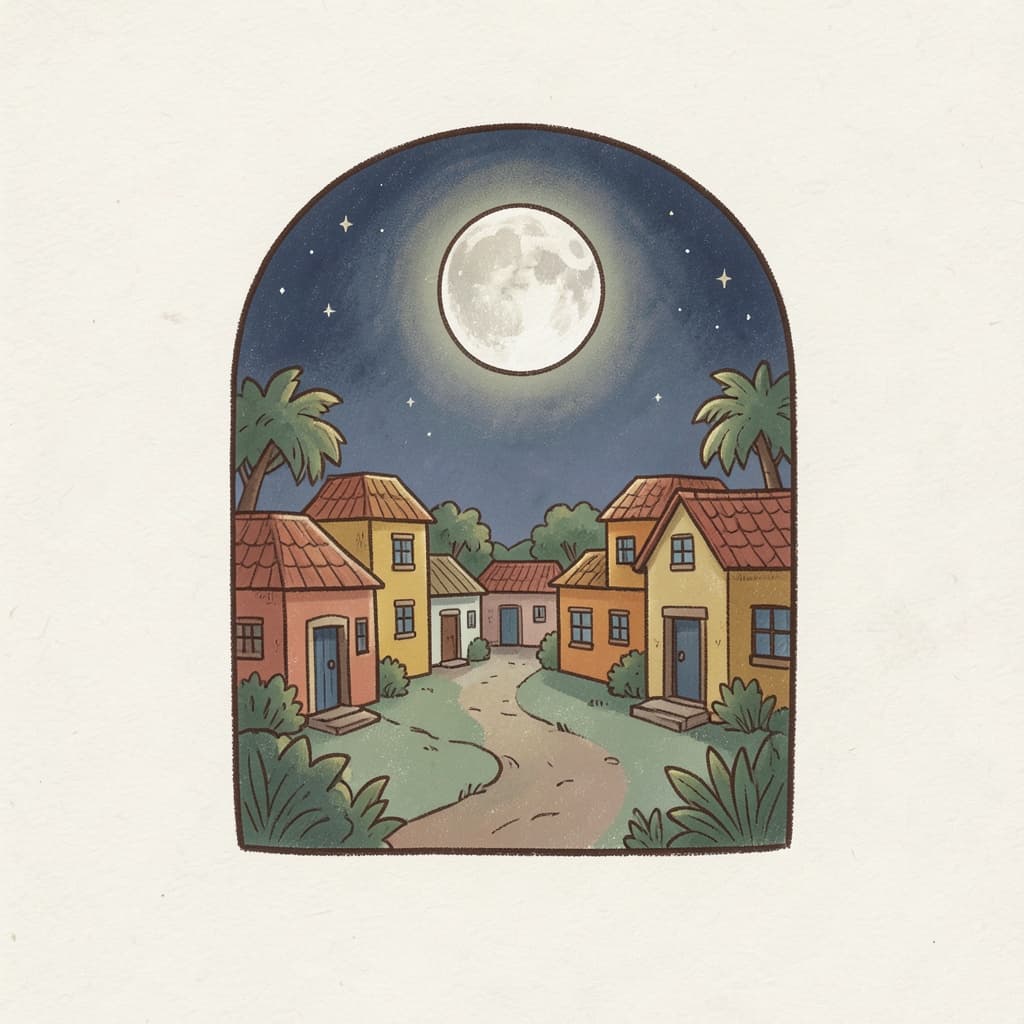
  • A full moon shining in the night sky over a village.
    candraḥ

    moon

    NounMasculine

    ।I see the moon.

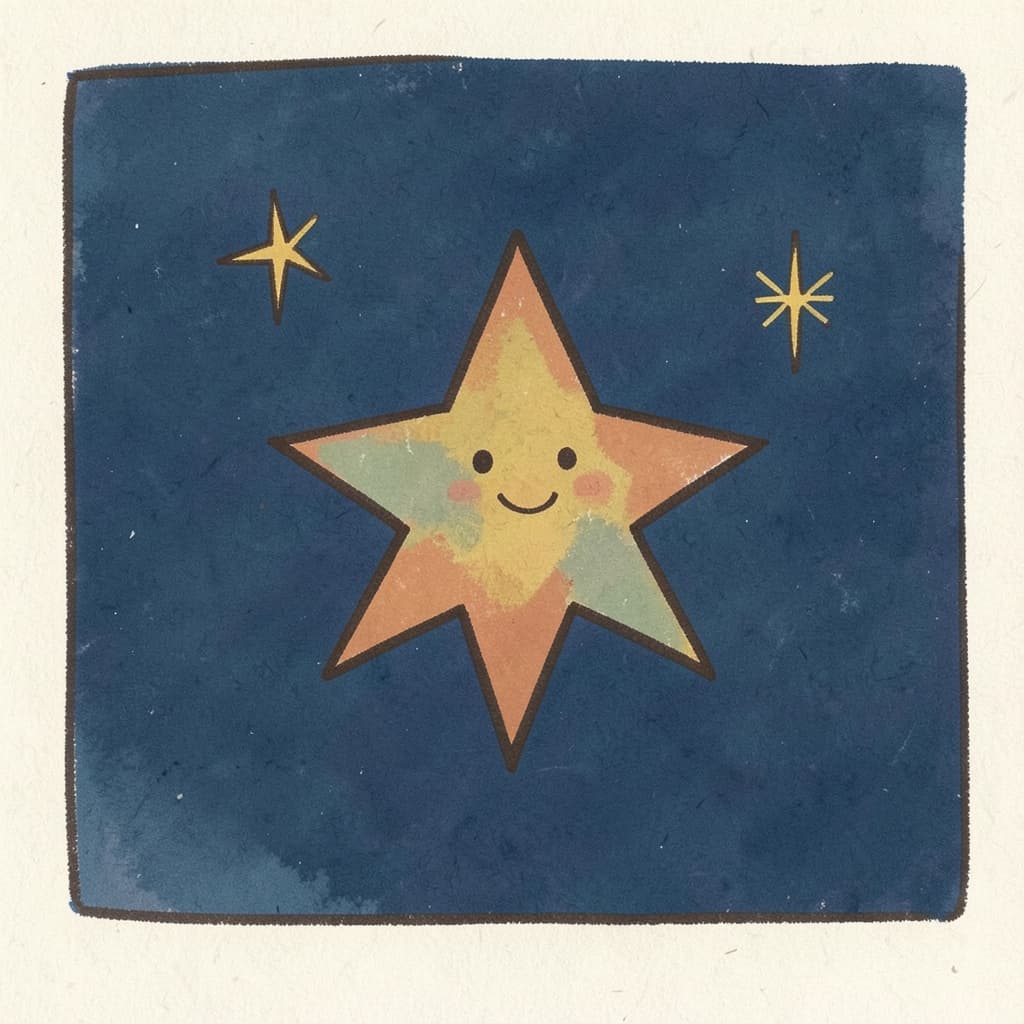
  • A bright twinkling star in a dark blue sky.
    tārā

    star

    NounFeminine

    ।There are stars in the sky.

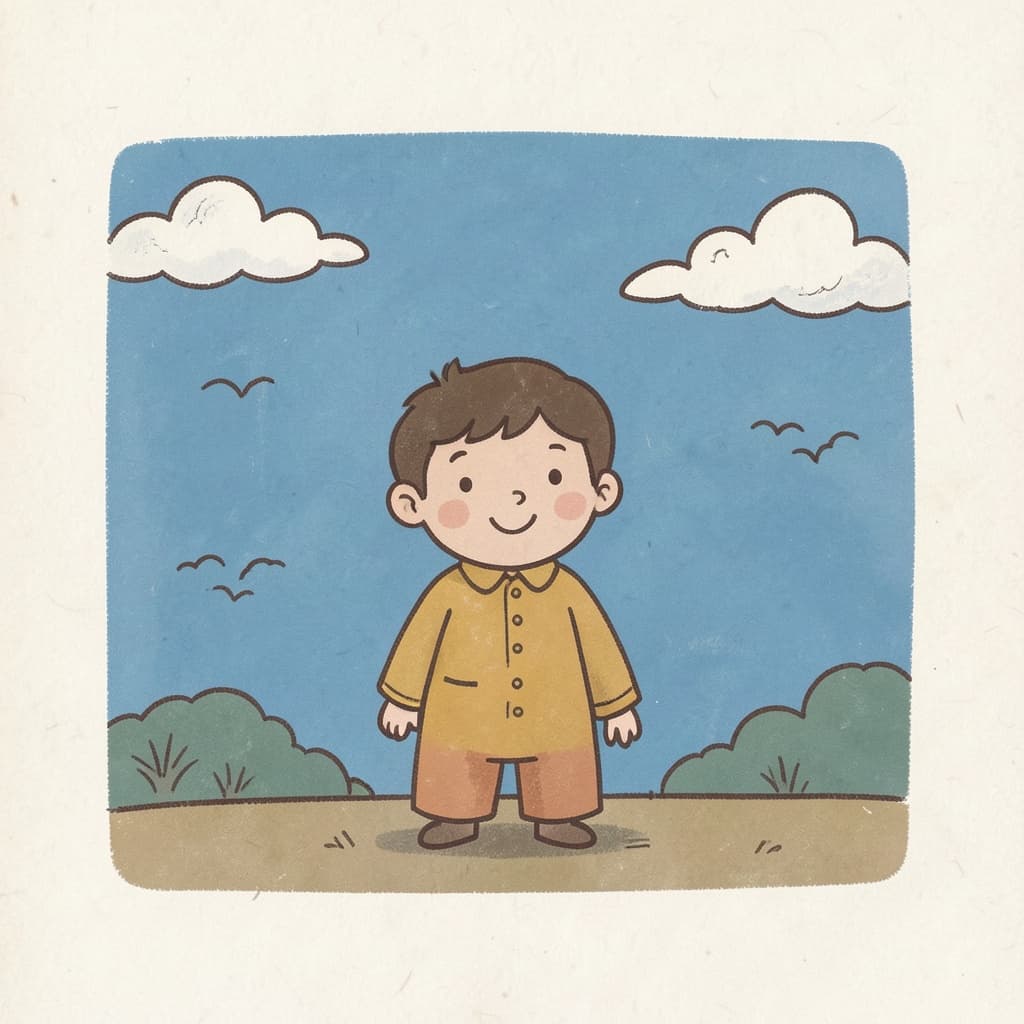
  • A wide open blue sky with a few white clouds and birds.
    ākāśaḥ

    sky

    NounMasculine

    ।The sky is blue.

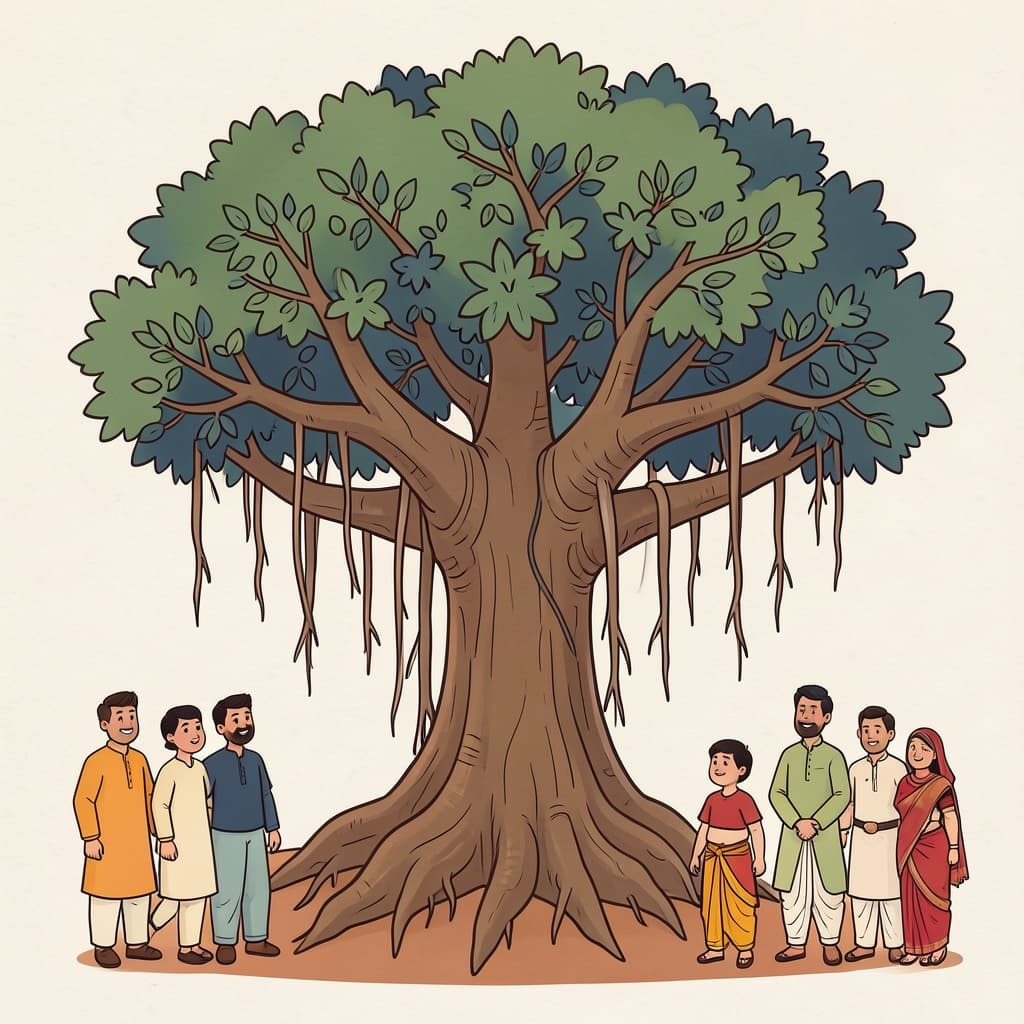
  • A large leafy banyan tree with spreading branches and hanging roots.
    vṛkṣaḥ

    tree

    NounMasculine

    ।There are trees in the garden.

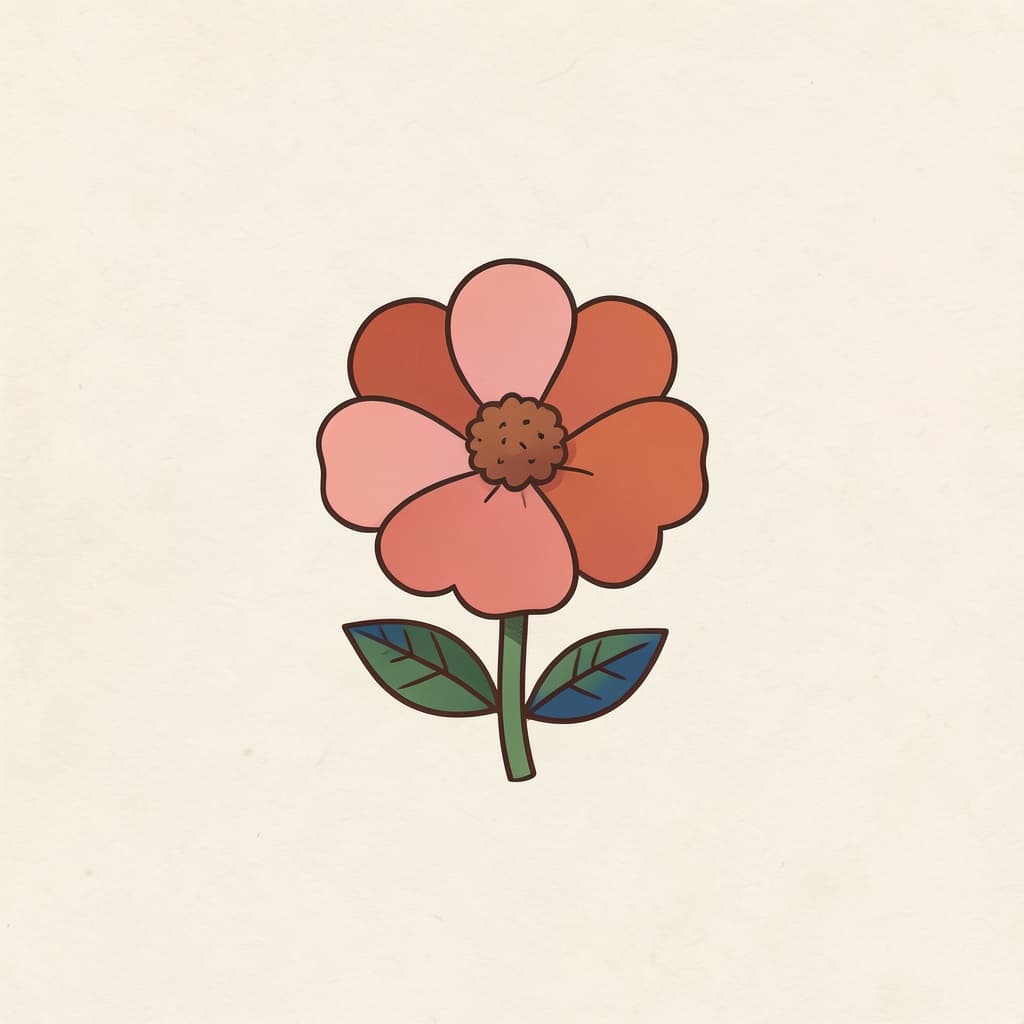
  • A single pink flower in full bloom.
    puṣpam

    flower

    NounNeuter

    ।The girls look at the flowers.

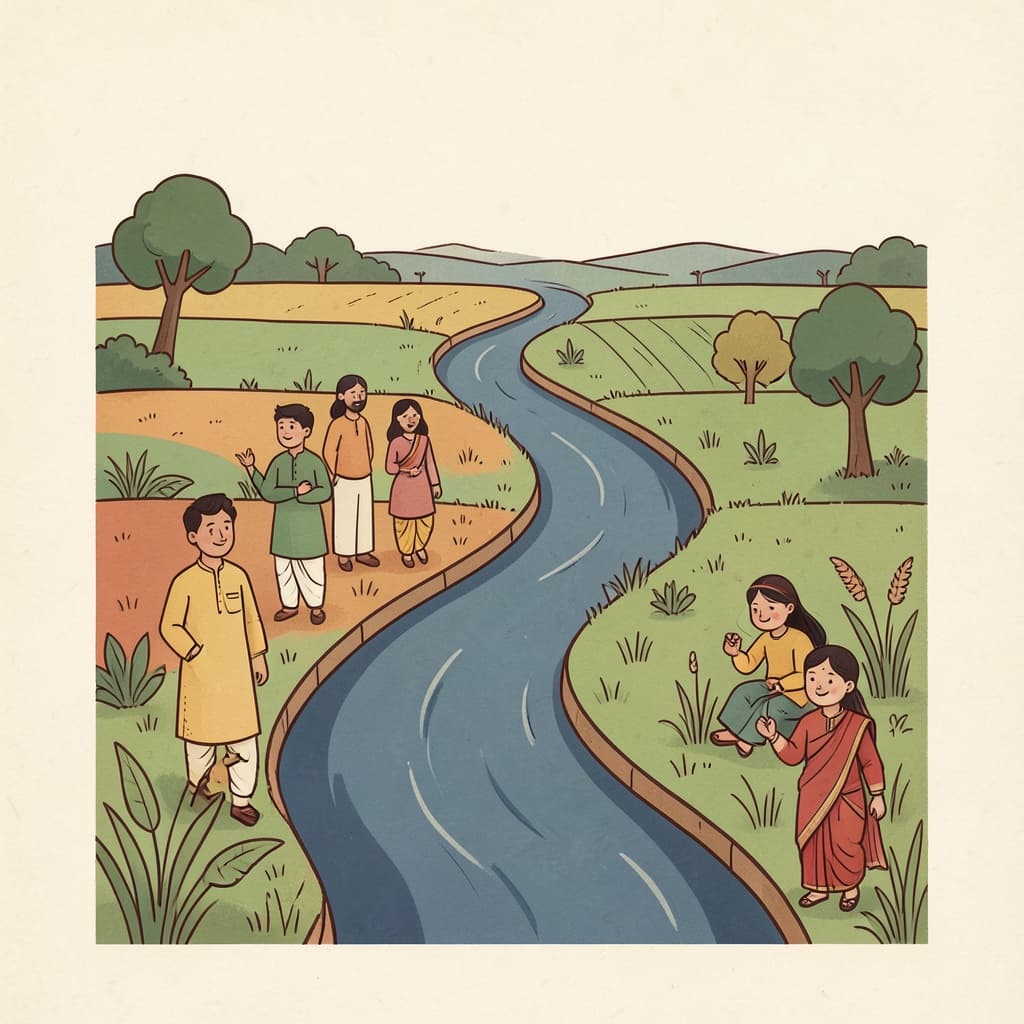
  • A winding river flowing through green fields.
    nadī

    river

    NounFeminine

    ।The river flows.

  • A tall mountain with a snowy peak.
    parvataḥ

    mountain

    NounMasculine

    ।The mountain is high.

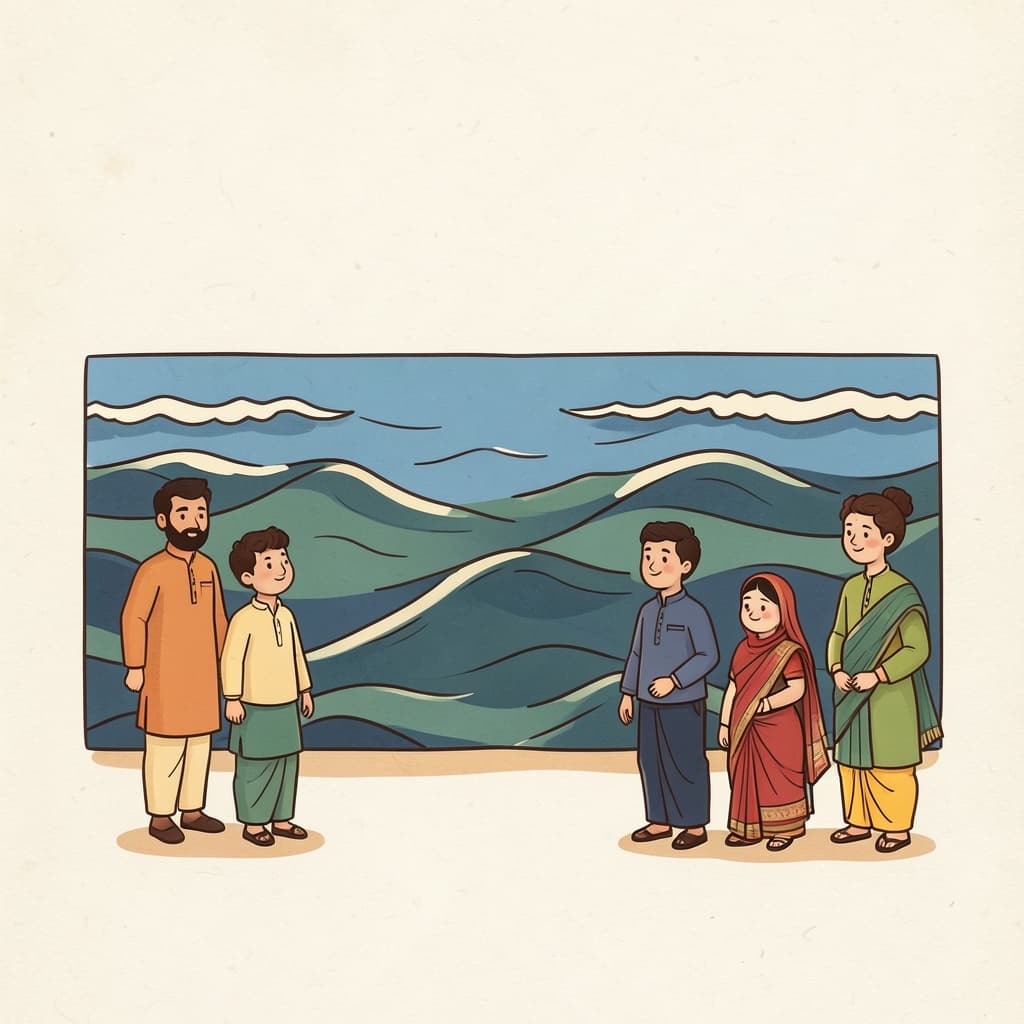
  • A wide blue ocean with rolling waves meeting the horizon.
    samudraḥ

    sea, ocean

    NounMasculine

    ।The boat moves on the sea.

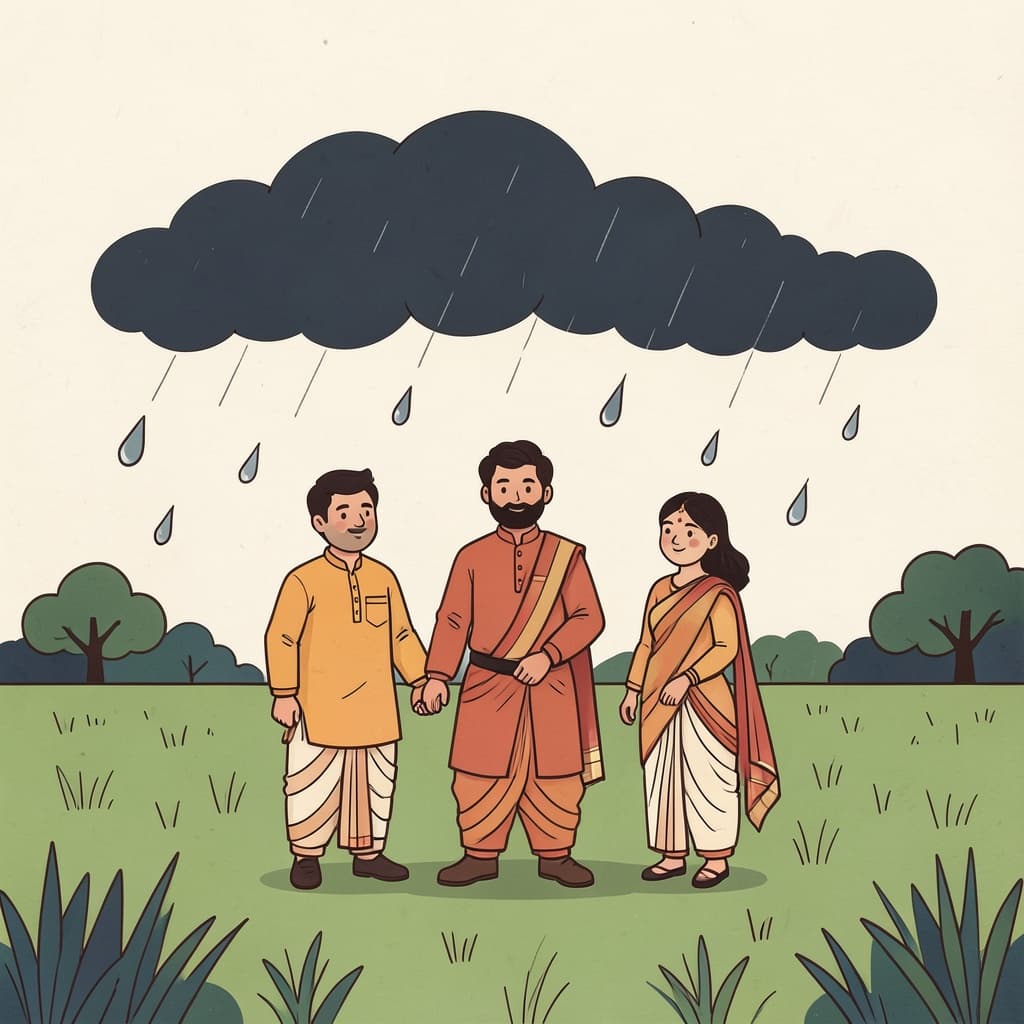
  • Dark rain clouds over green fields with a few raindrops falling.
    meghaḥ

    cloud

    NounMasculine

    ।There are clouds in the sky.

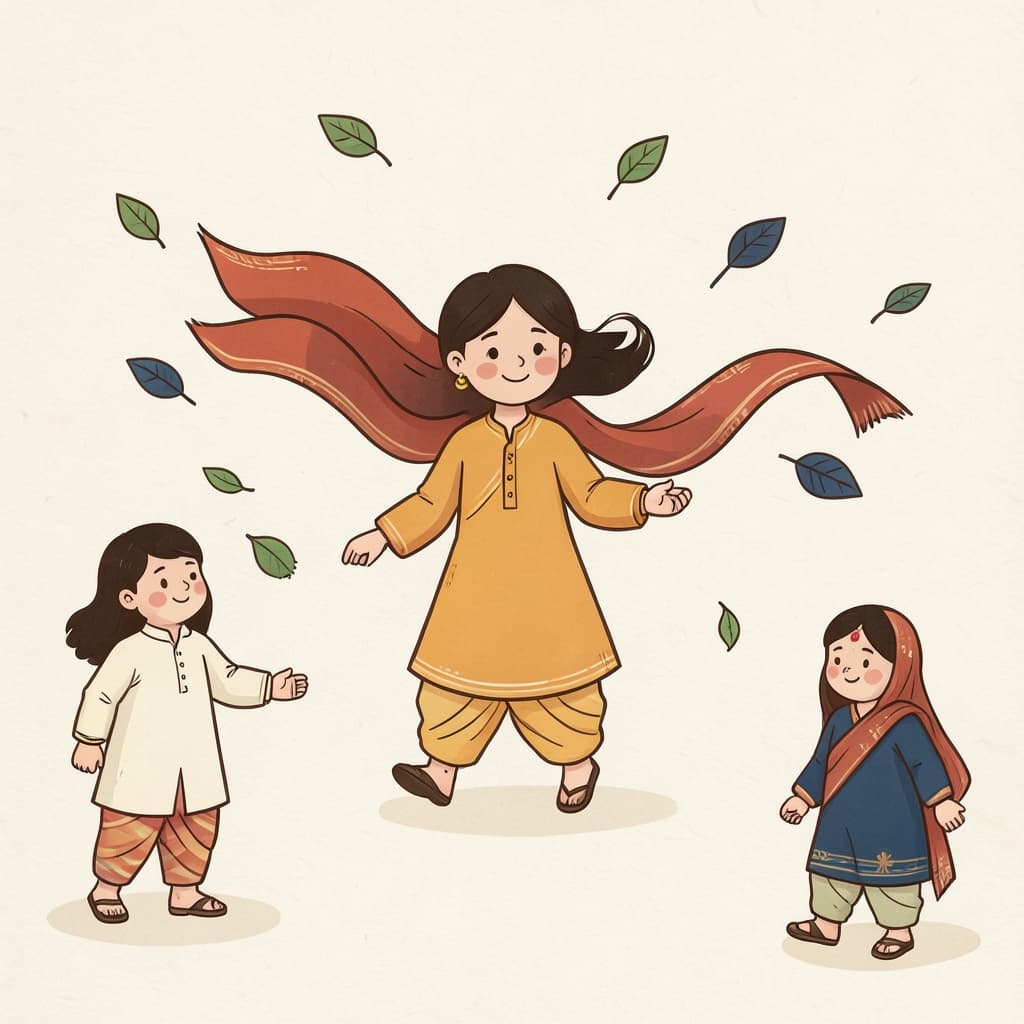
  • Strong wind blowing leaves and a girl's scarf through the air.
    vāyuḥ

    wind, air

    NounMasculine

    ।The wind is cool.

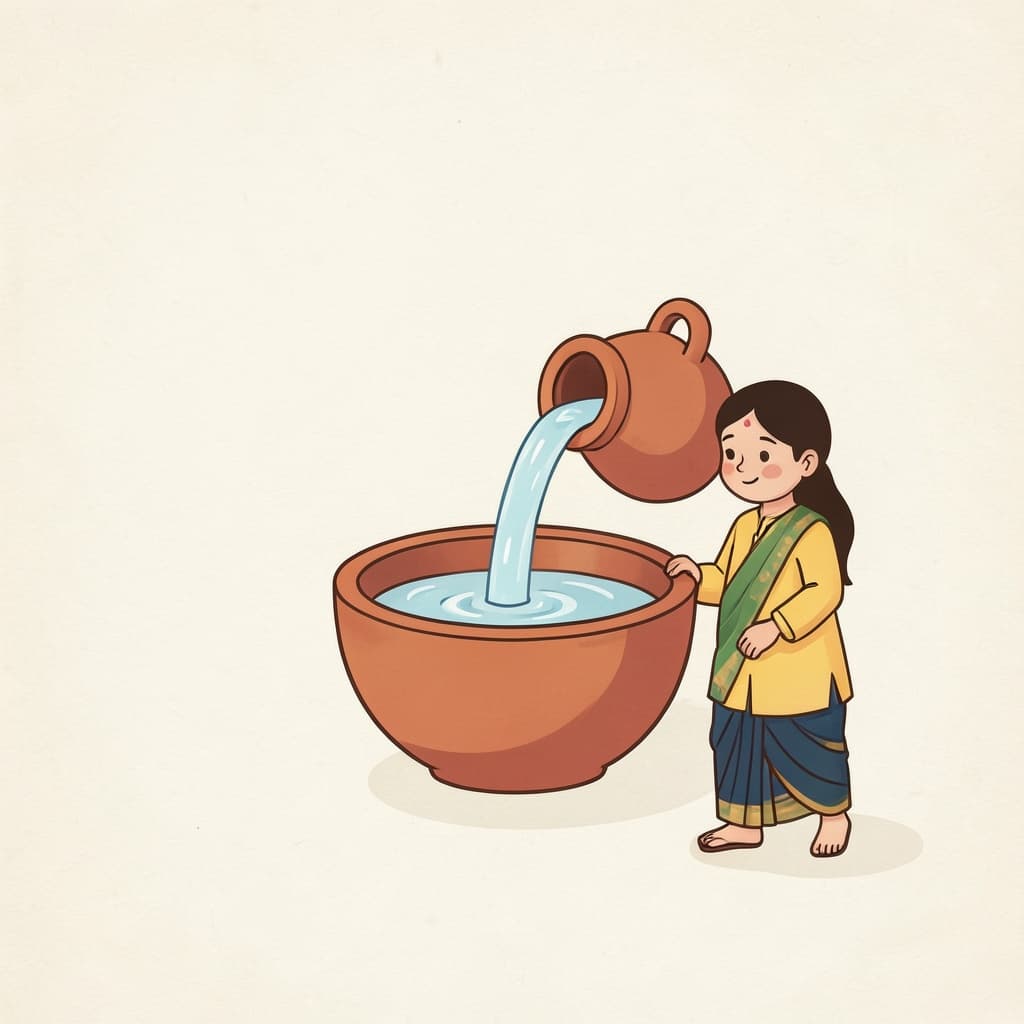
  • Clear water pouring from a clay pot into a bowl.
    jalam

    water

    NounNeuter

    ।We drink water.

  • A bright campfire with leaping orange flames.
    agniḥ

    fire

    NounMasculine

    ।Fire is hot.

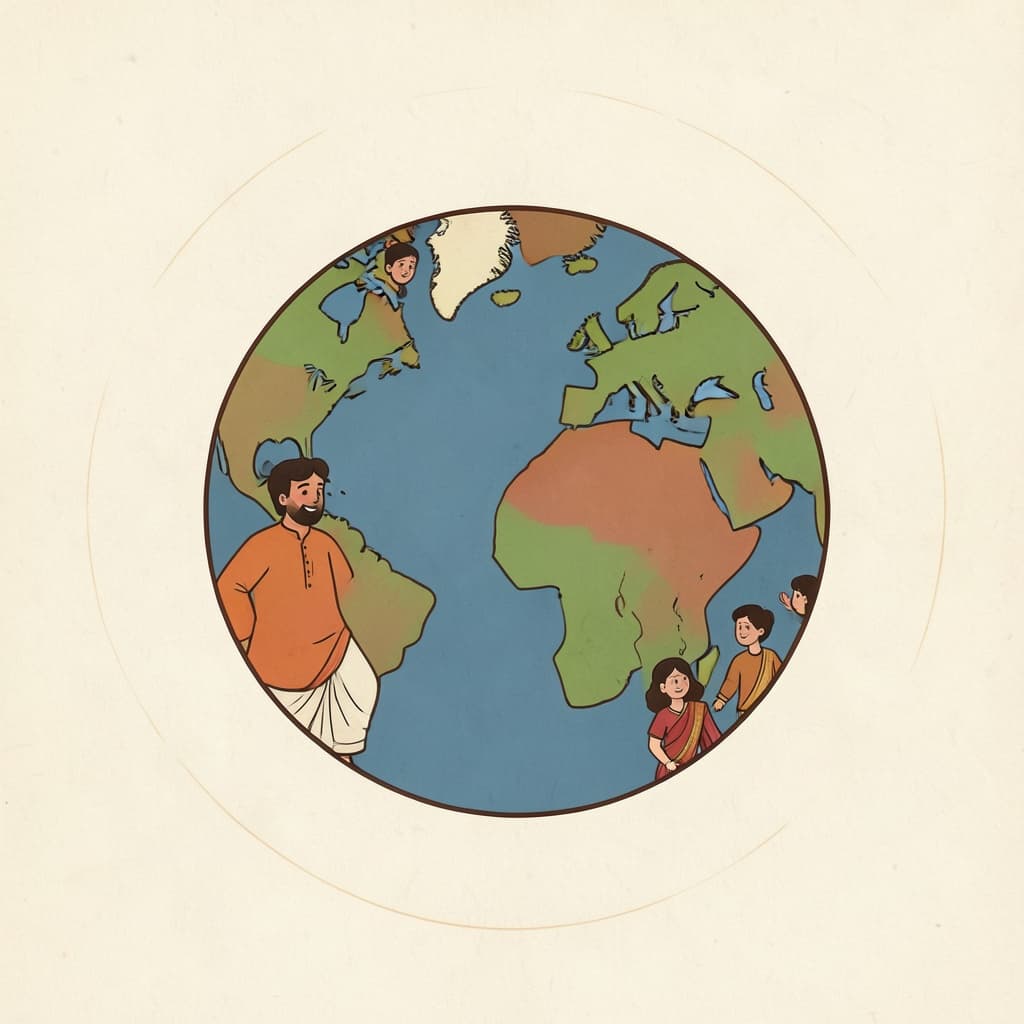
  • The round earth with green lands and blue seas.
    bhūmiḥ

    earth, ground

    NounFeminine

    ।The snake moves on the ground.

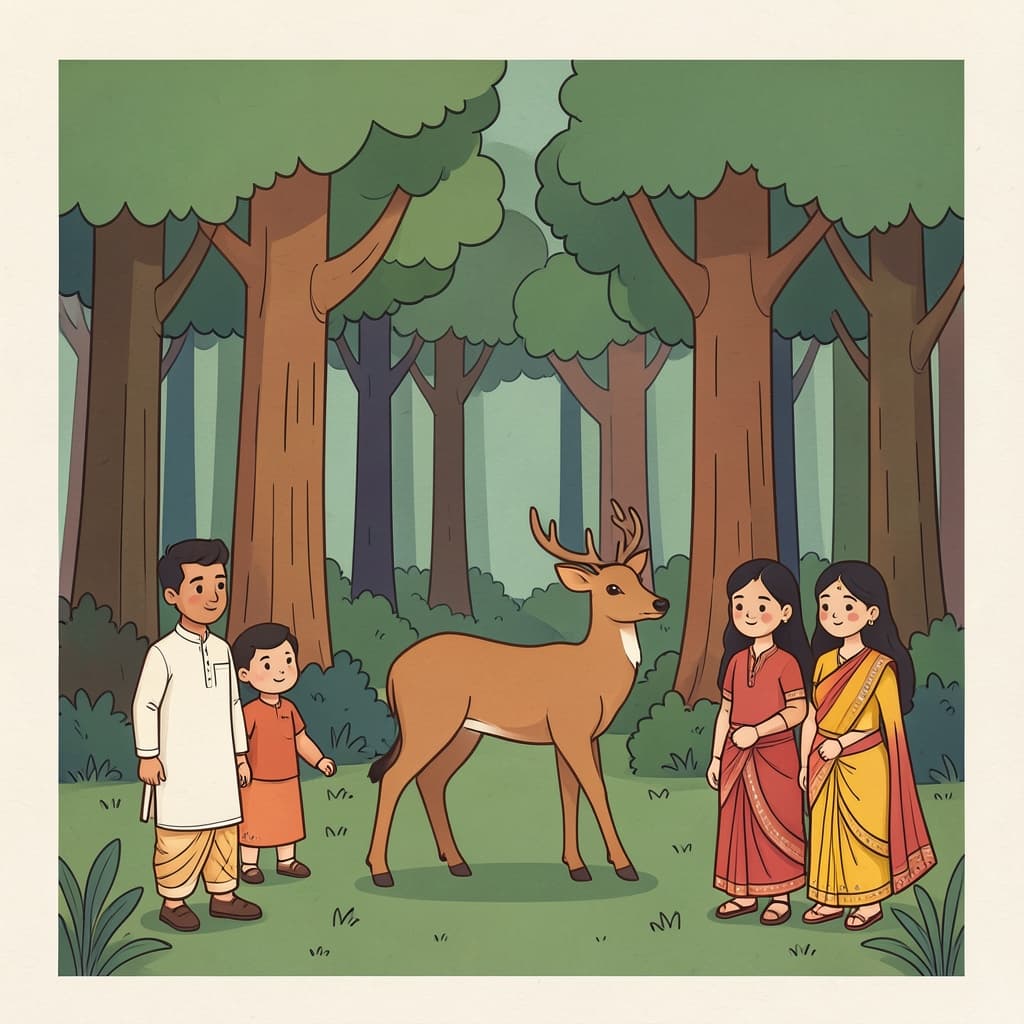
  • A dense green forest with tall trees and a deer.
    vanam

    forest

    NounNeuter

    ।The elephant walks in the forest.

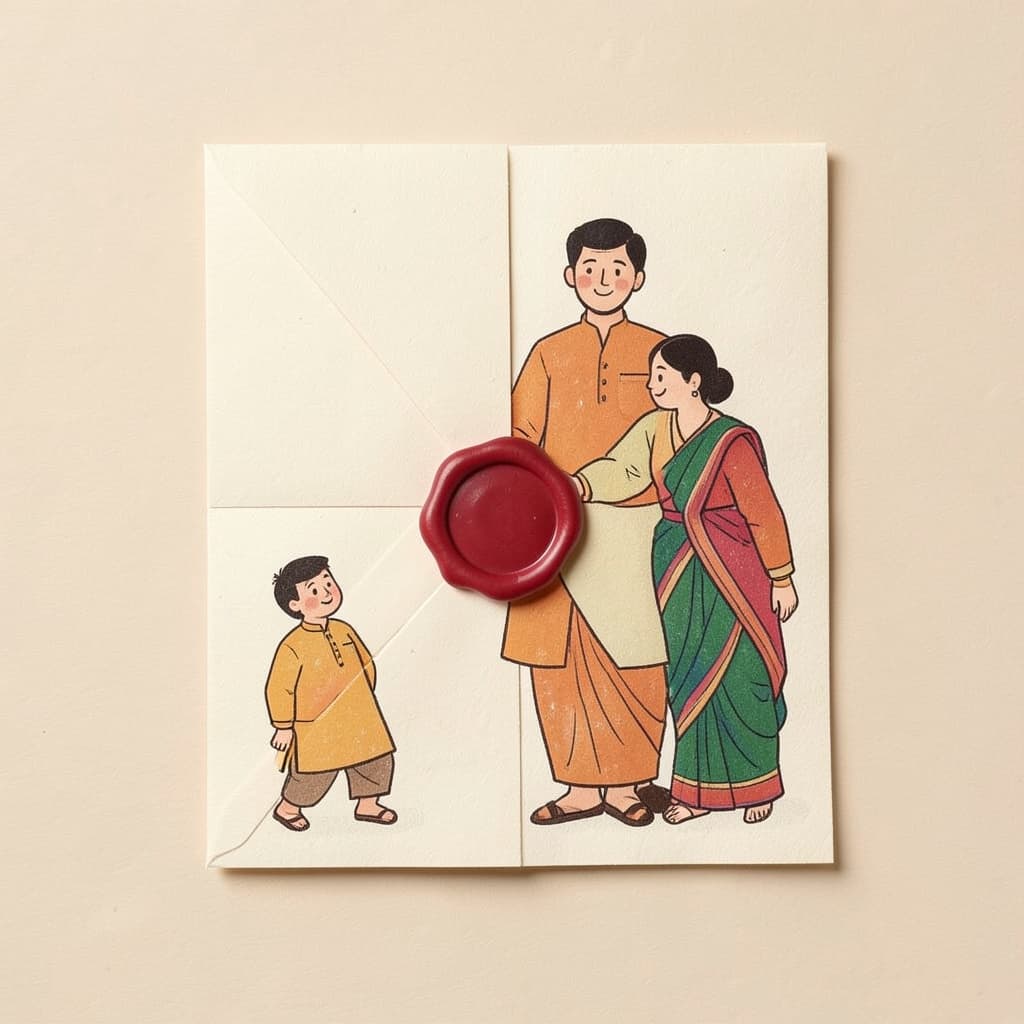
  • A folded letter with a red wax seal.
    patram

    leaf; letter

    NounNeuter

    ।A leaf falls from the tree.

  • Dark rain clouds over green fields with a few raindrops falling.
    varṣā

    rain

    NounFeminine

    ।It rains.

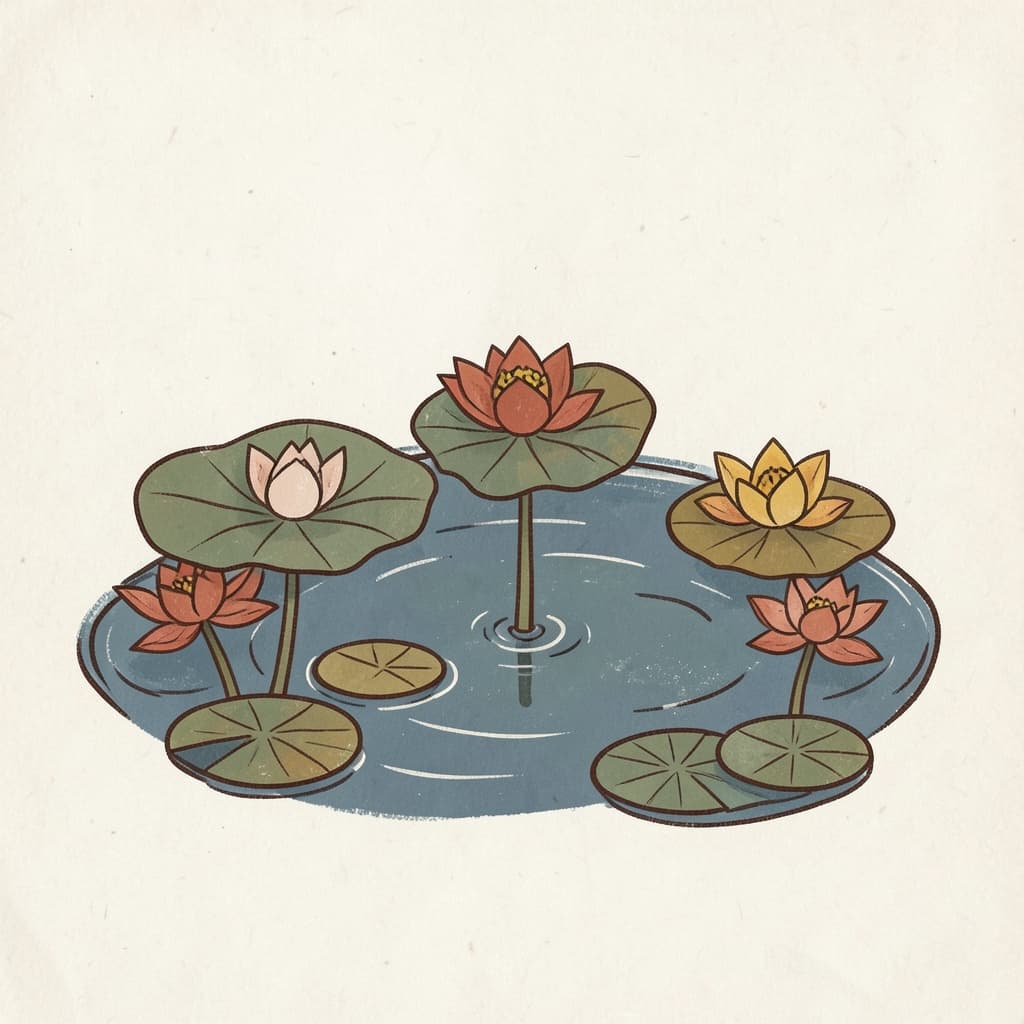
  • A calm pond with lotus flowers and lily pads.
    taḍāgaḥ

    pond, lake

    NounMasculine

    ।The swan lives in the pond.

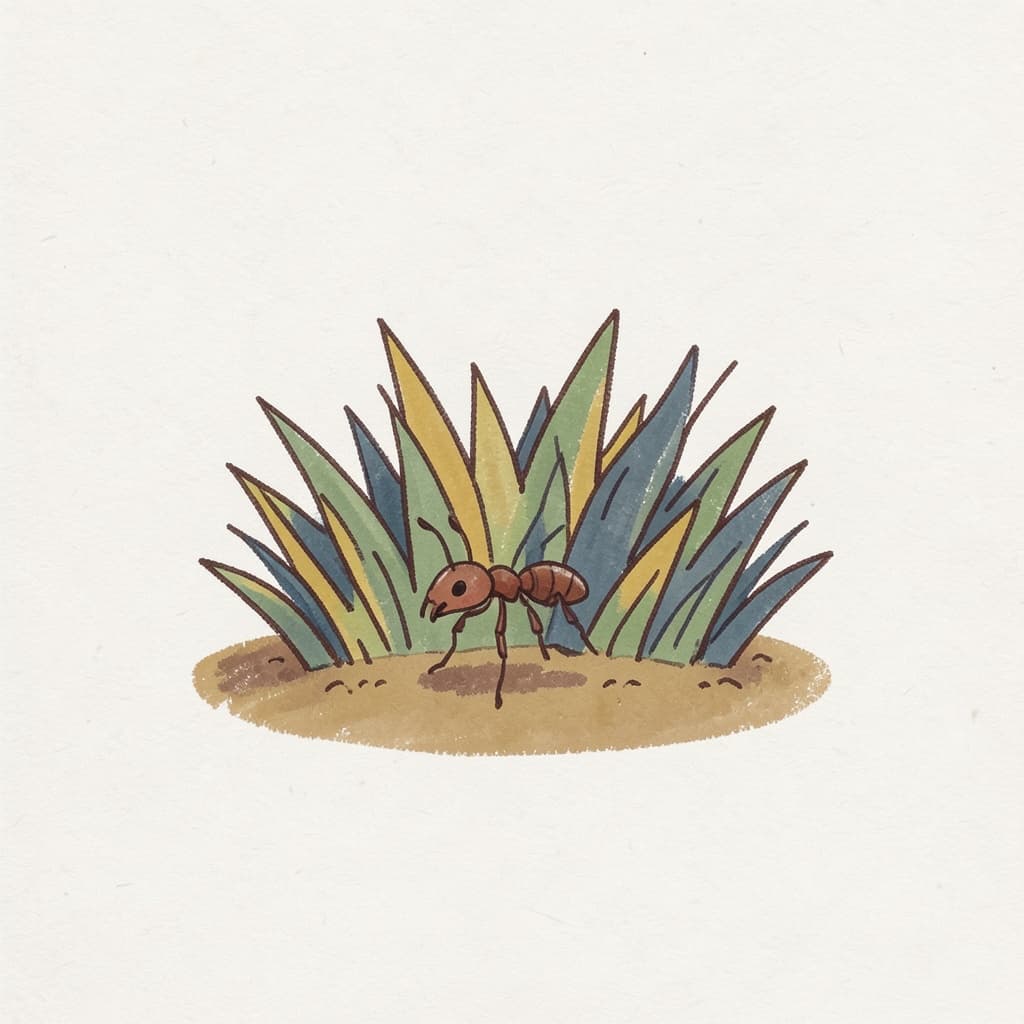
  • Fresh green grass growing in a small patch with a little ant.
    tṛṇam

    grass

    NounNeuter

    ।The cow eats grass.

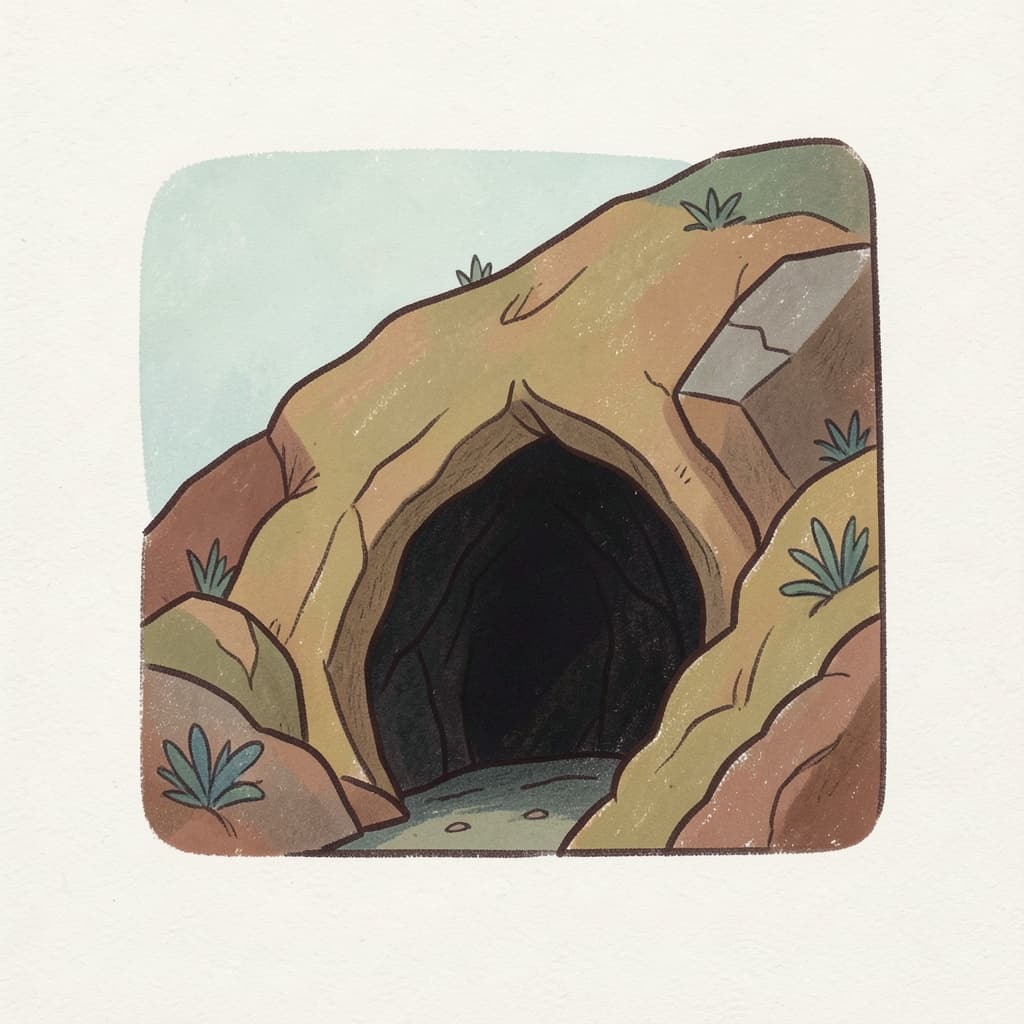
  • A dark cave opening in a rocky hillside.
    guhā

    cave

    NounFeminine

    ।The lion lives in a cave.

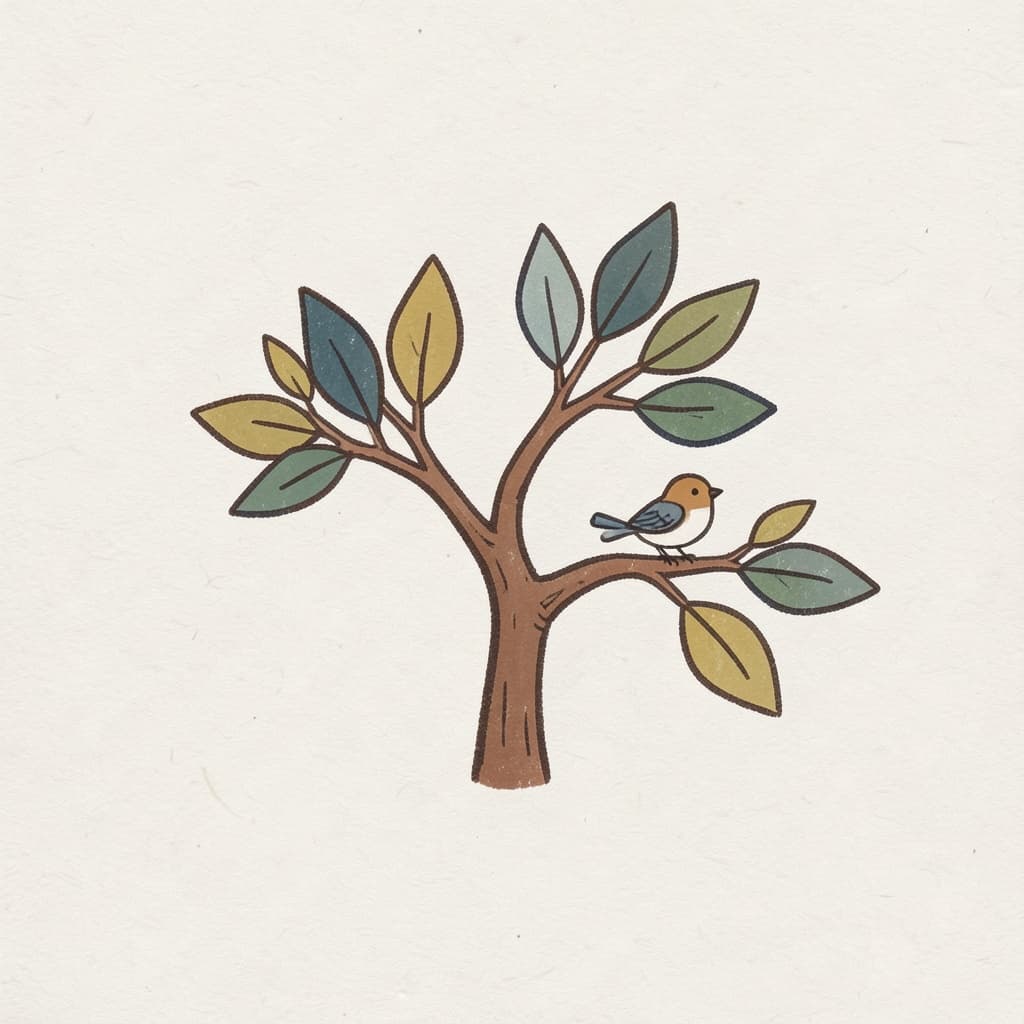
  • A single tree branch with green leaves and a small bird.
    śākhā

    branch

    NounFeminine

    ।The branches of the tree bend.

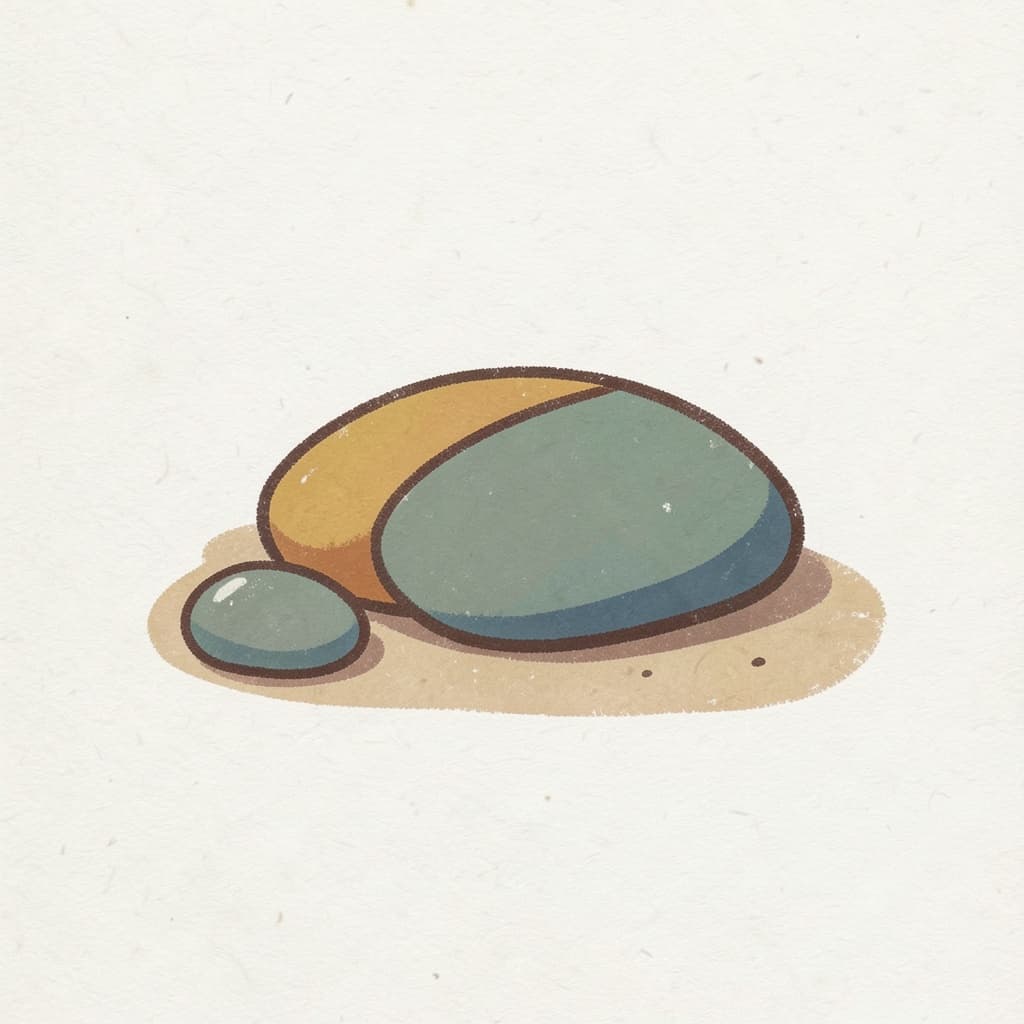
  • A few smooth round pebbles on the sand.
    pāṣāṇakhaṇḍaḥ

    pebble

    NounMasculine

    ।The crow dropped pebbles into the pot.
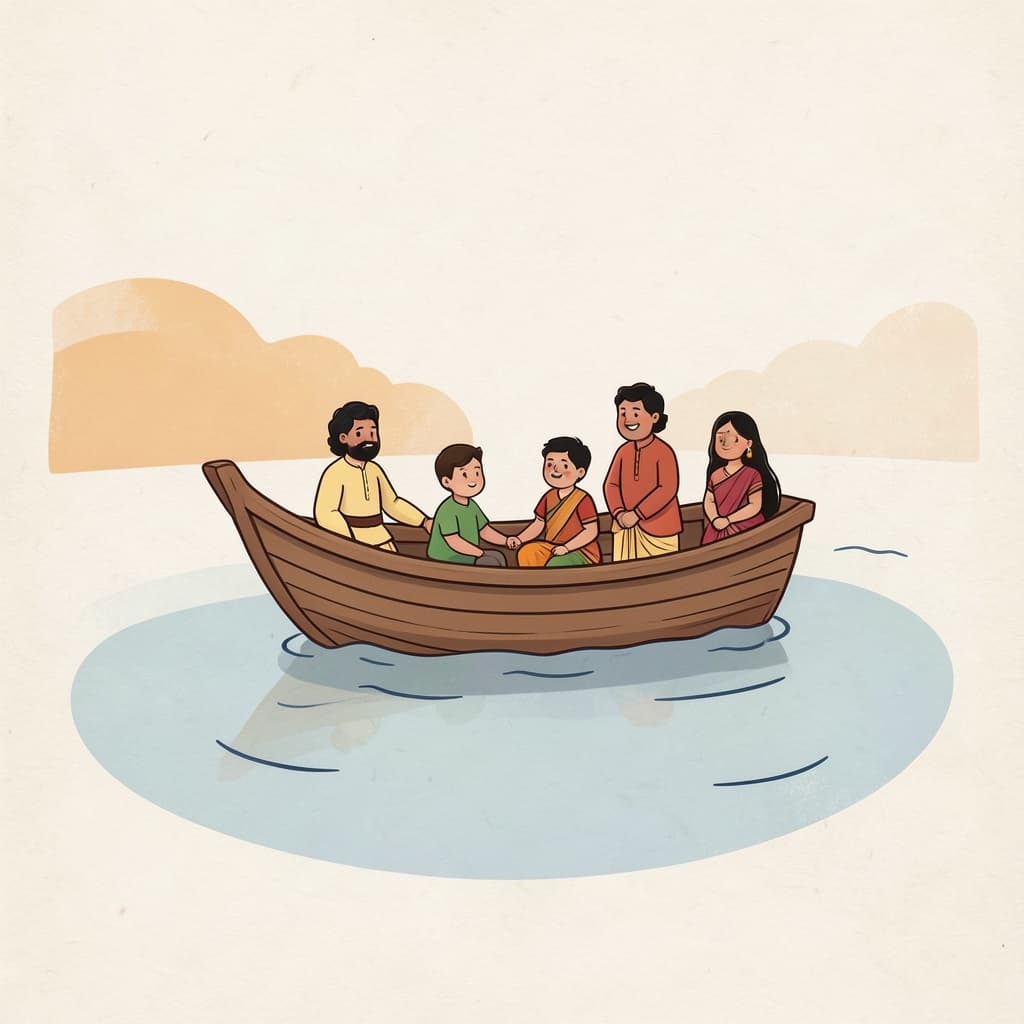
  • A wooden boat floating on a calm river.
    naukā

    boat

    NounFeminine

    ।The boat moves on the water.

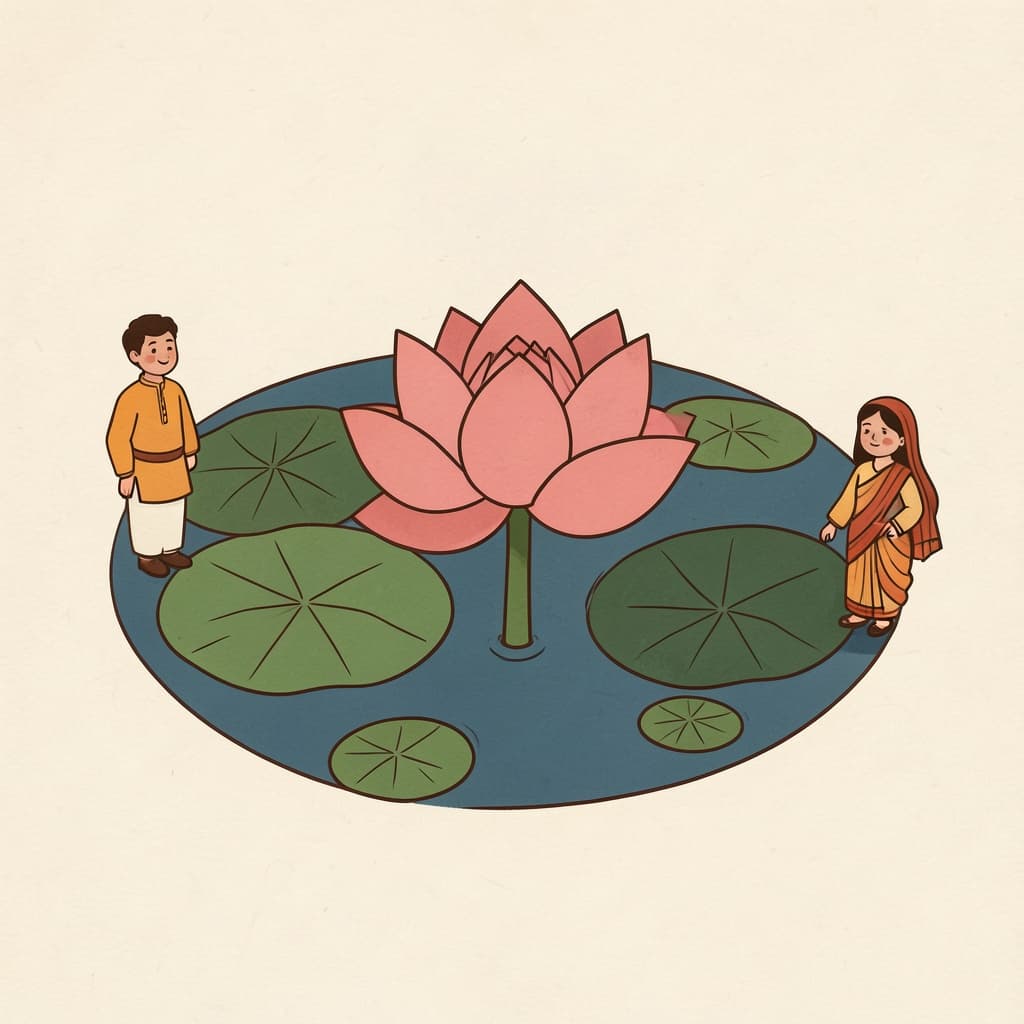
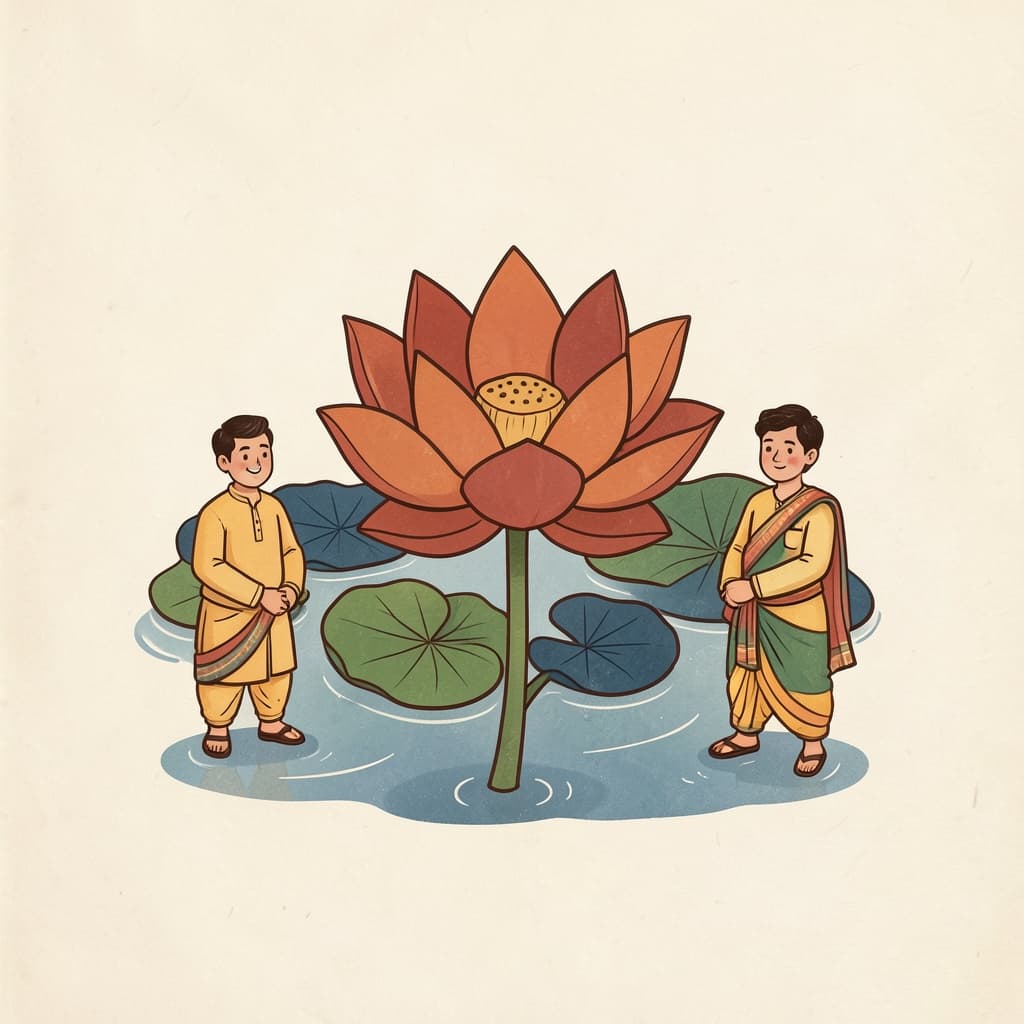
  • A pink lotus flower on a pond with round green leaves.
    kamalam

    lotus

    NounNeuter

    ।There are lotuses in the pond.

  • A large leafy banyan tree with spreading branches and hanging roots.
    taruḥ

    tree

    NounMasculine

भोजनम्

Food

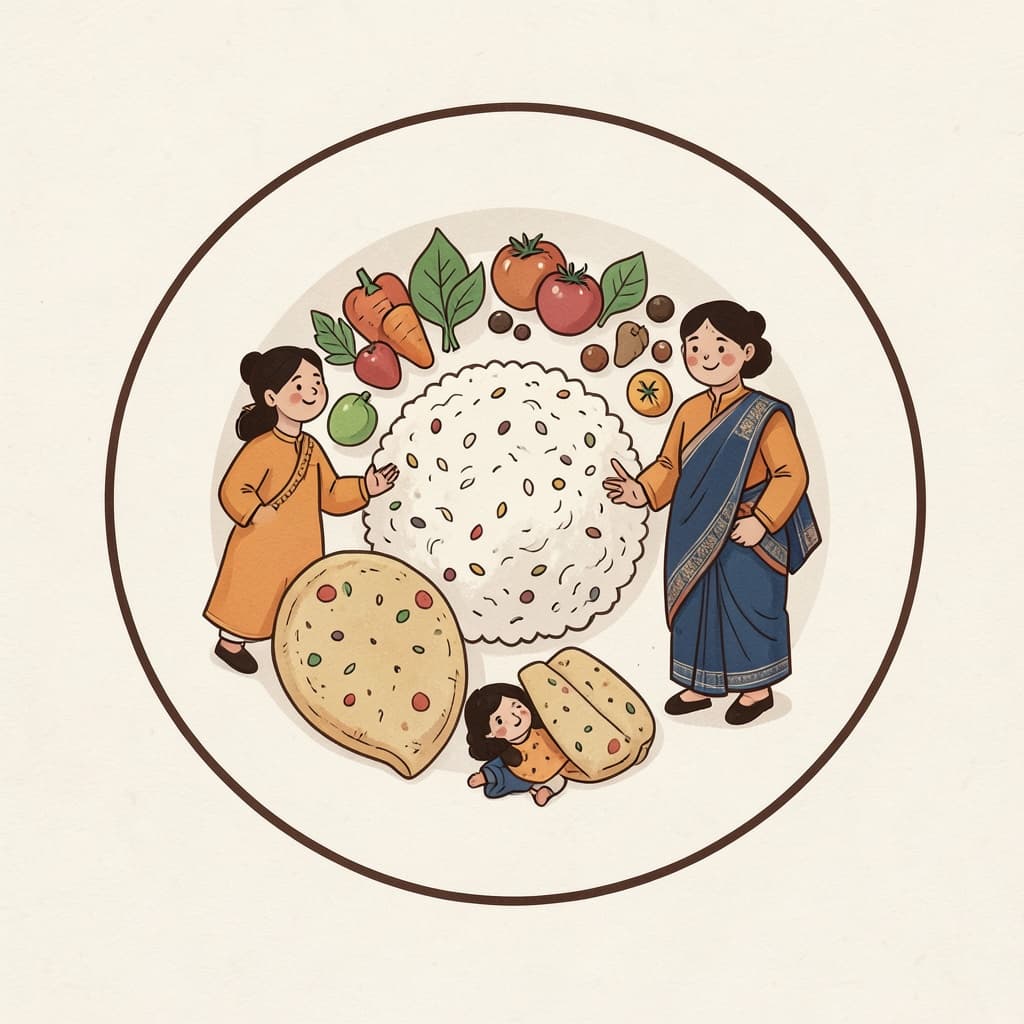
  • A round plate with rice, dal, vegetables and chapati.
    annam

    food, grain

    NounNeuter

    ।The pigeon eats grain.

  • A brass glass full of white milk.
    dugdham

    milk

    NounNeuter

    ।The boy drinks milk.

  • A round plate with rice, dal, vegetables and chapati.
    odanaḥ

    cooked rice

    NounMasculine

    ।Mother cooks rice.

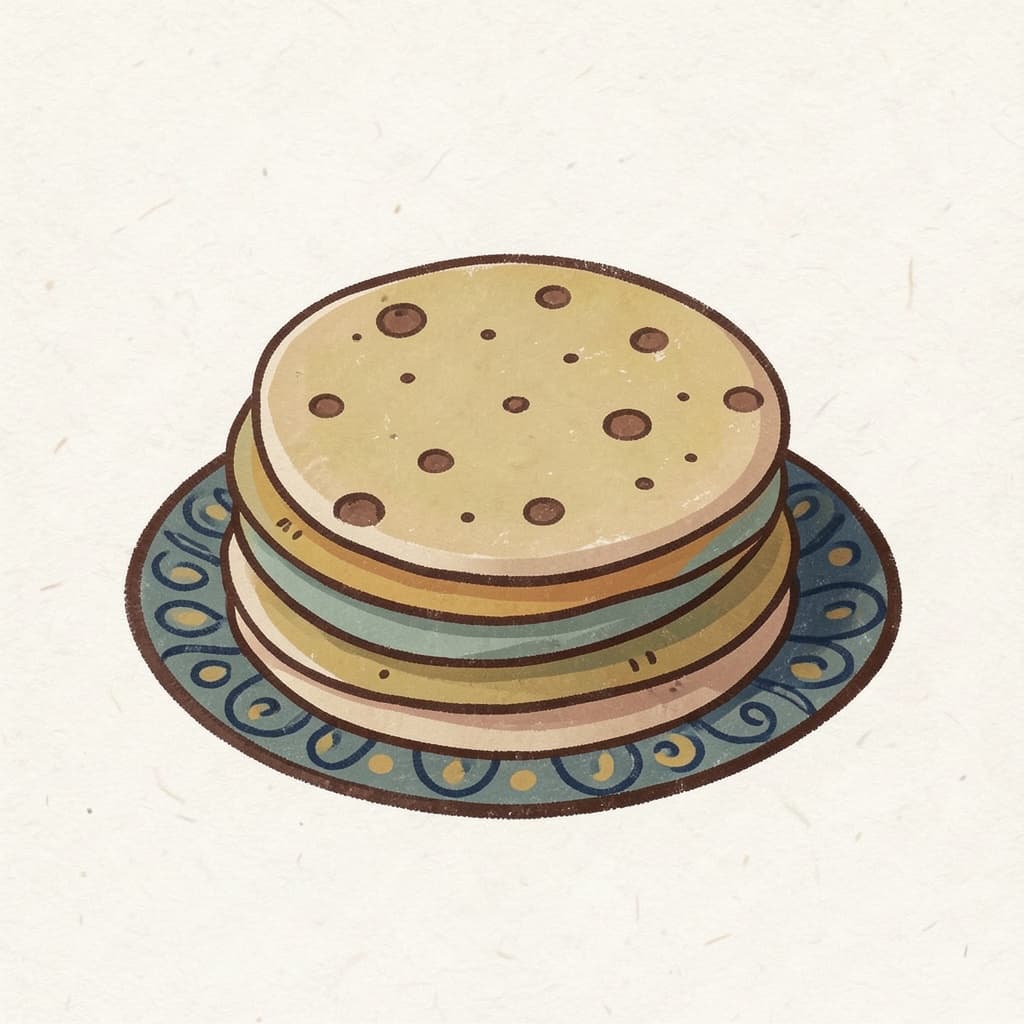
  • A stack of round flatbread rotis on a plate.
    roṭikā

    flatbread (roti)

    NounFeminineModern usage

    ।We eat roti.

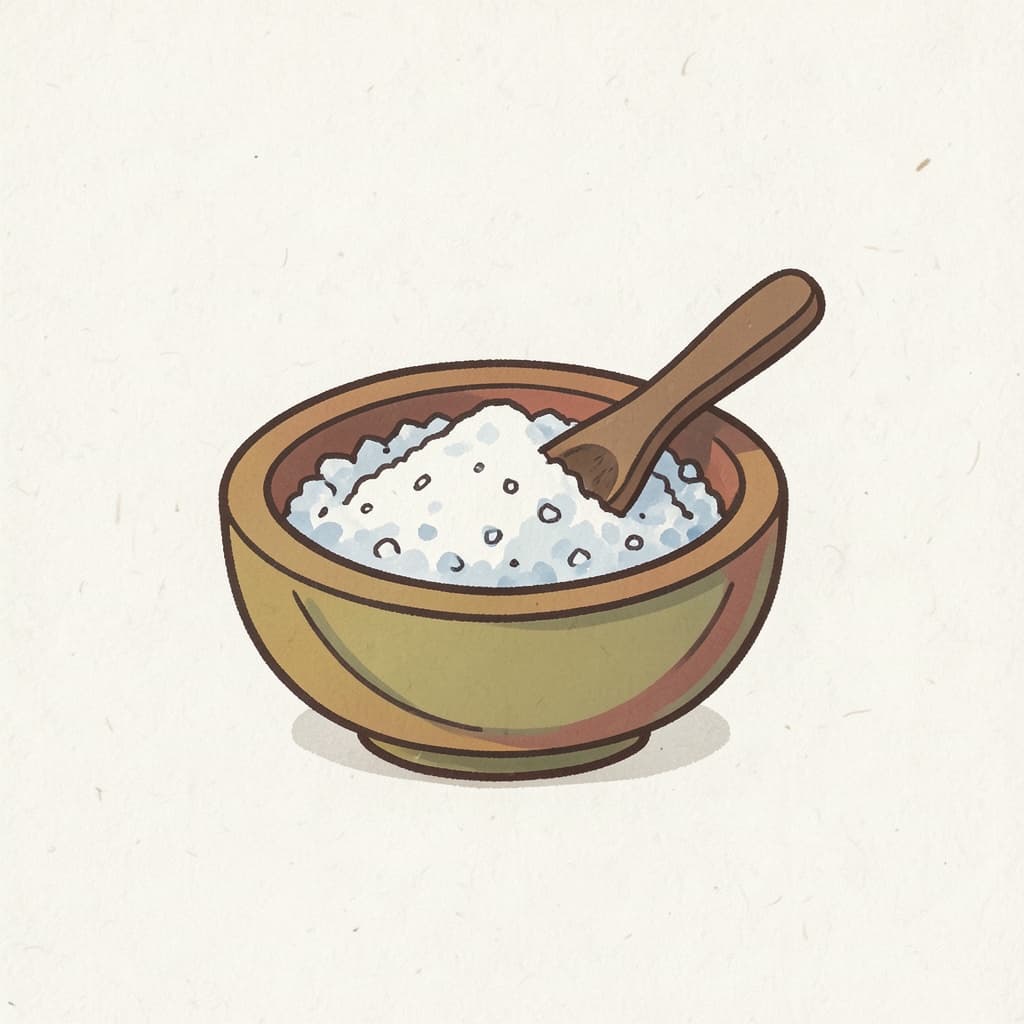
  • A small bowl of white salt with a wooden spoon.
    lavaṇam

    salt

    NounNeuter

    ।There is salt in the food.

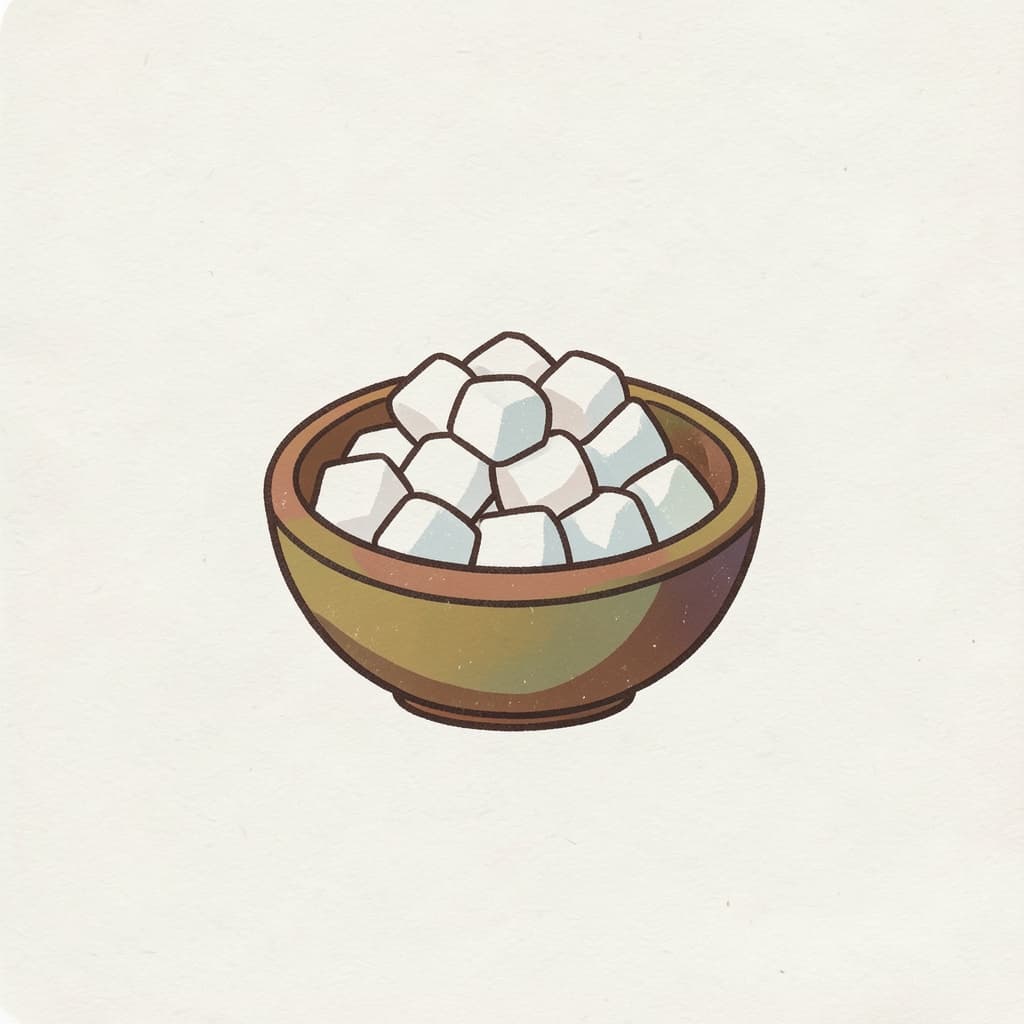
  • A small bowl of white sugar cubes and crystals.
    śarkarā

    sugar

    NounFeminine

    ।There is sugar in the milk.

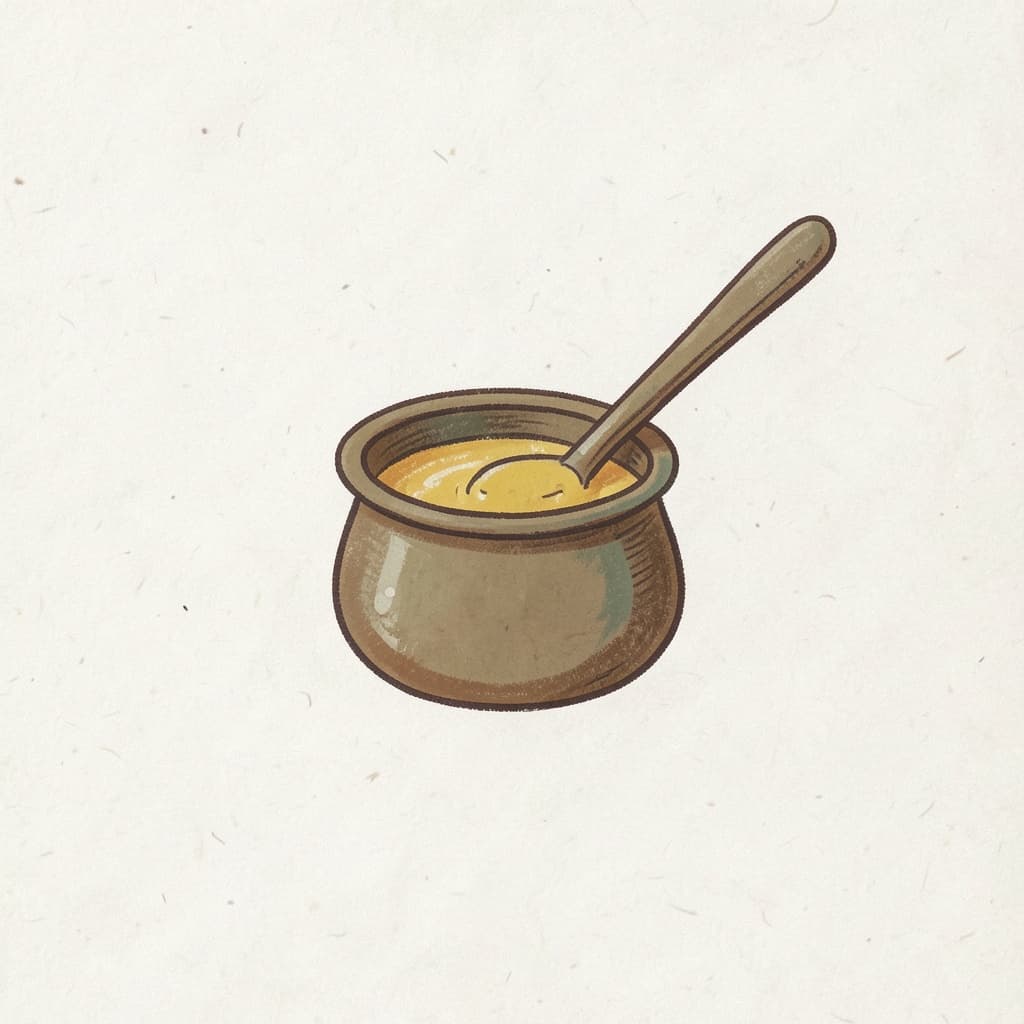
  • A small brass pot of golden ghee with a spoon.
    ghṛtam

    ghee, clarified butter

    NounNeuter

    ।Mother cooks with ghee.

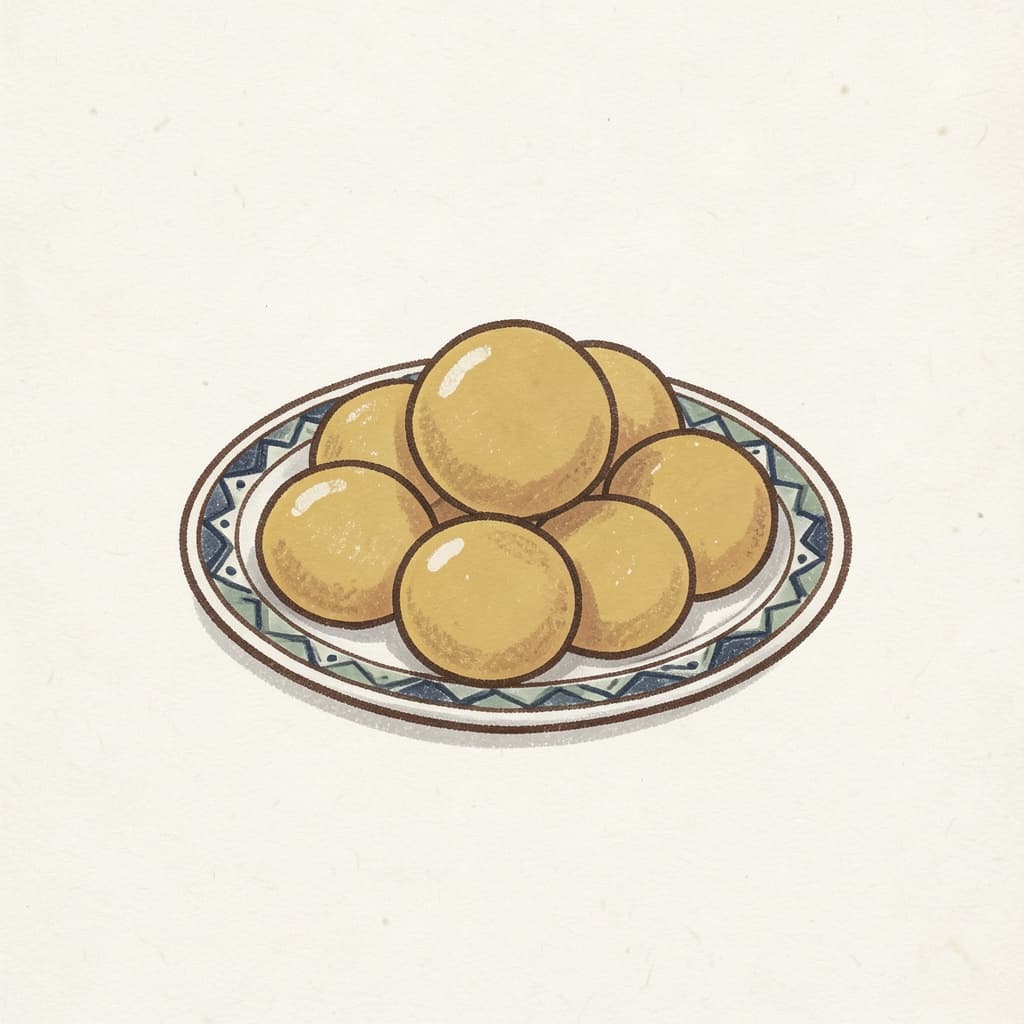
  • A plate of round yellow laddu sweets.
    modakaḥ

    sweet ball (laddu)

    NounMasculine

    ।I like laddus.

  • A round plate with rice, dal, vegetables and chapati.
    bhojanam

    meal, food

    NounNeuter

    ।In the evening we eat a meal.

स्थानानि

Places
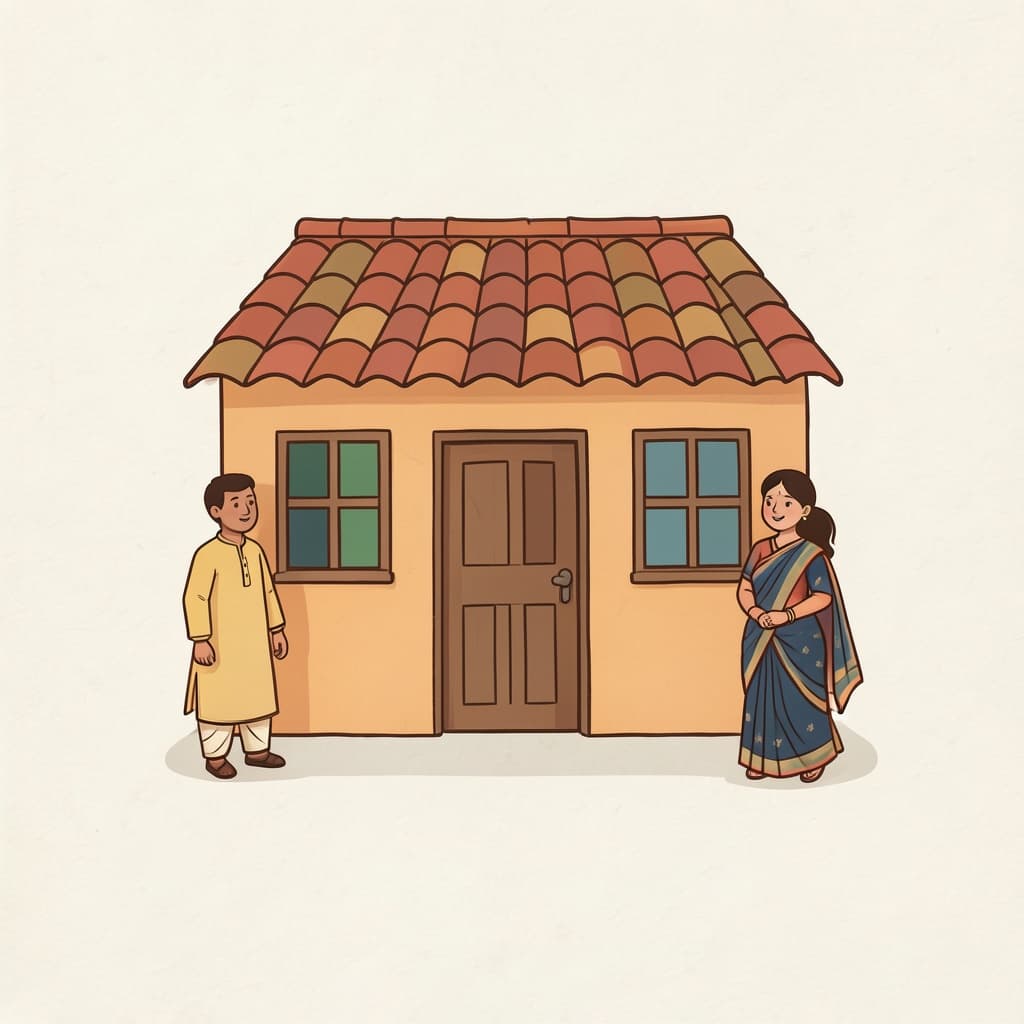
  • A small house with a door, windows and a tiled roof.
    gṛham

    house, home

    NounNeuter

    ।He goes home.

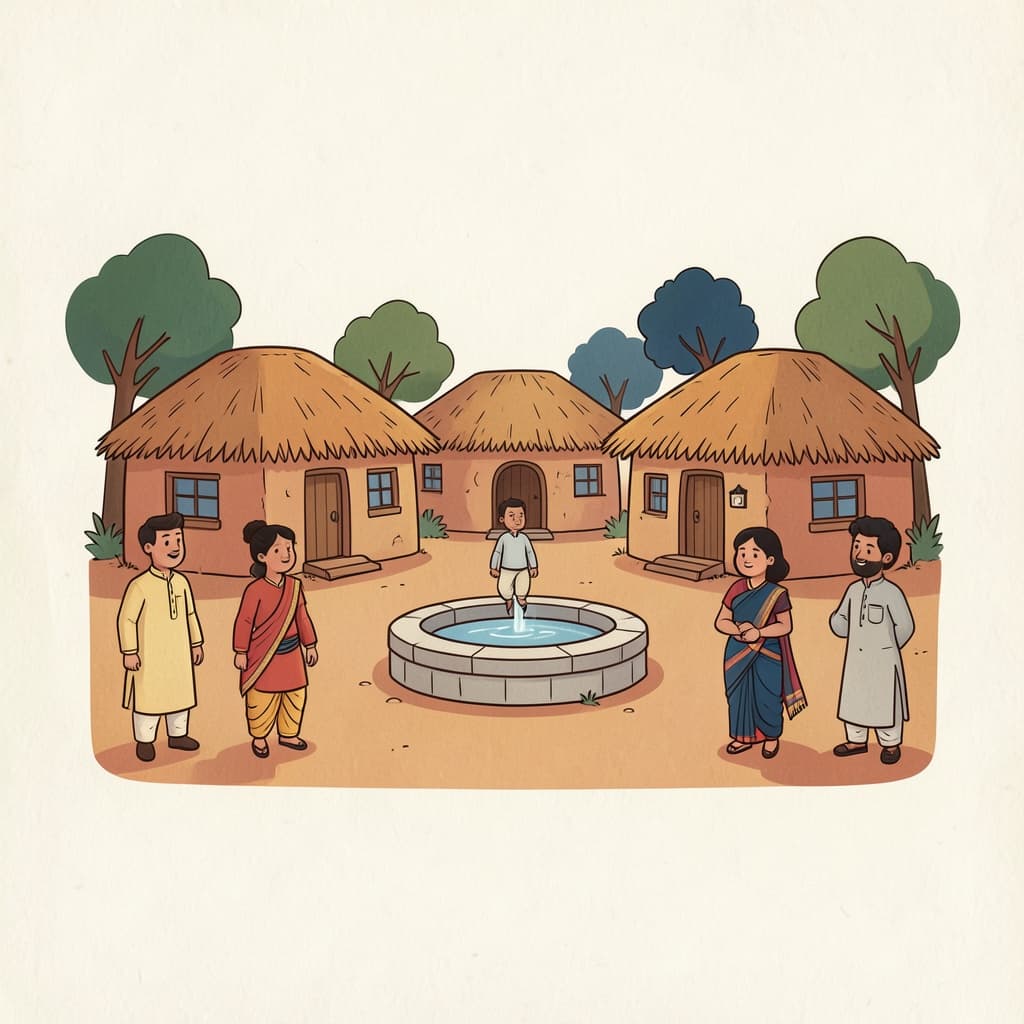
  • A small village with mud huts, thatched roofs and a well in the middle.
    grāmaḥ

    village

    NounMasculine

    ।We go to the village.

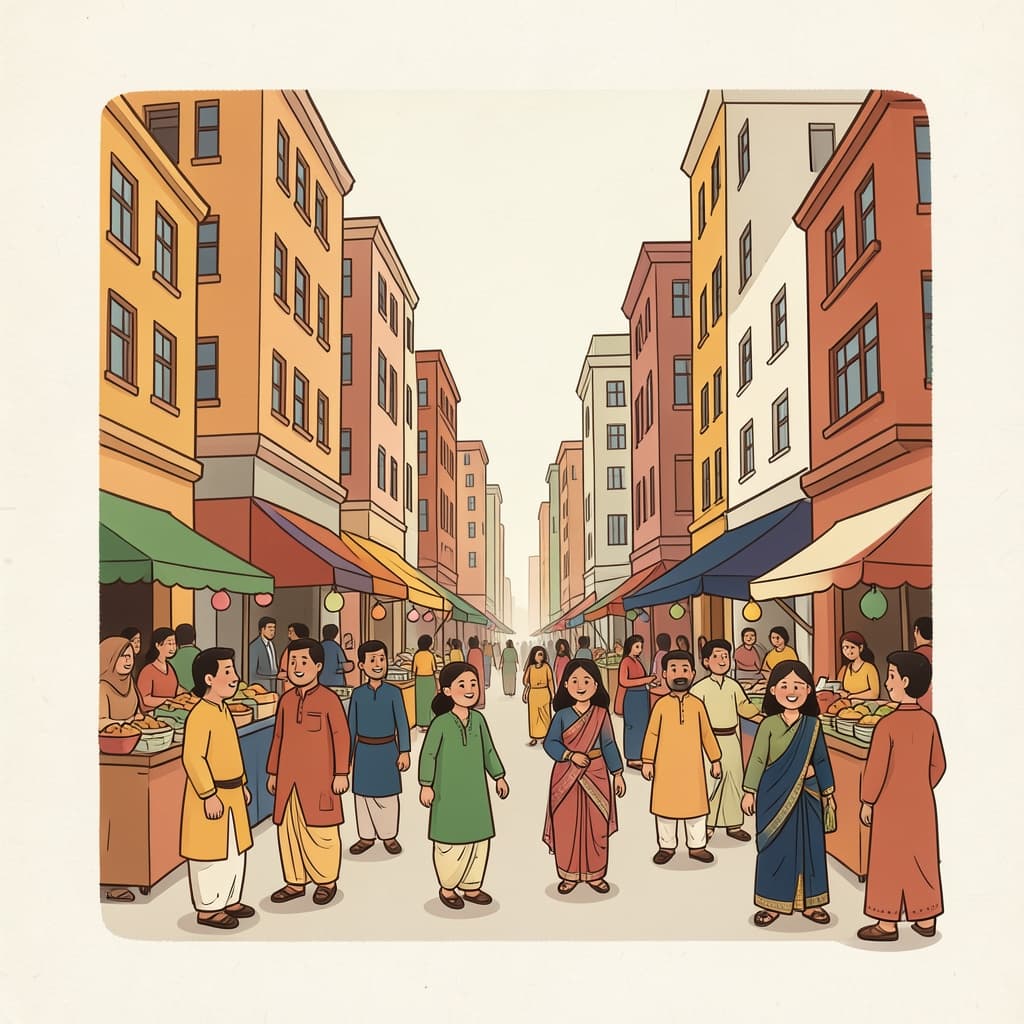
  • A busy city street with tall buildings and a market.
    nagaram

    city

    NounNeuter

    ।We live in the city.

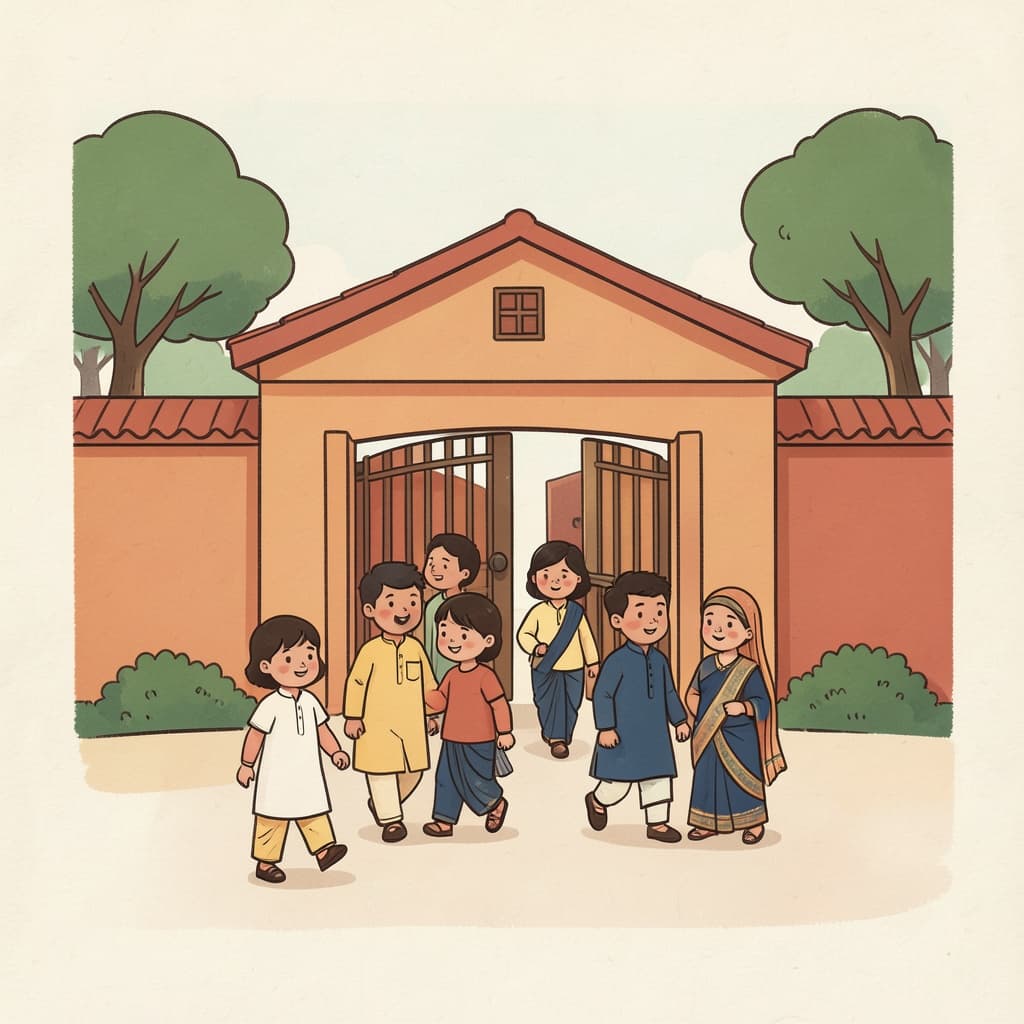
  • A village school building with children walking in through the gate.
    vidyālayaḥ

    school

    NounMasculine

    ।The boy goes to school.

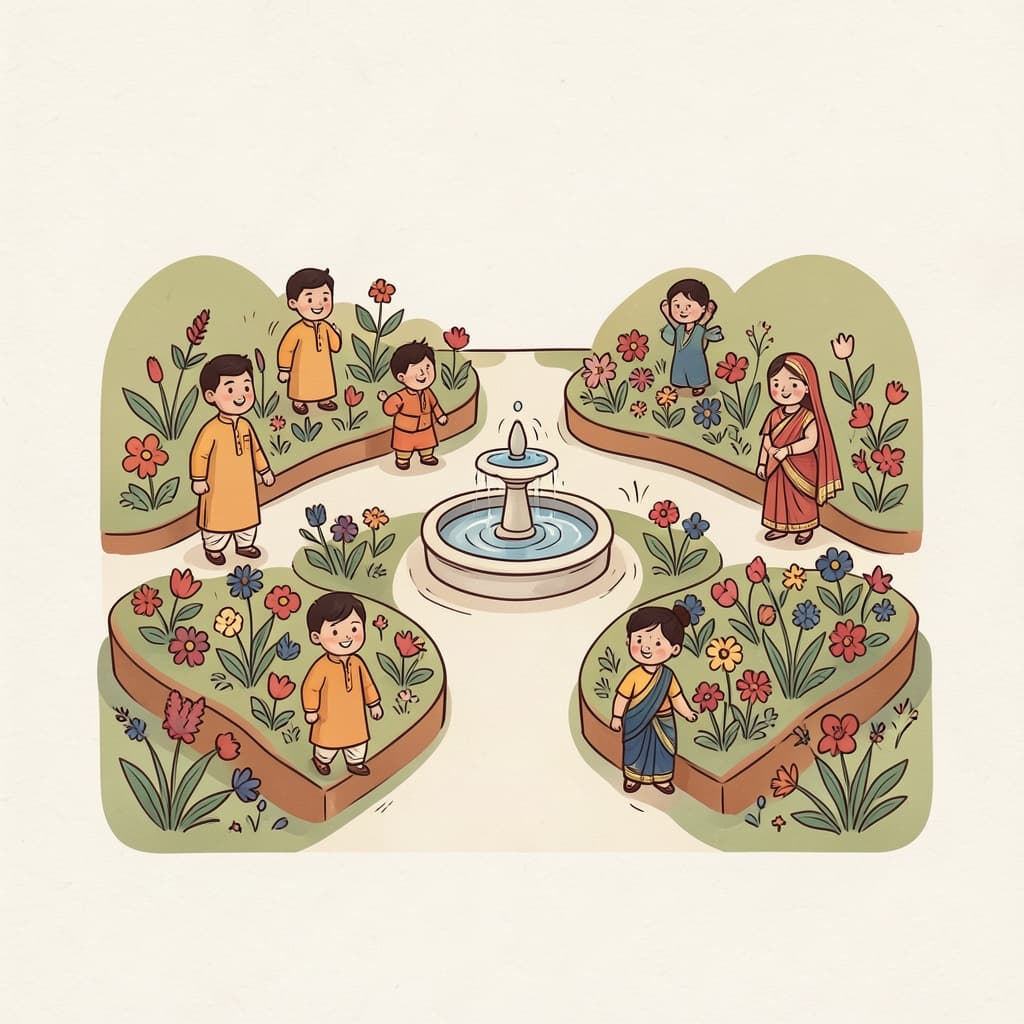
  • A garden with flower beds, a path and a small fountain.
    udyānam

    garden, park

    NounNeuter

    ।The boys play in the garden.

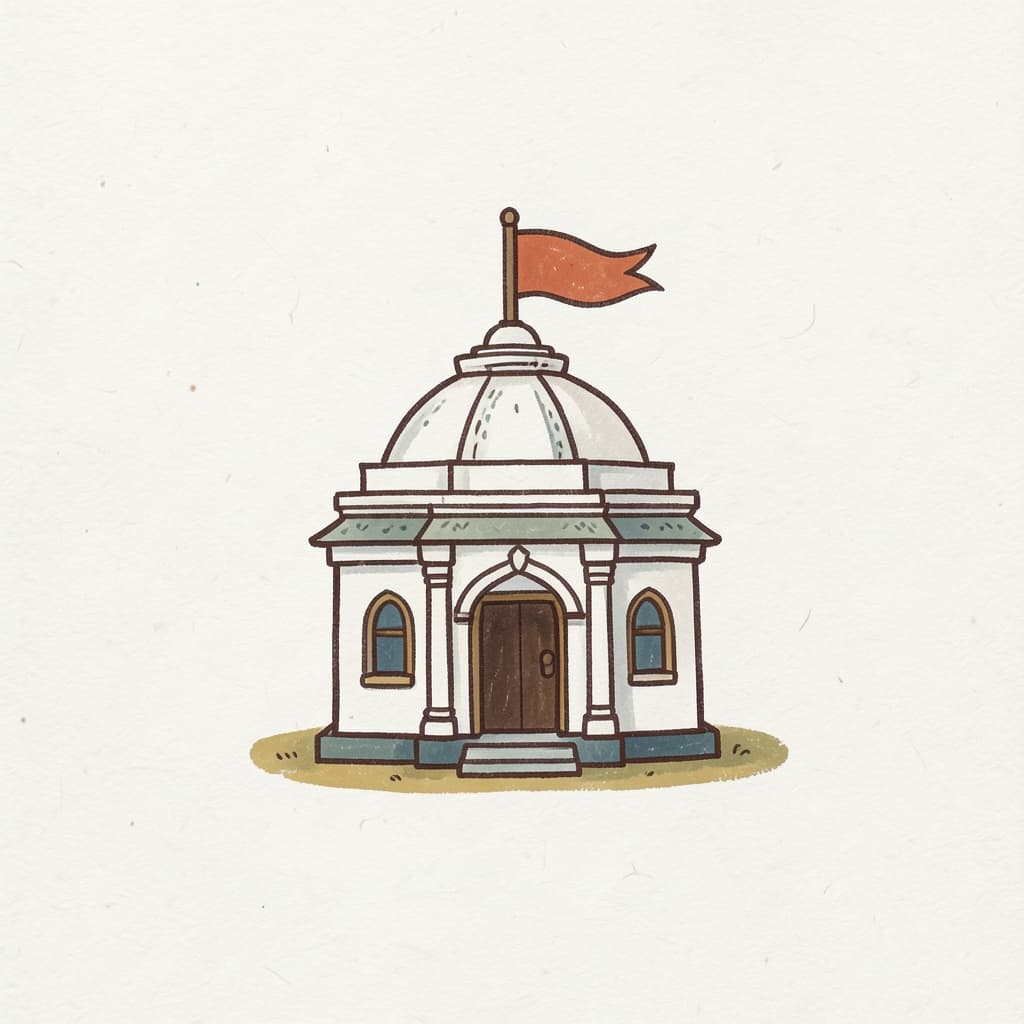
  • A small white village temple with a saffron flag on top.
    mandiram

    temple

    NounNeuter

    ।The temple is on the right.

  • A small village shop with jars, sacks and baskets of goods and a shopkeeper.
    āpaṇaḥ

    shop, market

    NounMasculine

    ।She goes to the shop.

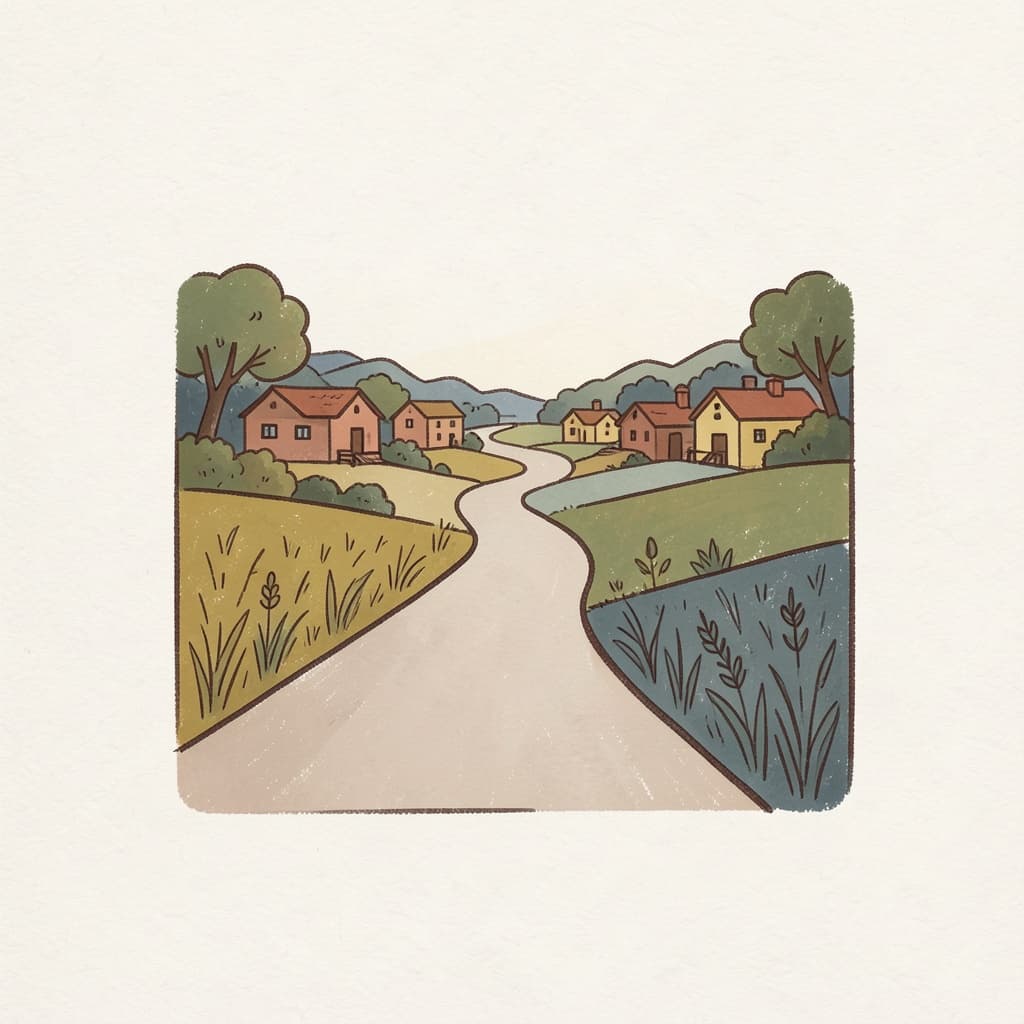
  • A winding road through green fields towards a village.
    mārgaḥ

    road, path

    NounMasculine

    ।People walk on the road.

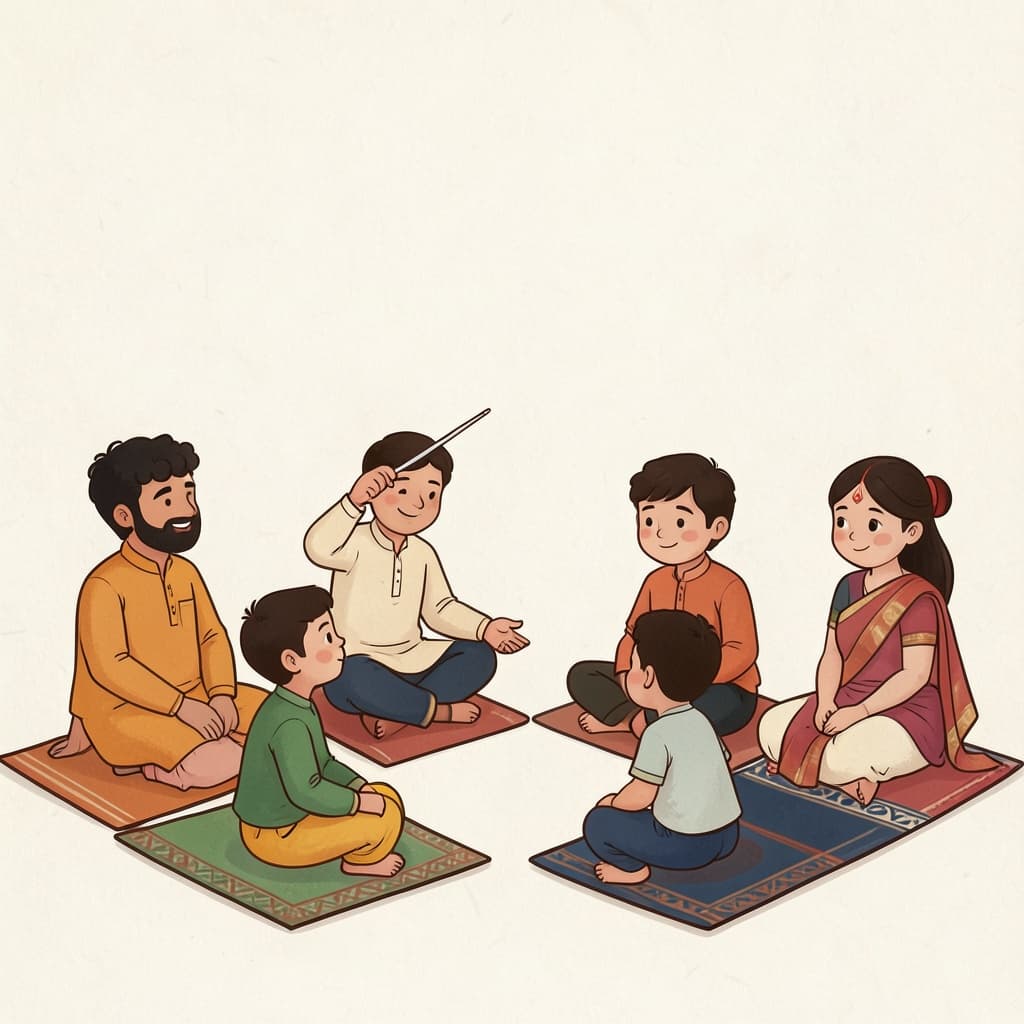
  • A teacher with a pointer explaining to a small class of children sitting on mats.
    kakṣā

    classroom, class

    NounFeminine

    ।The students stand in the classroom.

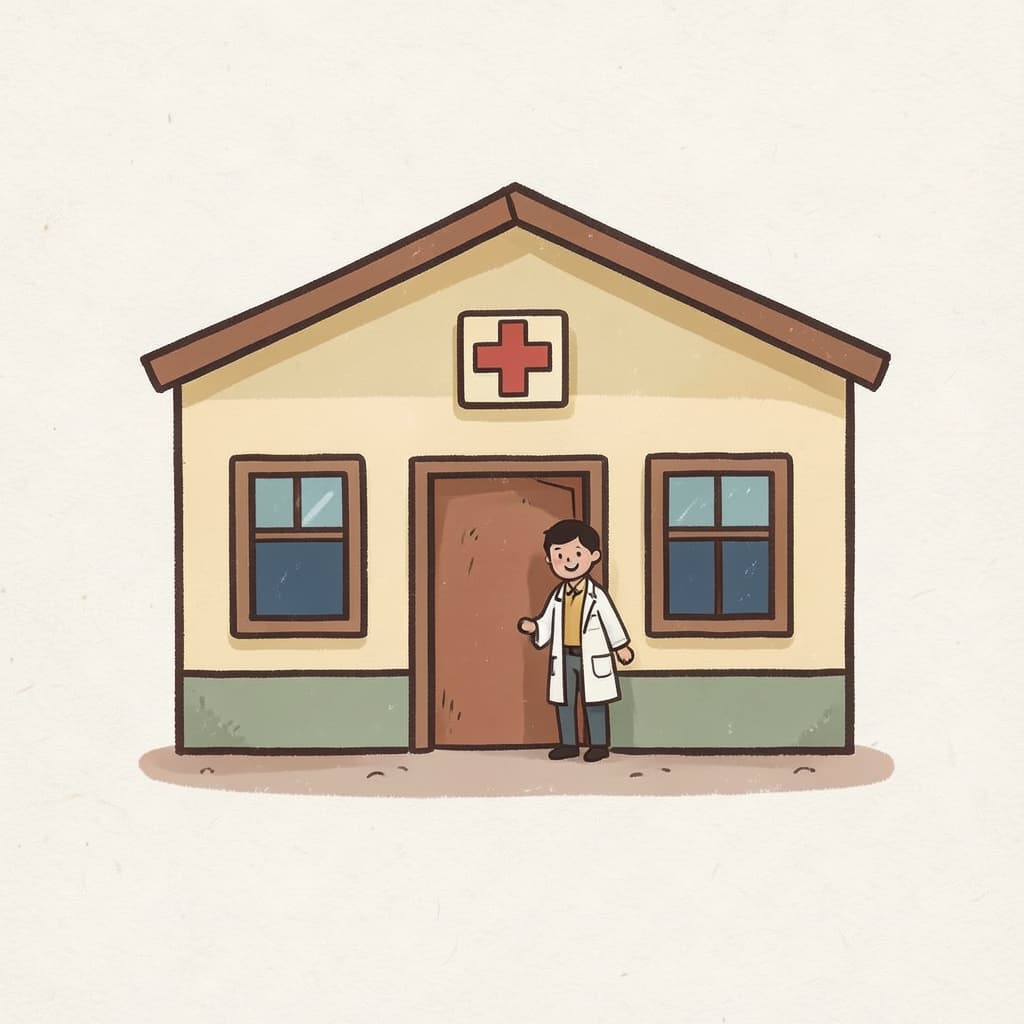
  • A small clean hospital building with a red cross sign and a doctor at the door.
    cikitsālayaḥ

    hospital

    NounMasculine

    ।The doctor goes to the hospital.

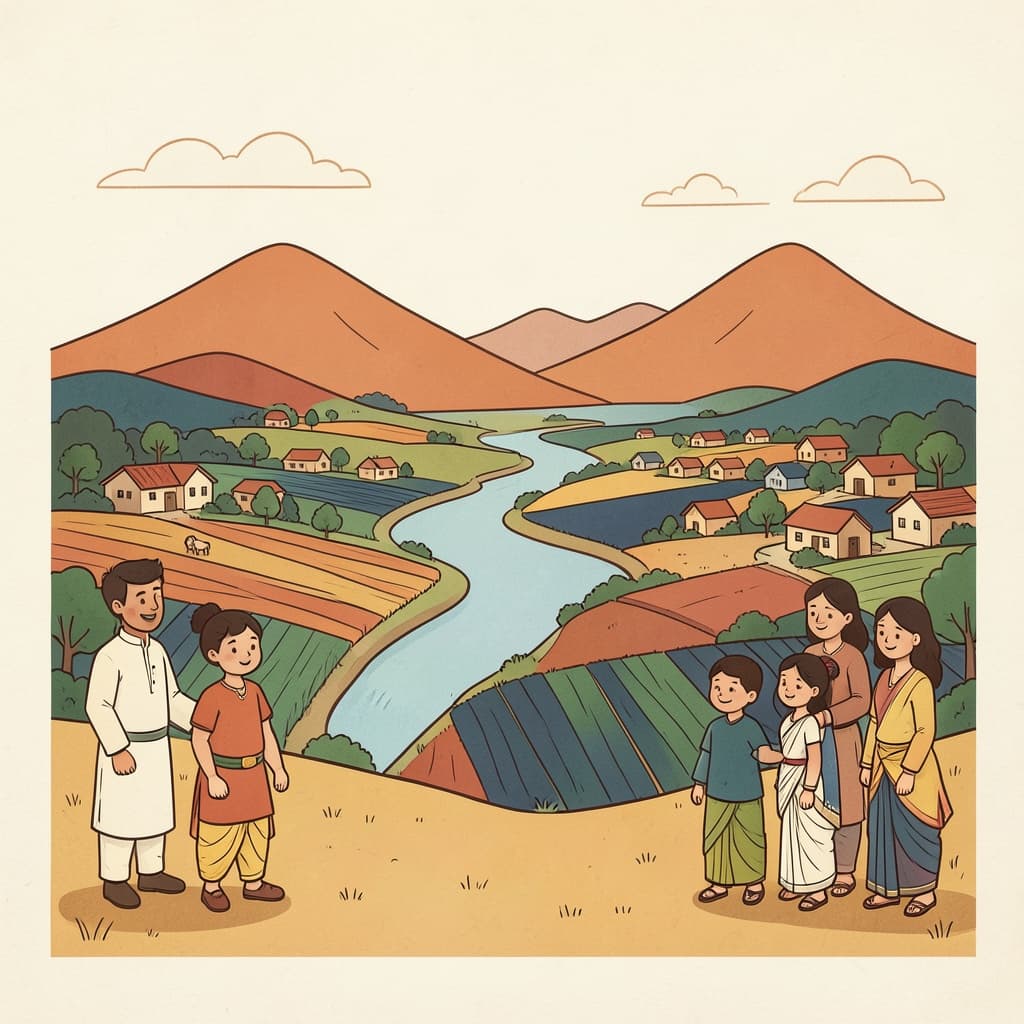
  • A wide landscape of a country with mountains, a river, fields and villages.
    deśaḥ

    country

    NounMasculine

    ।Soldiers protect the country.

कालः

Time & days
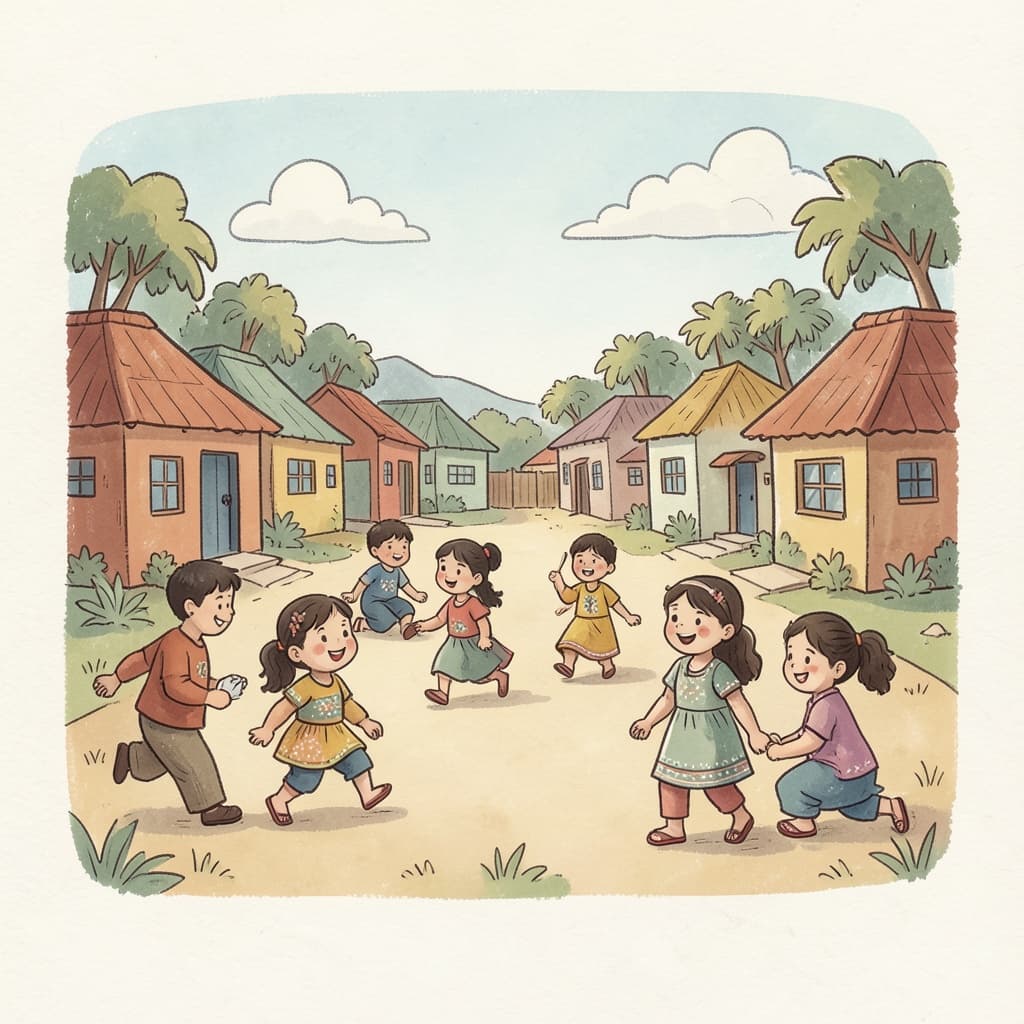
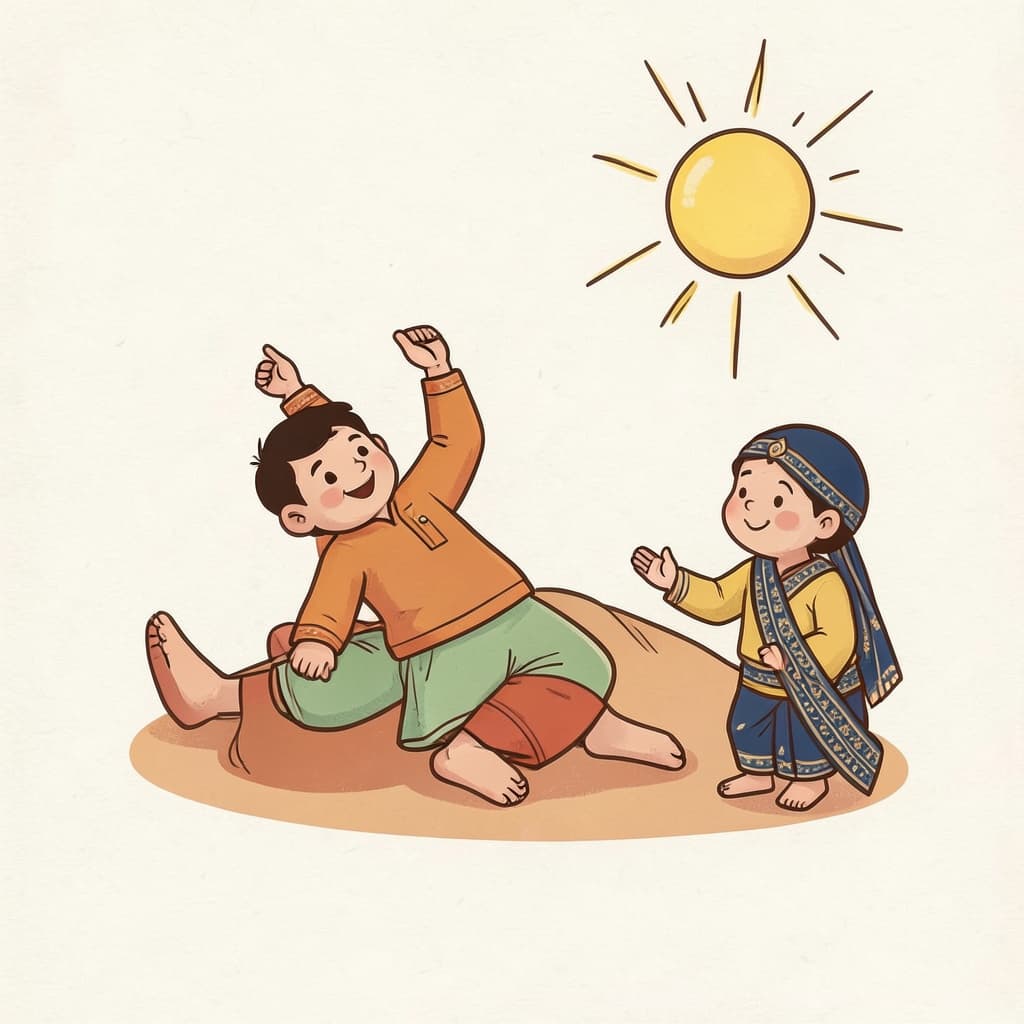
  • A bright sunny day over a village with children playing.
    dinam

    day

    NounNeuter

    ।One day the lion fell into a net.

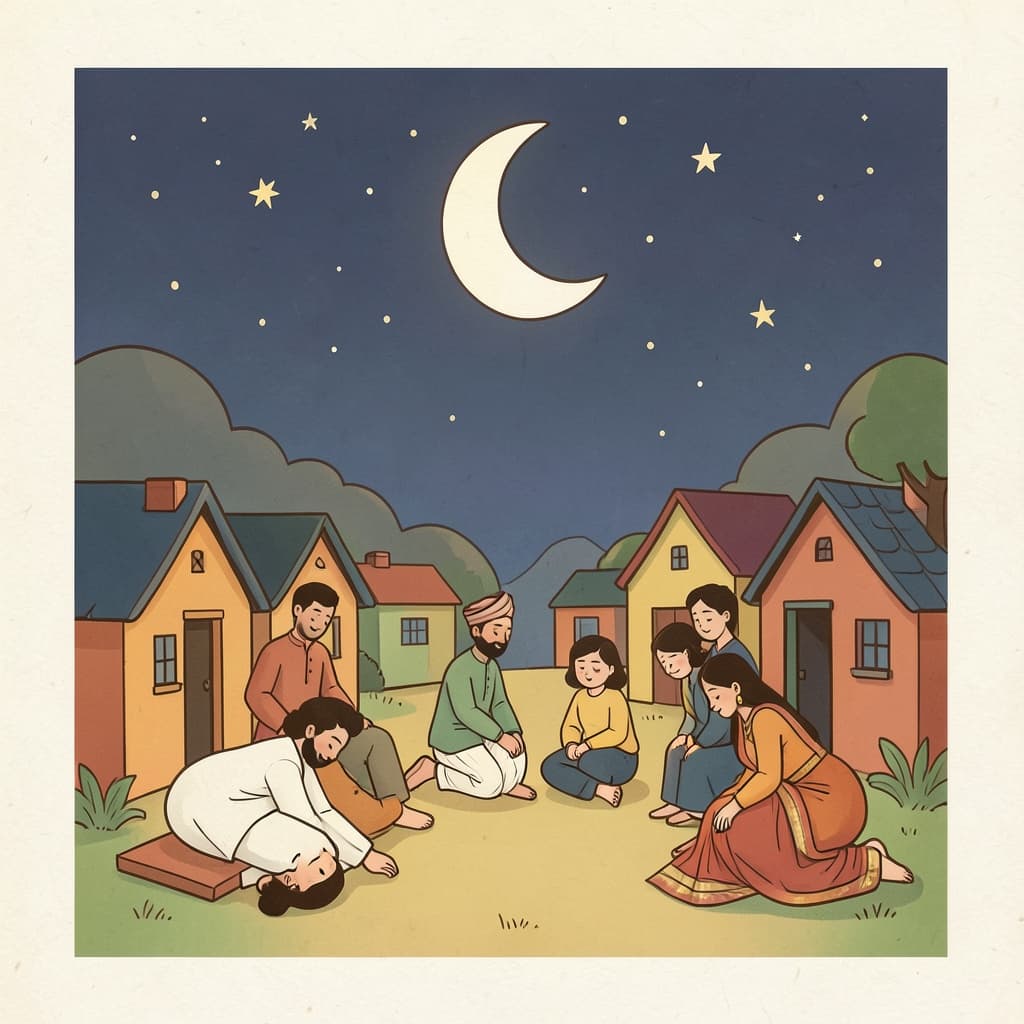
  • A night sky with a crescent moon and stars over a sleeping village.
    rātriḥ

    night

    NounFeminine

    ।The moon shines at night.

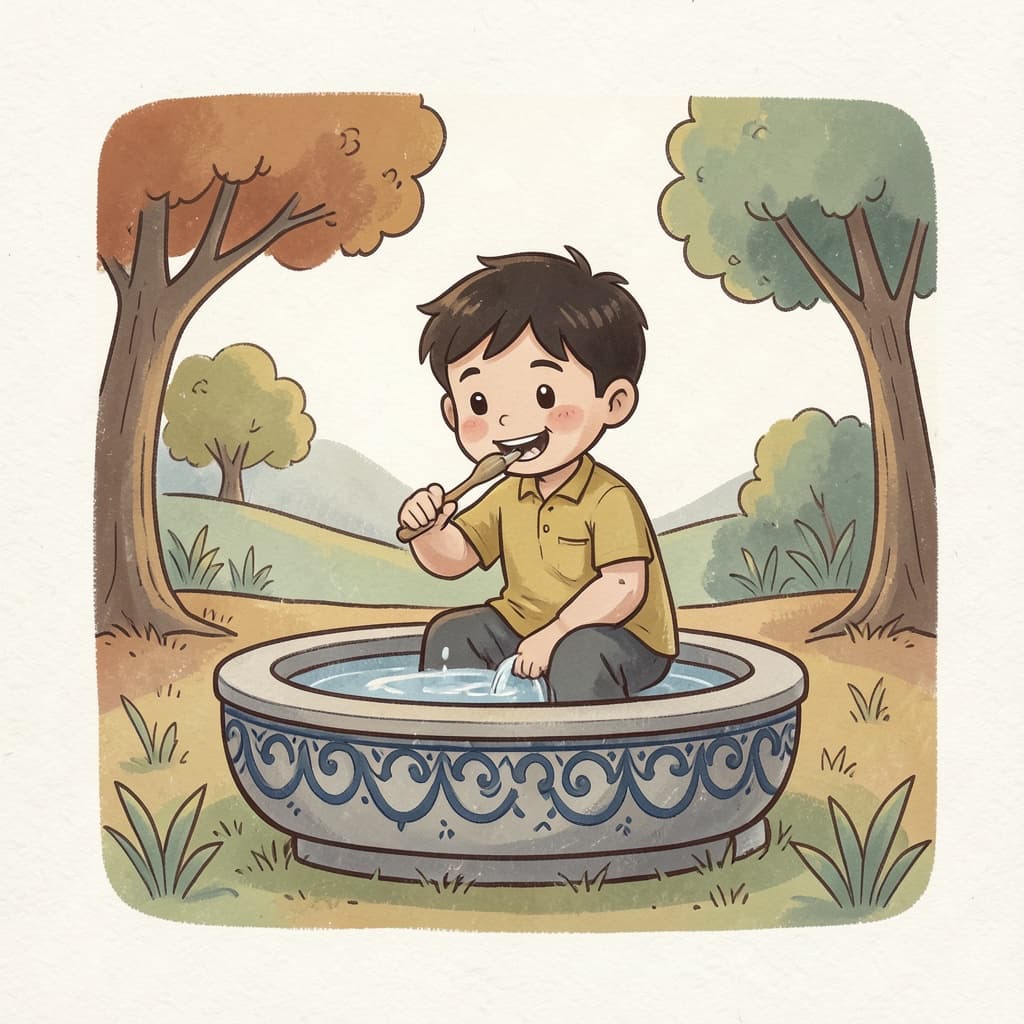
  • A boy brushing his teeth at a well in the early morning sunshine.
    prātaḥ

    in the morning

    Indeclinable

    ।He gets up in the morning.

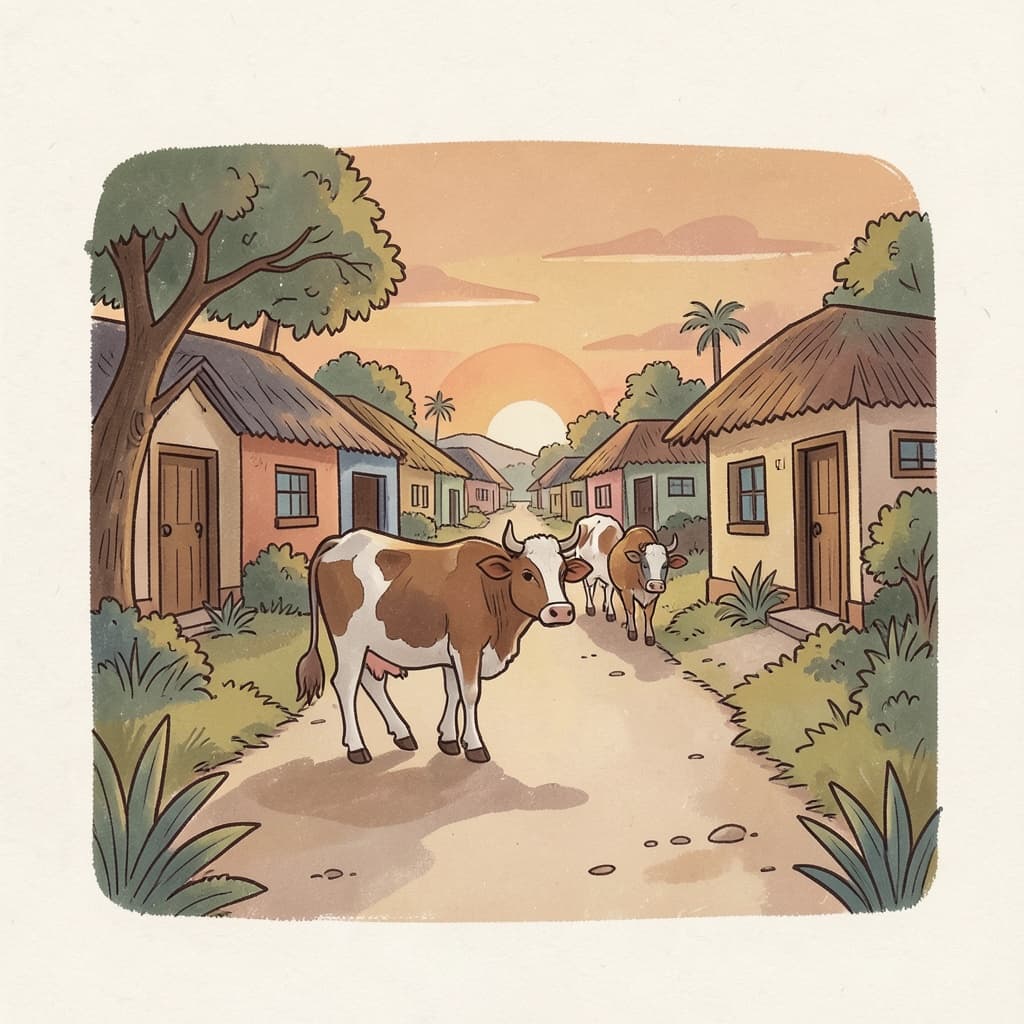
  • Cows walking home along a village path at sunset.
    sāyam

    in the evening

    Indeclinable

    ।In the evening father returns home.

  • A bright morning sun and a child waking up and stretching.
    adya

    today

    Indeclinable

    ।Today is Monday.

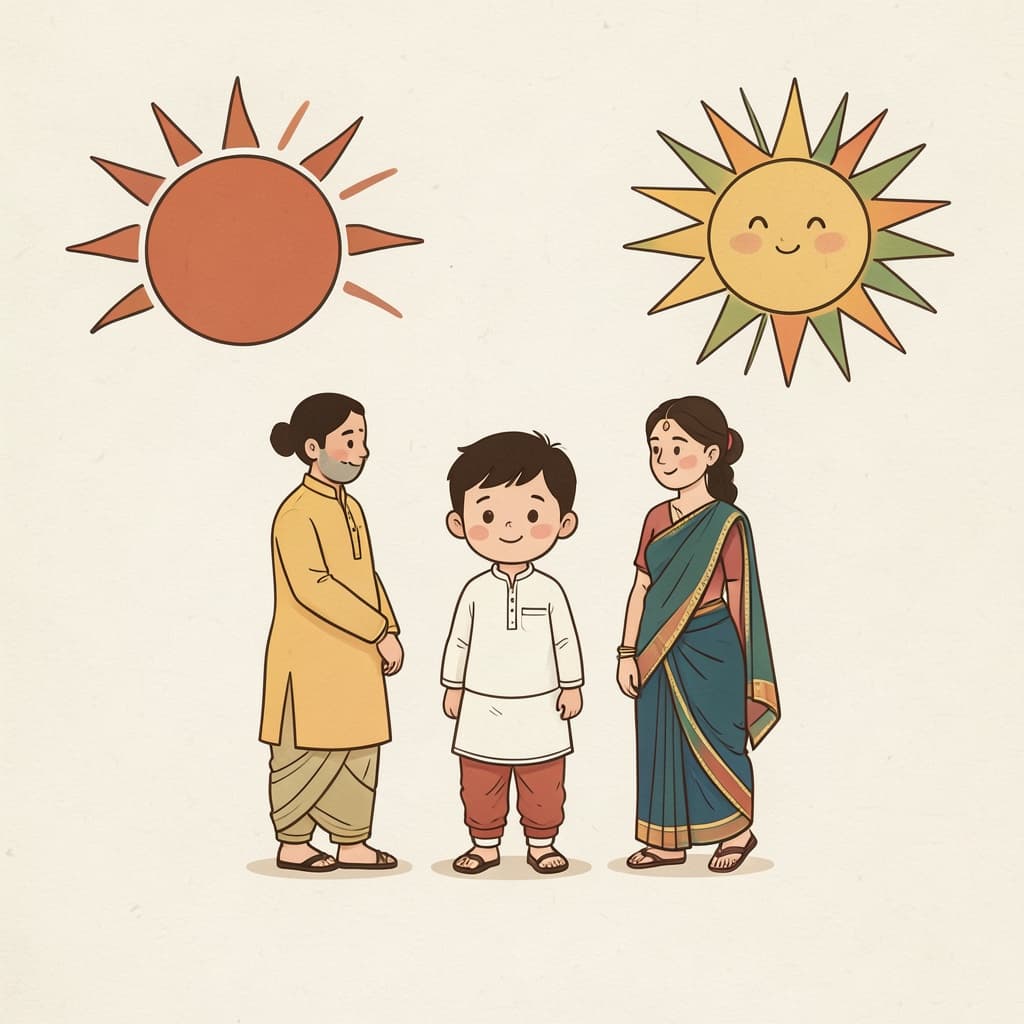
  • A setting sun on one side and a rising sun on the other, a child standing in the middle.
    śvaḥ

    tomorrow

    Indeclinable

    ।Tomorrow we will play.

  • A setting sun on one side and a rising sun on the other, a child standing in the middle.
    hyaḥ

    yesterday

    Indeclinable

    ।Yesterday I went to the village.

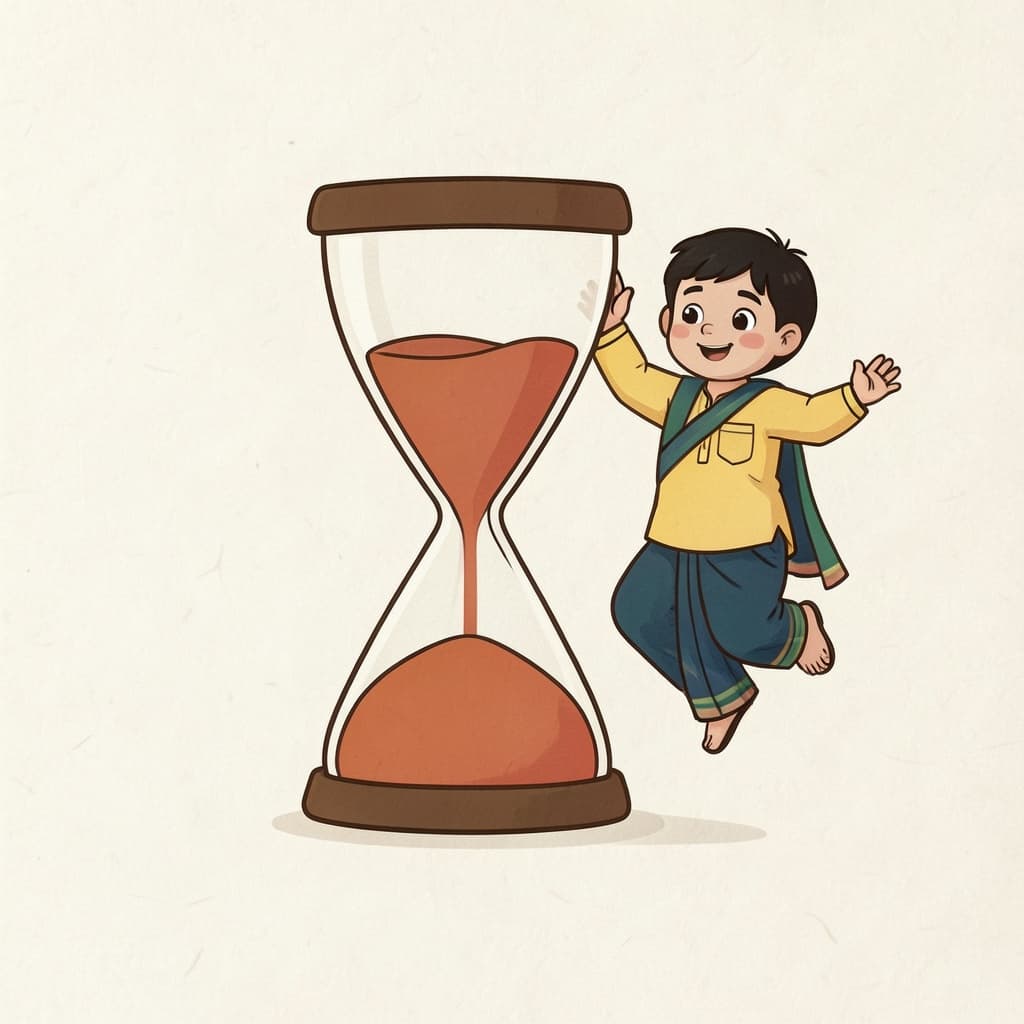
  • A sand timer with sand running, and a boy jumping up ready.
    idānīm

    now

    Indeclinable

    ।Now we study.

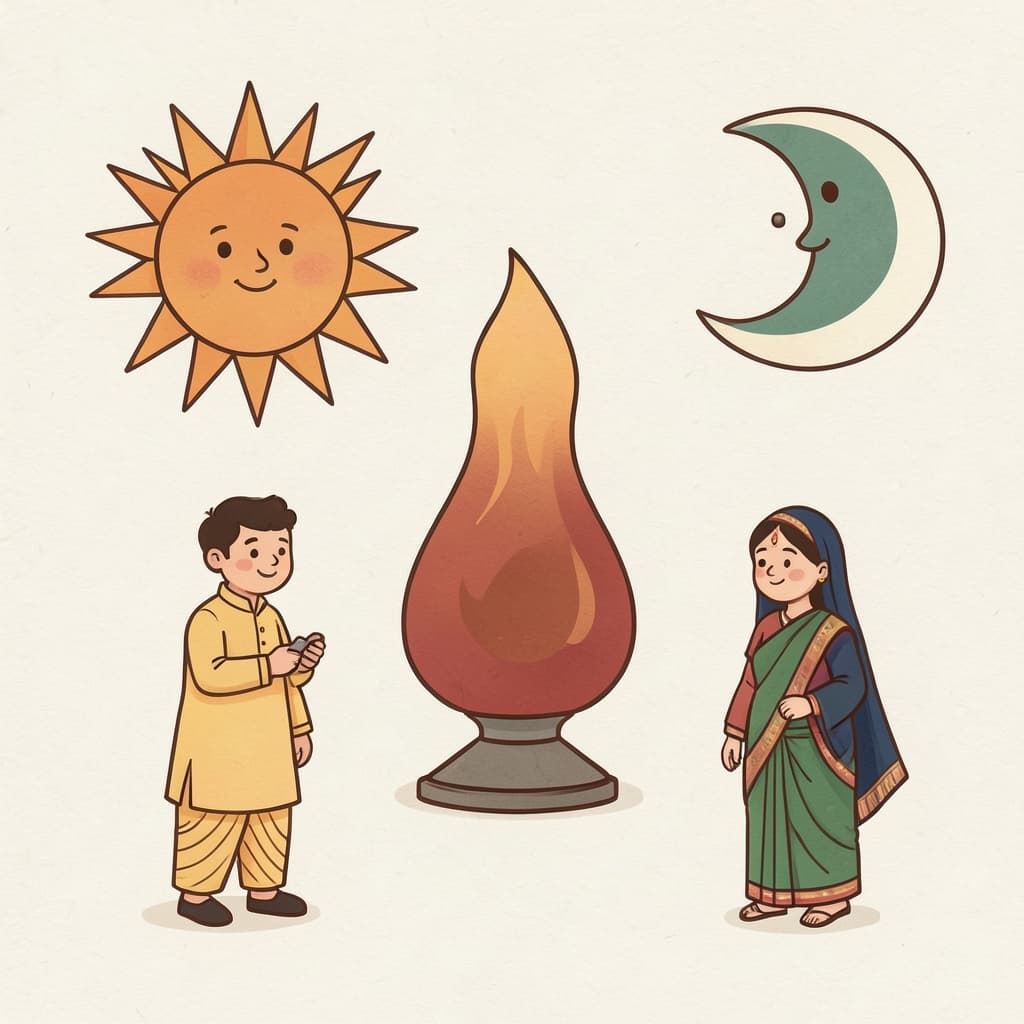
  • An oil lamp that keeps burning, with the sun on one side and the moon on the other.
    sadā

    always

    Indeclinable

    ।Always speak the truth.

  • A child knocking once on a big wooden door.
    ekadā

    once (upon a time)

    Indeclinable

    ।Once the lion was asleep under a tree.

  • A calendar page with a crescent moon drawn on it.
    somavāsaraḥ

    Monday

    NounMasculine

    ।Today is Monday.

  • A calendar page with a red planet Mars drawn on it.
    maṅgalavāsaraḥ

    Tuesday

    NounMasculine
  • A calendar page with a small green planet Mercury drawn on it.
    budhavāsaraḥ

    Wednesday

    NounMasculine
  • A calendar page with a large striped planet Jupiter drawn on it.
    guruvāsaraḥ

    Thursday

    NounMasculine
  • A calendar page with a bright white planet Venus drawn on it.
    śukravāsaraḥ

    Friday

    NounMasculine
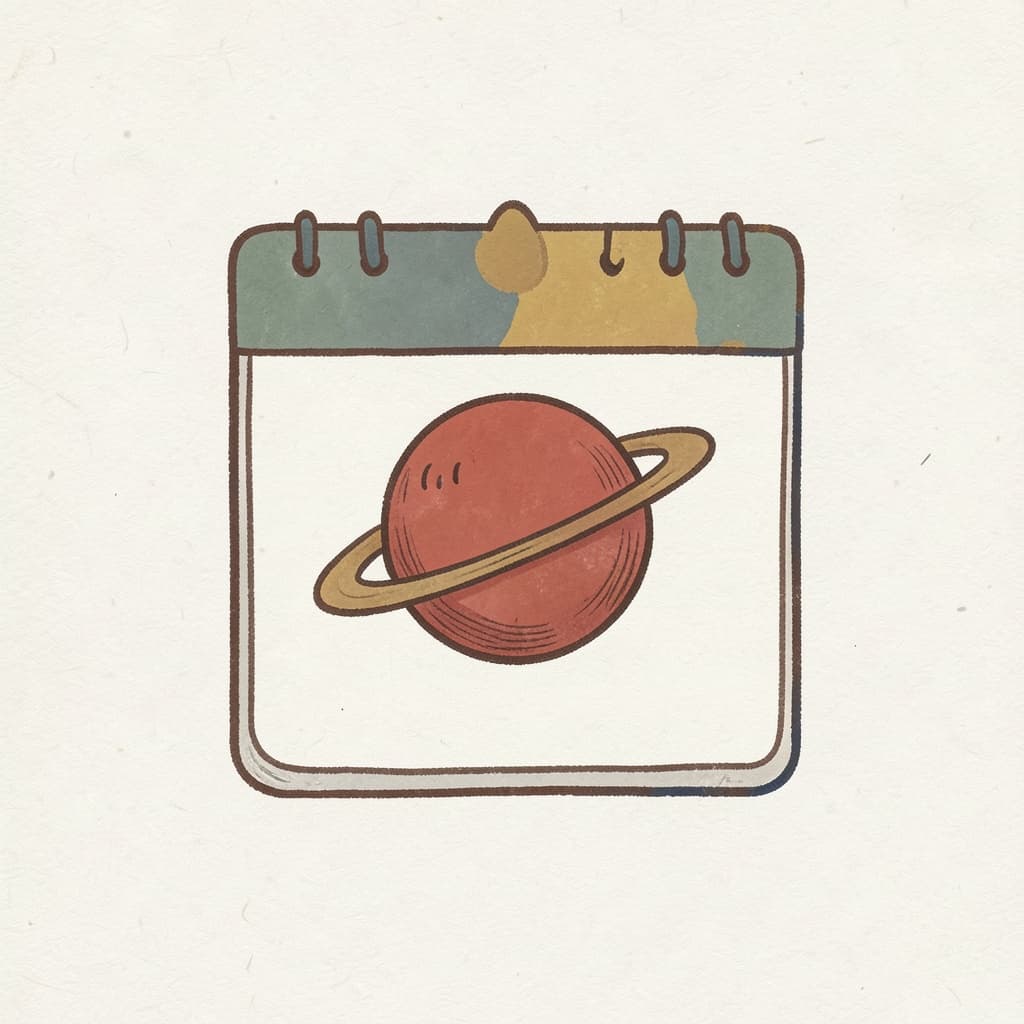
  • A calendar page with the ringed planet Saturn drawn on it.
    śanivāsaraḥ

    Saturday

    NounMasculine
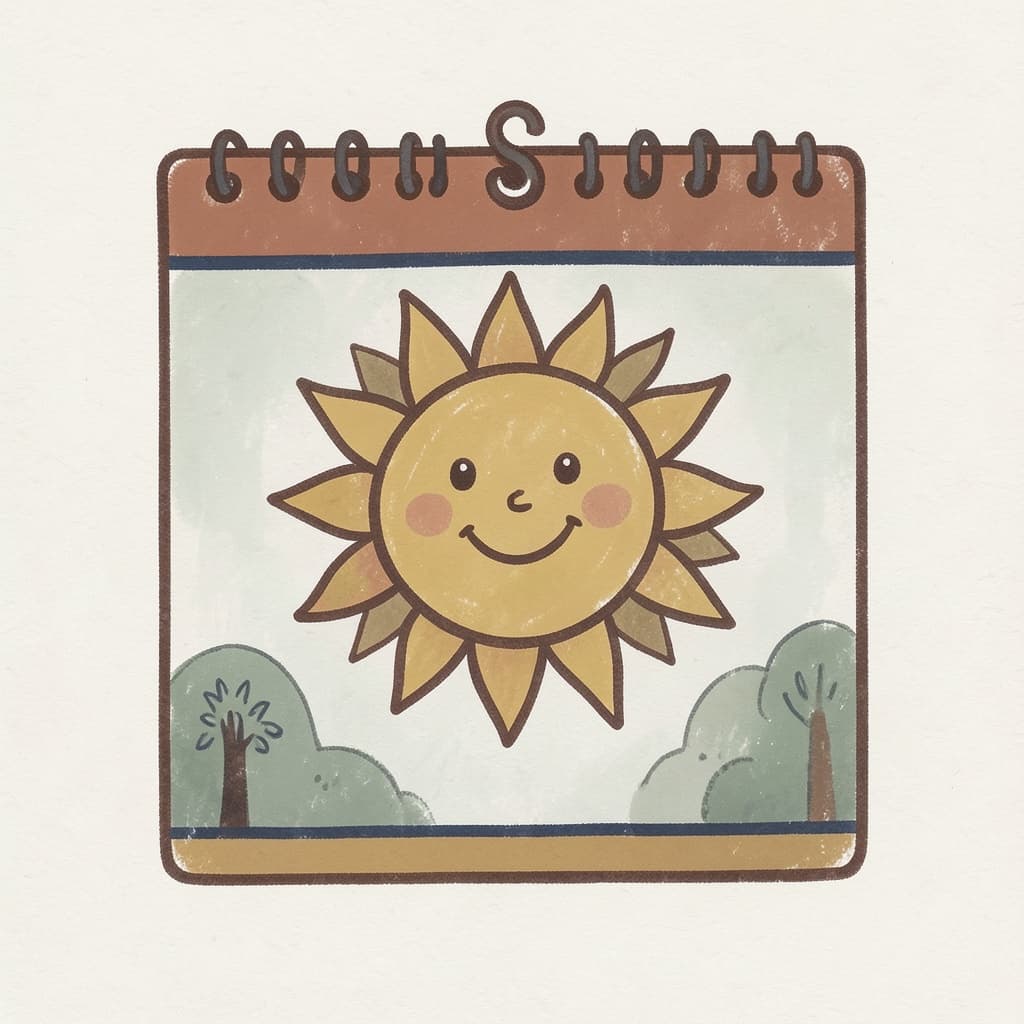
  • A calendar page with a big smiling sun drawn on it.
    ravivāsaraḥ

    Sunday

    NounMasculine
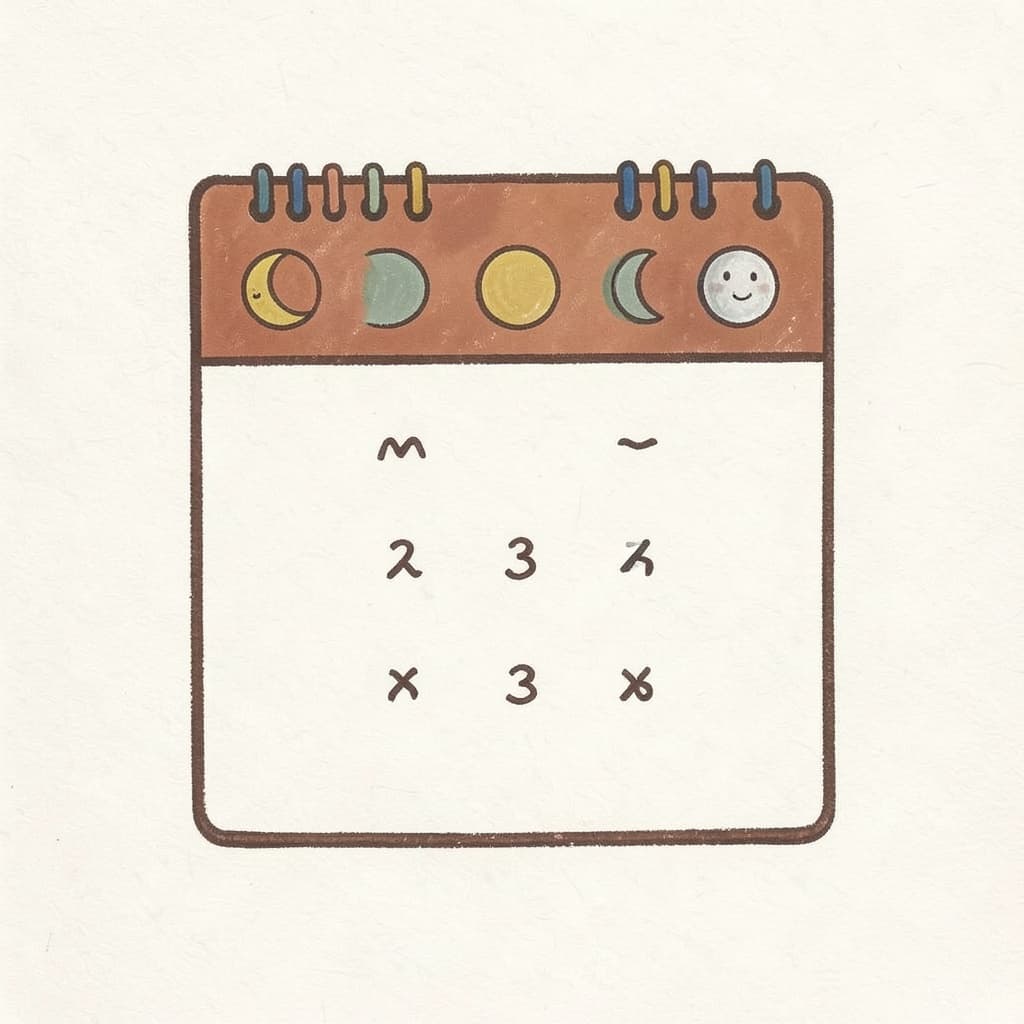
  • A wall calendar showing one month with a moon in its phases along the top.
    māsaḥ

    month

    NounMasculine
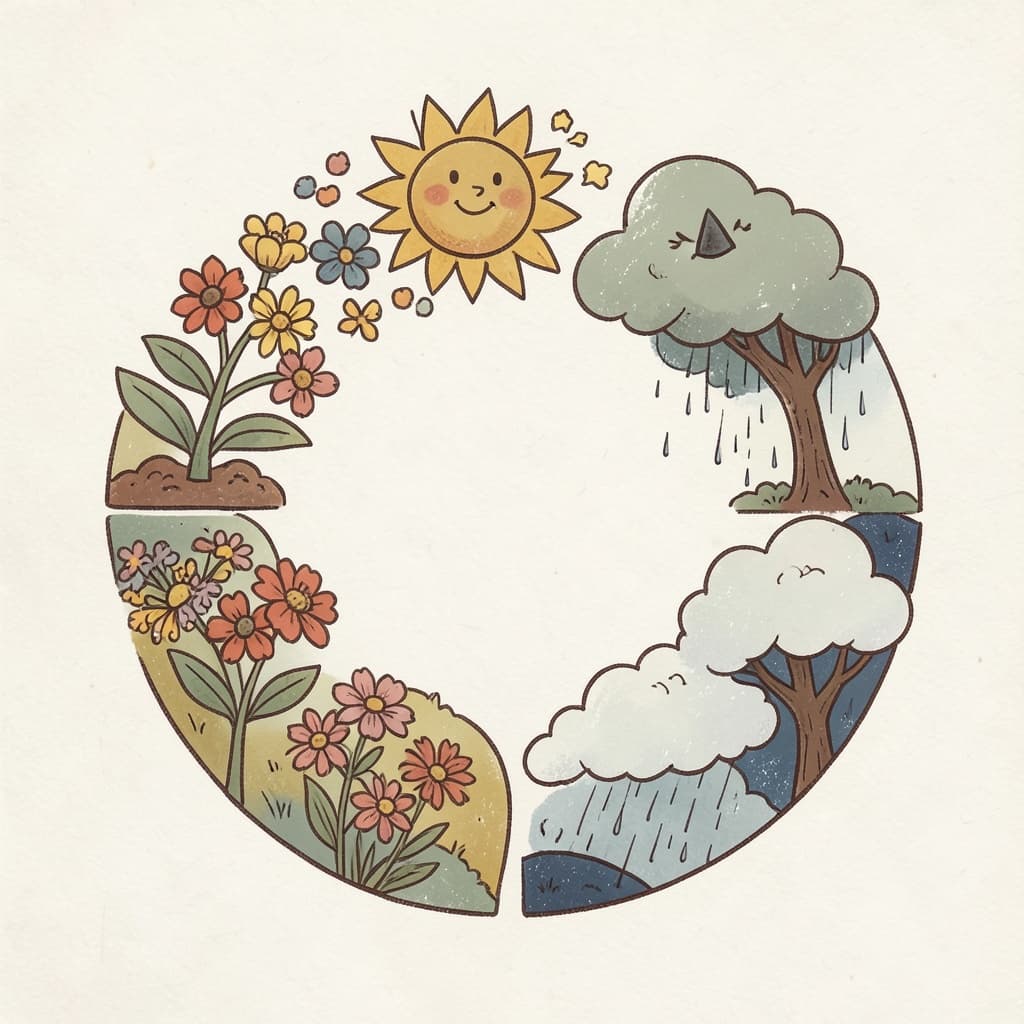
  • A circle of the four seasons: spring flowers, summer sun, monsoon rain and winter fog.
    varṣam

    year

    NounNeuter
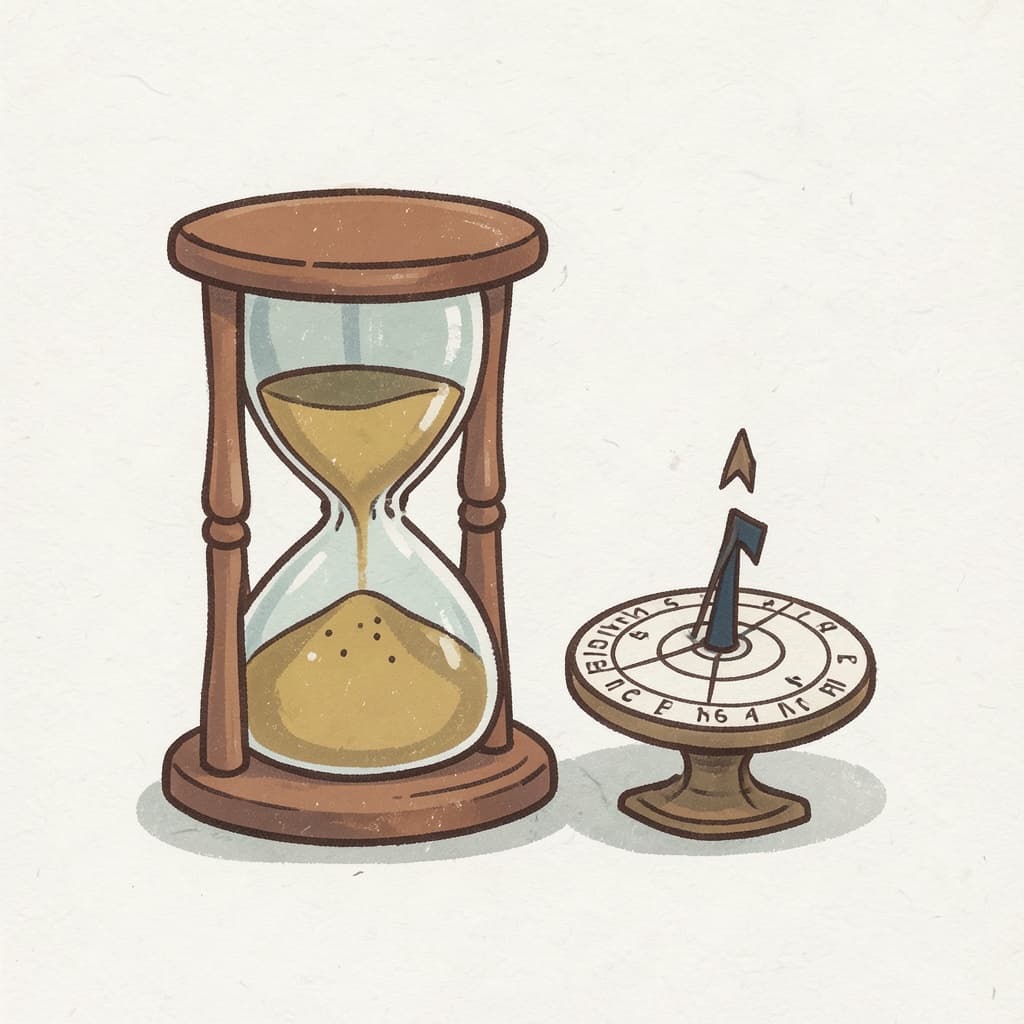
  • An old hourglass with sand flowing beside a sundial.
    kālaḥ

    time

    NounMasculine

सर्वनामानि

Pronouns
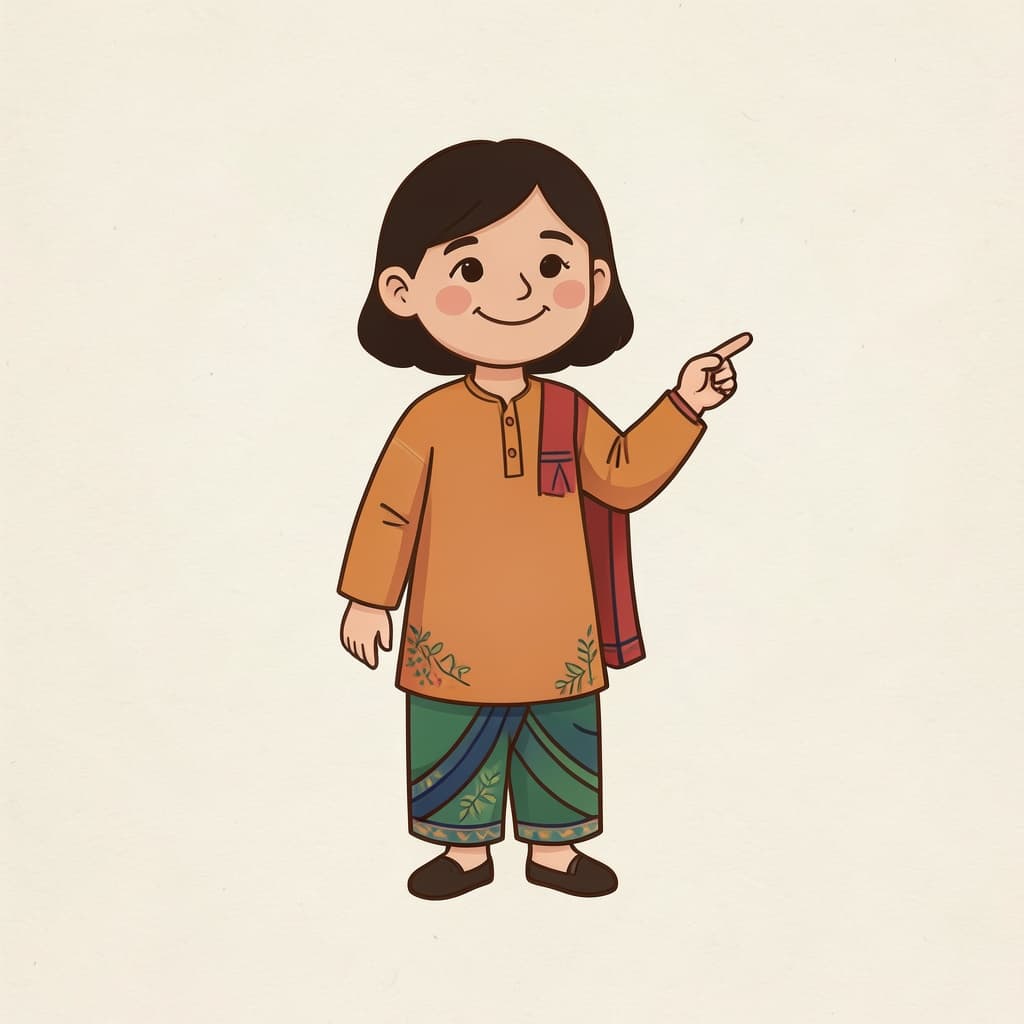
  • A girl pointing to herself with a smile.
    aham

    I

    Pronoun

    ।I read.

  • A teacher pointing kindly towards a student in front of her.
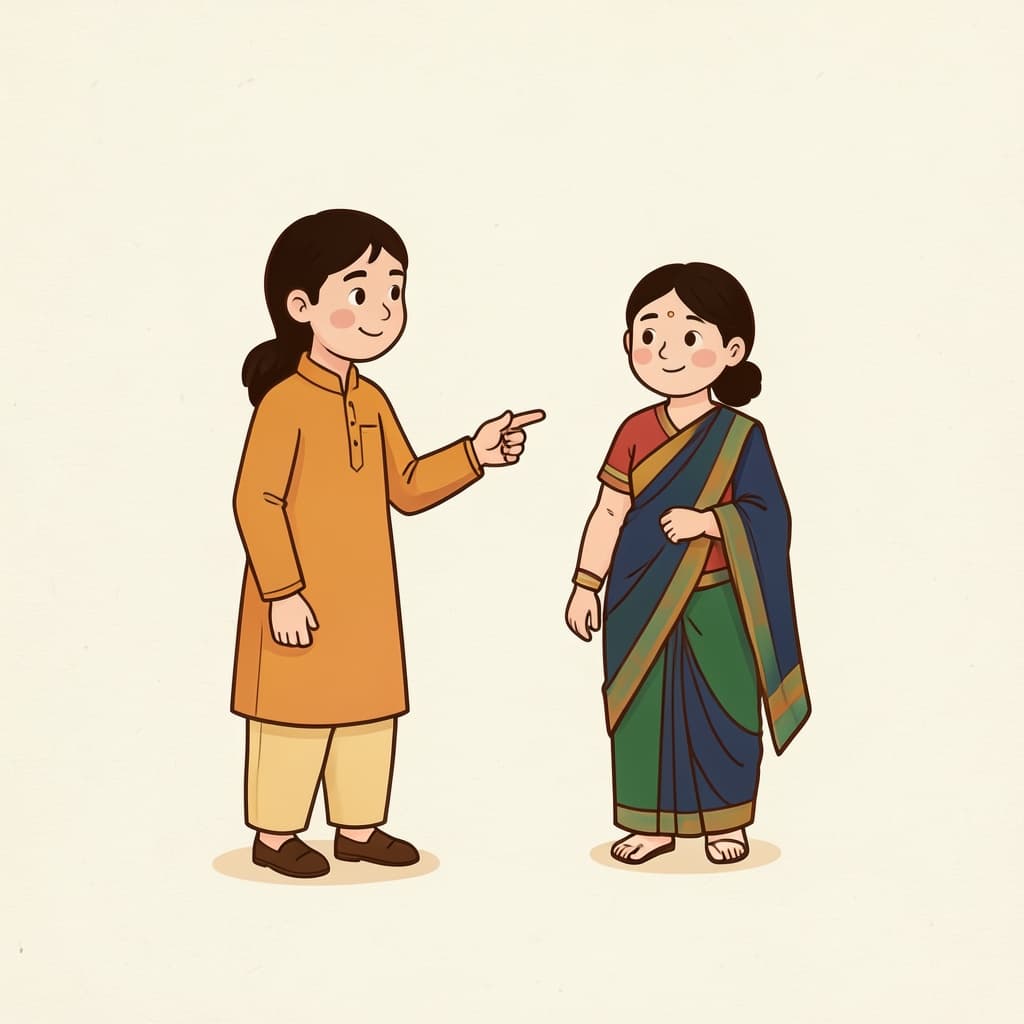
    tvam

    you (one person)

    Pronoun

    ।You read.

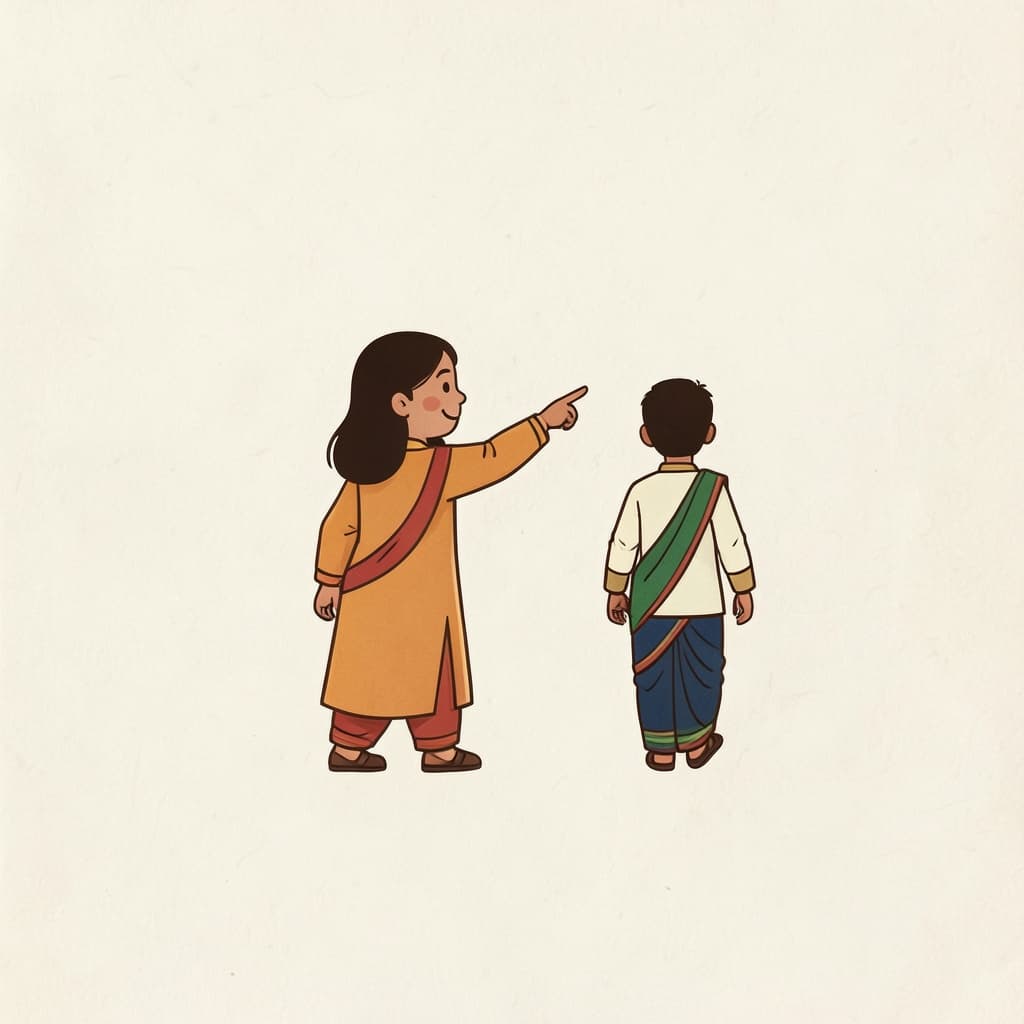
  • A girl pointing at a boy walking away in the distance.
    saḥ

    he

    PronounMasculine

    ।He reads.

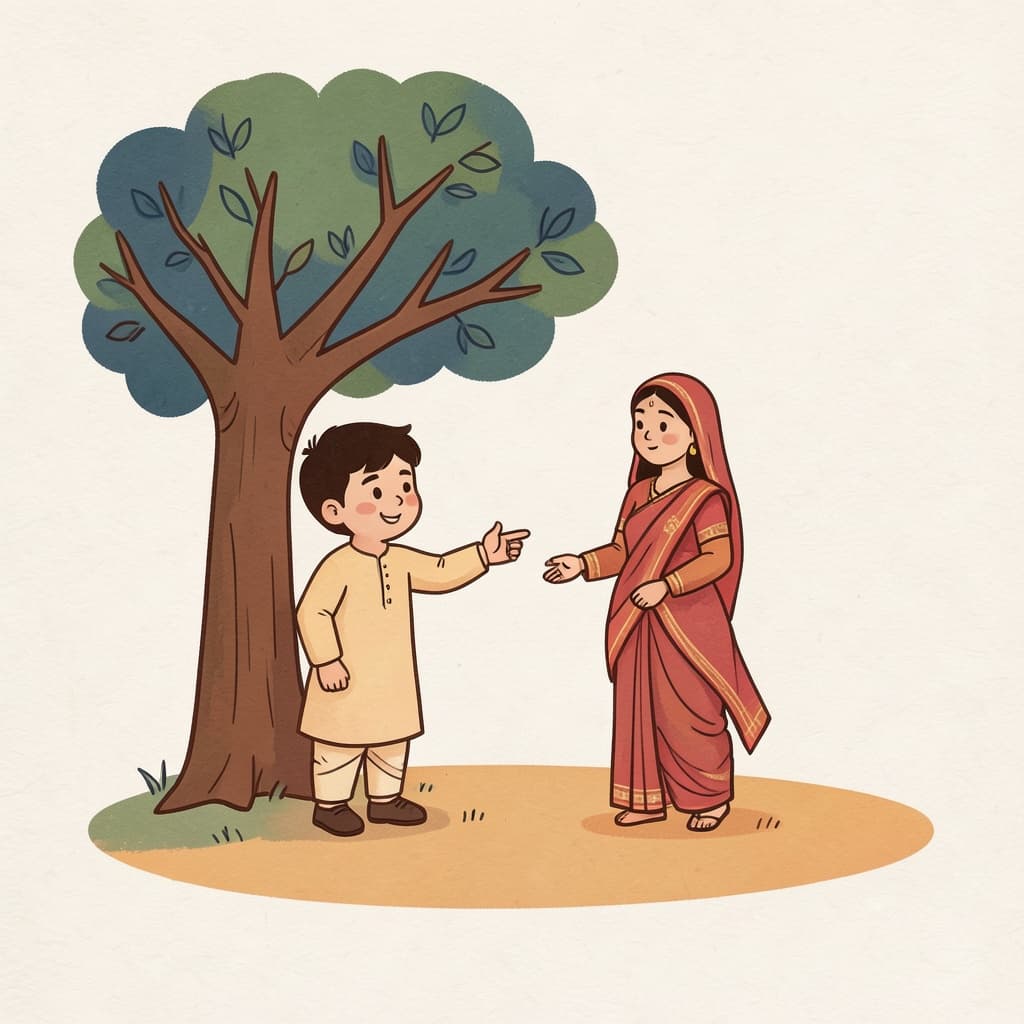
  • A boy pointing at a girl standing far away by a tree.
    sā

    she

    PronounFeminine

    ।She writes.

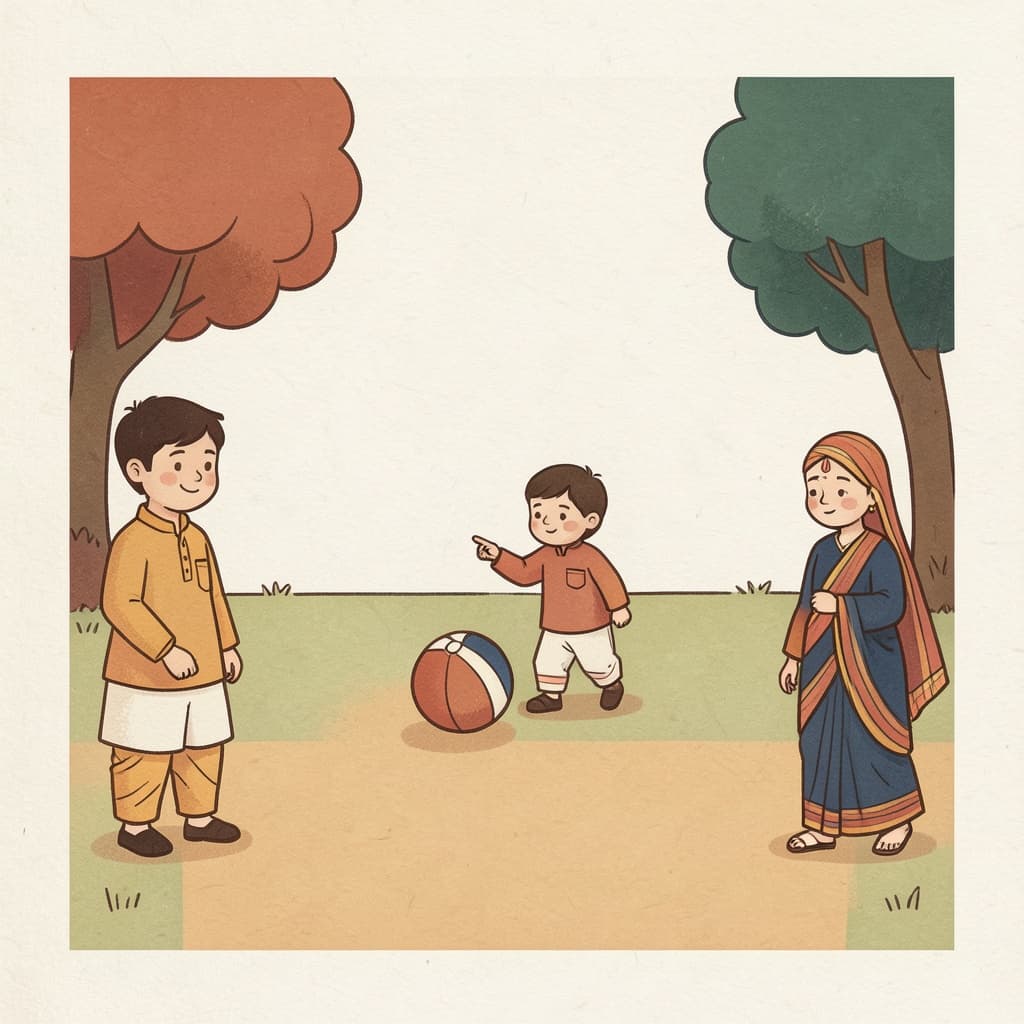
  • A child pointing at a ball lying far across the yard.
    tat

    it, that

    PronounNeuter

    ।That is a fruit.

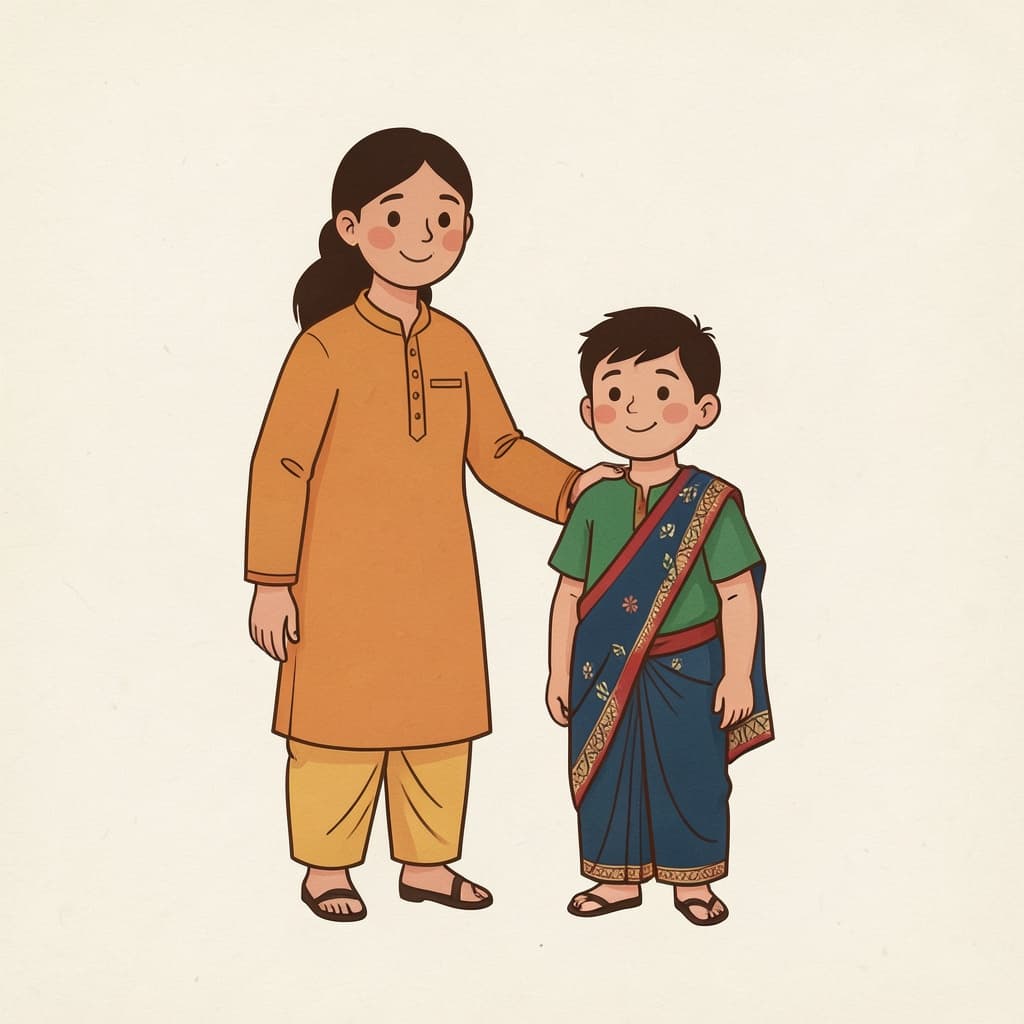
  • A mother with her hand on the shoulder of a little boy right beside her.
    eṣaḥ

    this (masc.)

    PronounMasculine

    ।This is a boy.

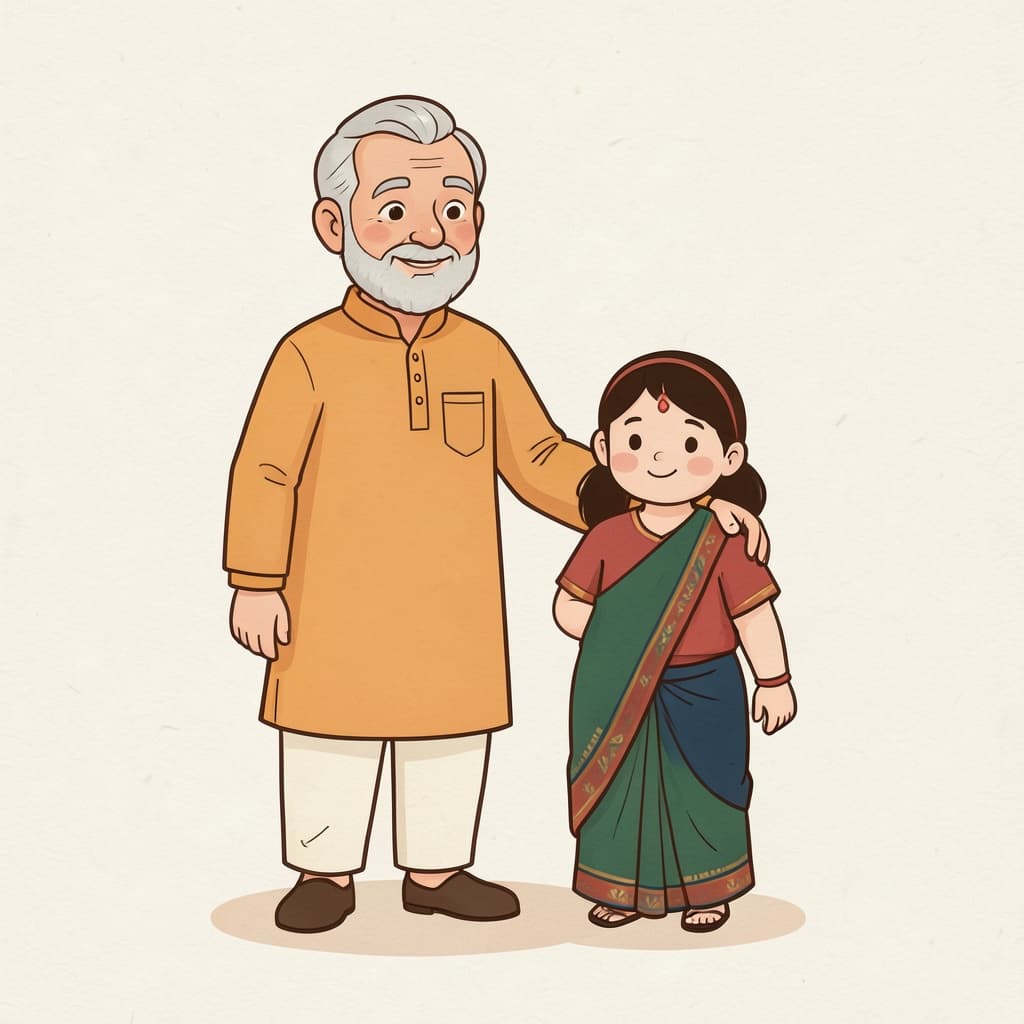
  • A grandfather with his hand on the shoulder of his granddaughter right beside him.
    eṣā

    this (fem.)

    PronounFeminine

    ।This is a girl.

  • A child holding up a mango close to the viewer, showing it.
    etat

    this (neut.)

    PronounNeuter

    ।This is a book.

  • A teacher pointing kindly towards a student in front of her.
    bhavān

    you (polite, masc.)

    PronounMasculine

    ?Where do you come from?

  • A teacher pointing kindly towards a student in front of her.
    bhavatī

    you (polite, fem.)

    PronounFeminine

    ?How are you?

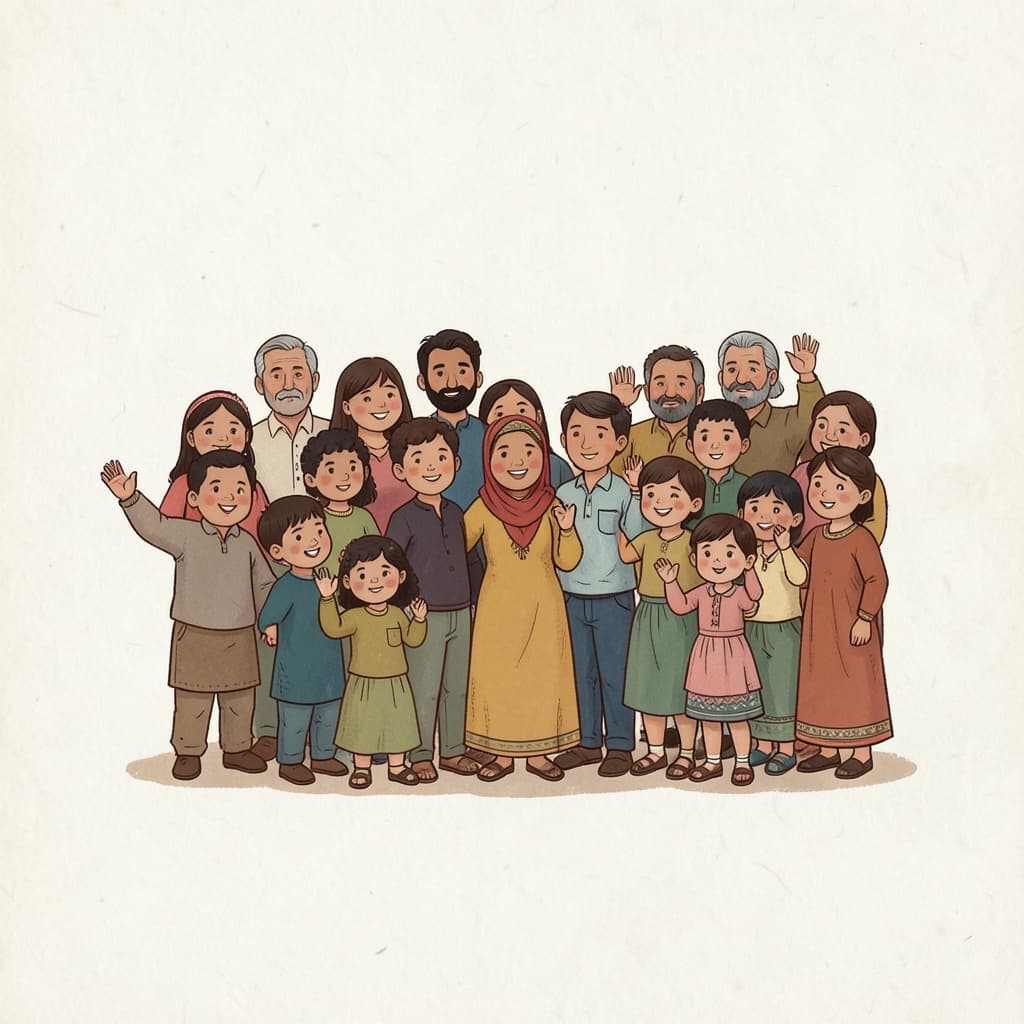
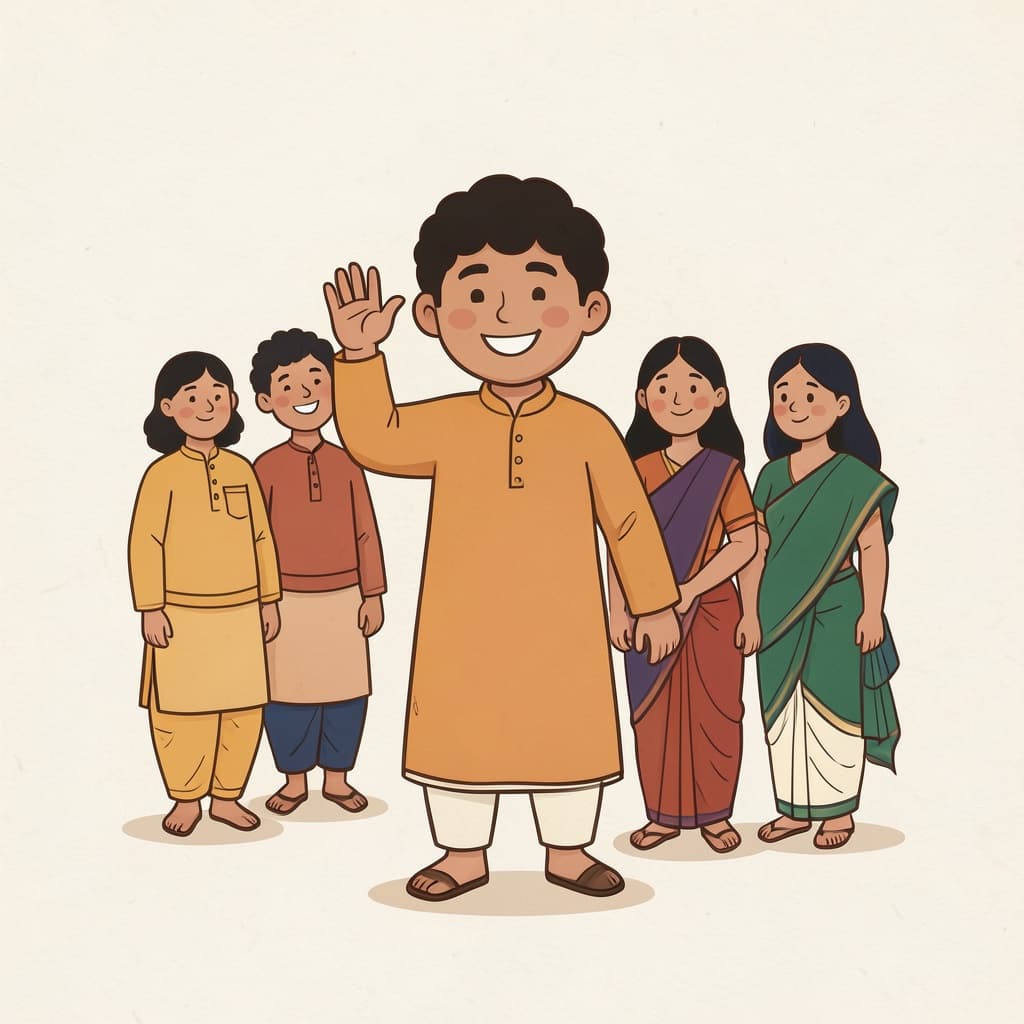
  • A big group of children and grown-ups standing together and waving.
    sarve

    all, everyone

    PronounMasculine

    ।Everyone is happy.

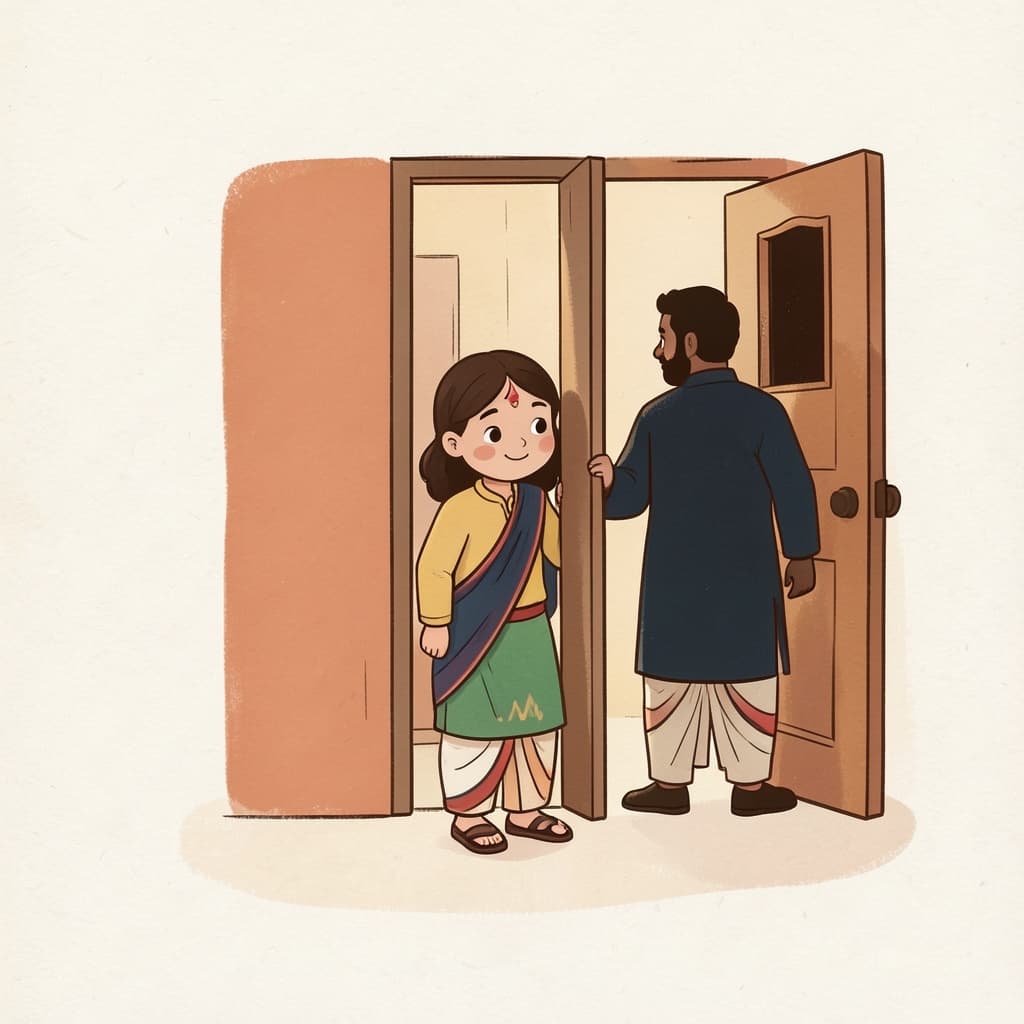
  • A curious girl peeking from behind a door at the shadow of a man outside.
    kaḥ

    who (masc.)

    PronounMasculine

    ?Who is he?

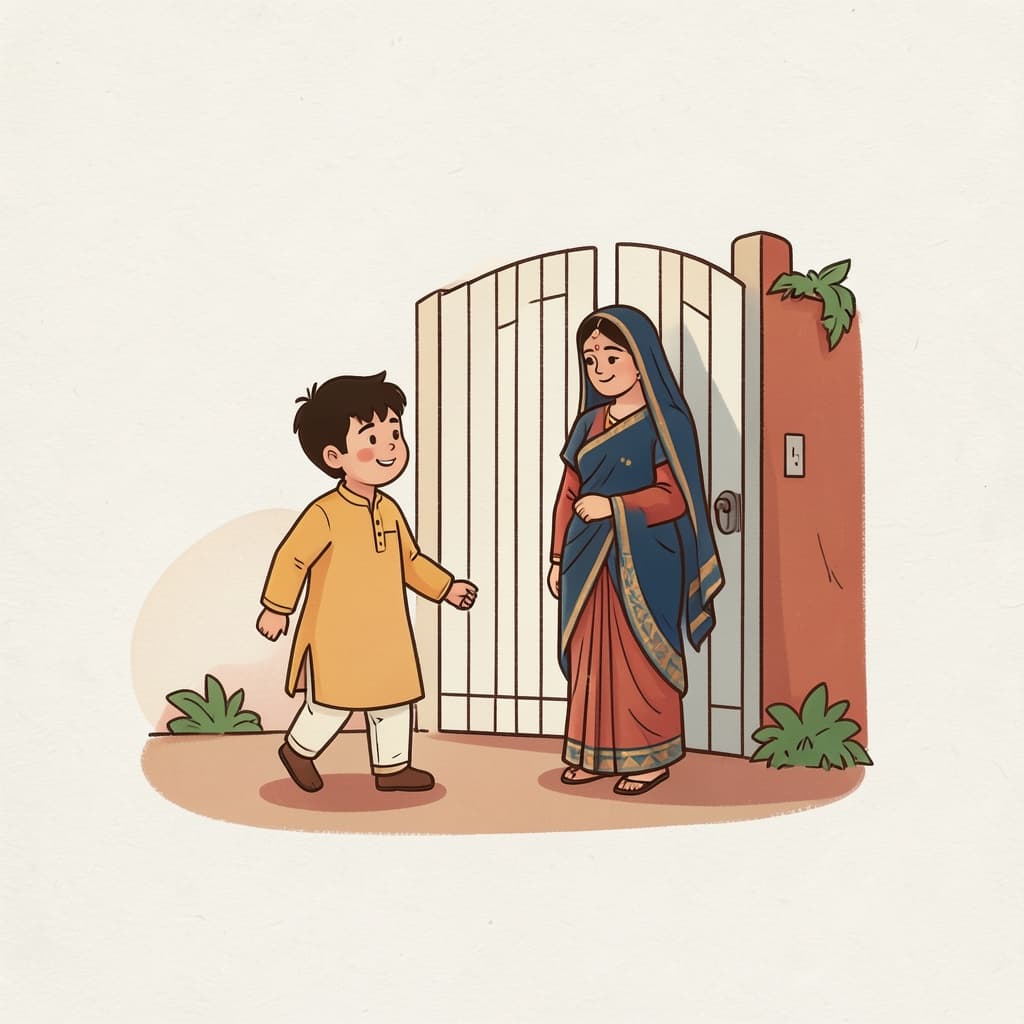
  • A boy wondering about a veiled woman standing at the gate.
    kā

    who (fem.)

    PronounFeminine

    ?Who is she?

  • A puzzled child scratching her head, looking at a strange object.
    kim

    what

    PronounNeuter

    ?What do you see?

प्रश्नवाचकाः

Question words
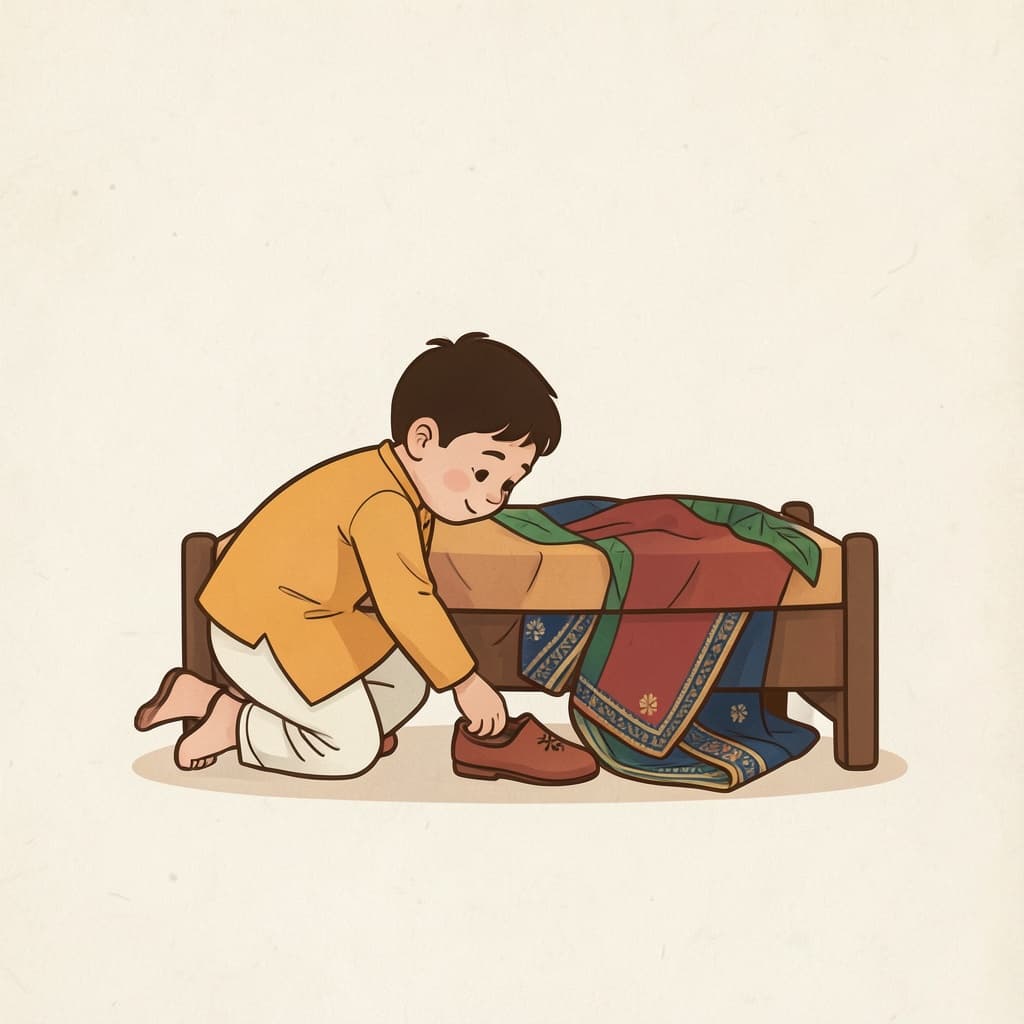
  • A boy searching under a cot for his lost slipper, looking around.
    kutra

    where

    Indeclinable

    ?Where are you going?

  • A girl waiting at the village gate, looking down the road.
    kadā

    when

    Indeclinable

    ?When will you go?

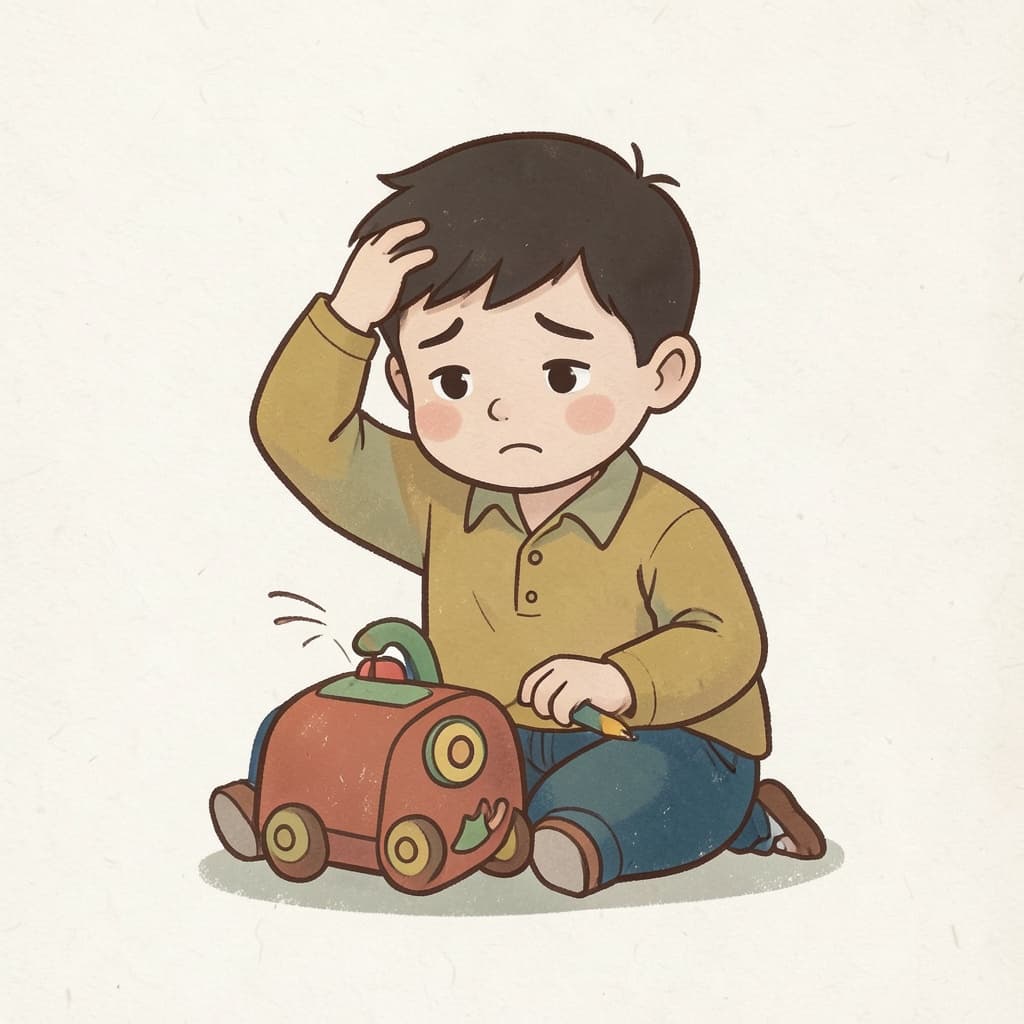
  • A puzzled boy scratching his head looking at a toy he cannot fix.
    katham

    how

    Indeclinable

    ?How are you?

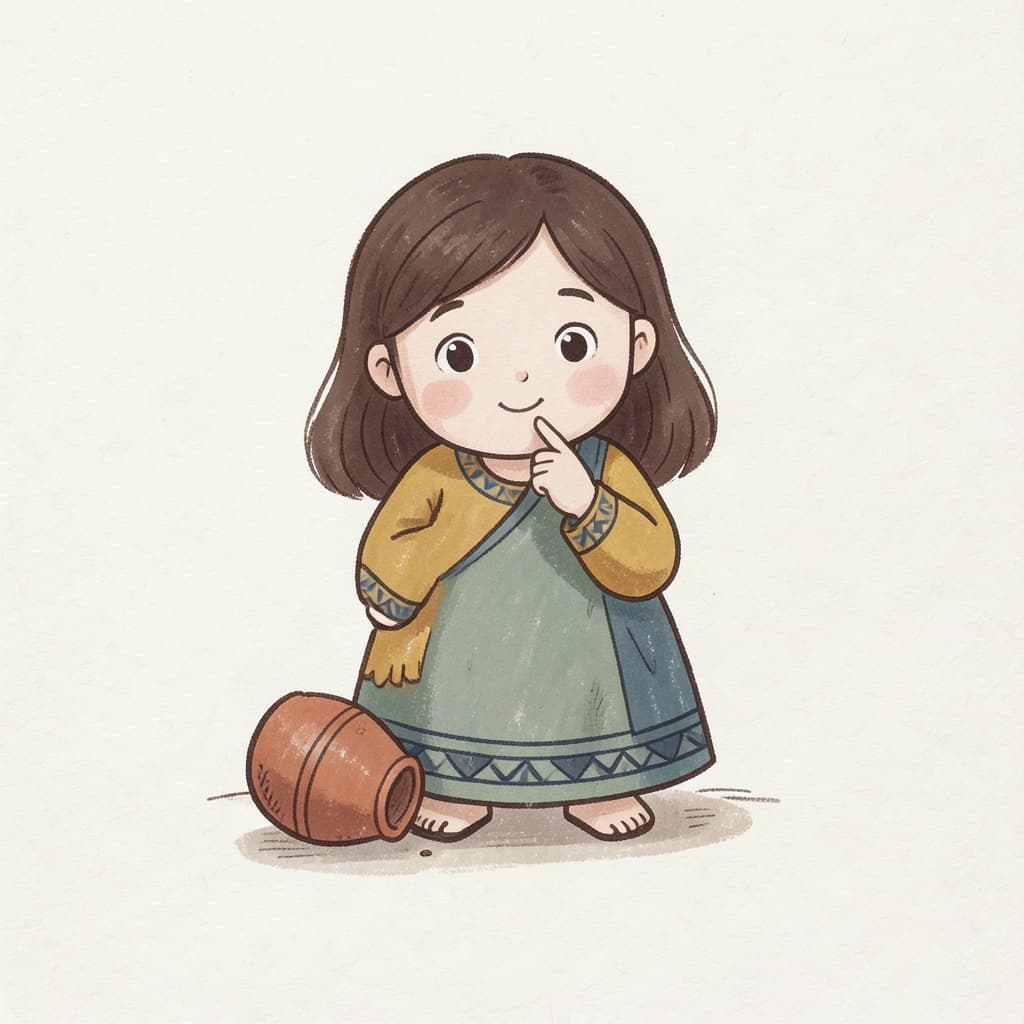
  • A curious girl with a question look, finger on her chin, looking at a fallen pot.
    kimartham

    why

    Indeclinable

    ?Why do you laugh?

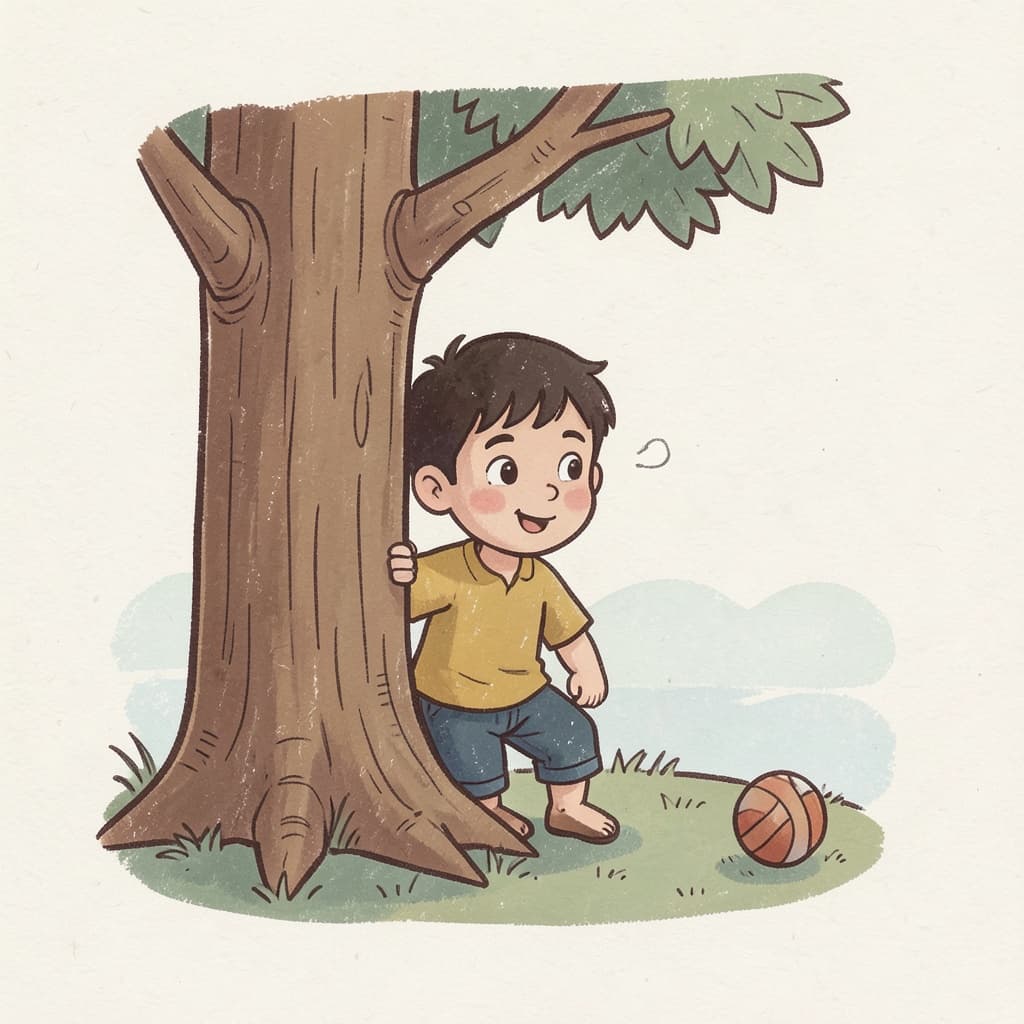
  • A boy peeking from behind a tree, wondering where a ball came from.
    kutaḥ

    from where

    Indeclinable

    ?Where do you come from?

भावाः

Ideas & things
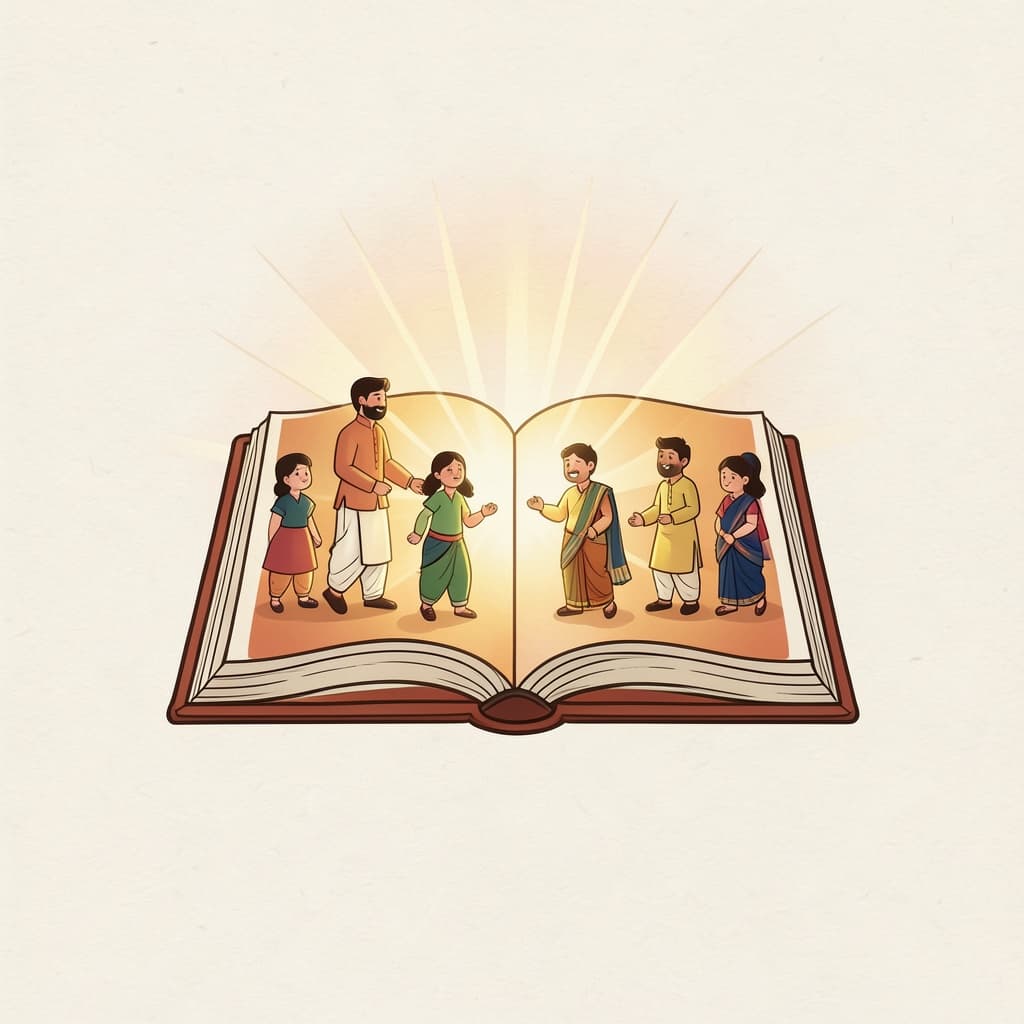
  • A glowing open book with rays of light coming from its pages.
    vidyā

    knowledge, learning

    NounFeminine

    ।Knowledge gives humility.

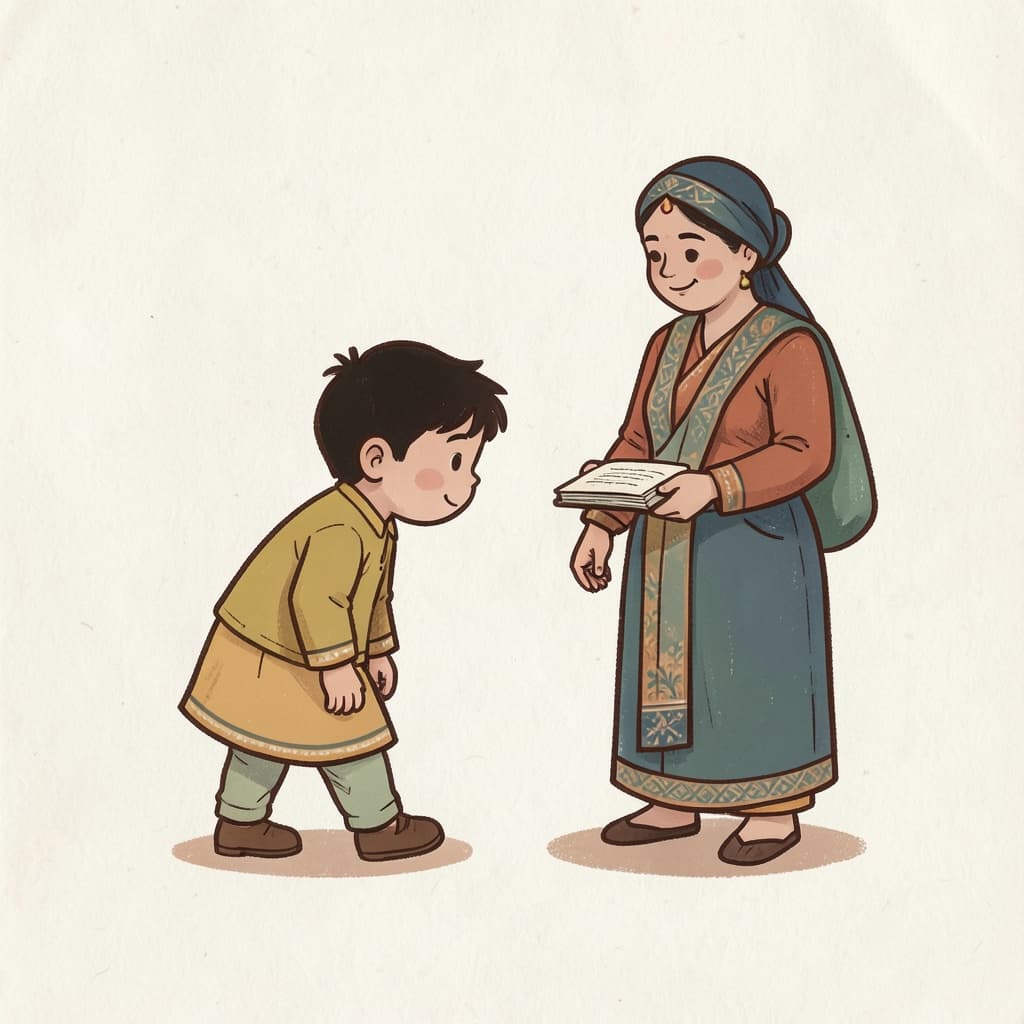
  • A young student bowing respectfully before a teacher.
    vinayaḥ

    humility, discipline

    NounMasculine

    ।From humility comes worthiness.

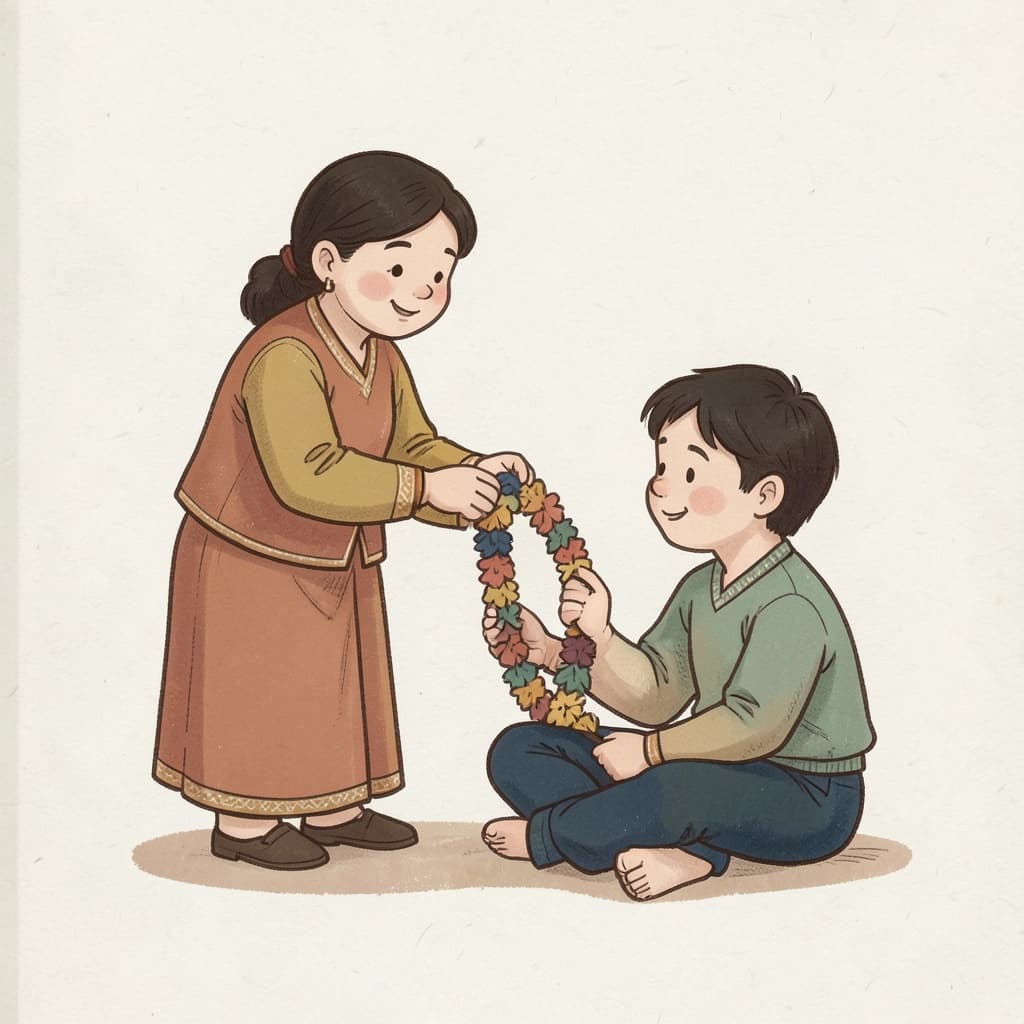
  • A teacher placing a garland on a hardworking student.
    pātratā

    worthiness, fitness

    NounFeminine
  • A student receiving a certificate scroll from a teacher.
    pātratvam

    worthiness

    NounNeuter
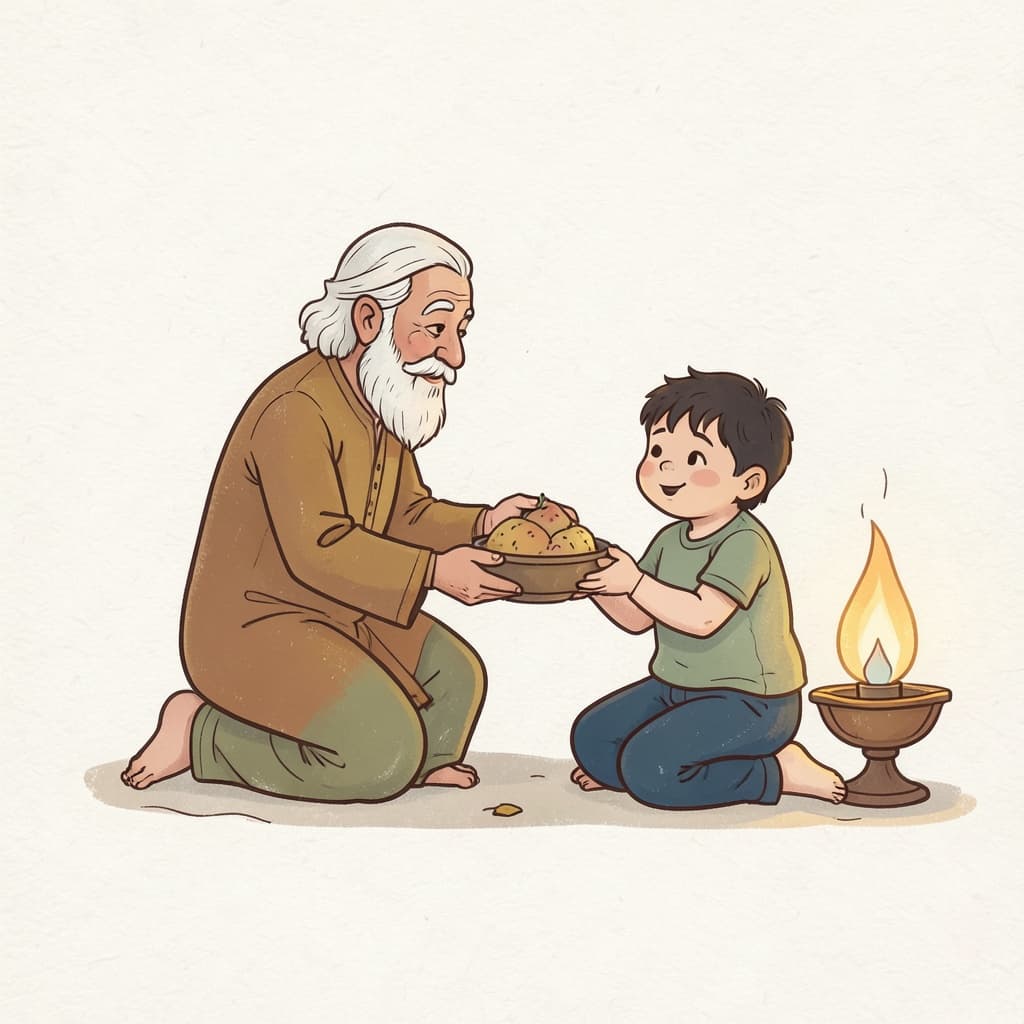
  • A wise old man giving food to a hungry child, a calm lamp burning nearby.
    dharmaḥ

    dharma, right conduct

    NounMasculine

    ।From wealth, dharma; then happiness.

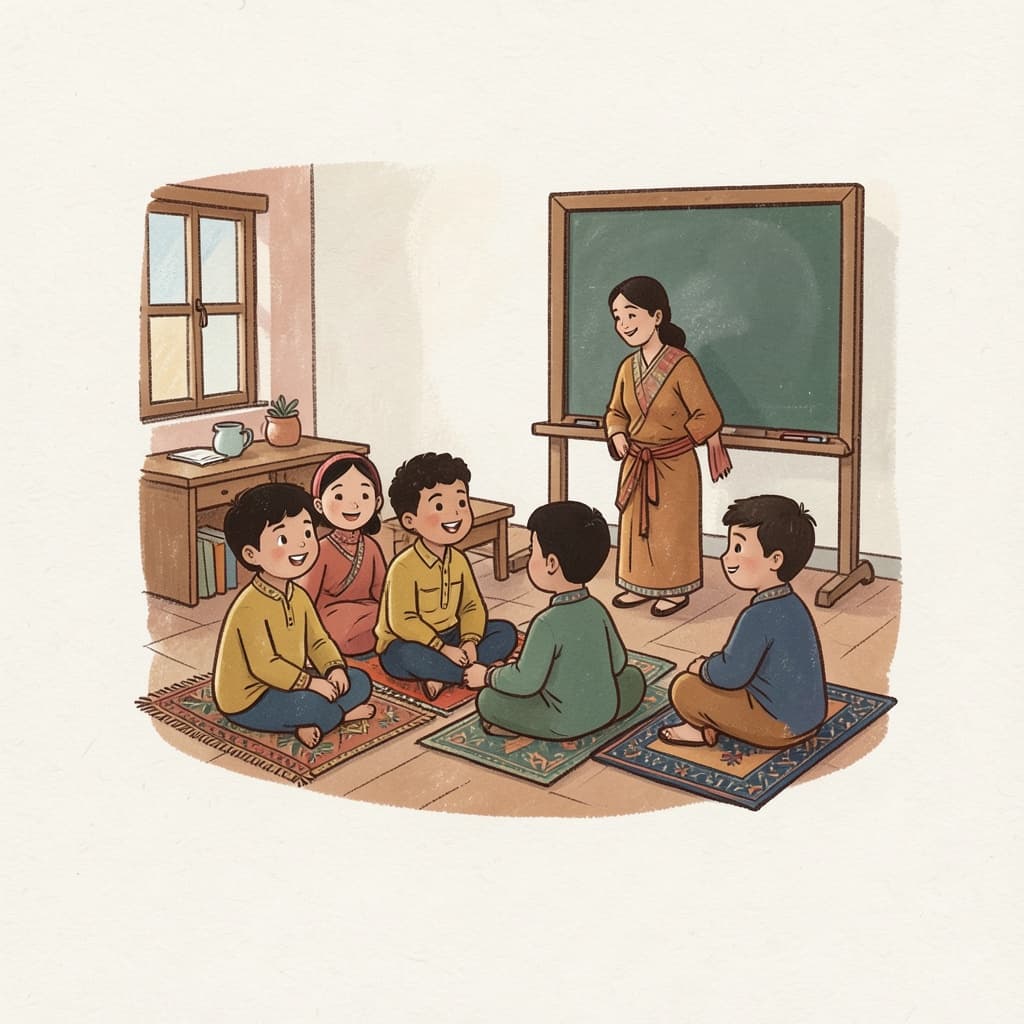
  • Children sitting on mats in a classroom with a teacher at a slate board.
    pāṭhaḥ

    lesson

    NounMasculine

    ।The students read the lesson.

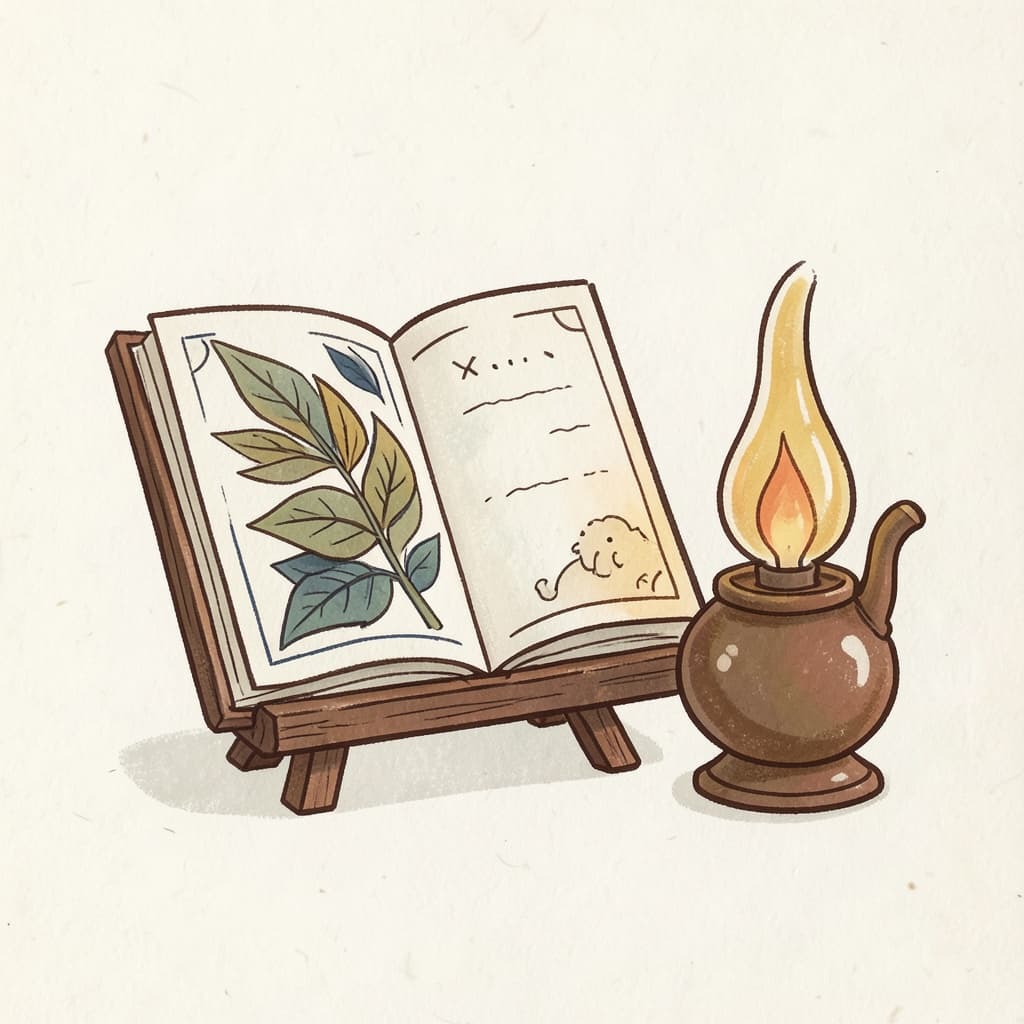
  • An open palm-leaf manuscript on a wooden stand beside an oil lamp.
    saṃskṛtam

    Sanskrit (the language)

    NounNeuter

    ।I study Sanskrit.

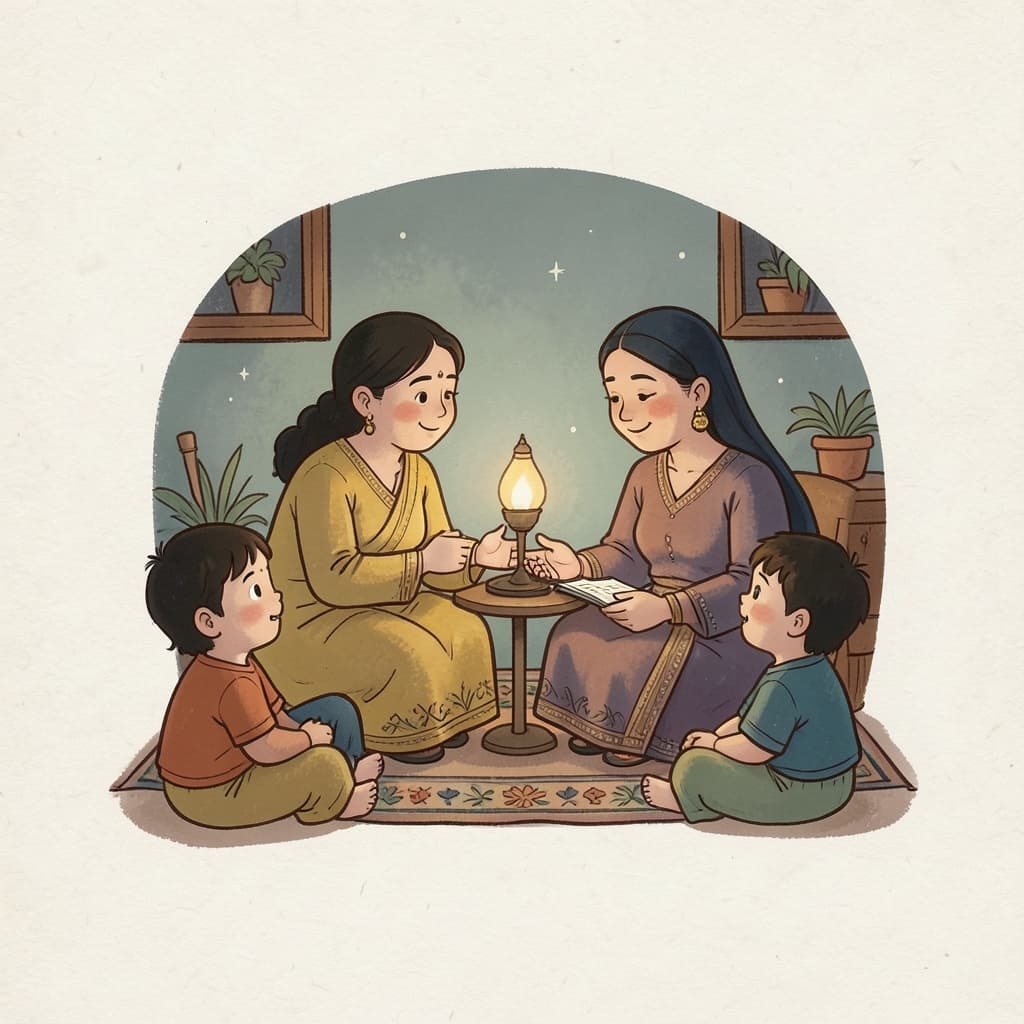
  • A grandmother telling a story to children sitting around her at night by a lamp.
    kathā

    story

    NounFeminine

    ।Grandfather tells a story.

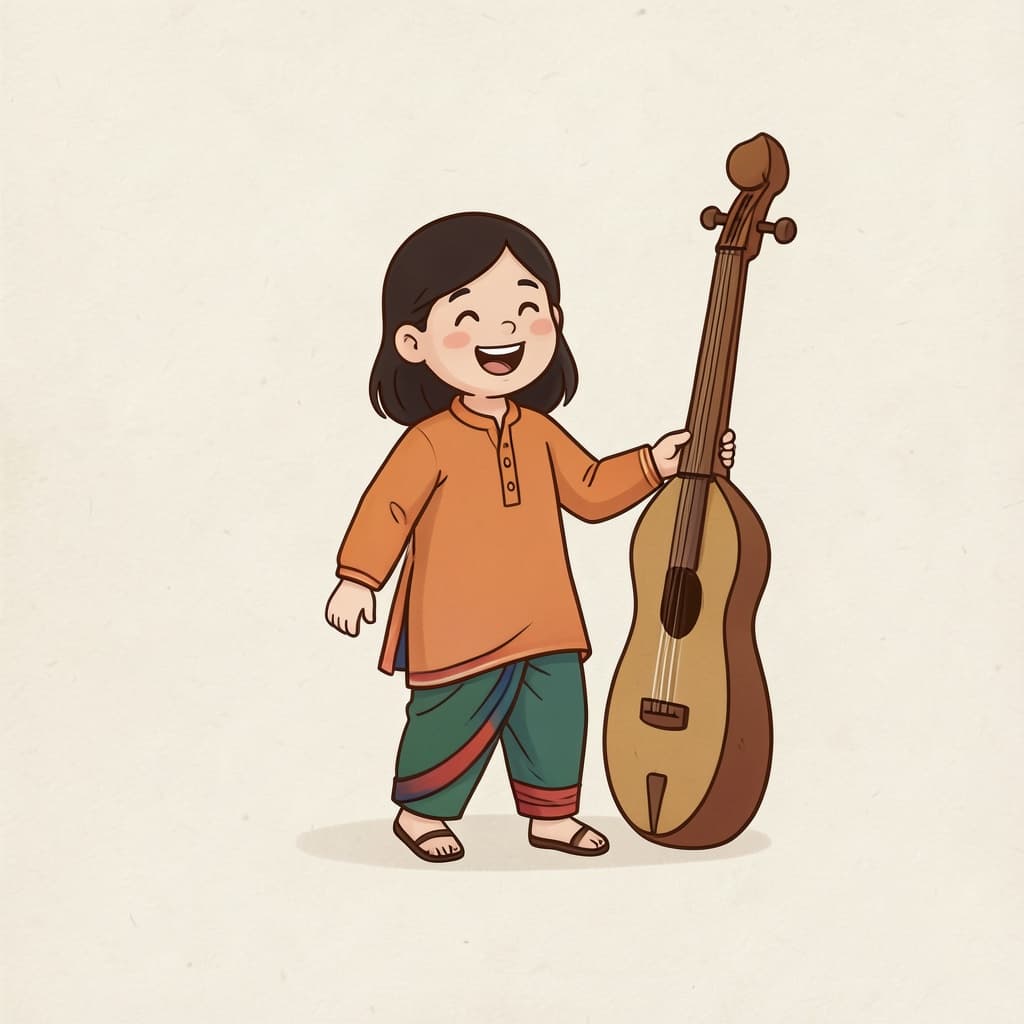
  • A girl singing joyfully with a tanpura beside her.
    gītam

    song

    NounNeuter

    ।The girl sings a song.

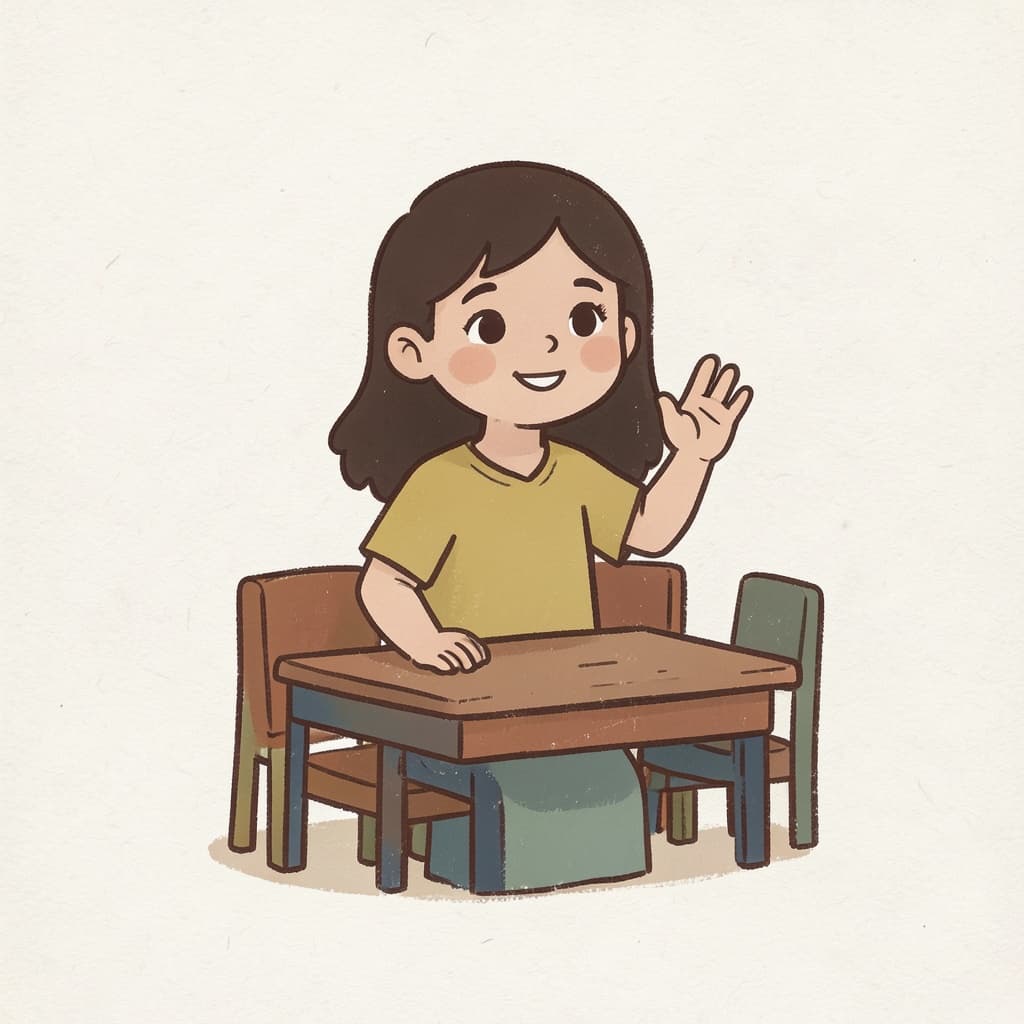
  • A student raising her hand in class to ask something.
    praśnaḥ

    question

    NounMasculine

    ।The student asks a question.

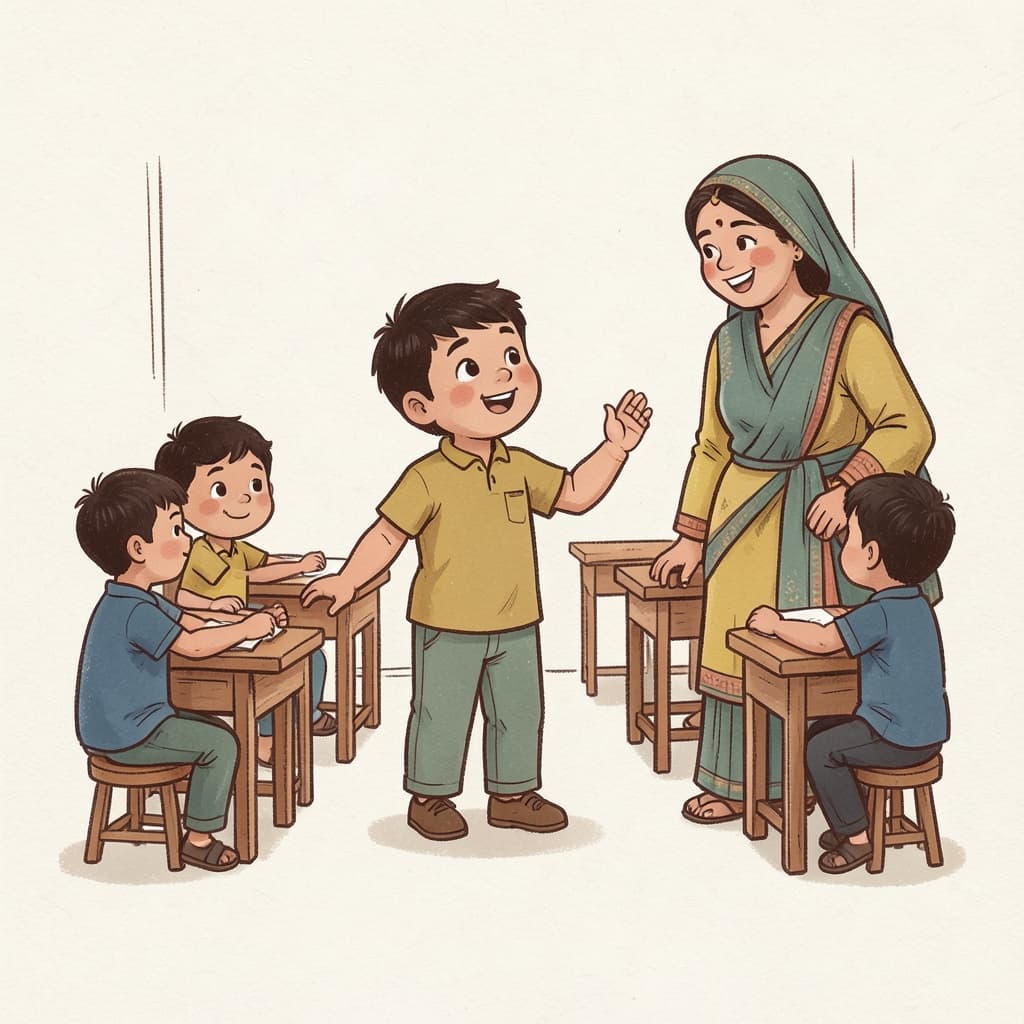
  • A boy standing up in class answering confidently while the teacher smiles.
    uttaram

    answer

    NounNeuter

    ।The teacher gives the answer.

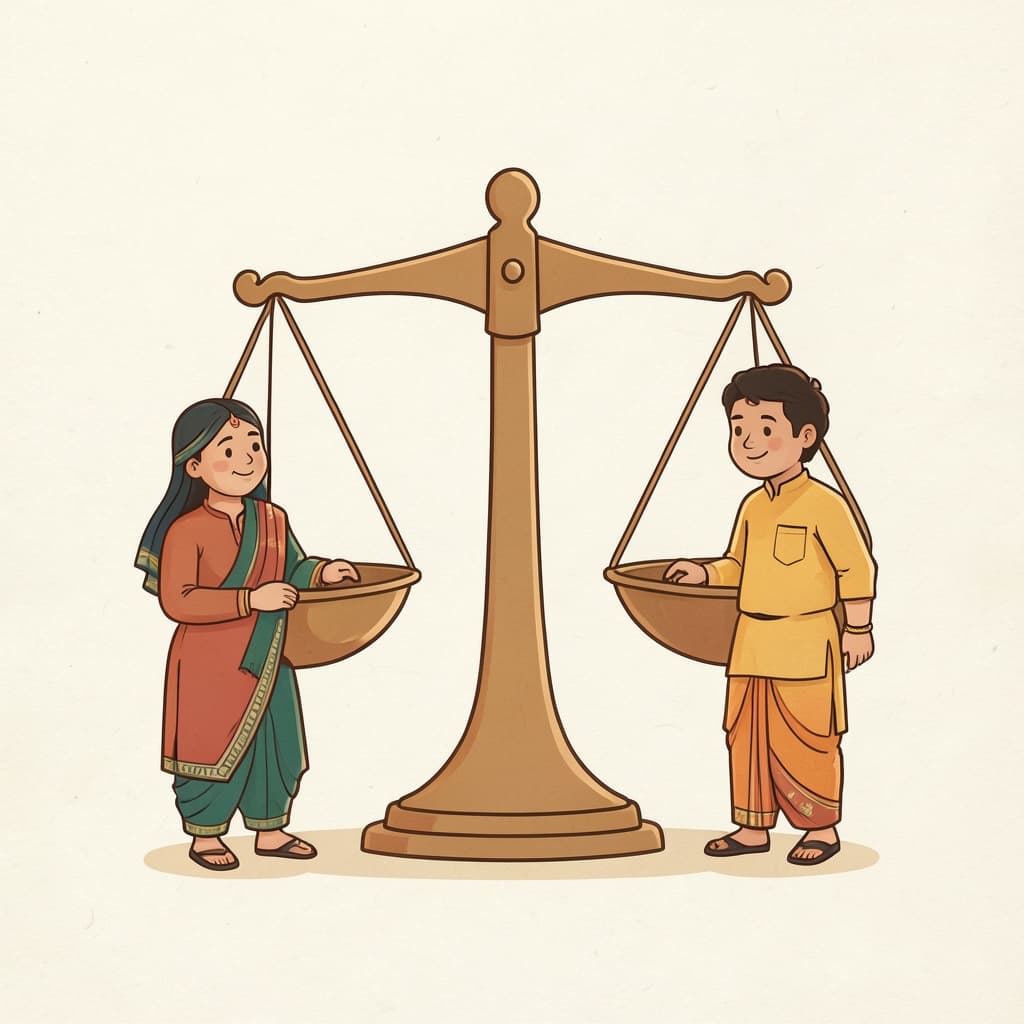
  • A balance scale perfectly level in bright sunlight.
    satyam

    truth

    NounNeuter

    ।Speak the truth.

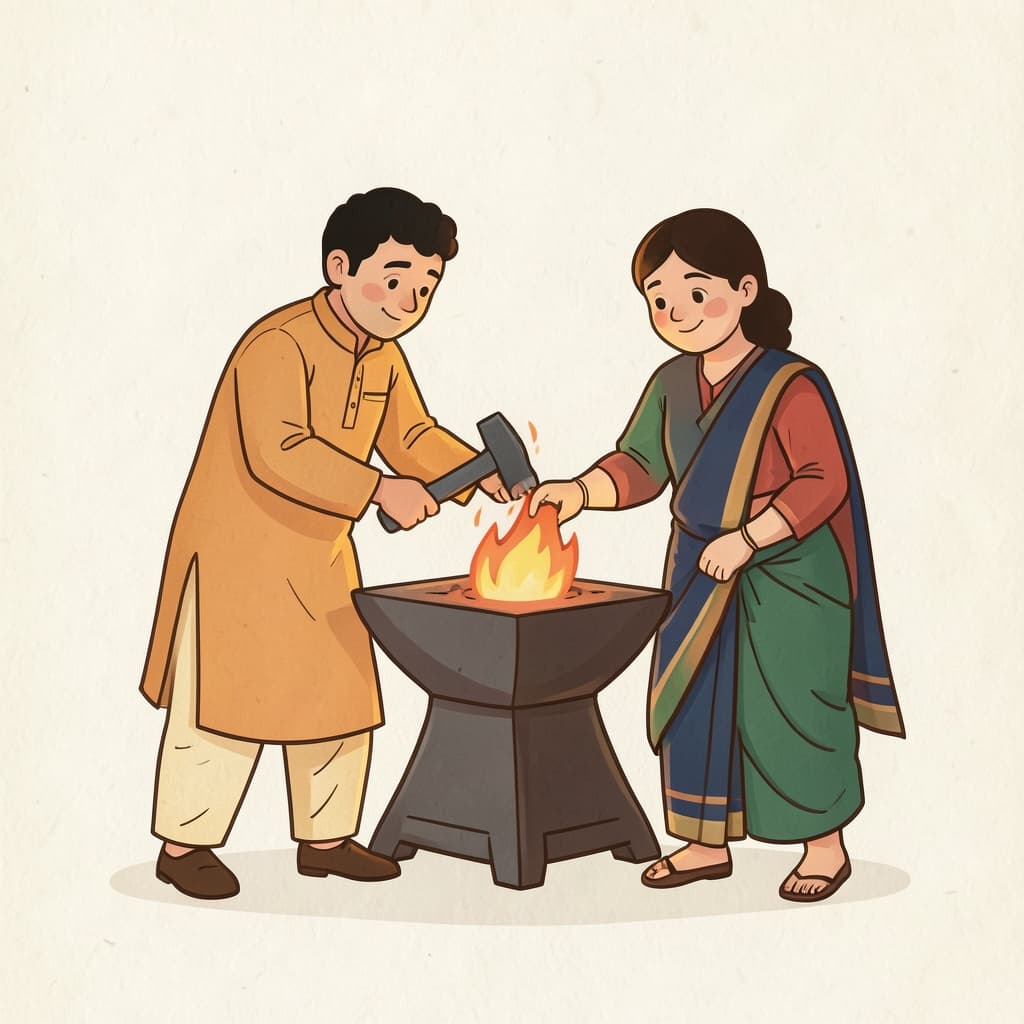
  • A blacksmith hammering hot iron on an anvil, hard at work.
    kāryam

    work, task

    NounNeuter

    ।He does the work.

  • A glowing open book with rays of light coming from its pages.
    jñānam

    knowledge

    NounNeuter

    ।He attains knowledge.

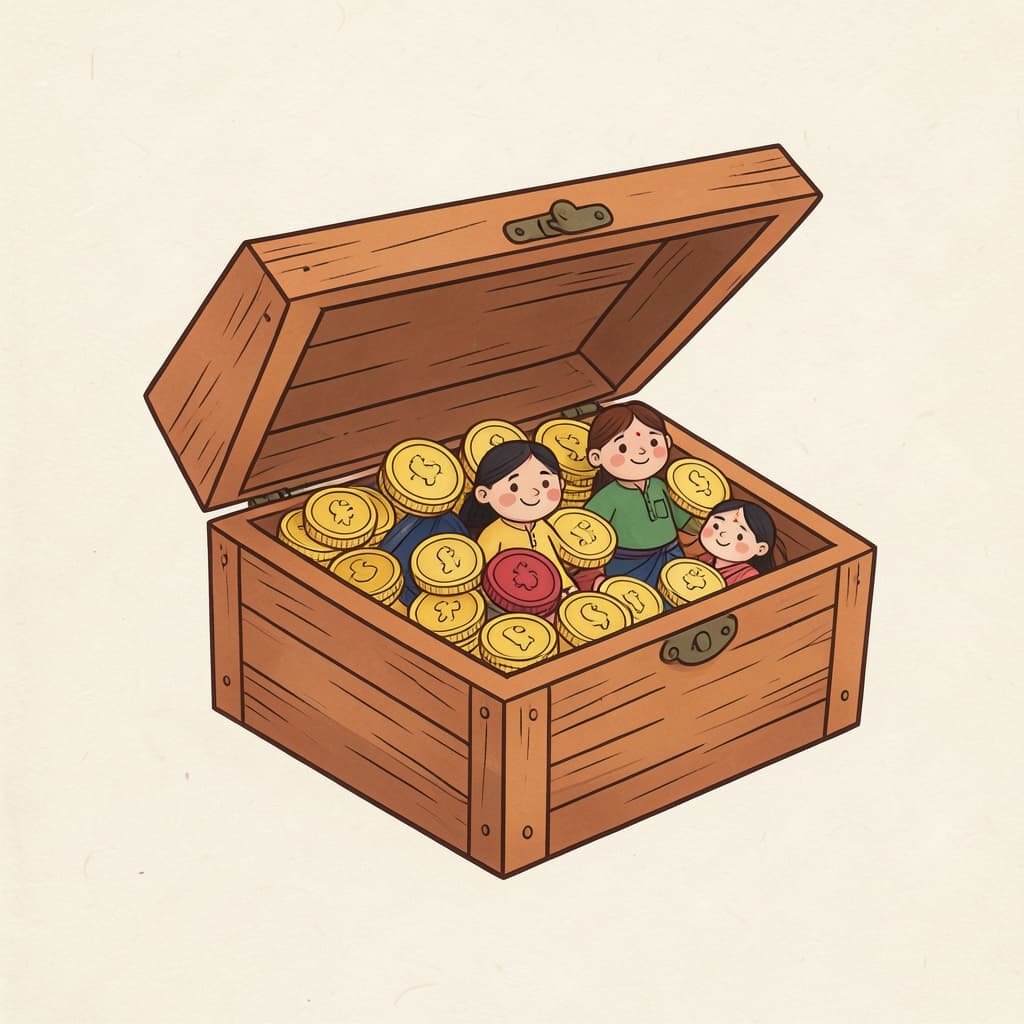
  • An open wooden chest full of gold coins.
    dhanam

    wealth, money

    NounNeuter

    ।The thief steals the money.

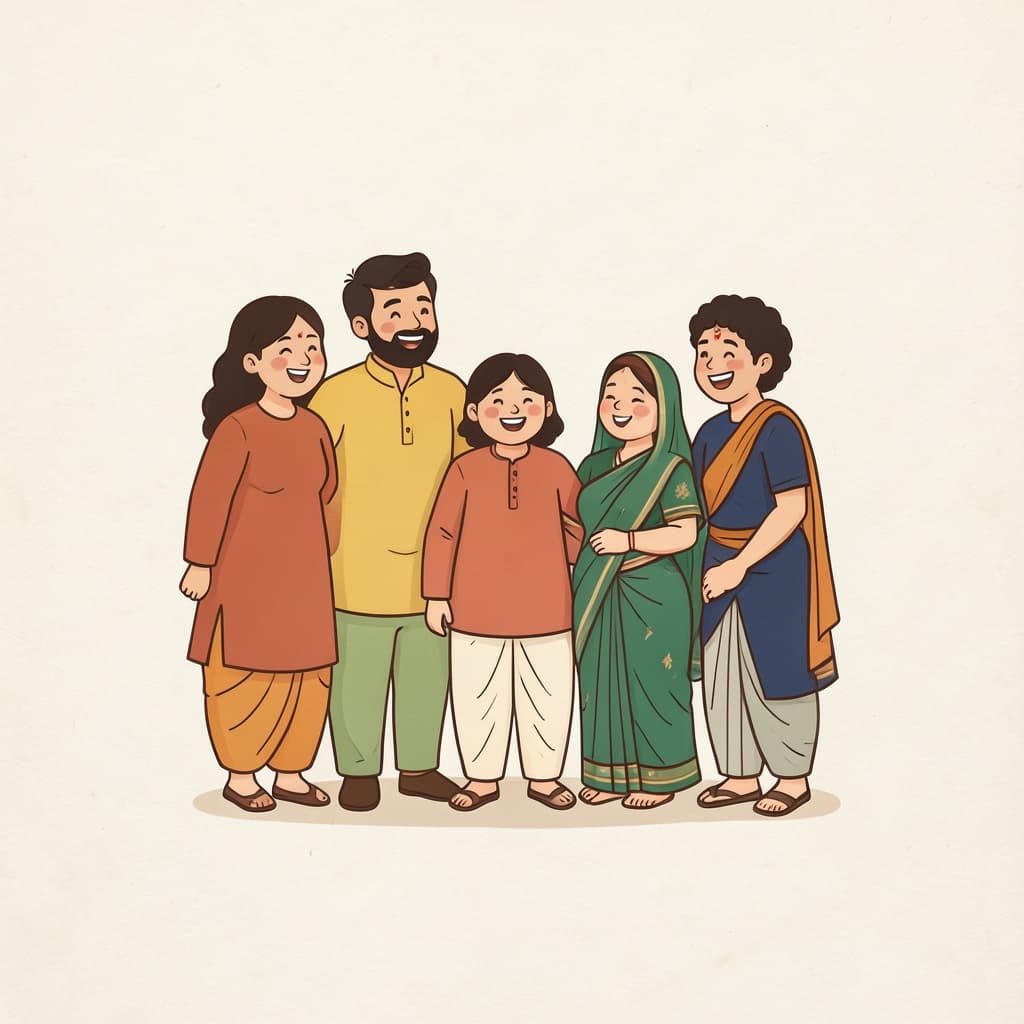
  • A joyful family laughing together.
    sukham

    happiness

    NounNeuter

    ।He experiences happiness.

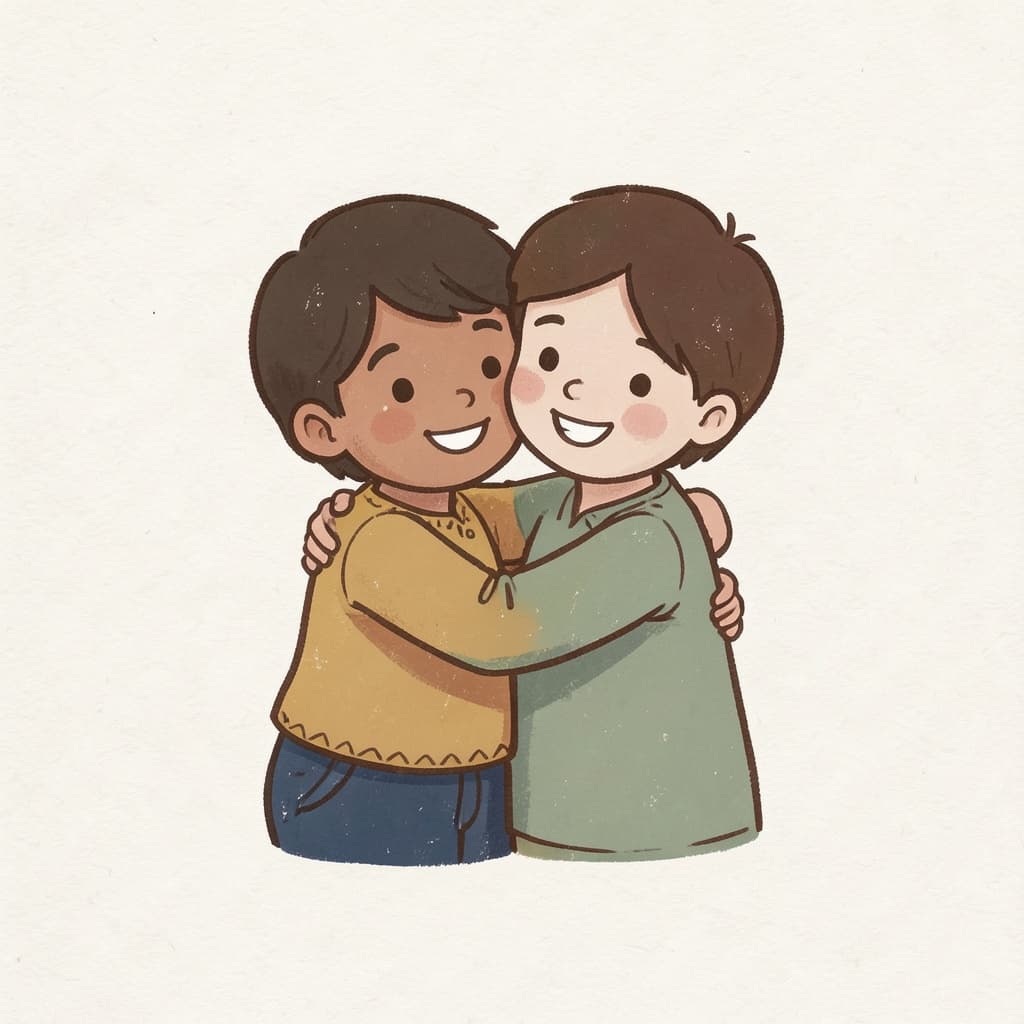
  • Two friends hugging each other warmly.
    snehaḥ

    affection, love

    NounMasculine

    ।The mother has affection for her son.

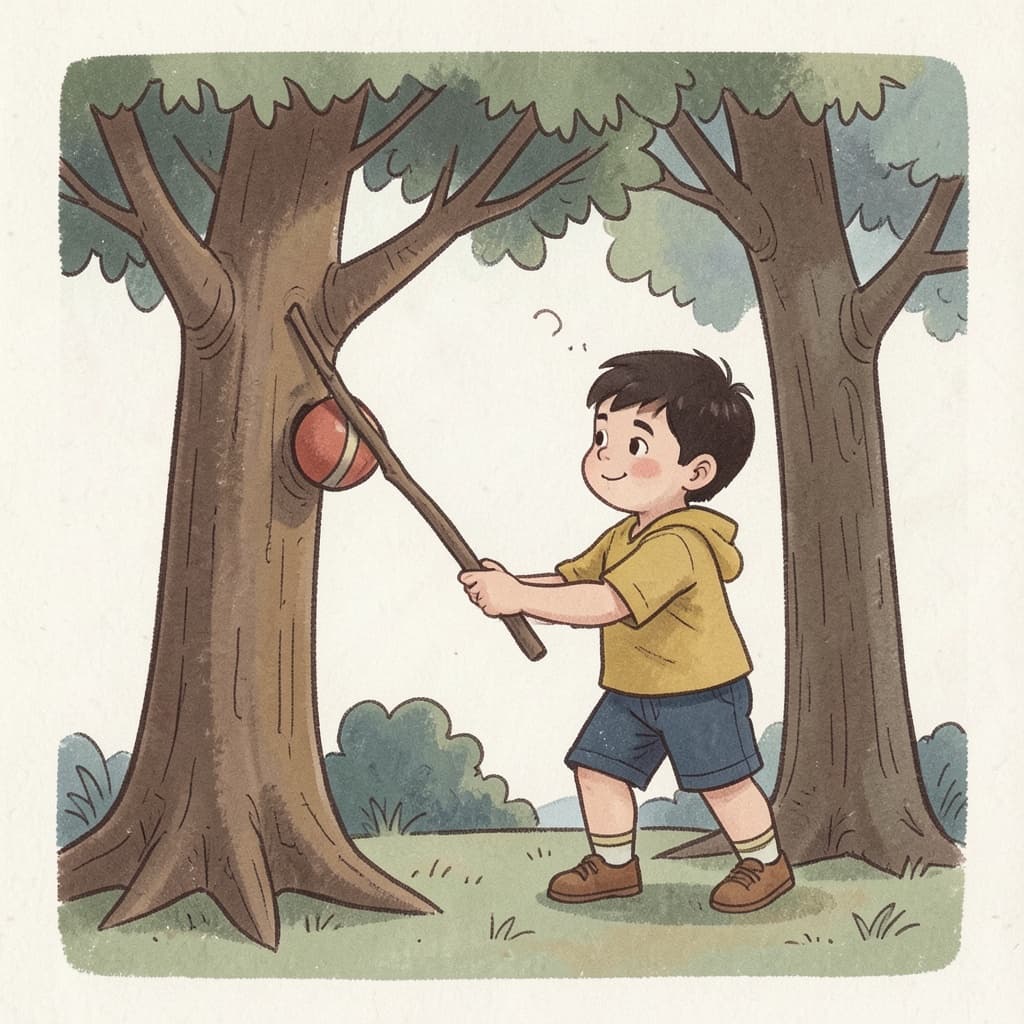
  • A boy using a stick to get a ball stuck in a tree, thinking cleverly.
    upāyaḥ

    means, plan

    NounMasculine

    ।With a plan, everything succeeds.

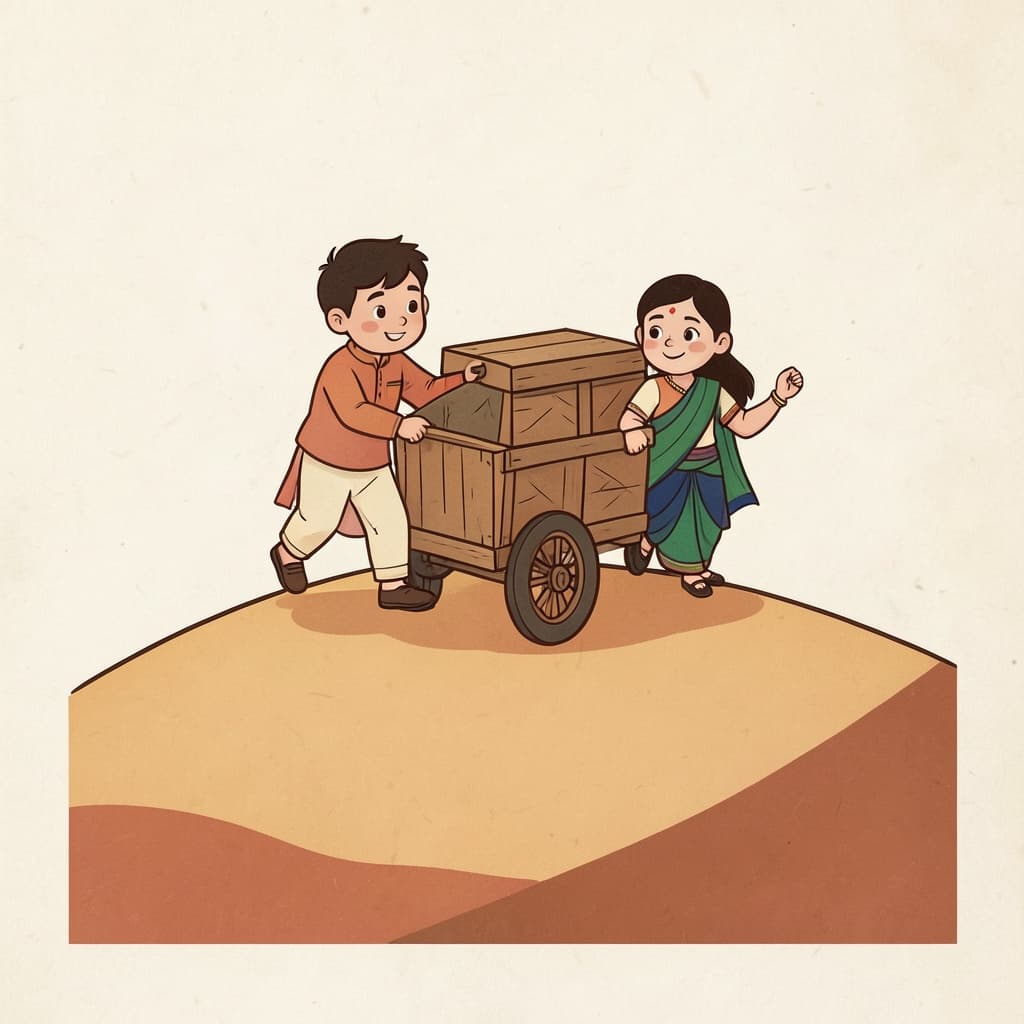
  • A boy pushing a heavy cart up a hill with great effort.
    pariśramaḥ

    effort, hard work

    NounMasculine

    ।Work succeeds through effort.

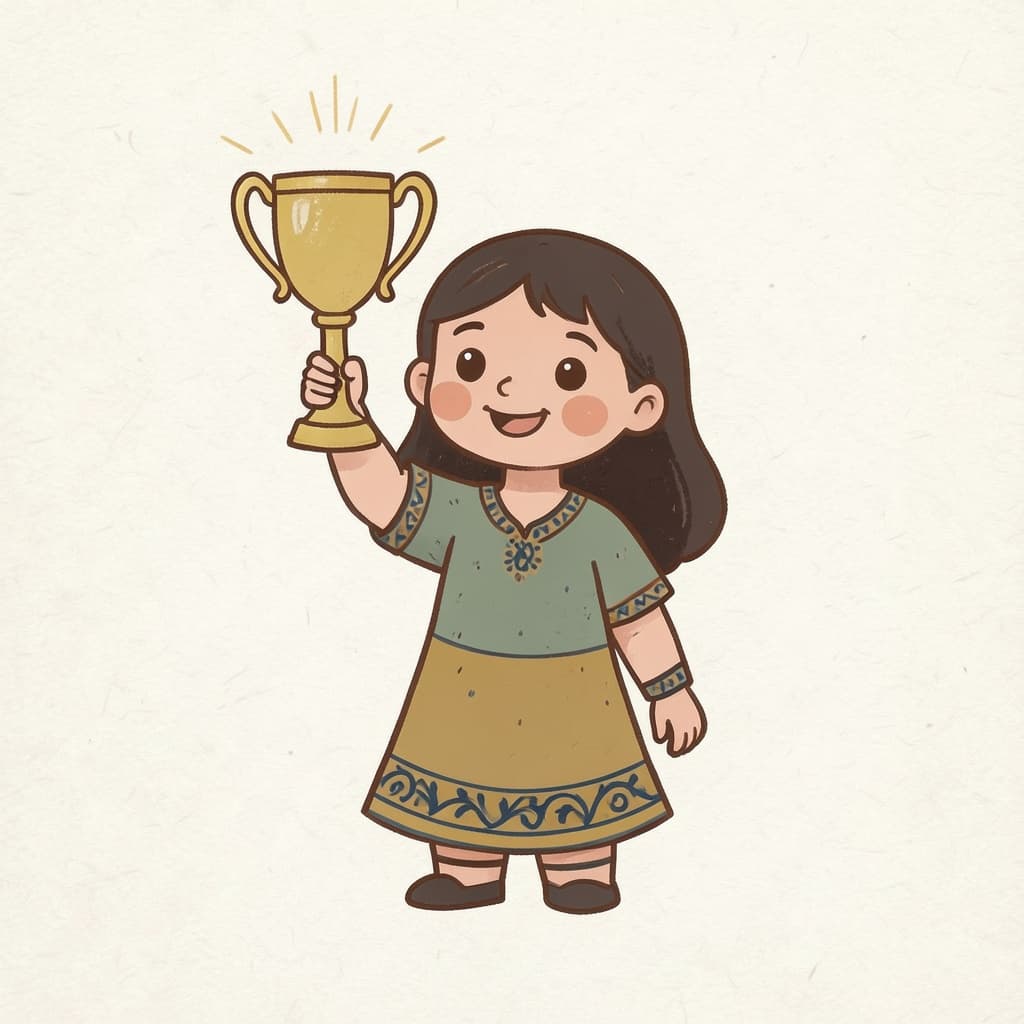
  • A happy girl holding up a shining trophy.
    puraskāraḥ

    prize, reward

    NounMasculine

    ।The student receives a prize.

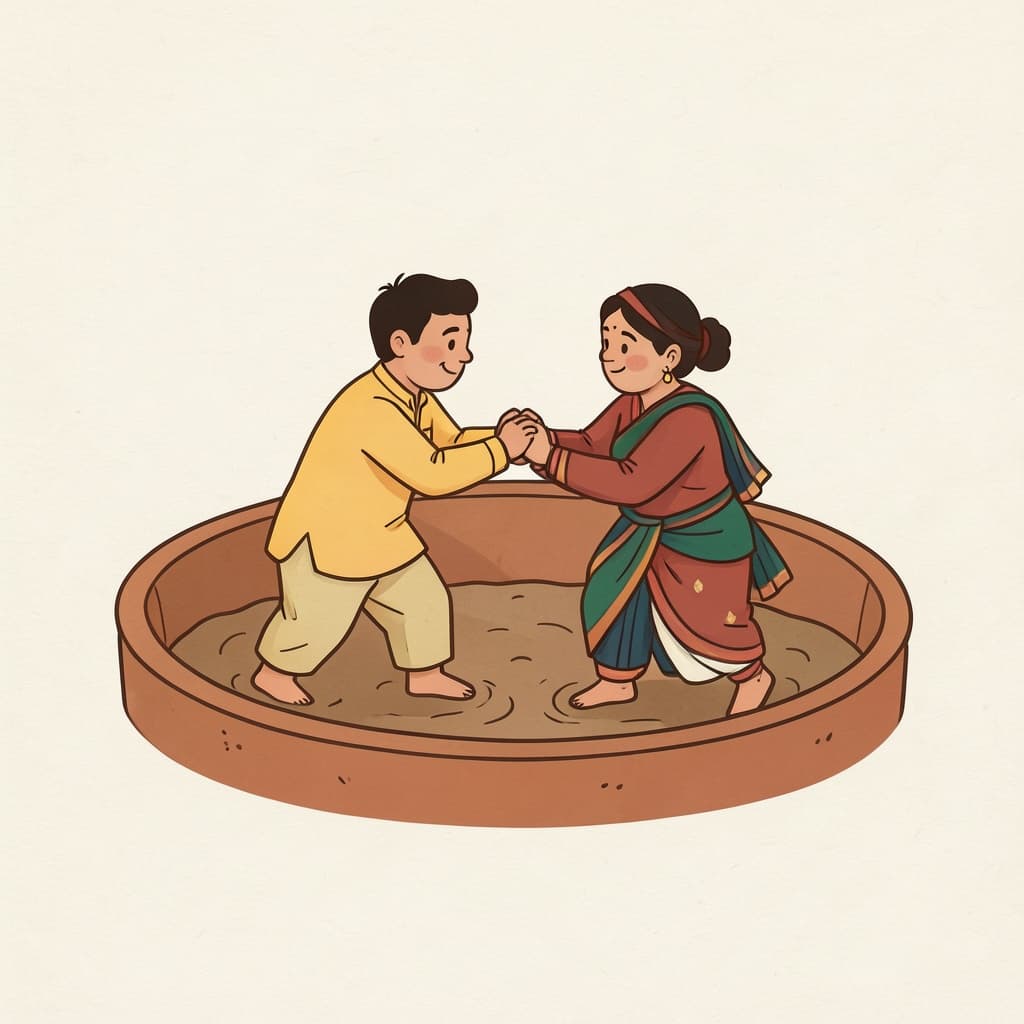
  • Two wrestlers grappling in a mud wrestling pit.
    yuddham

    battle, war

    NounNeuter

    ।The hero wins the battle.

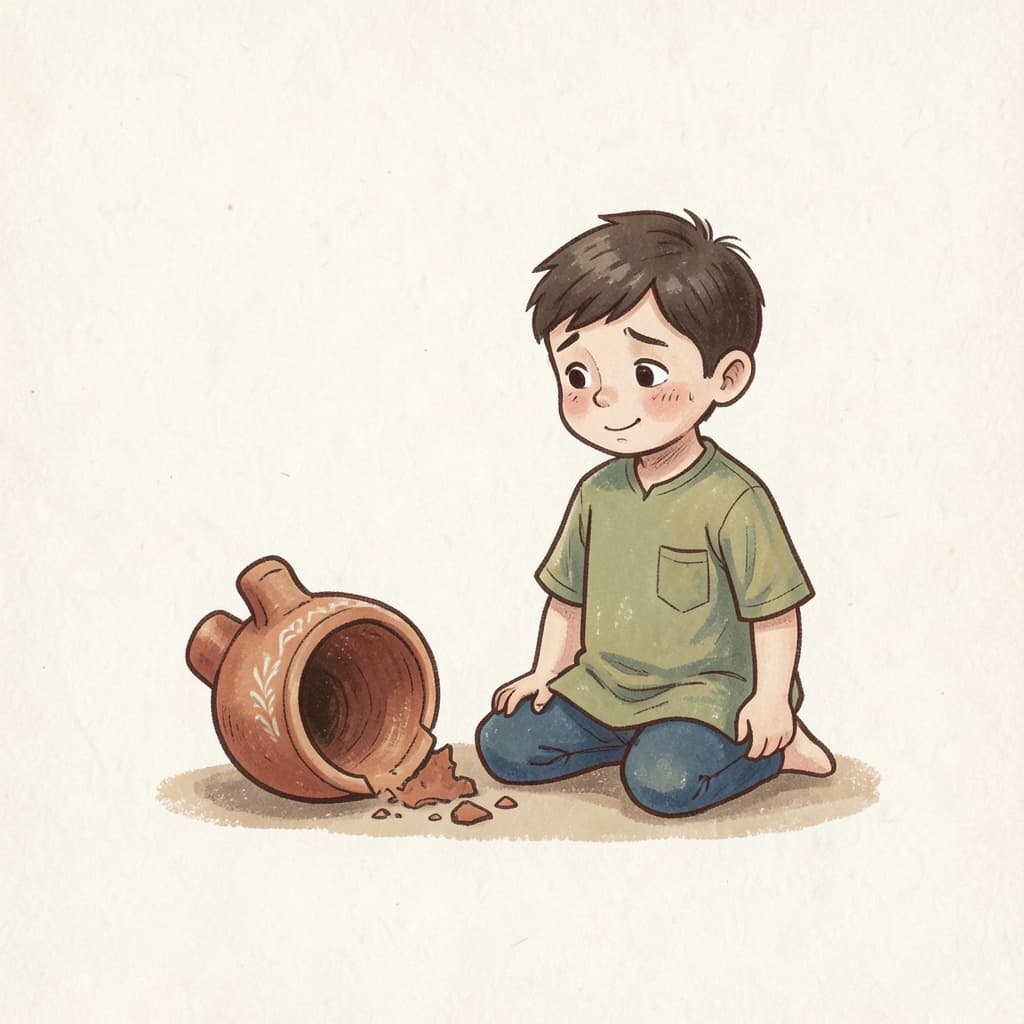
  • A broken clay pot on the floor and a sorry looking boy.
    doṣaḥ

    fault, error

    NounMasculine

    ।He avoids faults.

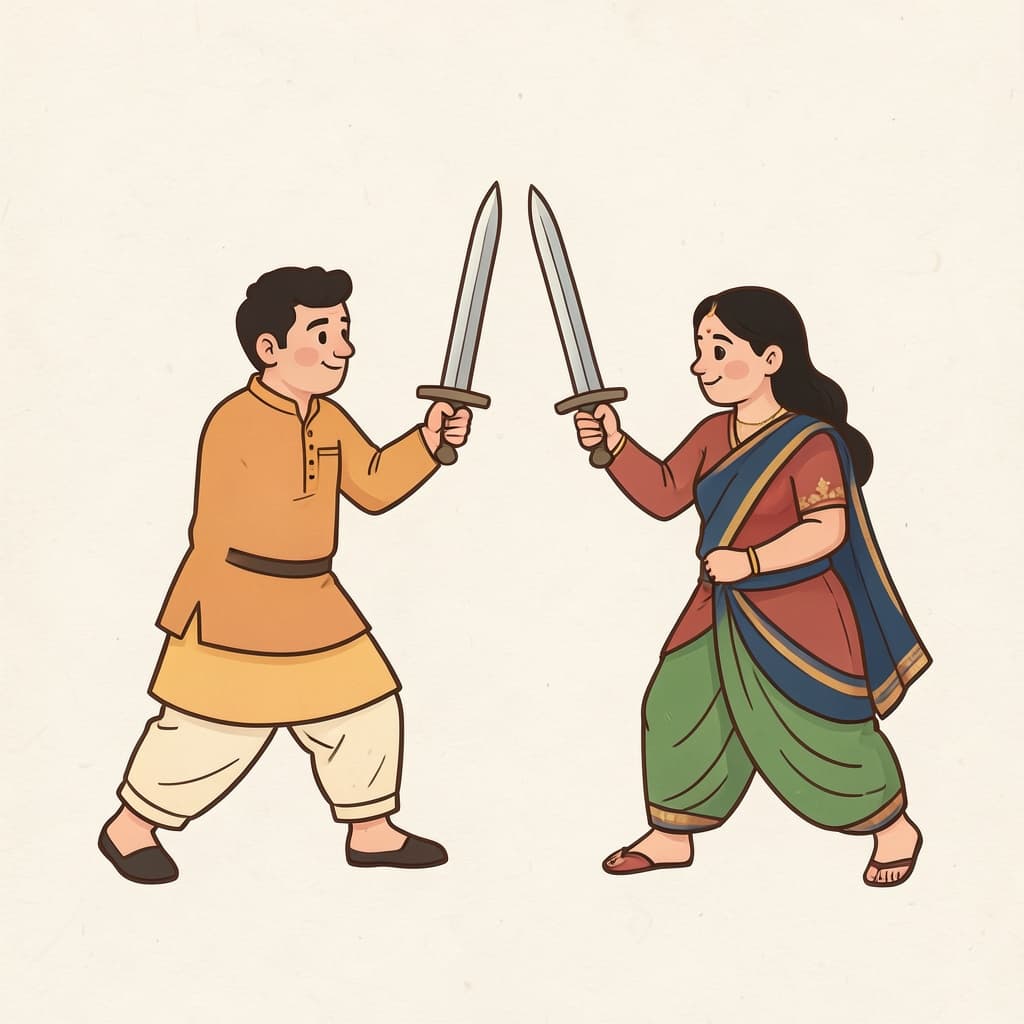
  • Two warriors facing each other with raised swords, ready to fight.
    śatruḥ

    enemy

    NounMasculine

    ।The soldier strikes the enemy.

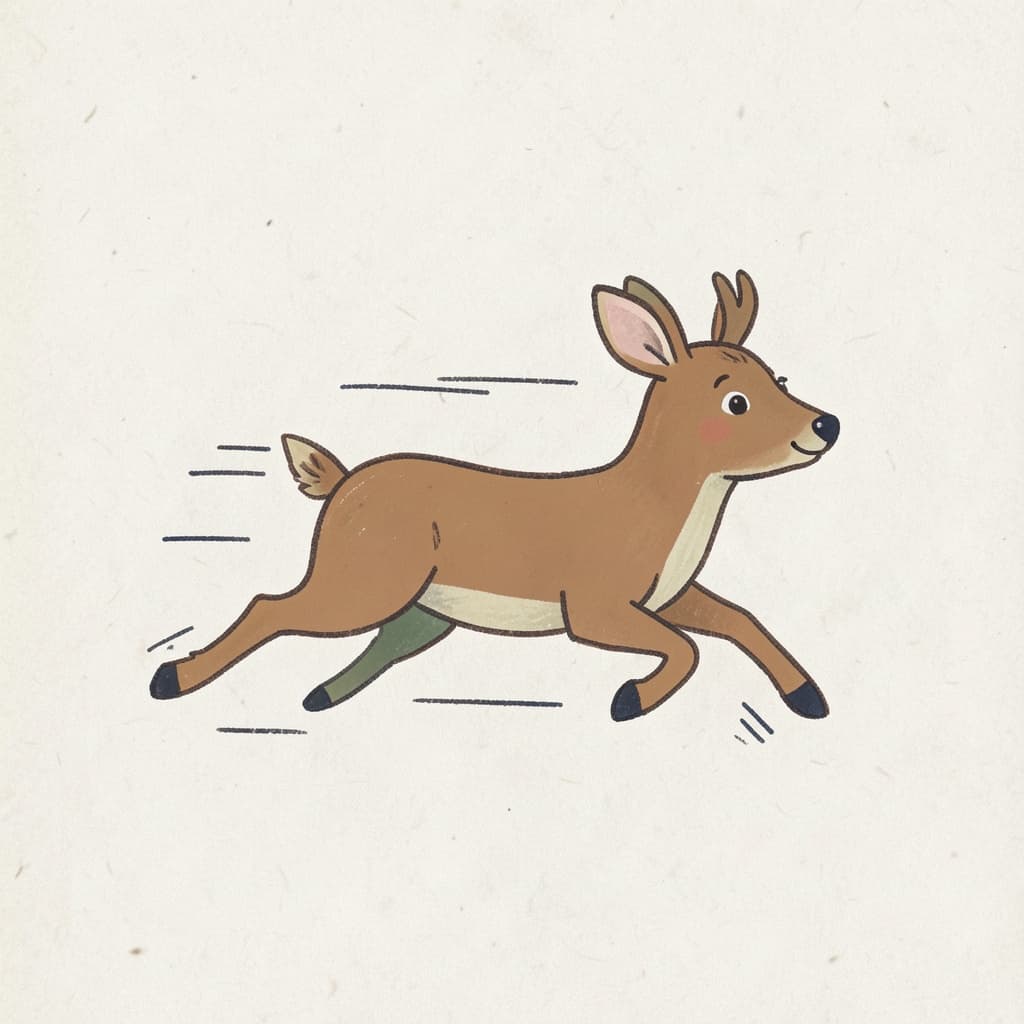
  • A deer running very fast with motion lines.
    vegaḥ

    speed

    NounMasculine

    ।The horse runs fast.

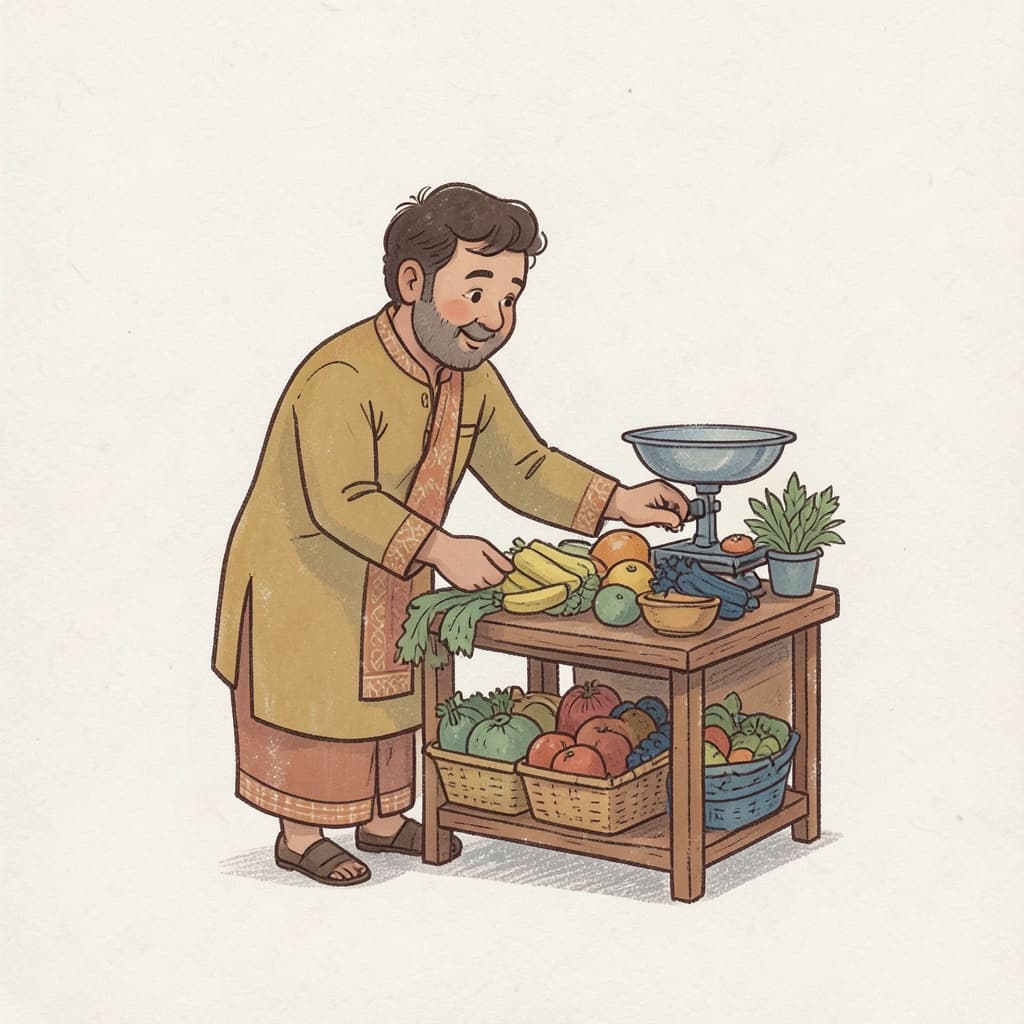
  • A shopkeeper at a market stall weighing vegetables on a scale.
    mūlyam

    price

    NounNeuter

    ?What is the price of a mango?

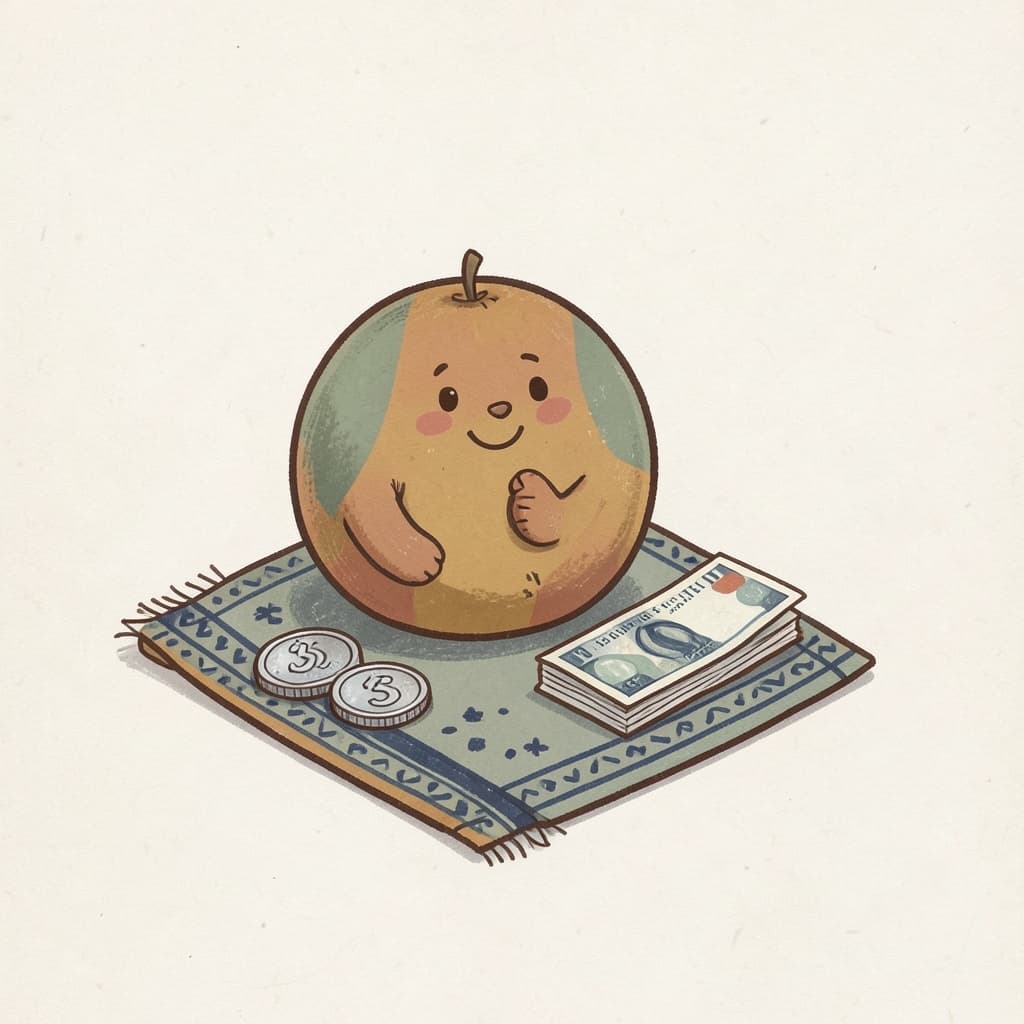
  • A few silver coins and a folded banknote on a cloth.
    rūpyakam

    rupee

    NounNeuter

    ।The price is ten rupees.

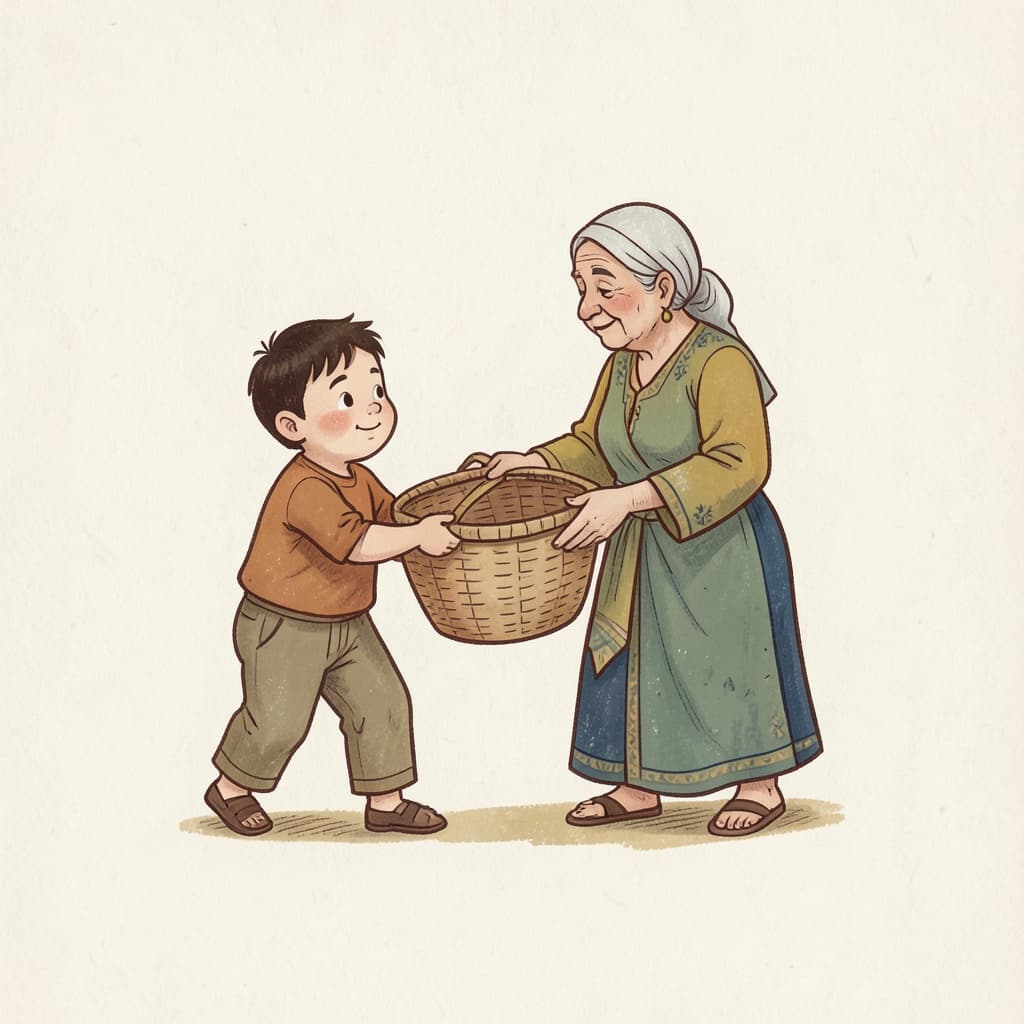
  • A boy helping an old woman carry a heavy basket.
    sāhāyyam

    help

    NounNeuter

    ।I will help you.

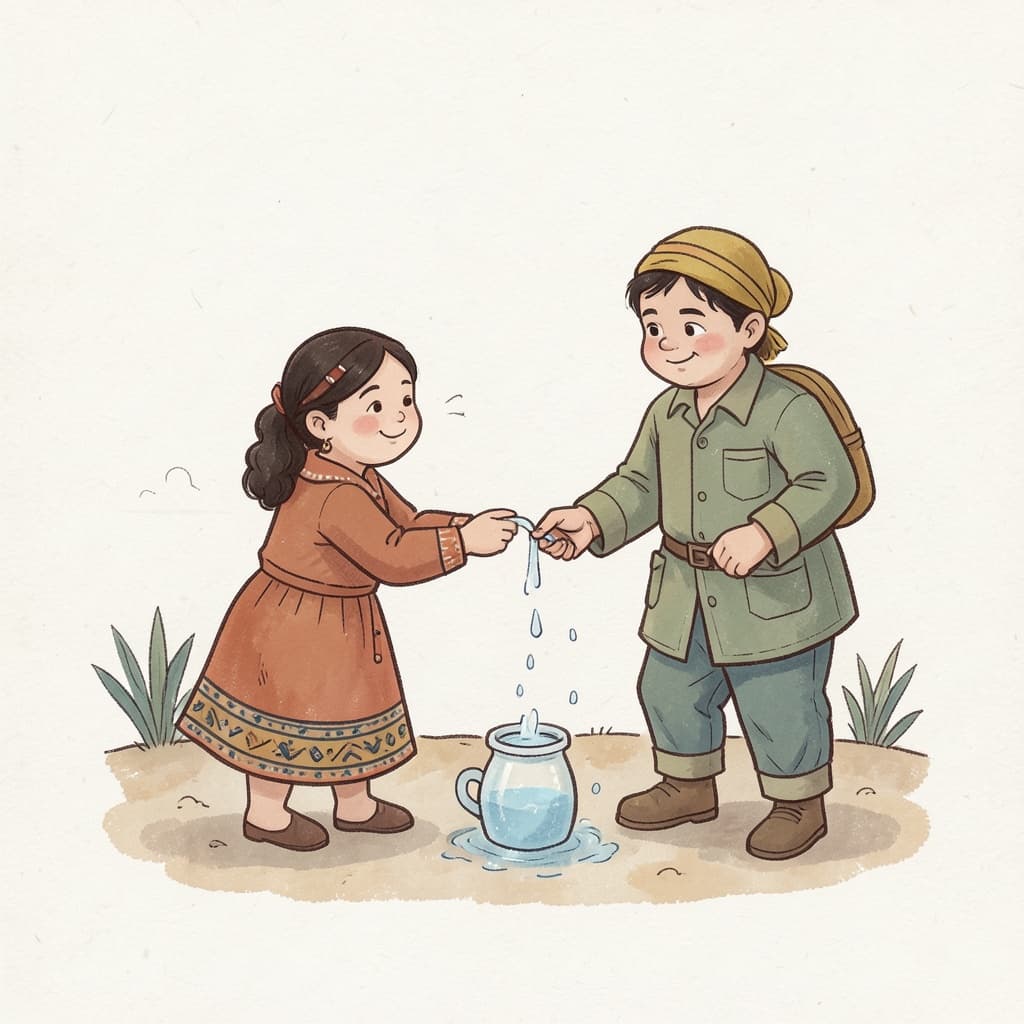
  • A girl giving water to a thirsty traveller.
    upakāraḥ

    help, favour

    NounMasculine

    ।Even a small person can help.

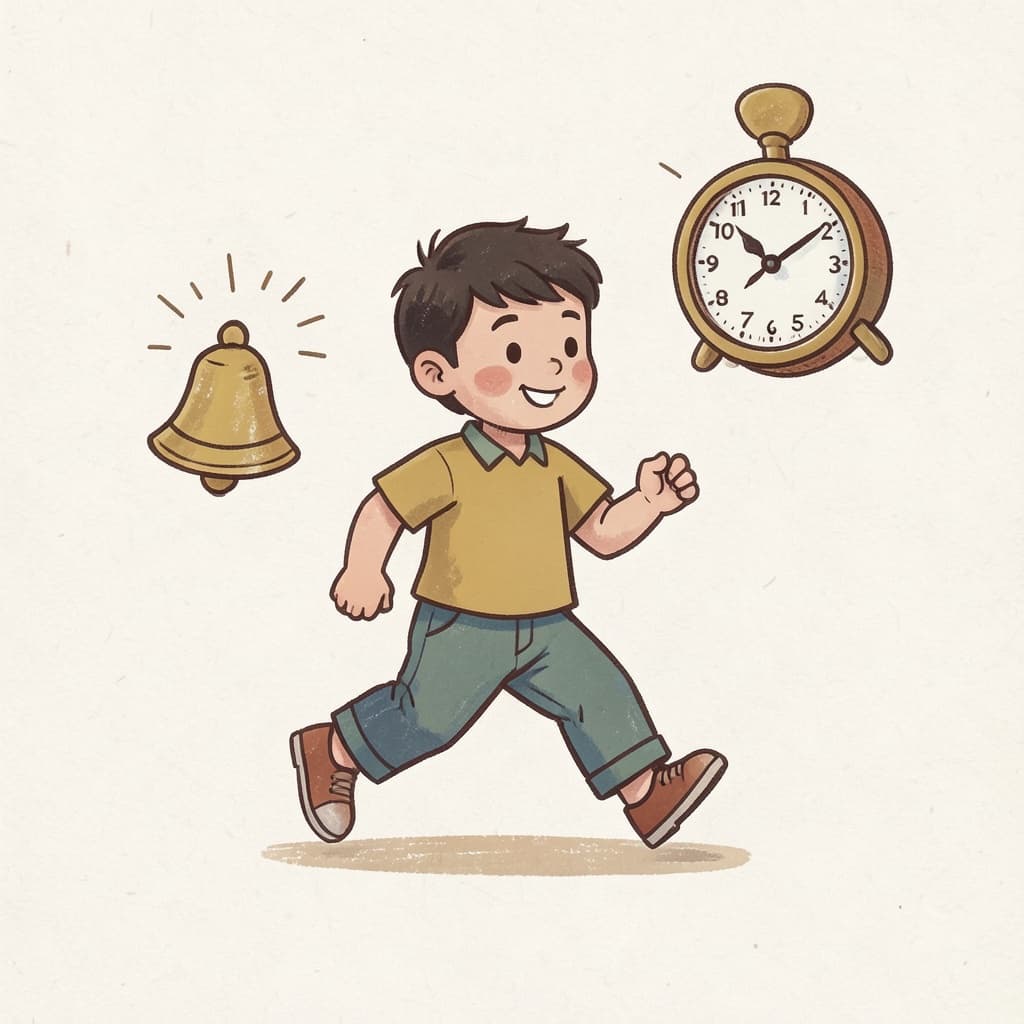
  • A boy running late to school with a ringing bell and a clock.
    vilambaḥ

    delay

    NounMasculine

    ।He comes late.

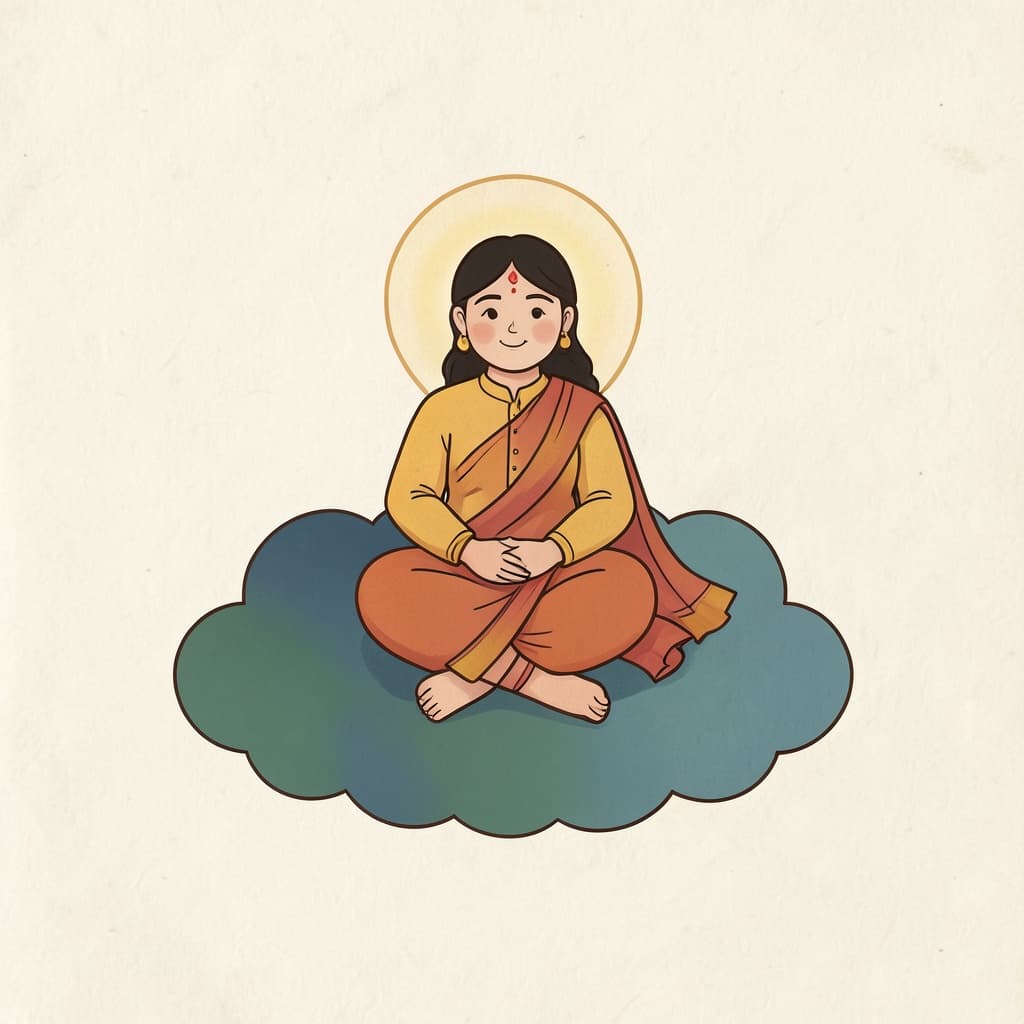
  • A serene celestial being with a soft golden halo seated on clouds.
    devaḥ

    god, deity

    NounMasculine

    ।We bow to the deity.

  • A child holding a blank name card on a string around the neck.
    nāma

    name

    NounNeuter

    ।My name is Sītā.

नामानि

Names

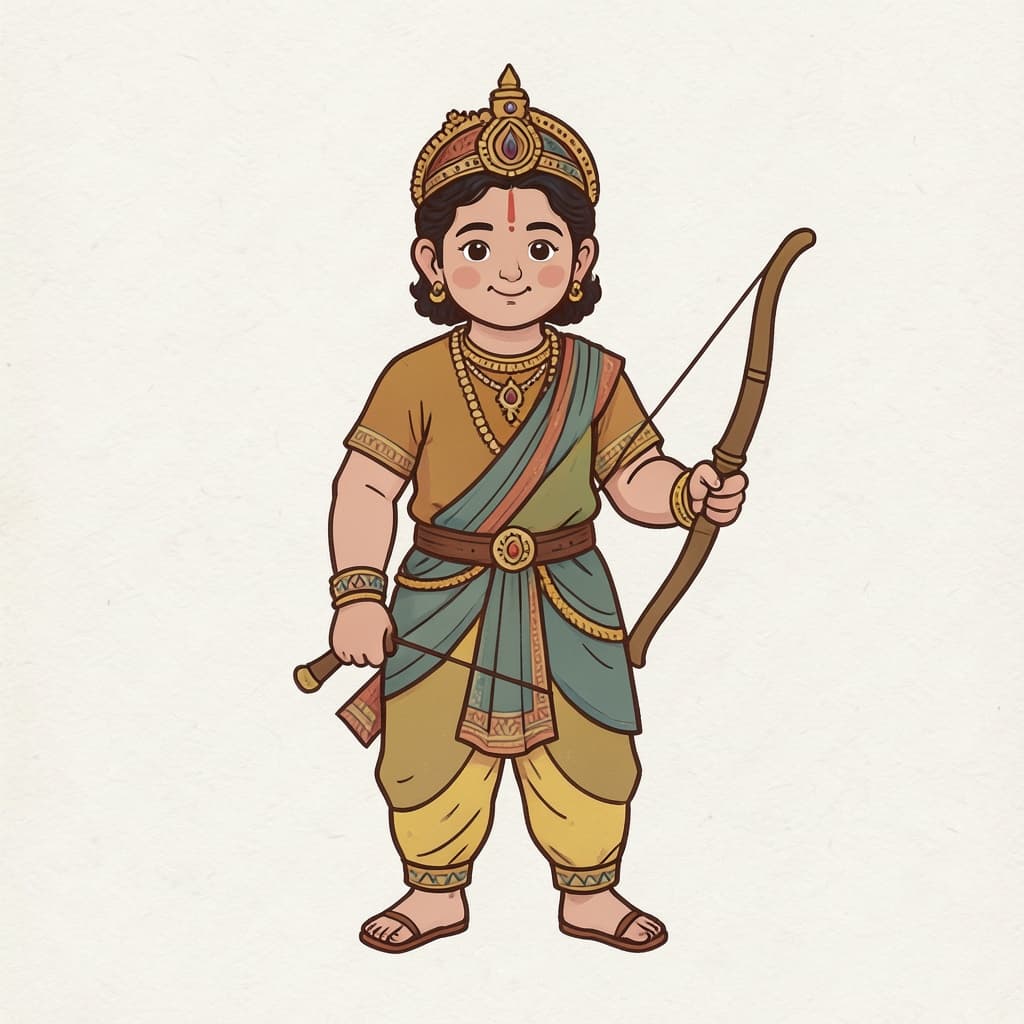
  • Prince Rama in royal clothes holding a bow, standing calmly.
    rāmaḥ

    Rāma (a name)

    NounMasculine

    ।Rāma reads a book.

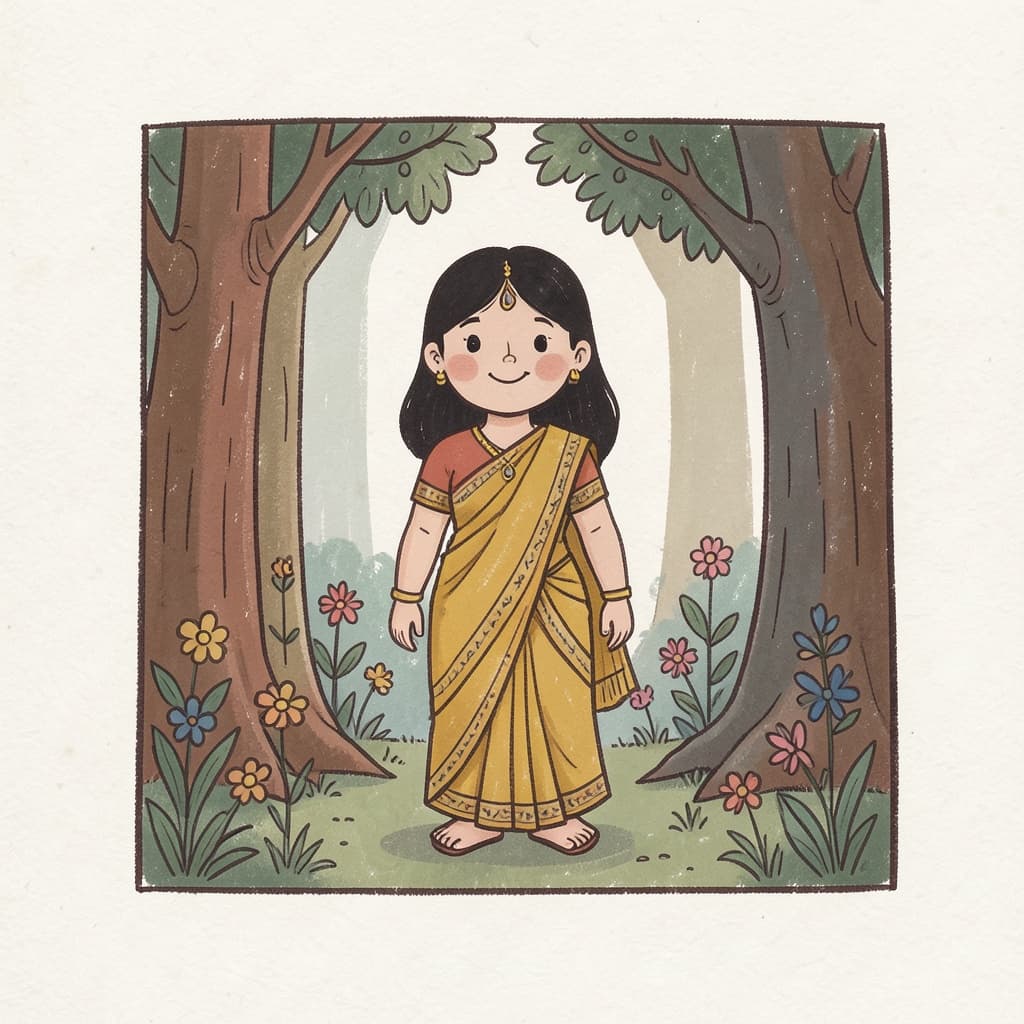
  • Sita in a simple sari standing in a forest with flowers.
    sītā

    Sītā (a name)

    NounFeminine

    ।I am Sītā.

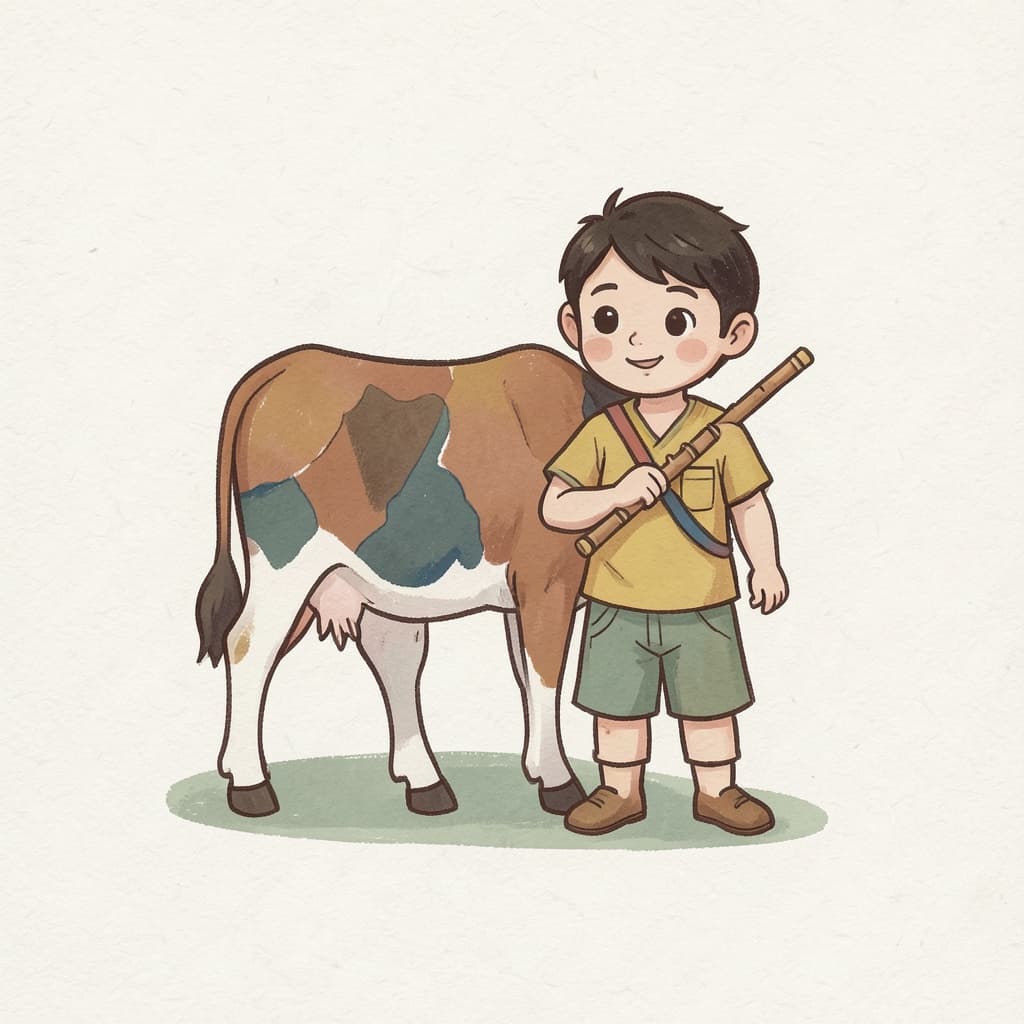
  • A young cowherd boy with a flute standing with a cow.
    gopālaḥ

    Gopāla (a name)

    NounMasculine

    ।His name is Gopāla.

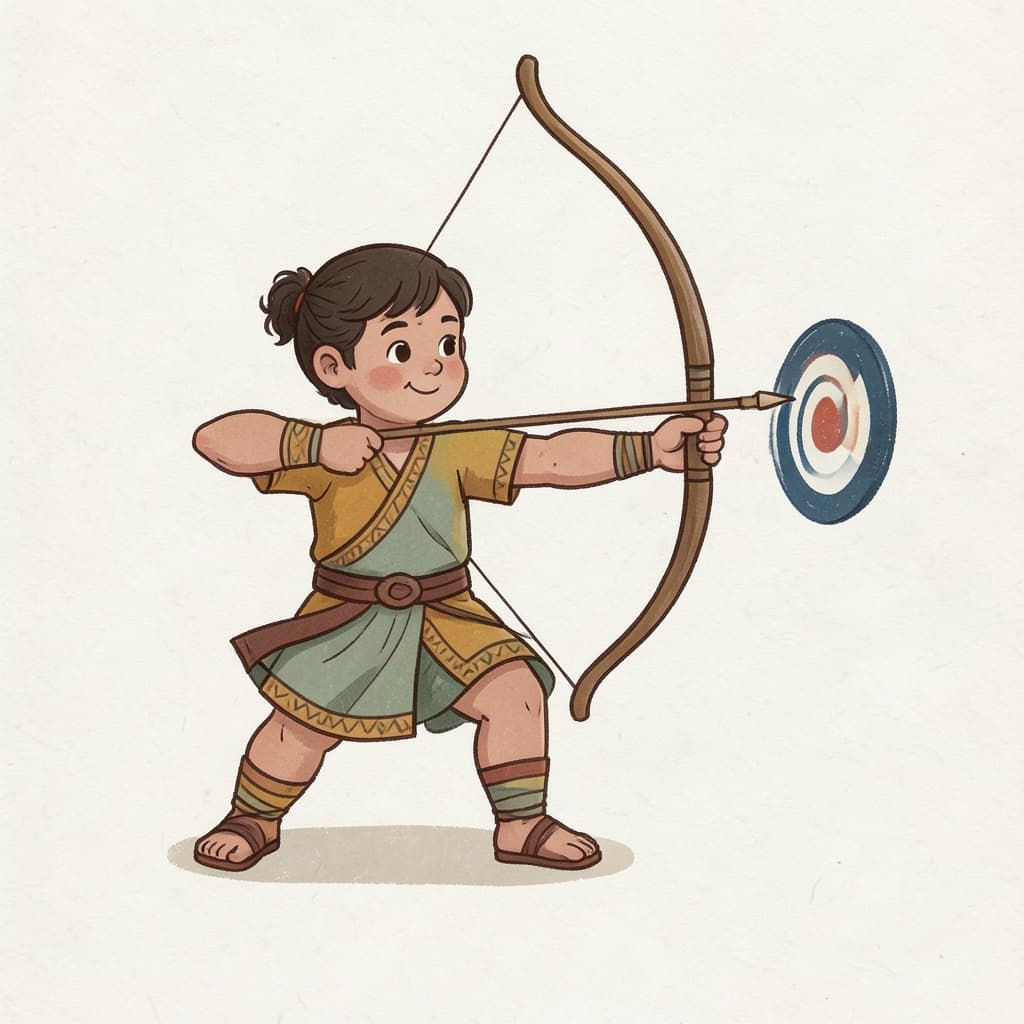
  • The archer Arjuna drawing a bow, aiming at a target.
    arjunaḥ

    Arjuna (a name)

    NounMasculine

    ।My name is Arjuna.

  • Mira singing devotional songs with a small stringed instrument.
    mīrā

    Mīrā (a name)

    NounFeminine

    ।My name is Mīrā.

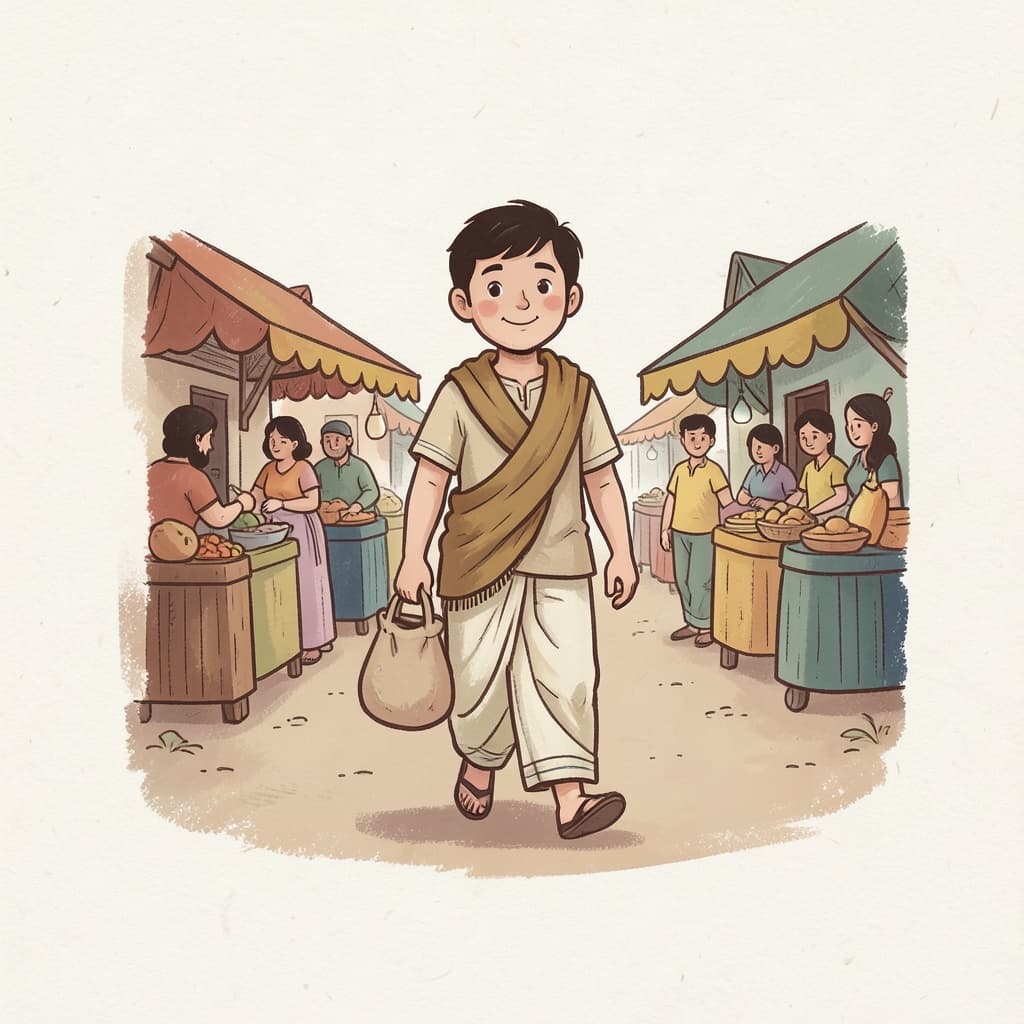
  • A young man in a dhoti and shawl walking to the market with a cloth bag.
    devadattaḥ

    Devadatta (a name)

    NounMasculine

    ।Devadatta cooks rice for himself.

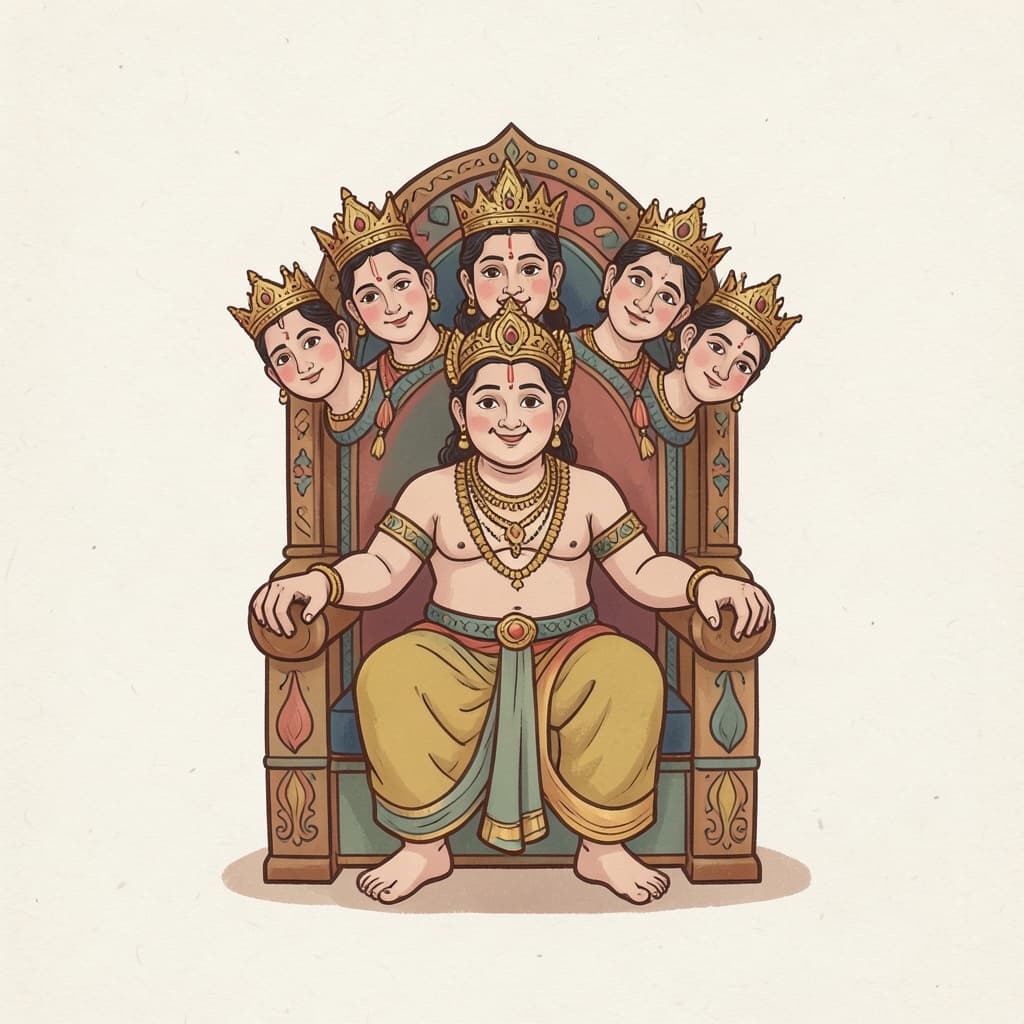
  • King Ravana with ten crowned heads on a throne, drawn in a gentle storybook way.
    rāvaṇaḥ

    Rāvaṇa

    NounMasculine

    ।Rāma defeats Rāvaṇa.

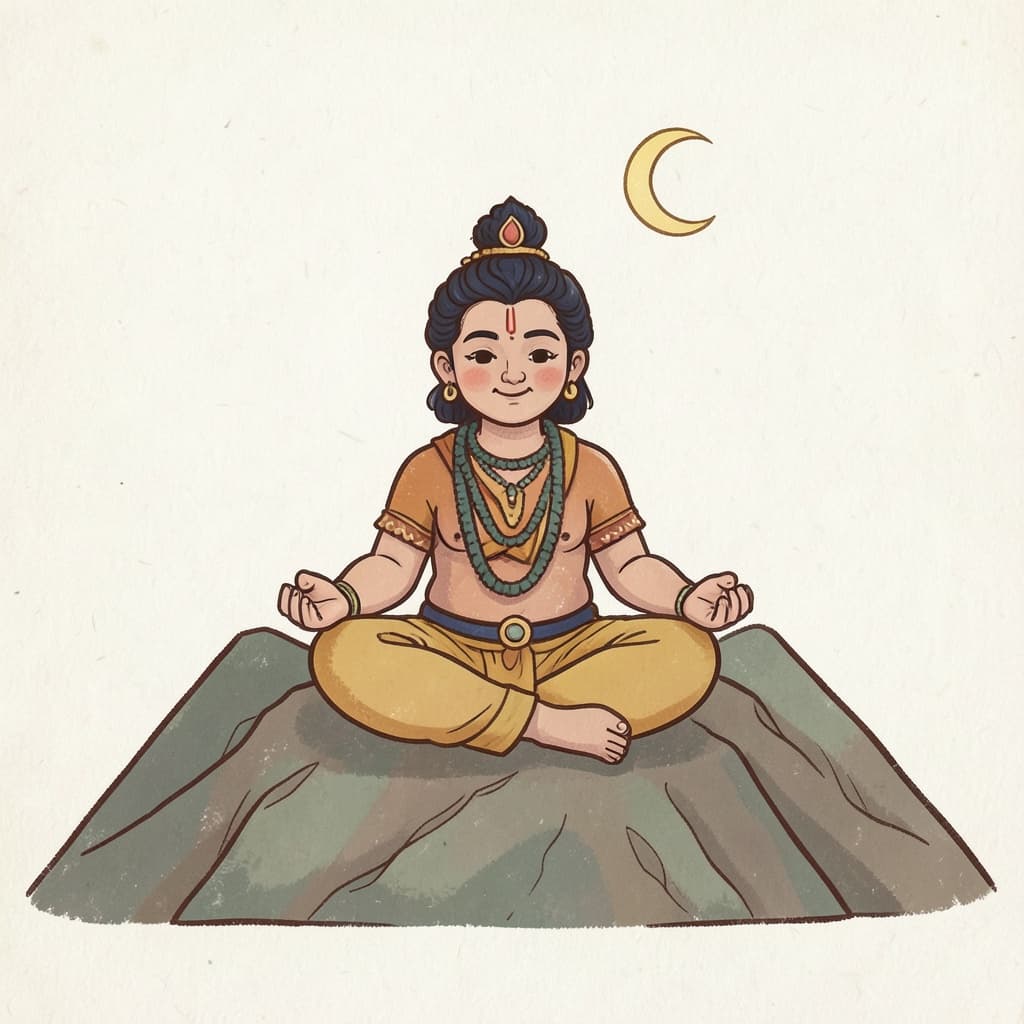
  • Lord Shiva meditating calmly on a mountain with a crescent moon in his hair.
    śivaḥ

    Śiva

    NounMasculine

    ।Śiva withdraws the world.

  • The snowy peaks of the Himalaya mountains under a blue sky.
    himālayaḥ

    the Himālaya

    NounMasculine

    ।The Gaṅgā arises from the Himālaya.

  • A winding river flowing through green fields.
    gaṅgā

    the Gaṅgā river

    NounFeminine
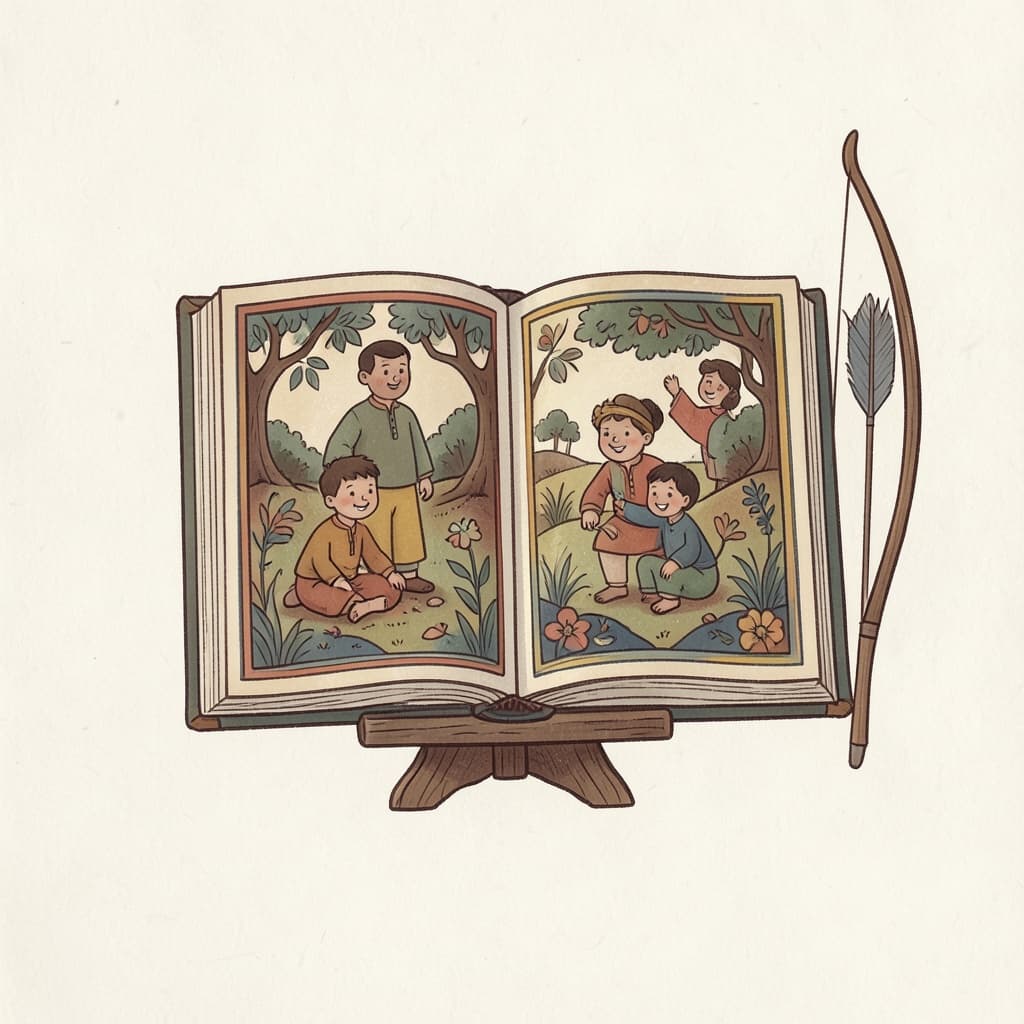
  • An old illustrated book of stories open on a stand with a bow and arrow beside it.
    rāmāyaṇam

    the Rāmāyaṇa

    NounNeuter
  • A busy city street with tall buildings and a market.
    dillīnagaram

    the city of Delhi

    NounNeuterModern usage

    ।I come from Delhi.

क्रियाः

Common actions
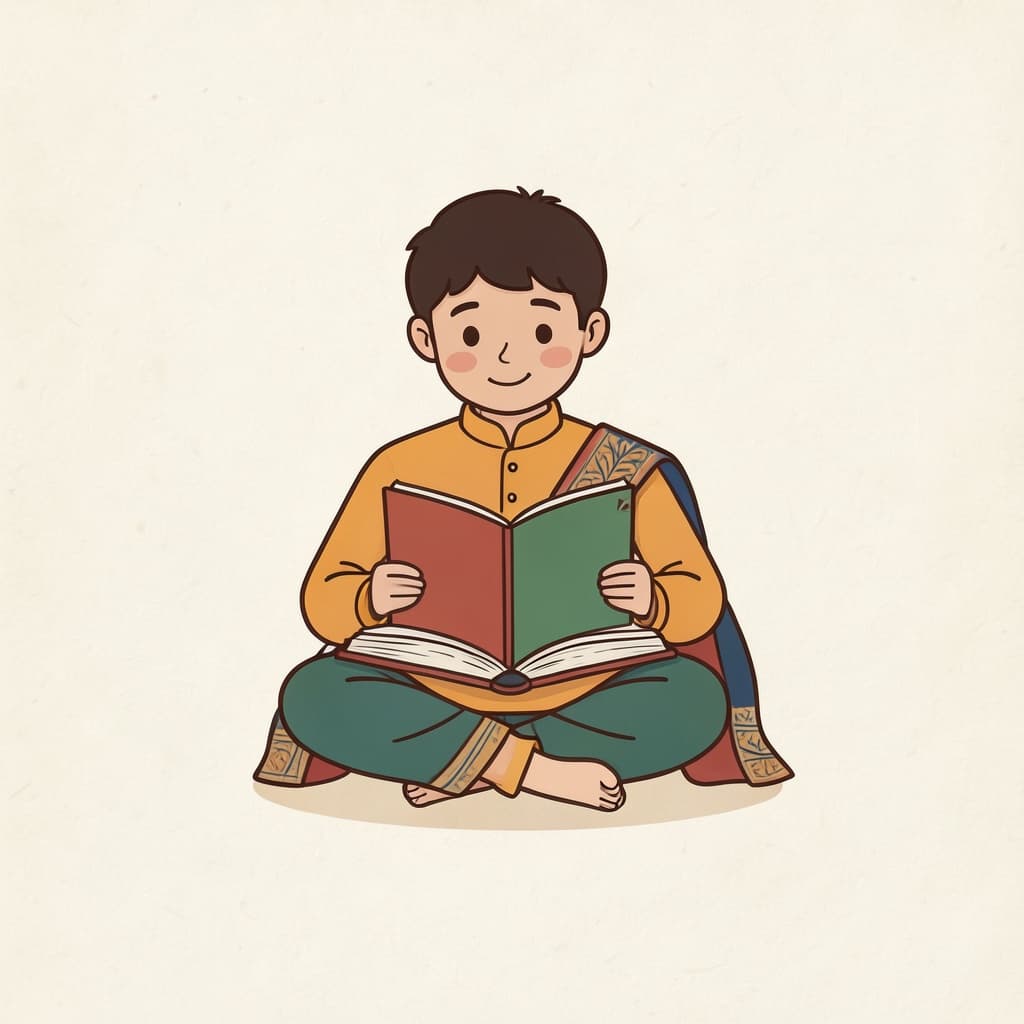
  • A boy sitting cross-legged reading an open book.
    paṭhati

    reads

    Verb

    ।The boy reads.

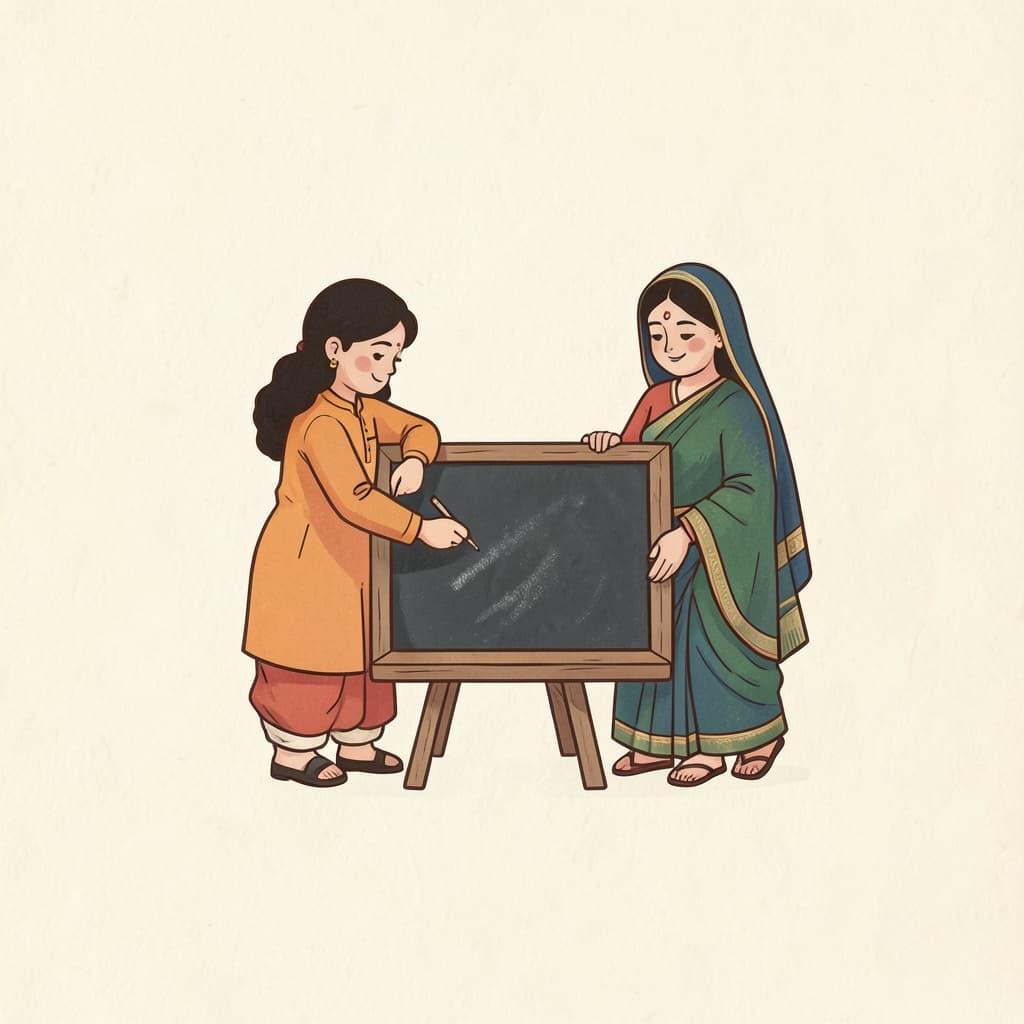
  • A girl writing on a wooden slate with chalk, no readable letters.
    likhati

    writes

    Verb

    ।The girl writes.

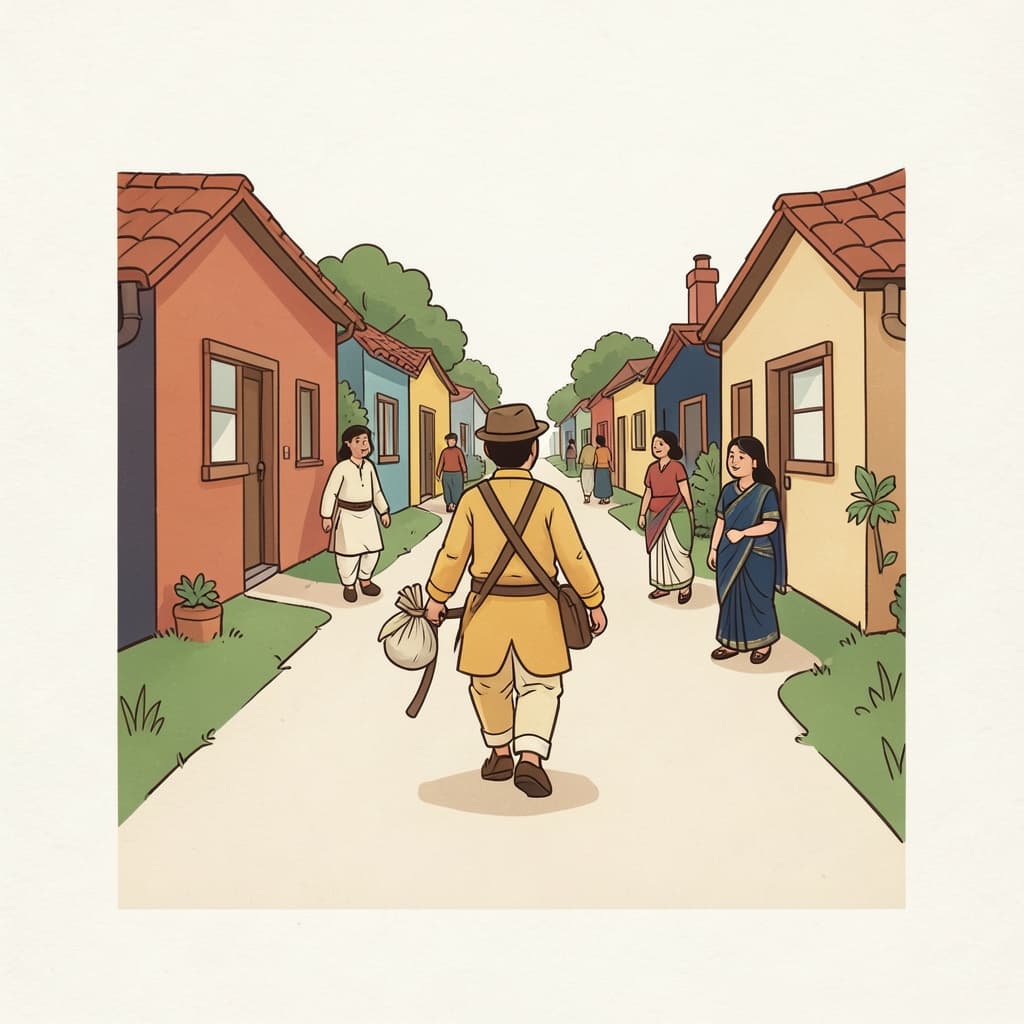
  • A traveller with a cloth bundle on a stick walking away along a village road.
    gacchati

    goes

    Verb

    ।He goes to school.

  • A lotus bud opening into a full bloom on a pond.
    bhavati

    is, becomes

    Verb

    ।It rains.

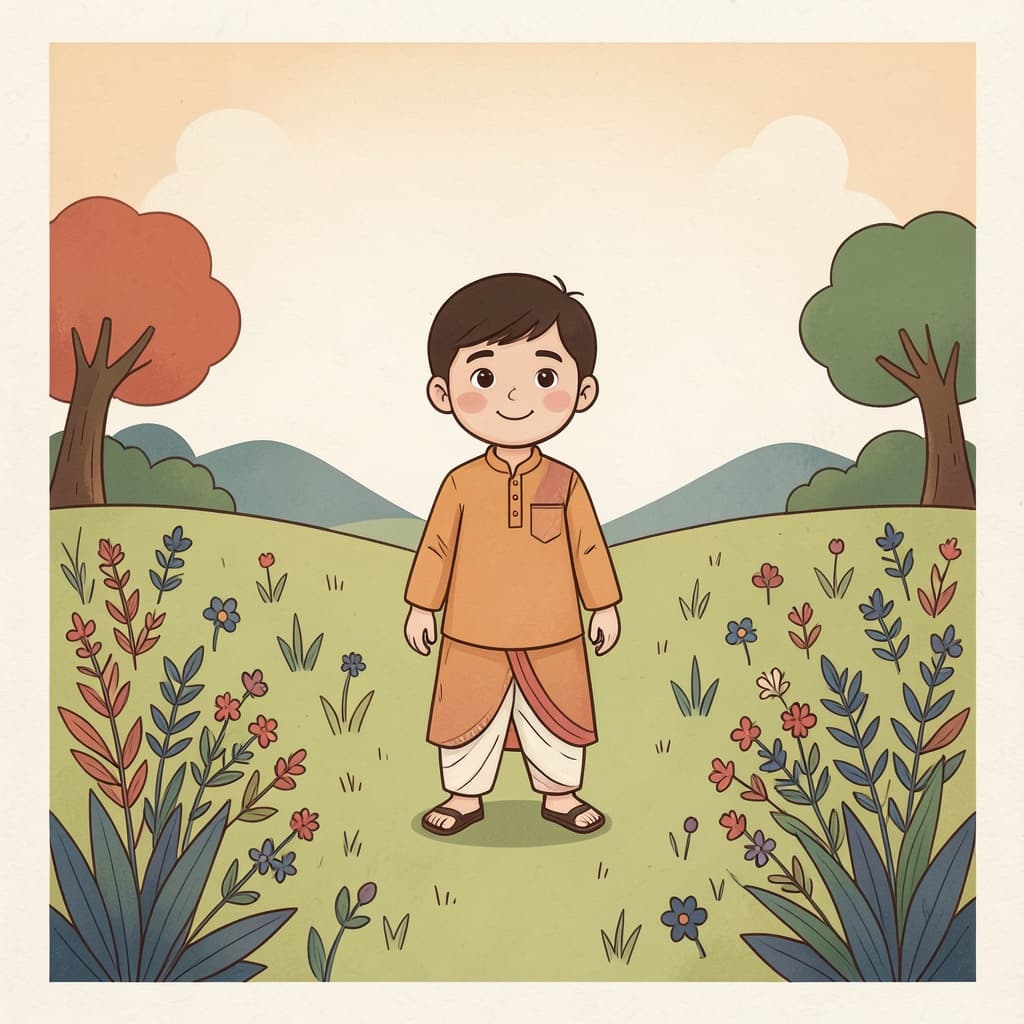
  • A calm child standing in a sunny meadow.
    asti

    is, exists

    Verb

    ।This is my house.

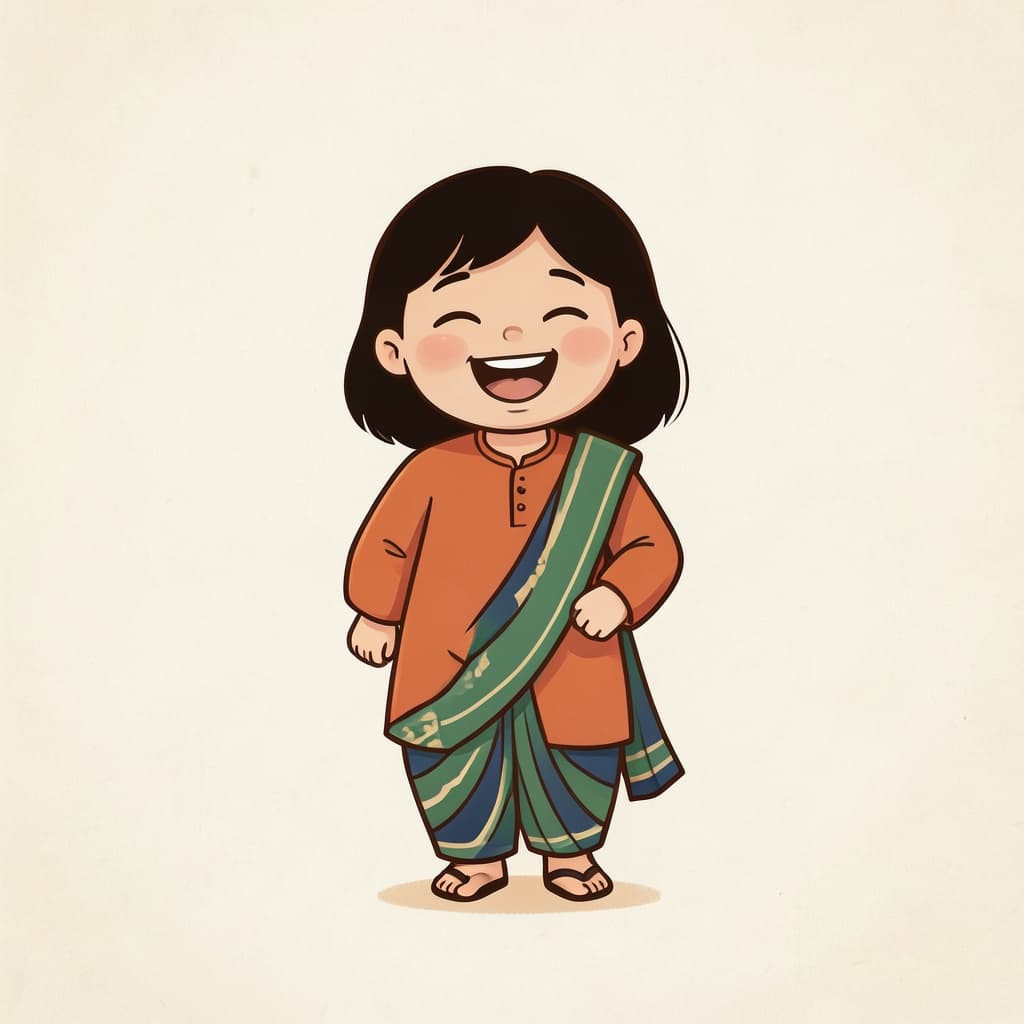
  • A girl laughing joyfully with her eyes closed.
    hasati

    laughs

    Verb

    ।The baby laughs.

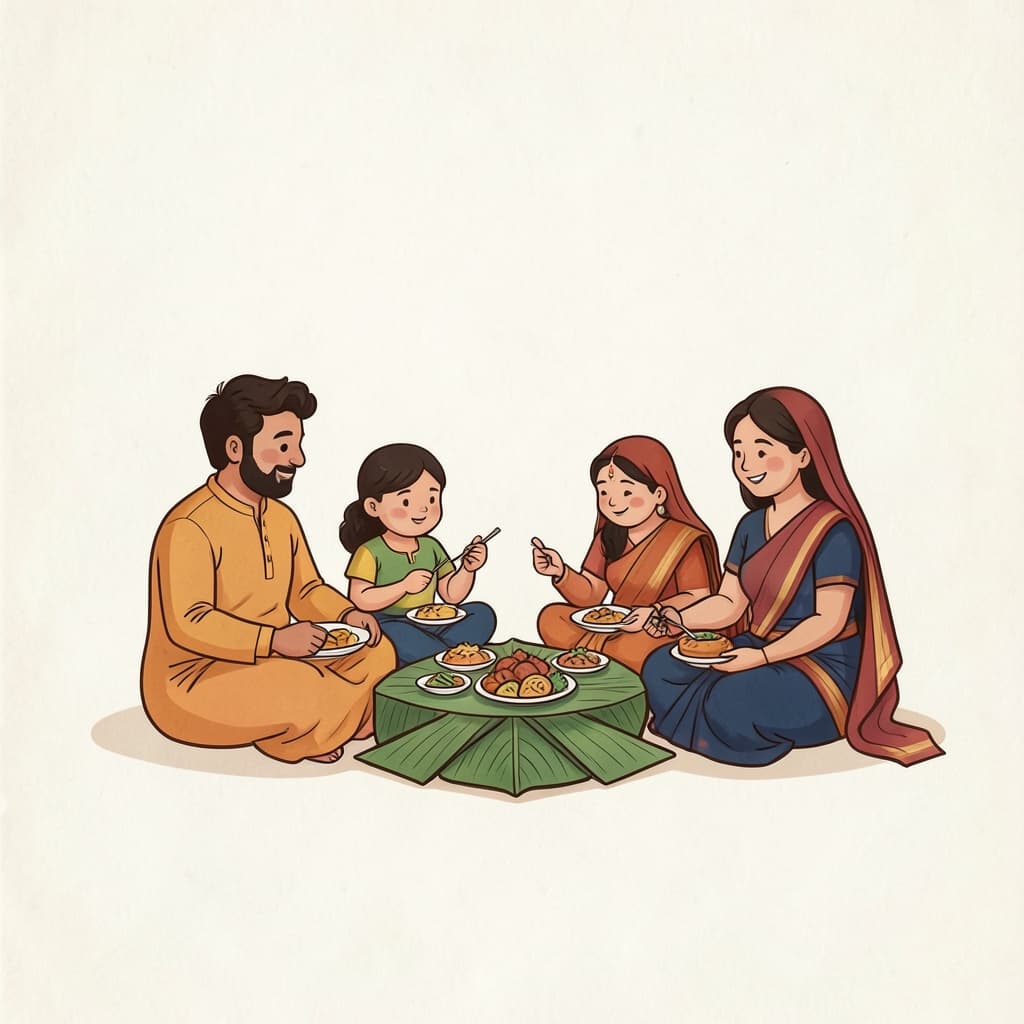
  • A family sitting on the floor eating a meal from banana leaves.
    khādati

    eats

    Verb

    ।The monkey eats a fruit.

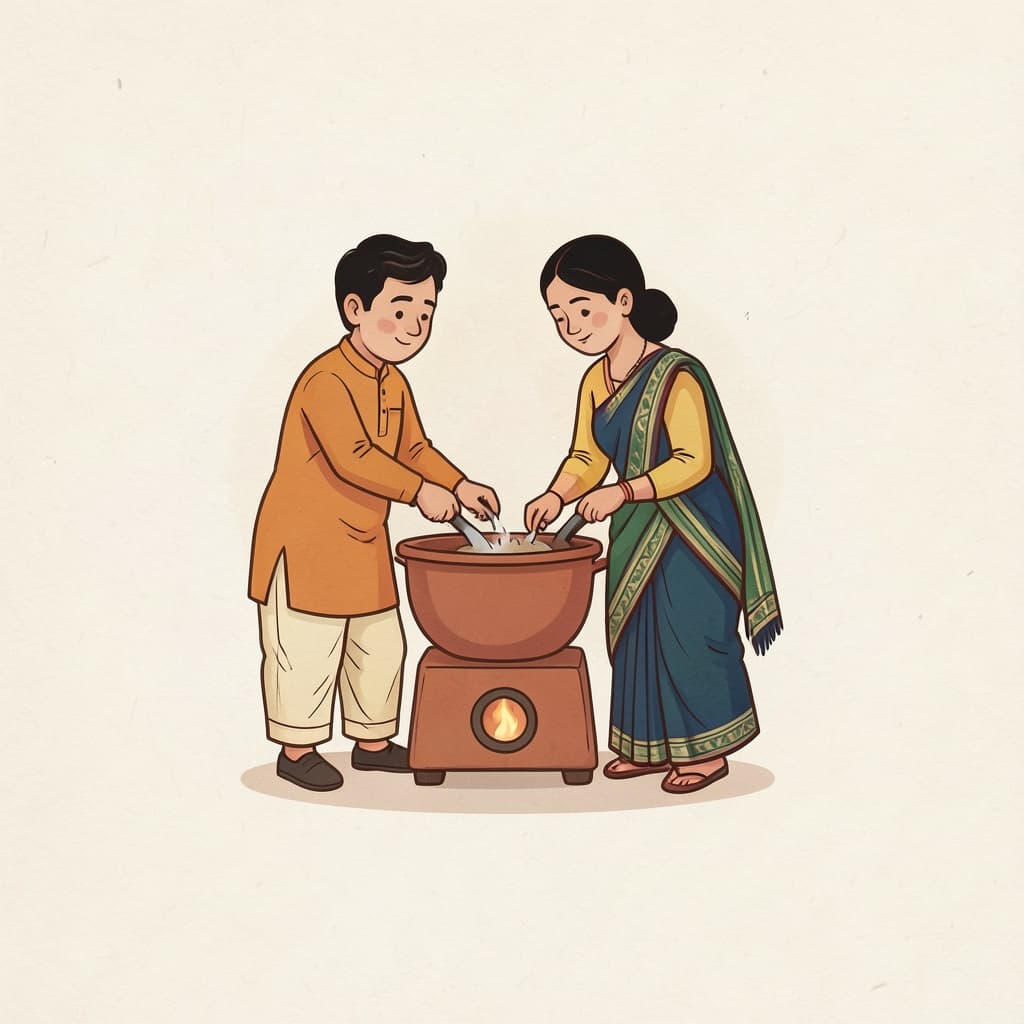
  • A woman cooking in a pot on a clay stove.
    pacati

    cooks

    Verb

    ।Mother cooks rice.

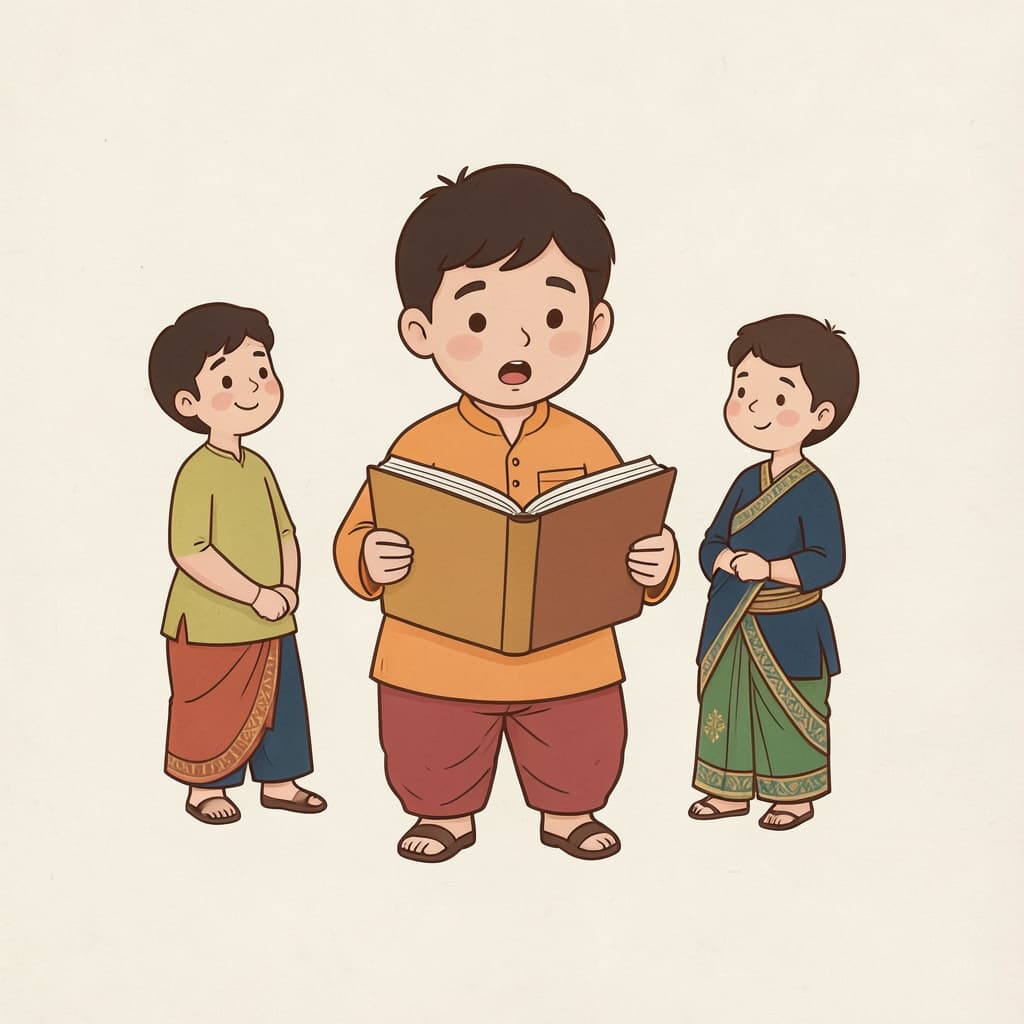
  • A student reciting aloud from a book held in both hands.
    vadati

    speaks, says

    Verb

    ।The teacher speaks the truth.

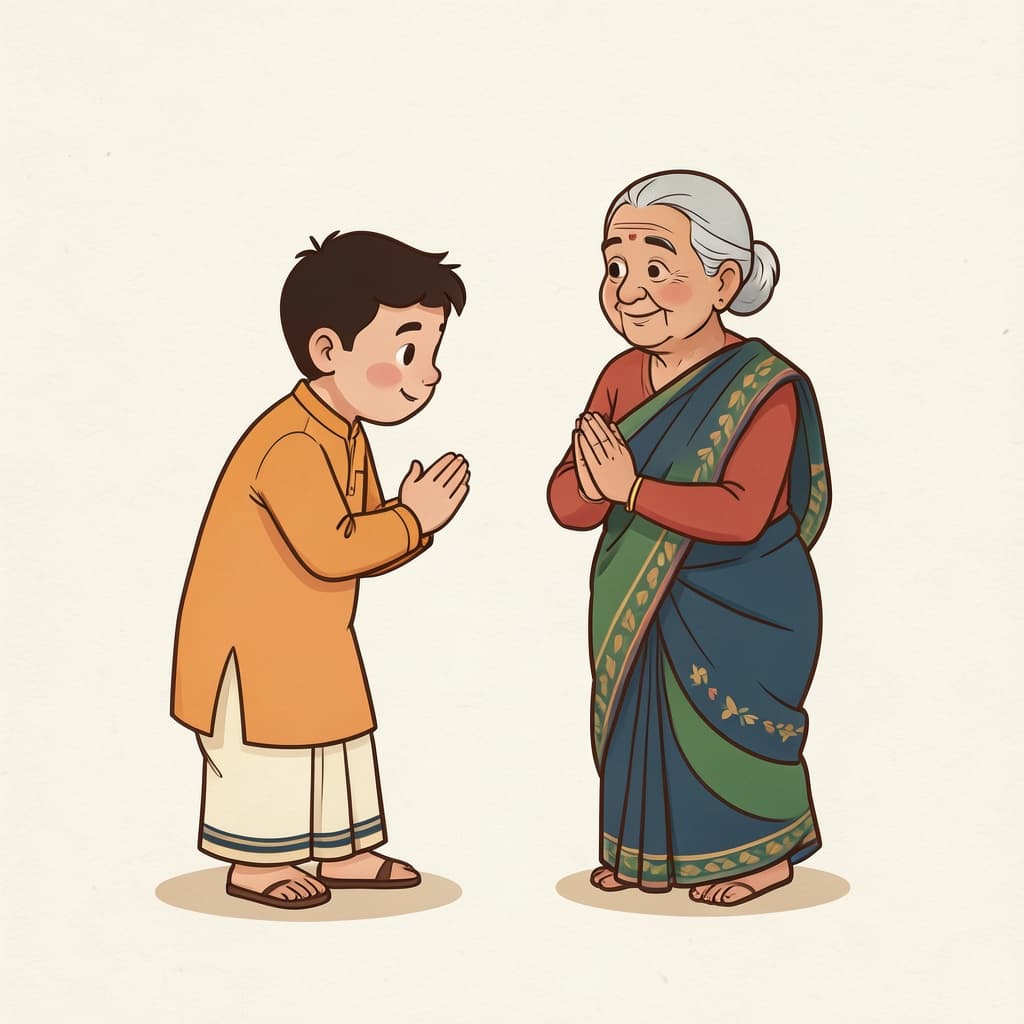
  • A young man bowing with folded hands in namaste before an elder.
    namati

    bows

    Verb

    ।The disciple bows to the teacher.

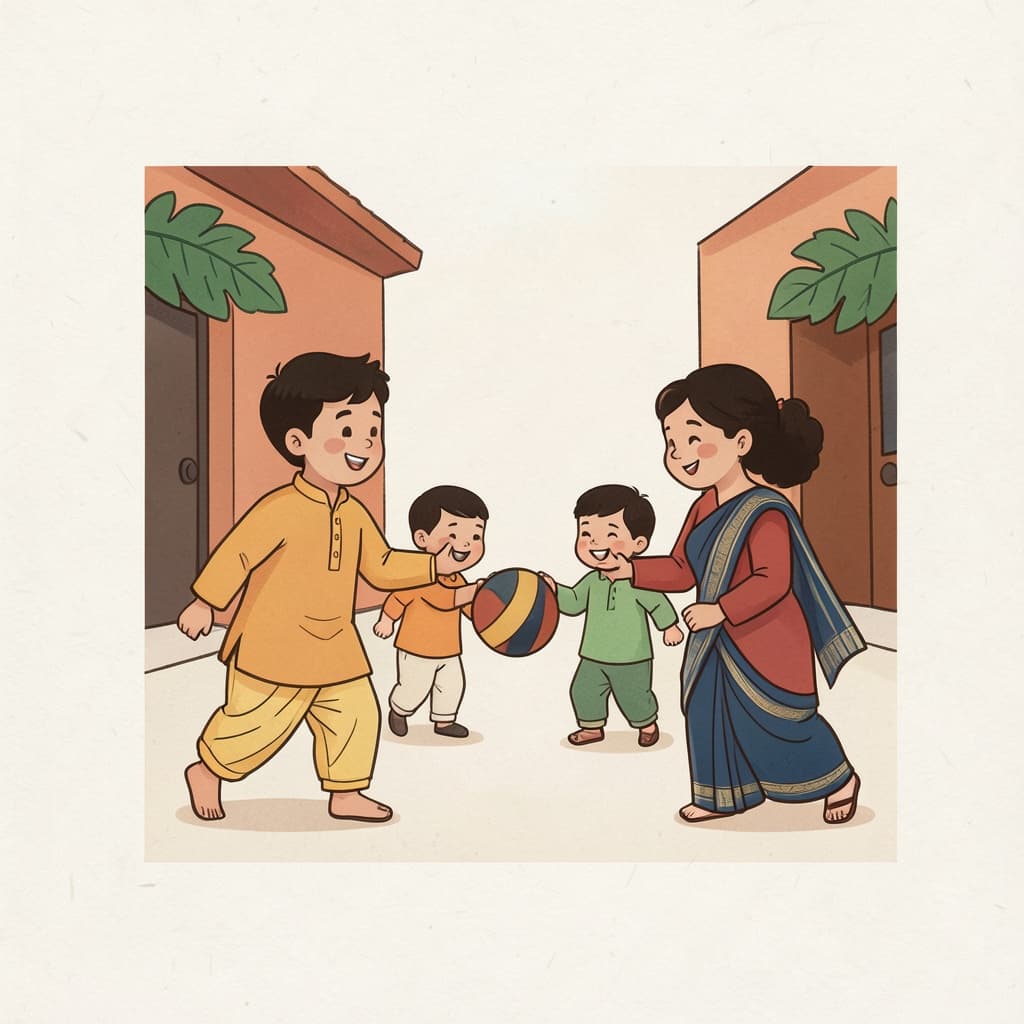
  • Three children playing happily with a ball in a courtyard.
    krīḍati

    plays

    Verb

    ।The boys play in the garden.

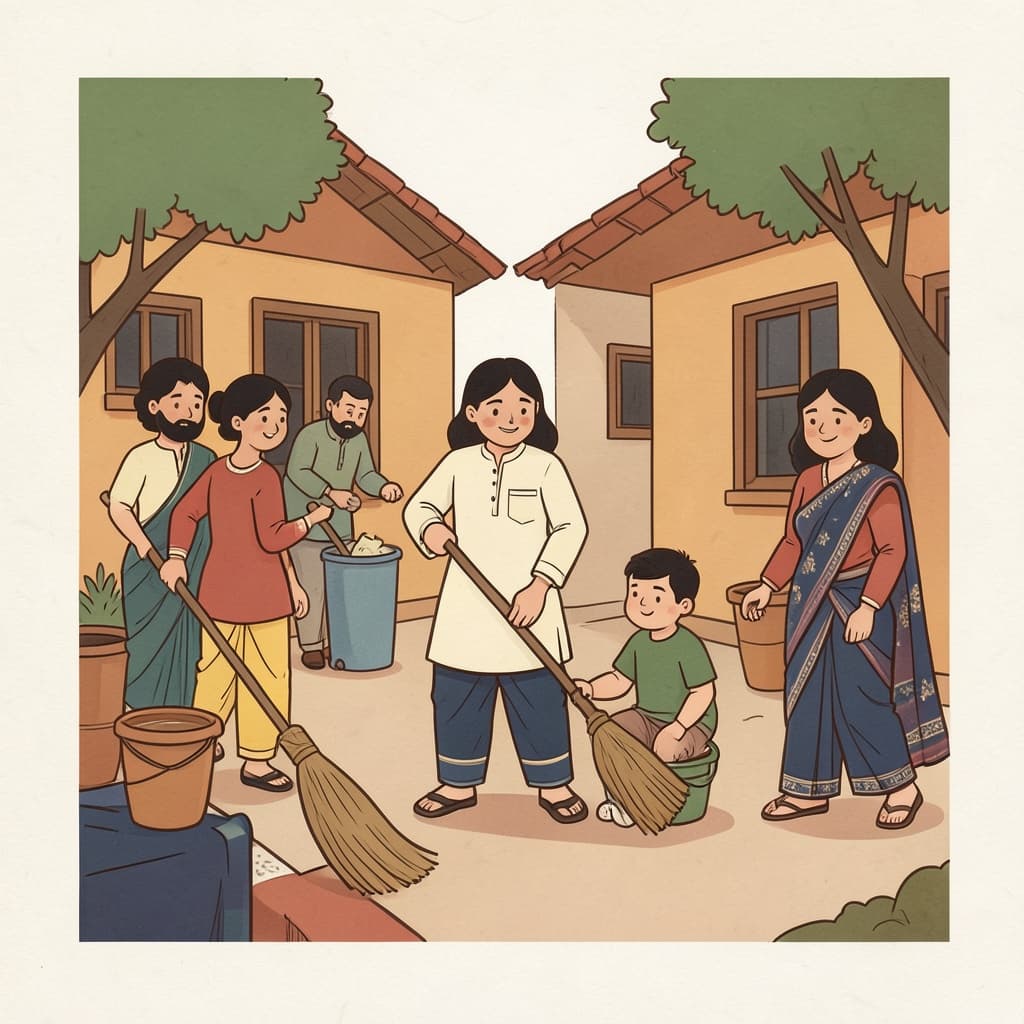
  • A busy woman doing housework, sweeping the courtyard with a broom.
    karoti

    does, makes

    Verb

    ।He does the work.

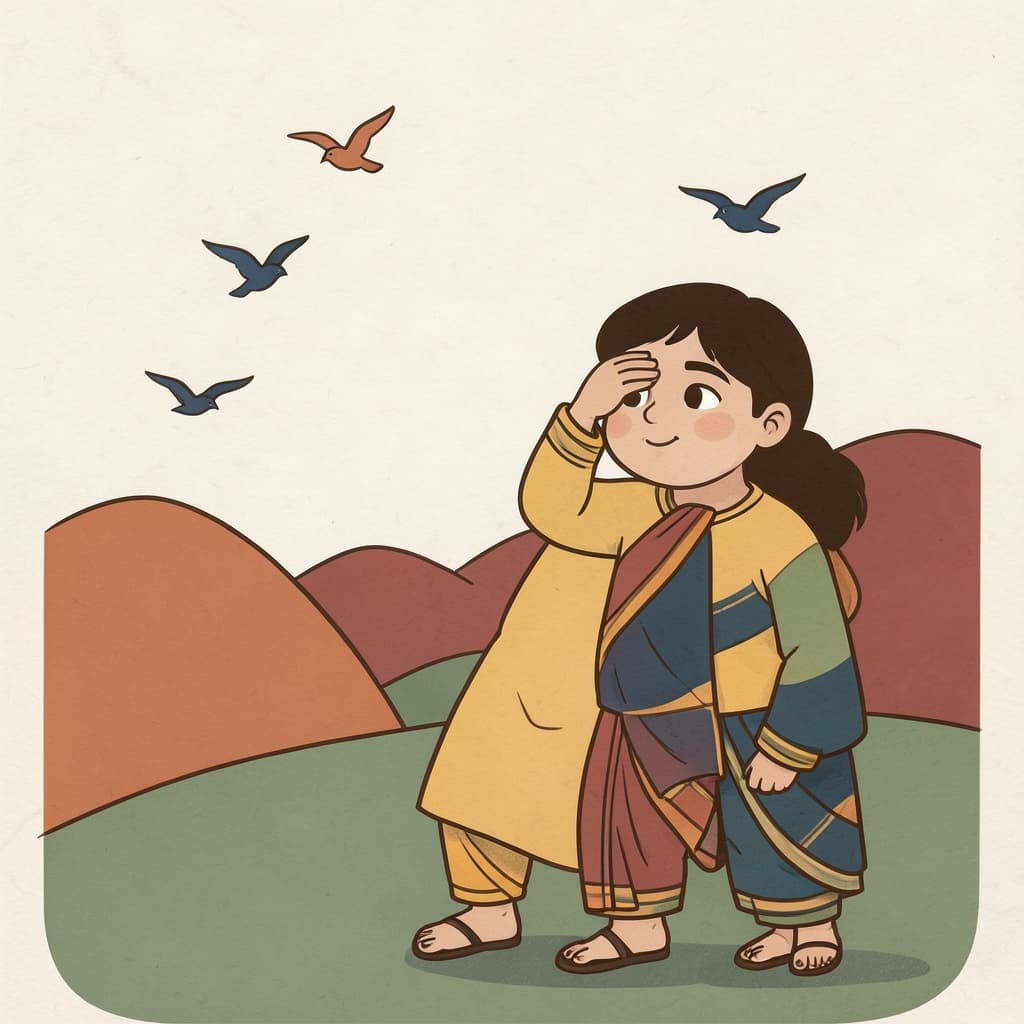
  • A girl shading her eyes with one hand, looking far away at birds over the hills.
    paśyati

    sees

    Verb

    ।I see the moon.

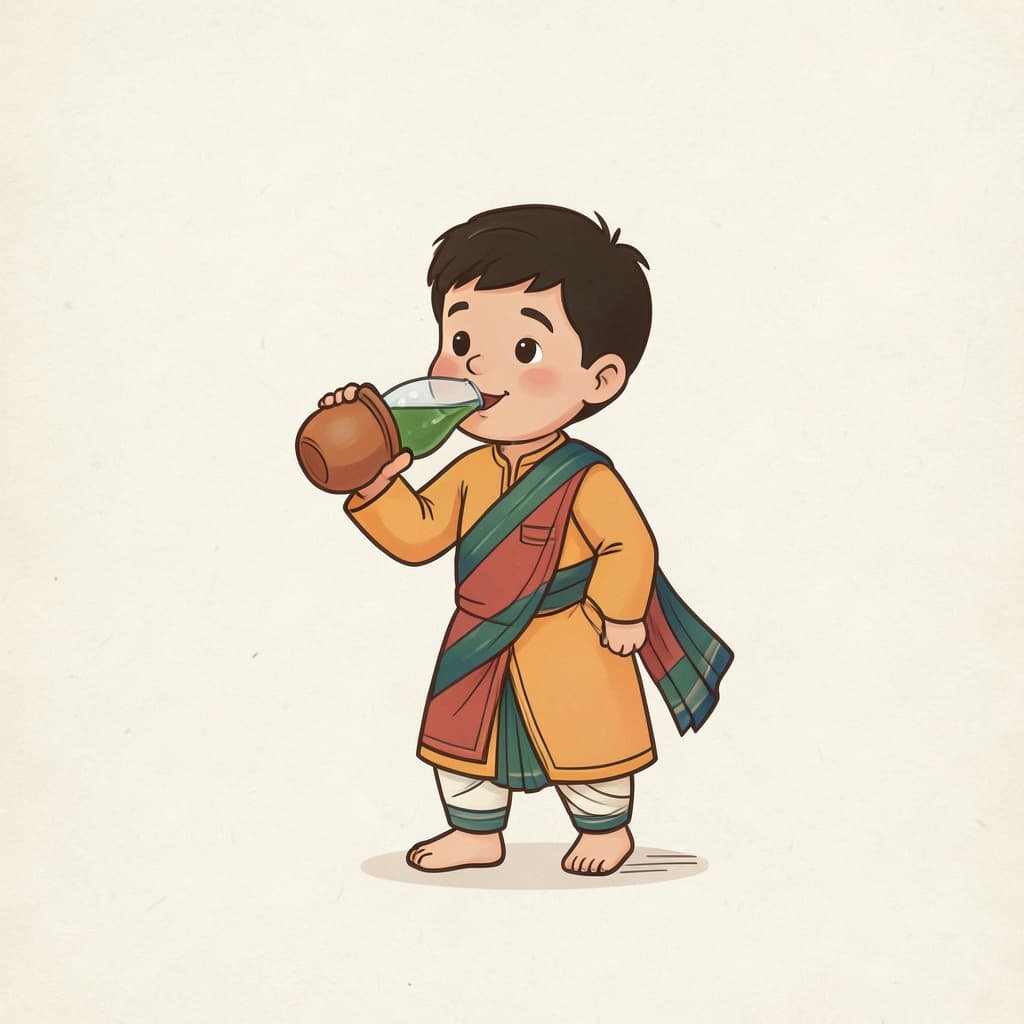
  • A boy drinking water from a clay pot.
    pibati

    drinks

    Verb

    ।The boy drinks milk.

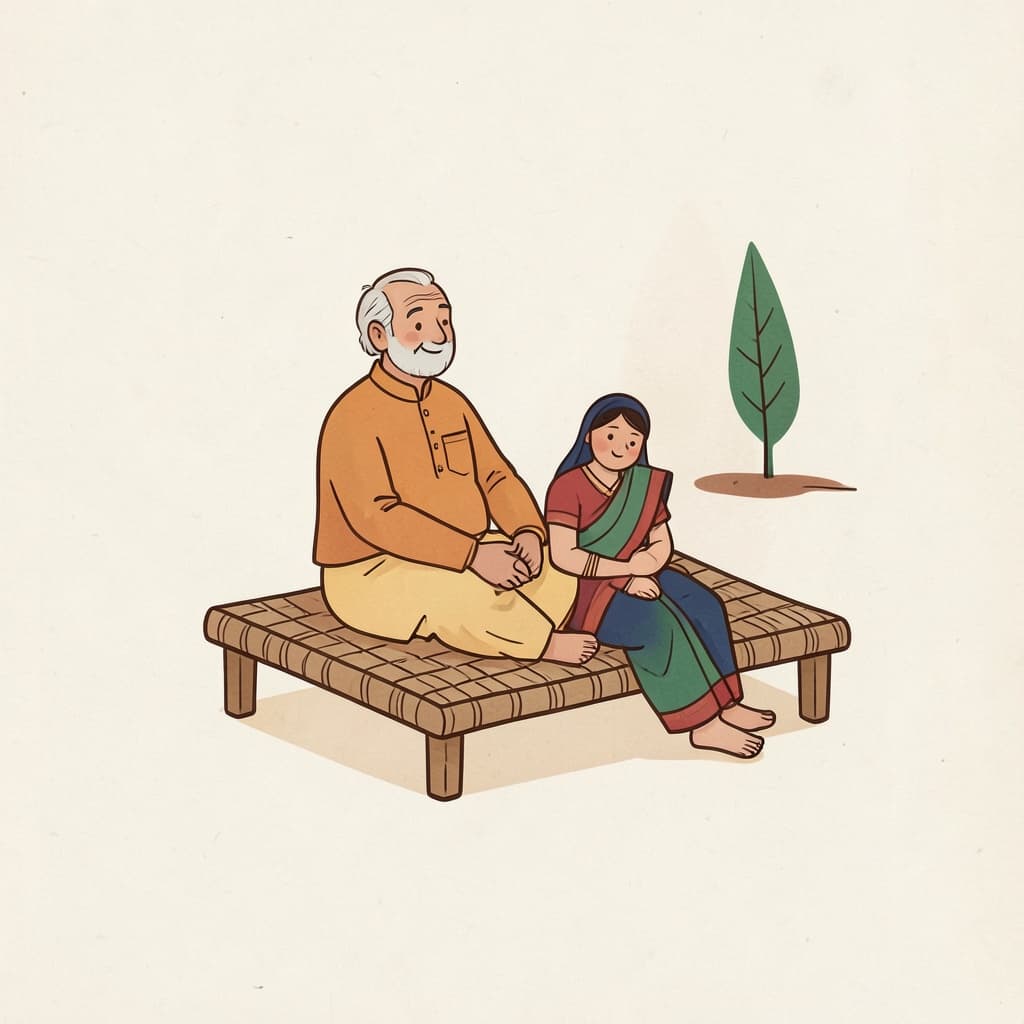
  • An old man resting at home, sitting on a woven cot.
    tiṣṭhati

    stands, stays

    Verb

    ।The students stand in the classroom.

  • A boy running fast across a field, hair flying.
    dhāvati

    runs

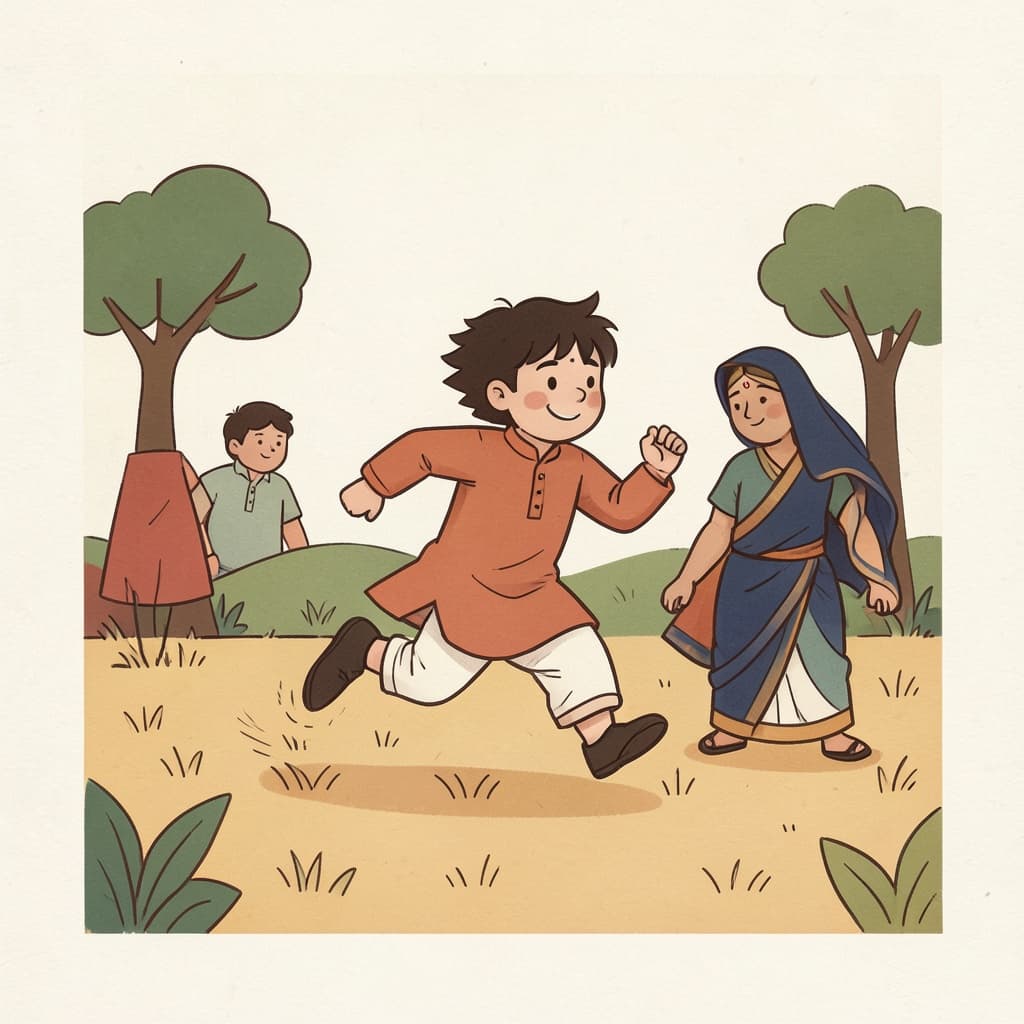
    Verb

    ।The horse runs.

  • A ripe mango falling from a tree branch.
    patati

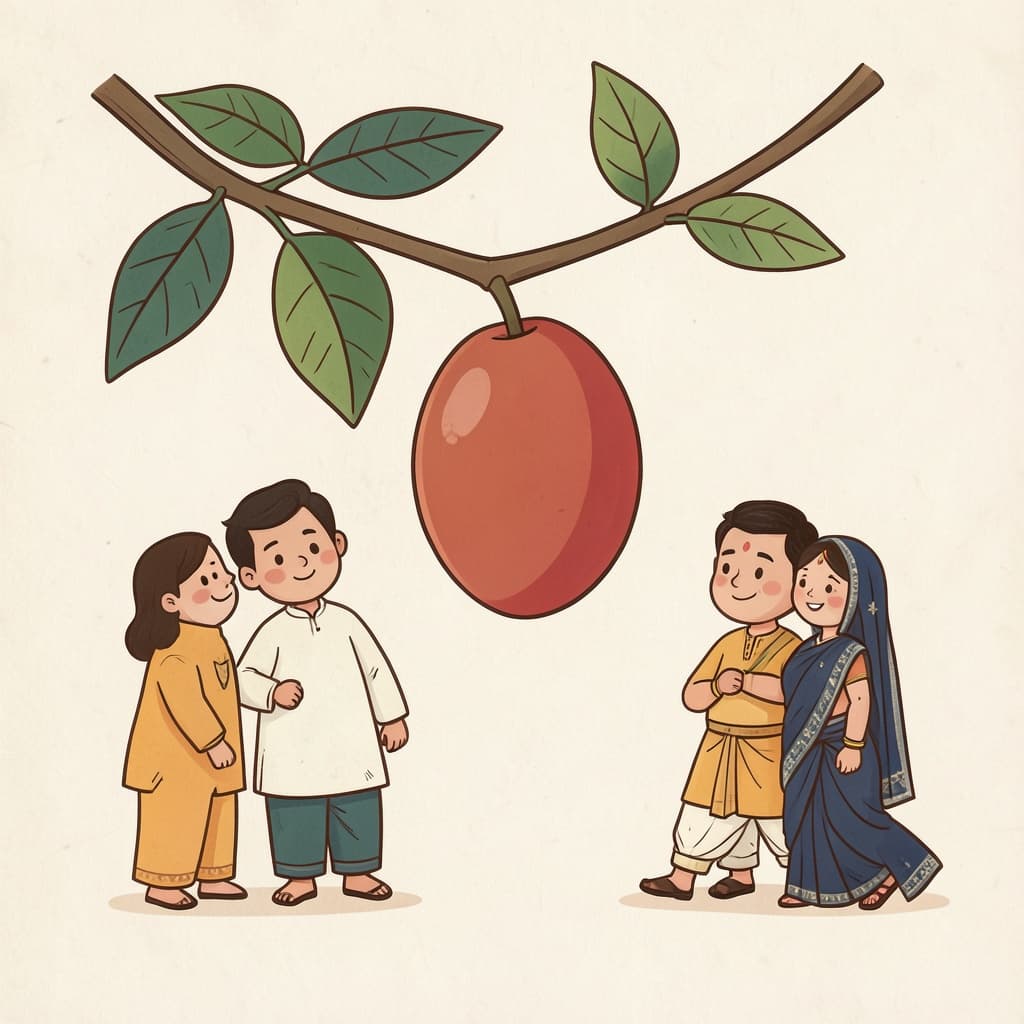
    falls

    Verb

    ।A leaf falls from the tree.

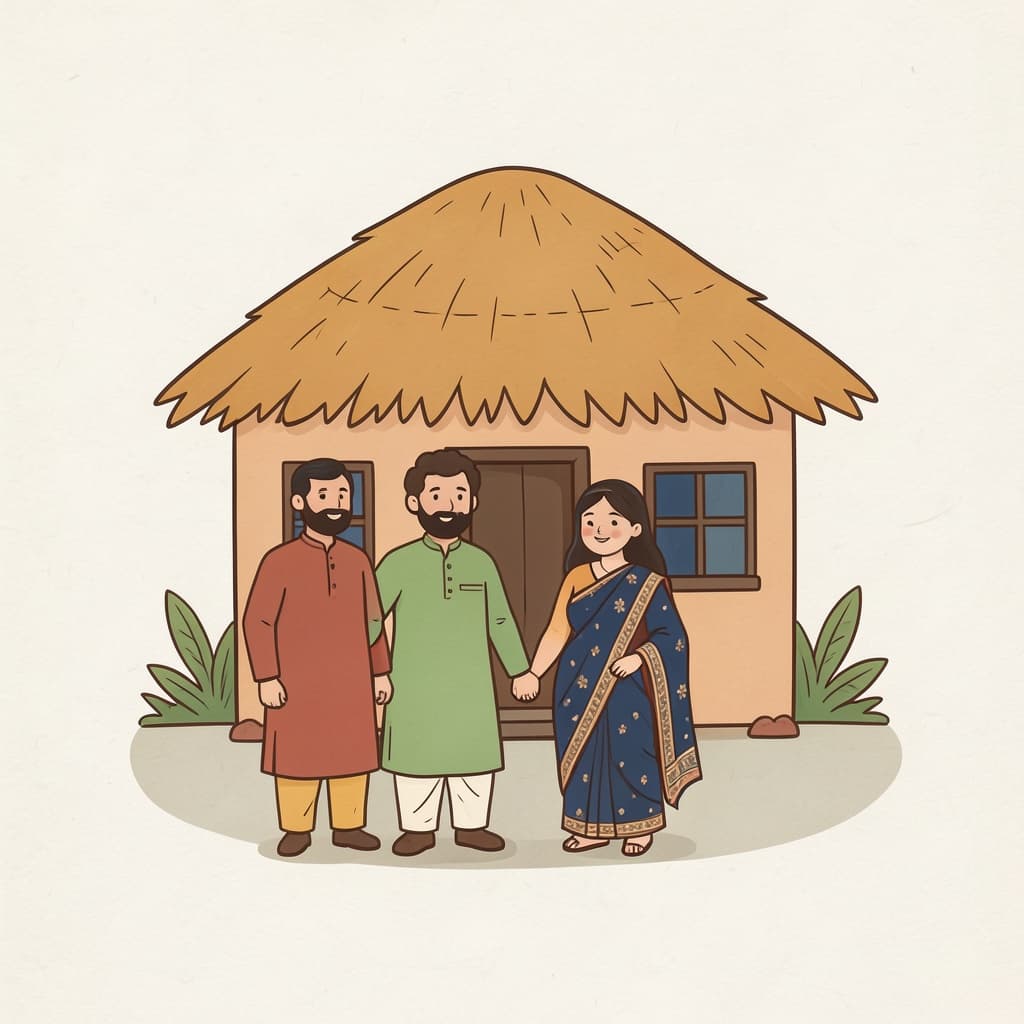
  • A family standing in front of their small home with a thatched roof.
    vasati

    lives, dwells

    Verb

    ।We live in the city.

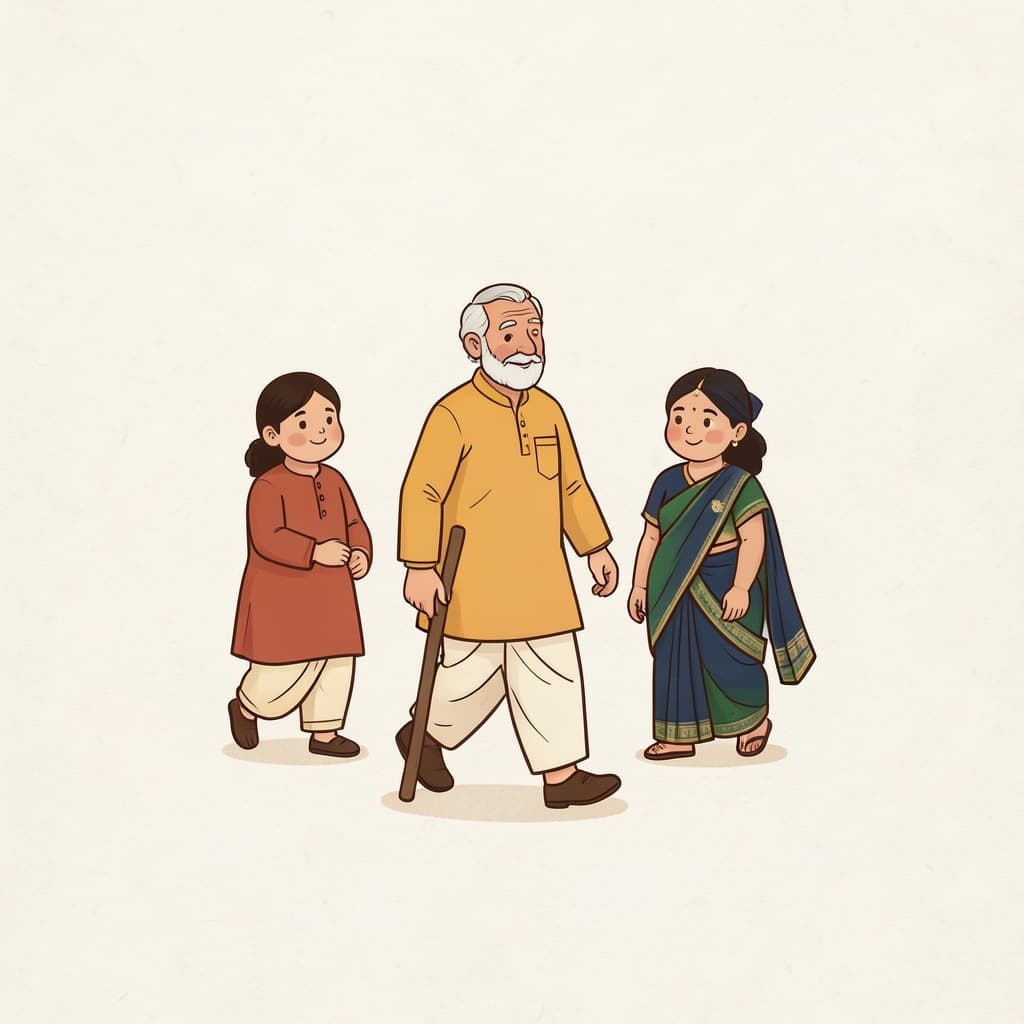
  • An old man walking slowly with a wooden stick.
    calati

    moves, walks

    Verb

    ।People walk on the road.

  • A smiling friend coming towards the viewer and waving.
    āgacchati

    comes

    Verb

    ।A friend comes home.

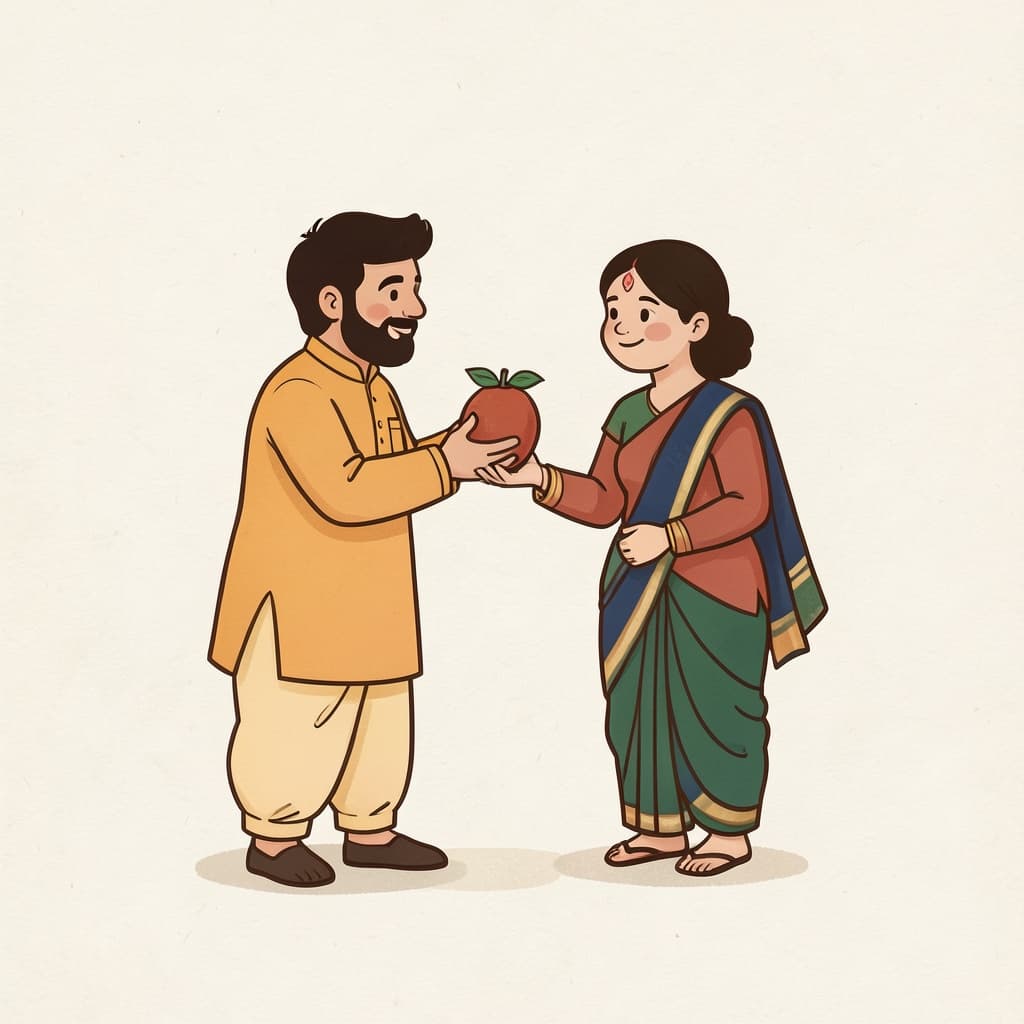
  • A man giving a fruit to a small child.
    dadāti

    gives

    Verb

    ।Mother gives a fruit to her son.

  • A wise teacher calmly explaining, one hand raised, an open palm-leaf manuscript beside him.
    jānāti

    knows

    Verb

    ।I know Sanskrit.

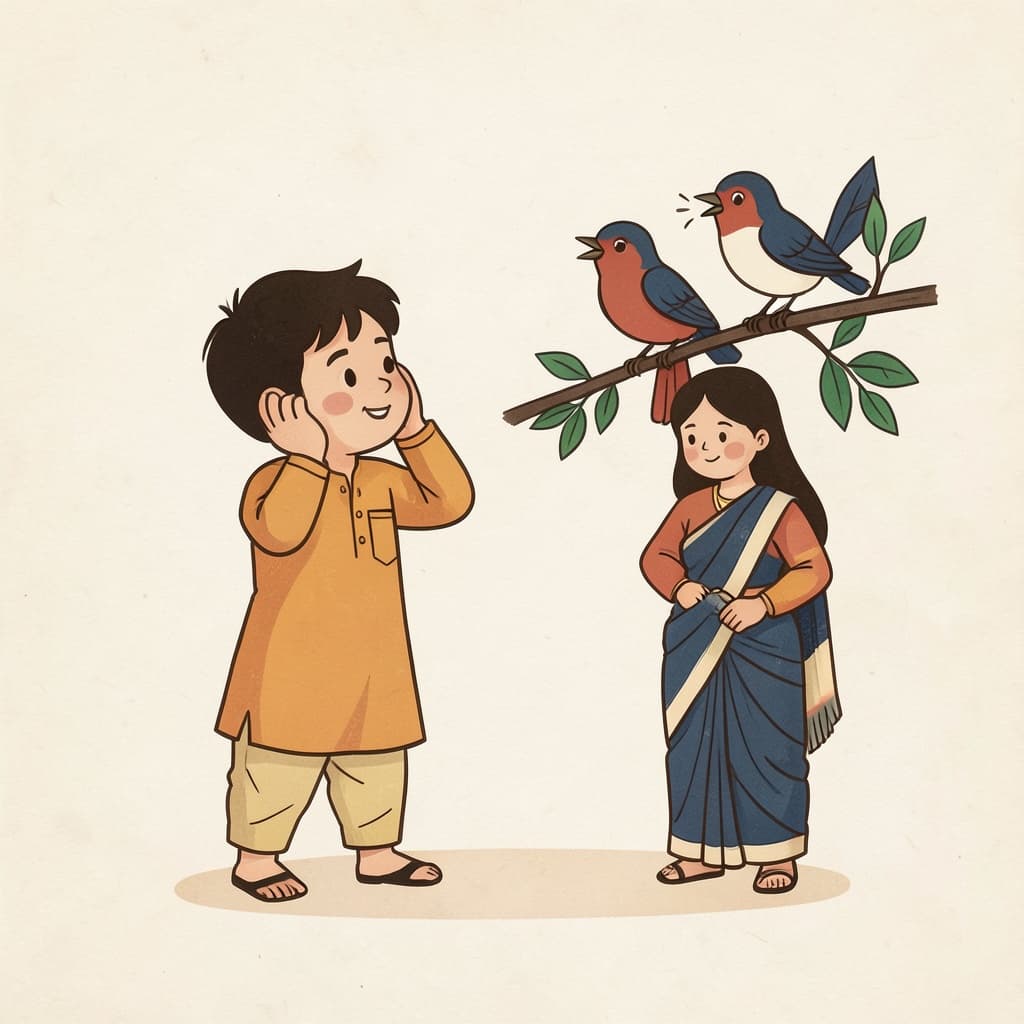
  • A child cupping a hand to his ear, listening to a bird singing on a branch.
    śṛṇoti

    hears, listens

    Verb

    ।We listen to a story.

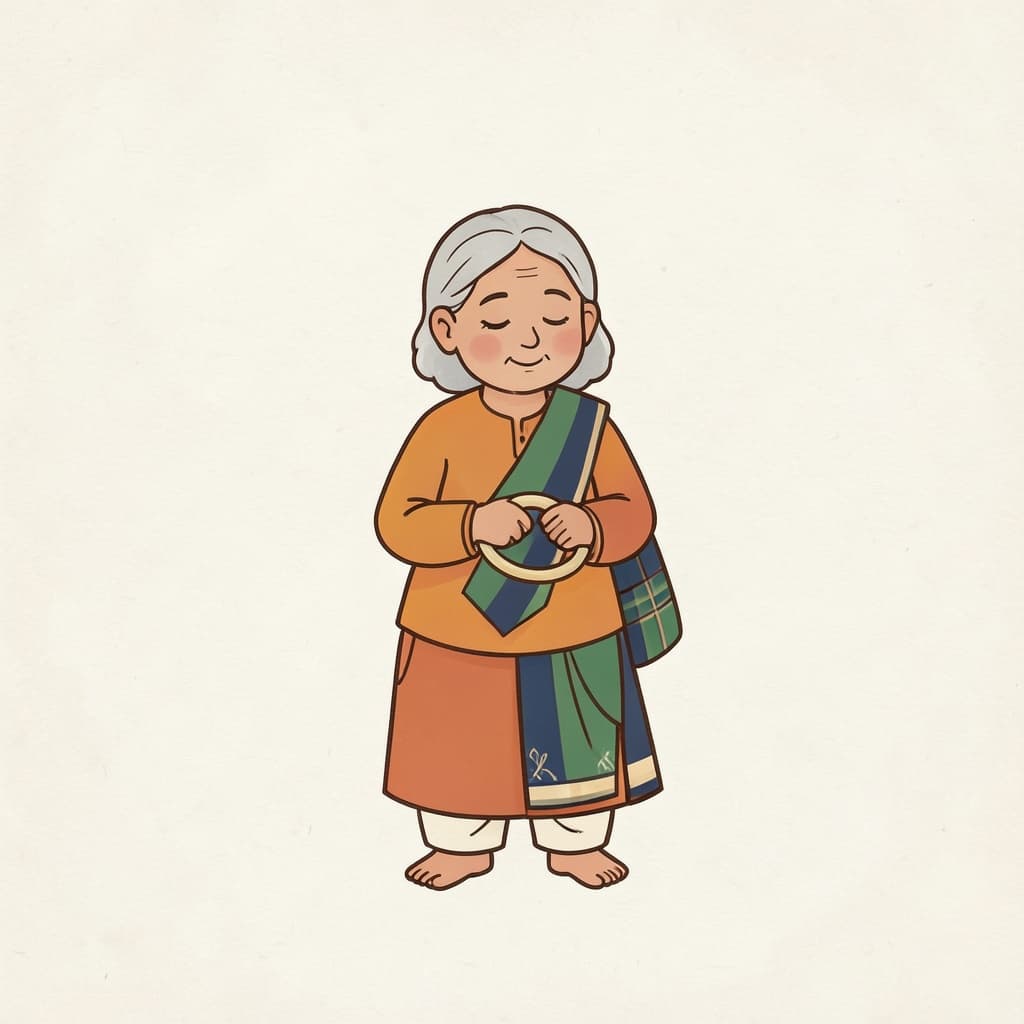
  • An old woman with closed eyes remembering, gently holding a bangle.
    smarati

    remembers

    Verb

    ।I remember my mother.

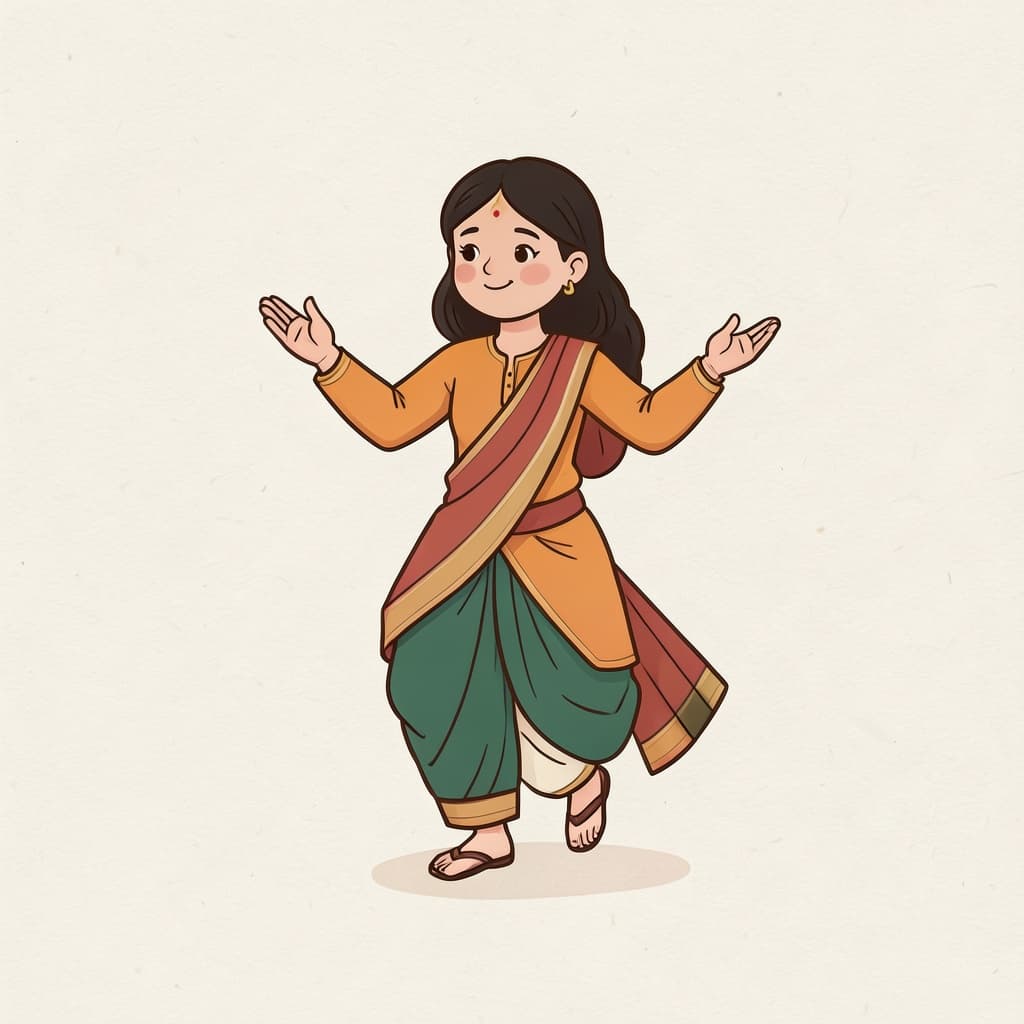
  • A girl dancing a classical Indian dance with graceful hand gestures.
    nṛtyati

    dances

    Verb

    ।The peacock dances.

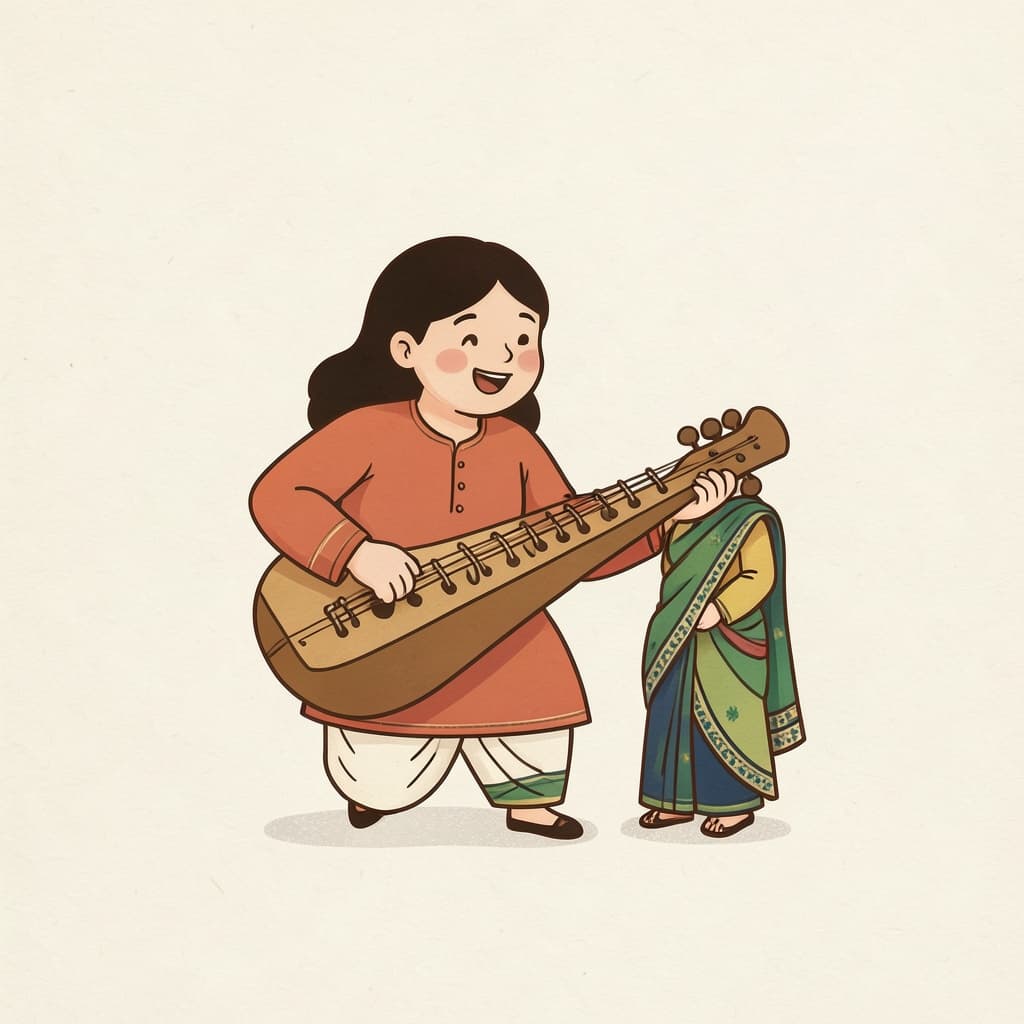
  • A girl singing, playing a tanpura.
    gāyati

    sings

    Verb

    ।The girl sings a song.

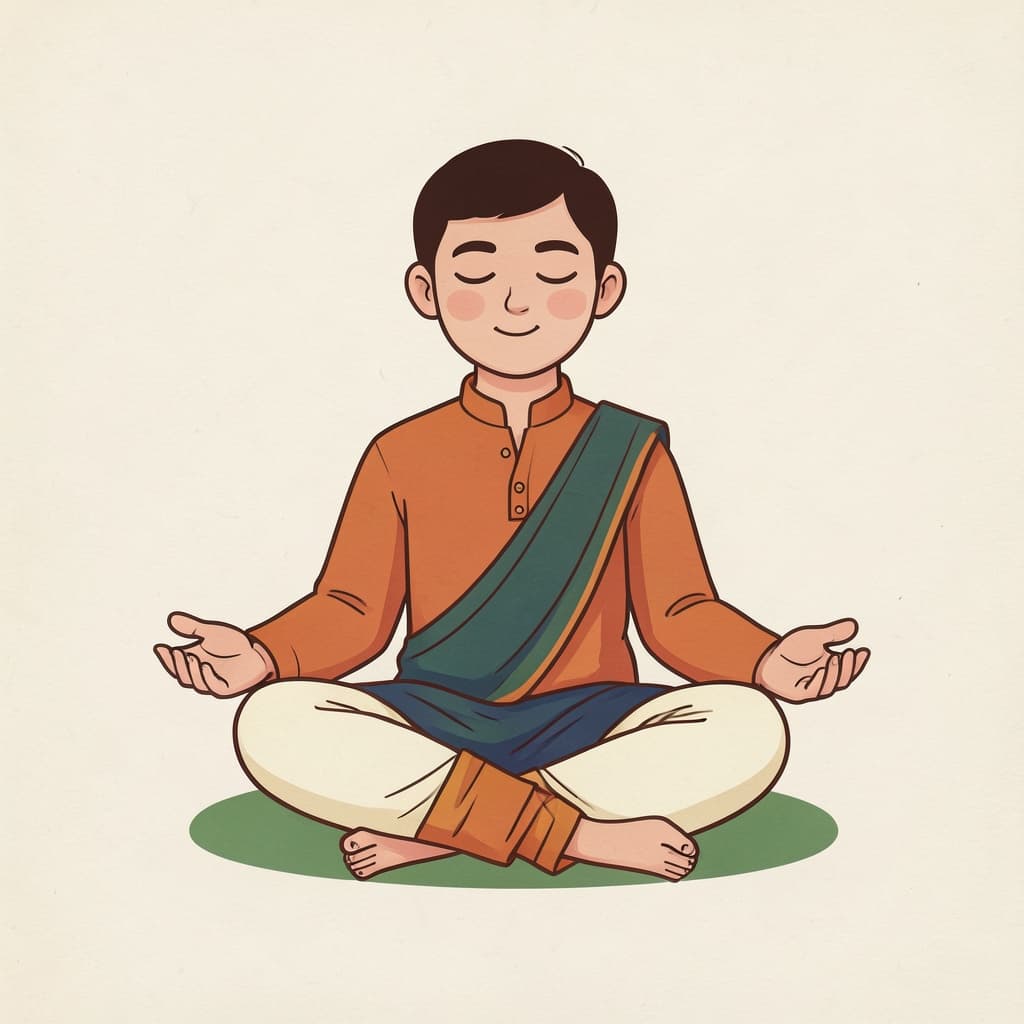
  • A person meditating cross-legged with closed eyes.
    upaviśati

    sits down

    Verb

    ।The students sit on the seat.

  • A man rising from his seat at sunrise.
    uttiṣṭhati

    gets up, rises

    Verb

    ।He gets up in the morning.

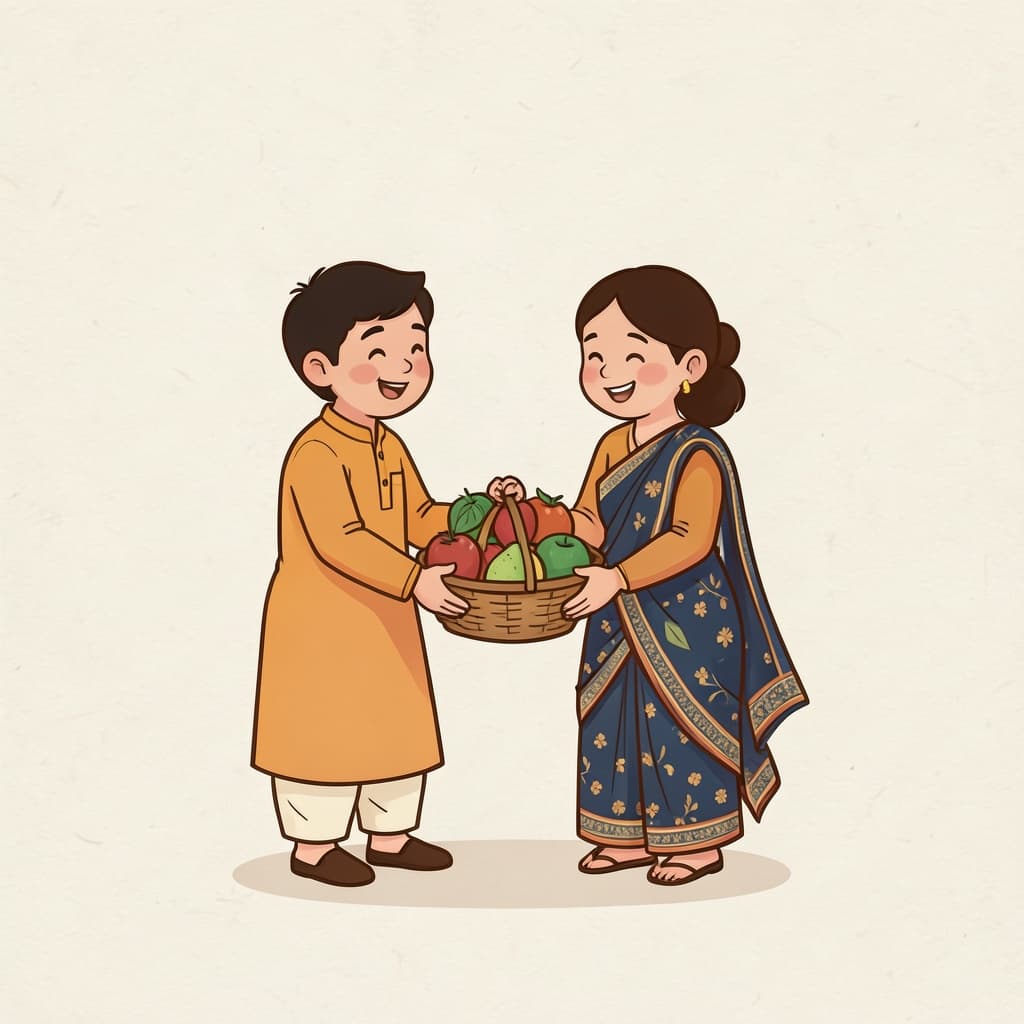
  • A girl receiving a basket of fruit as a gift, delighted.
    labhate

    gets, obtains

    Verb

    ।The student receives a prize.

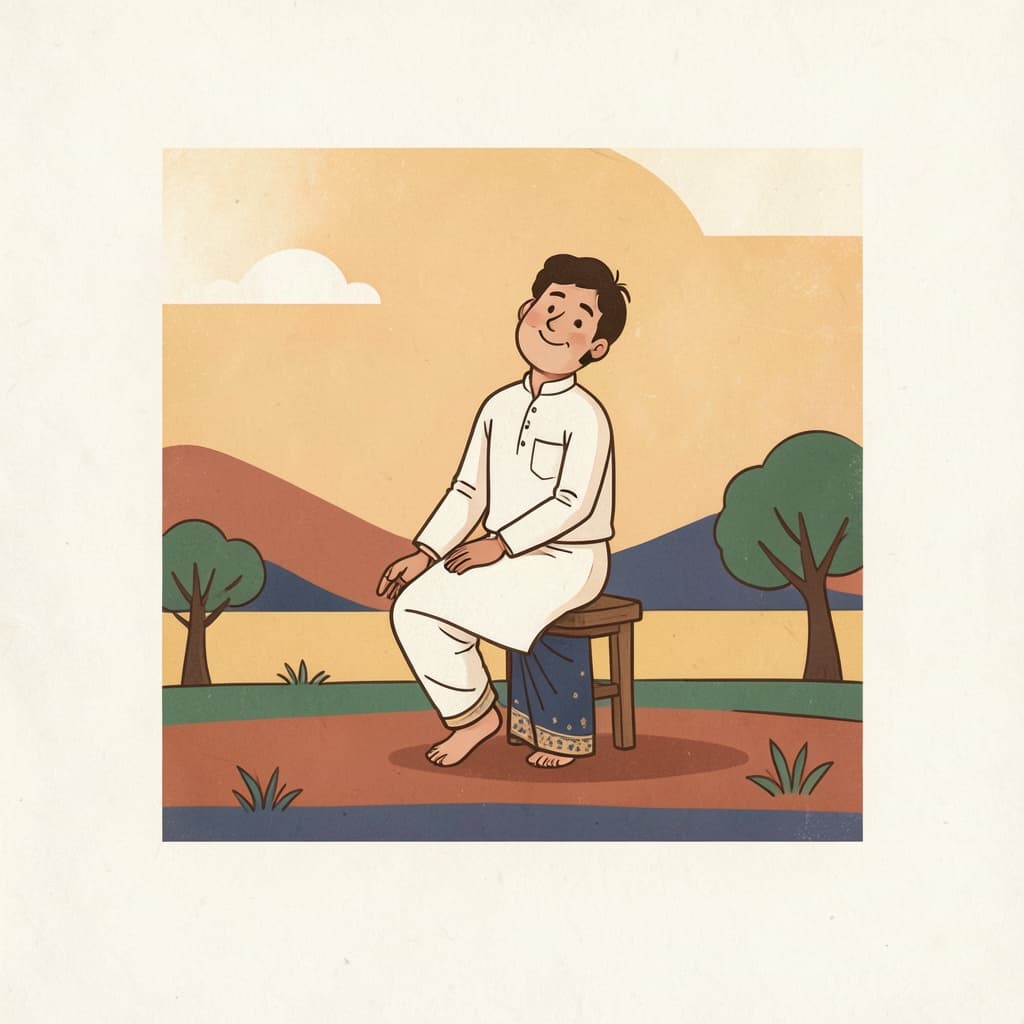
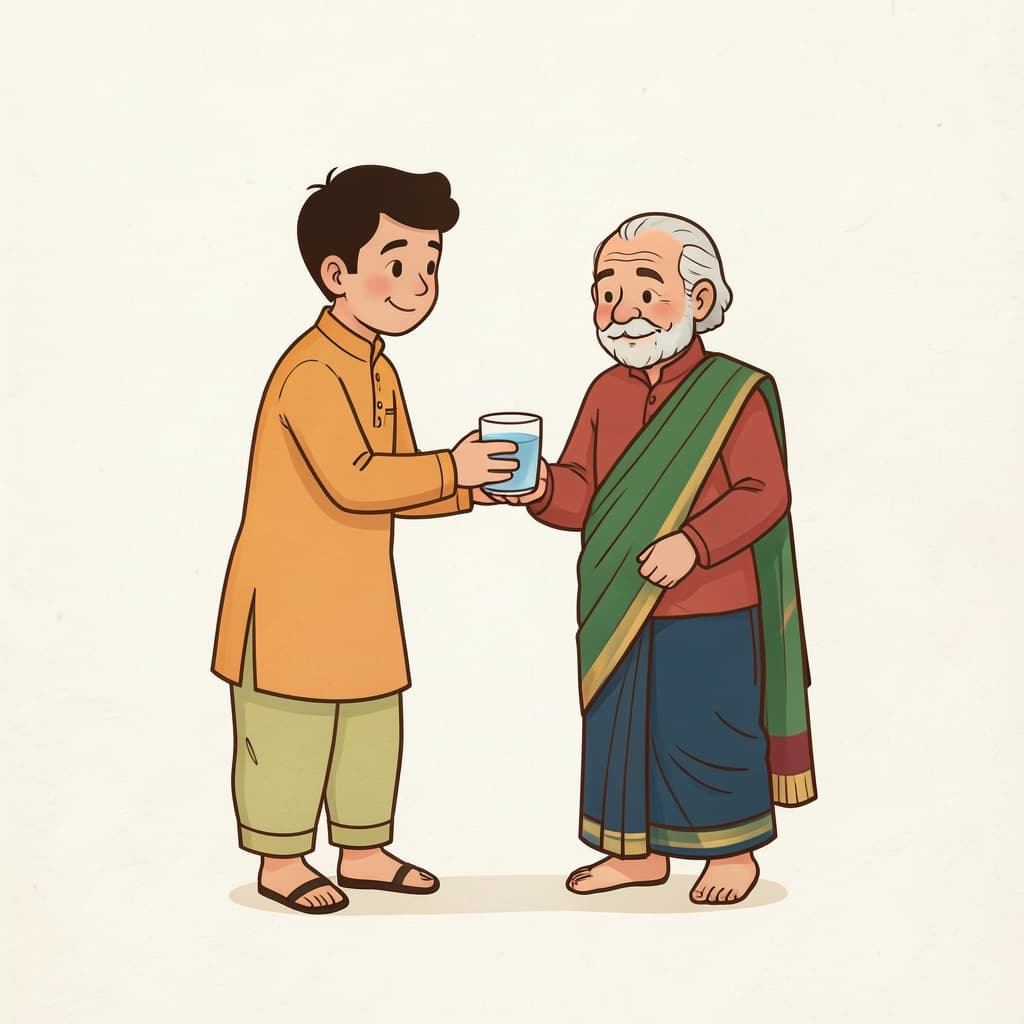
  • A young man serving a cup of water to an old man.
    sevate

    serves

    Verb

    ।The son serves his father.

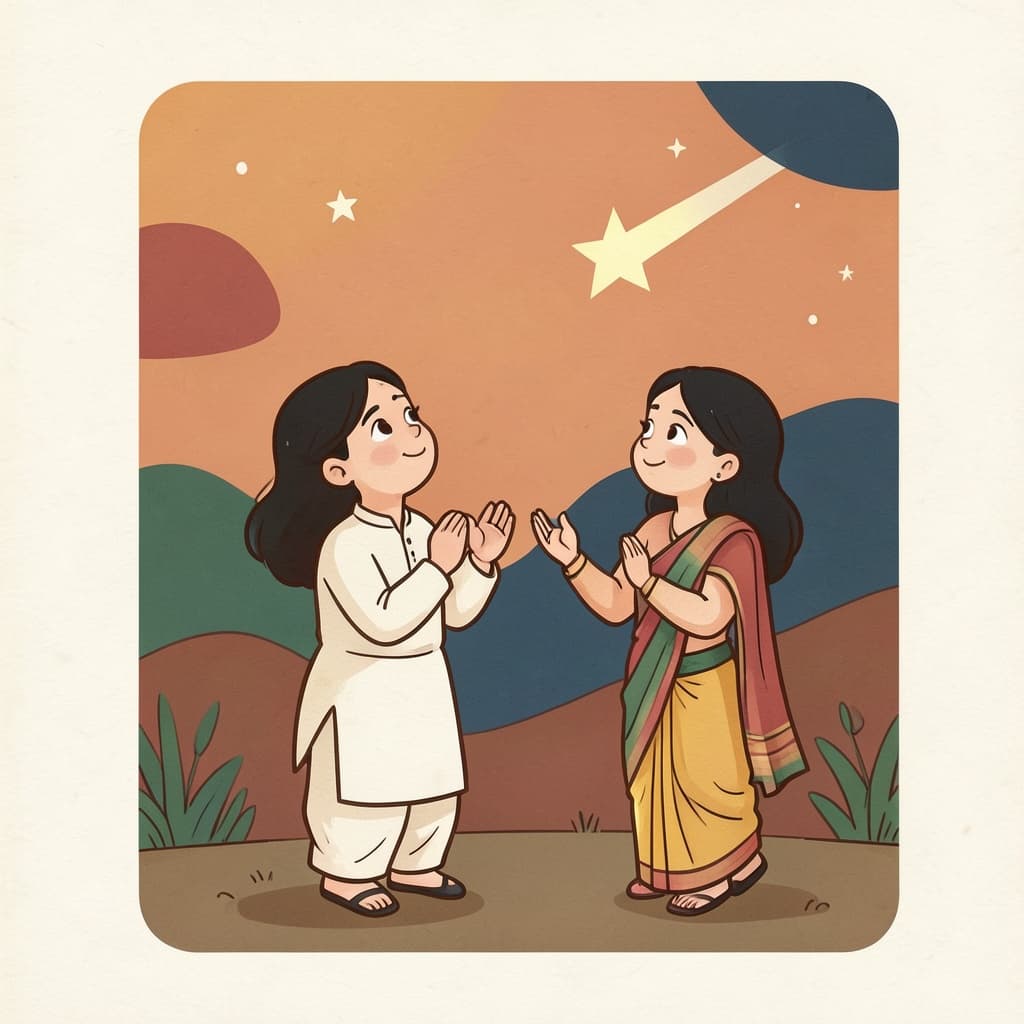
  • A girl with clasped hands looking up hopefully at a shooting star in the evening sky.
    icchati

    wants, wishes

    Verb

    ।I want to drink water.

  • A student raising her hand to ask her teacher a question.
    pṛcchati

    asks

    Verb

    ।The student asks a question.

Made with Modulify